

The reason why makeup applies better after women's facial hair removal!? Beomgye, Pyeongchon, Beomgye Station, Pyeongchon Station, Hogye-dong, Bisan-dong, Gwanyang-dong, Dongan-gu, Indeogwon, Geumjeong, Anyang
8/9/2026
This is a procedure note for The reason why makeup applies better after women's facial hair removal!? at Gyeonggi Anyang Beomgye KKEUT Korean Clinic.
Why your makeup changes after facial hair removal for women
Many women report that their makeup applies noticeably better after facial hair removal.
This is no coincidence. Fine facial hair physically obstructs base makeup like foundation and BB cream from adhering closely to the skin. Once these fine hairs are removed through hair removal, foundation can be applied evenly along the skin texture, resulting in a flawless finish without caking or unevenness.
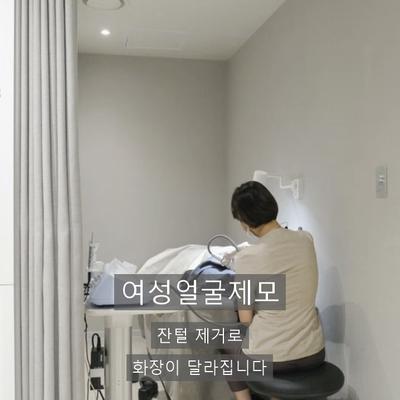
The skin texture itself also becomes refined. Around hair follicles where fine hairs once grew, it's common for a subtle, irregular texture to form. As laser hair removal sessions accumulate, the hair follicles shrink, leading to an overall smoother skin texture. This is why makeup longevity improves even without using a primer.
Facial hair removal for women goes beyond simple cosmetic improvement; it is a fundamental treatment that forms the basis of good skin care.
The Principle of Laser Hair Removal — Precisely Targeting Hair Follicles
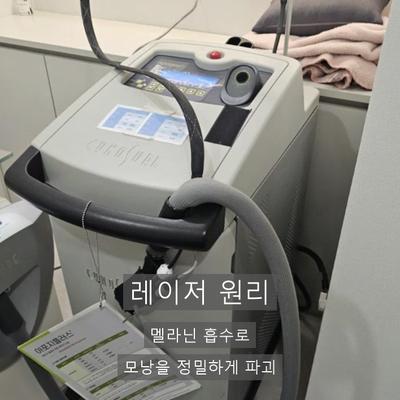
Laser hair removal utilizes the property of melanin pigment in hair to selectively absorb laser energy. The absorbed energy is converted into heat, destroying the hair root and follicle. Surrounding skin tissue is not targeted, ensuring high safety.
It's important to note that the laser is only effective on hair follicles in the 'anagen' (growth) phase. Hair cycles through anagen, catagen (regression), and telogen (resting) phases, and each follicle has a different cycle. Therefore, it's impossible to destroy all follicles in a single session; a series of treatments is required to progressively remove follicles as they enter their growth phase.
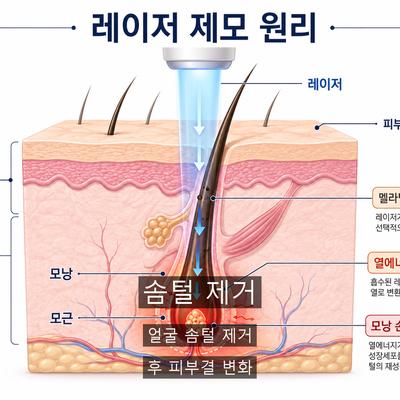
Facial hair is often finer and lighter than body hair. Vellus hair and fine hairs have less melanin, resulting in a relatively lower energy absorption rate. Therefore, if the energy output and number of pulses are not precisely tailored, the effectiveness may not meet expectations.
Facial Hair Removal: The Number of Sessions and Cycle are Key
For any area, a minimum of 10 sessions is recommended. For fine and light hairs like facial vellus hair, the growth cycle varies significantly between follicles. Therefore, a sufficient number of sessions is needed to progressively treat follicles as they enter the anagen phase at different times.
The treatment interval is a minimum of 3 weeks, with 4 weeks recommended. Adhering to the skin's exfoliation and regeneration cycle ensures skin protection and allows time for new anagen hairs to develop. If the interval is too short, it can place unnecessary stress on the skin.
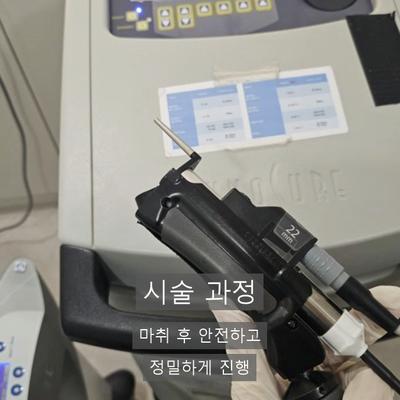
Post-treatment care is also crucial. Shaving is recommended from the day after the procedure, rather than on the day of the procedure. Absolutely no plucking or waxing during the treatment period, as this removes the hair root that the laser targets. For 1-2 days after the treatment, refrain from activities that generate heat on the face, such as saunas, vigorous exercise, or alcohol consumption.
Concerns about anesthesia also need clarification. Anesthetic cream only temporarily numbs the skin's surface and does not anesthetize the hair root. The actual treatment discomfort is comparable to the sensation experienced during ice cooling, and as sessions accumulate and hair reduces, so does the discomfort.
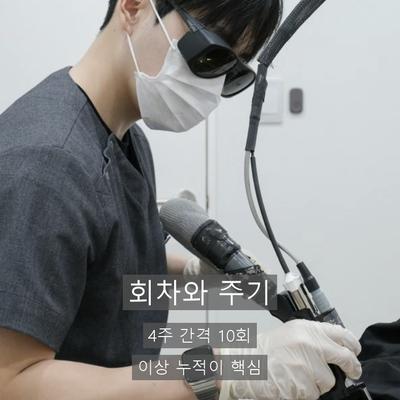
Folliculitis may occur after the procedure. This is a natural reaction given the nature of the treatment, which delivers heat directly to the hair follicles, and it typically resolves over time with diligent application of a regenerating cream. 'Permanent' hair removal does not exist. Laser hair removal is considered semi-permanent, and even after complete removal, maintenance sessions are recommended once every 2-3 months.
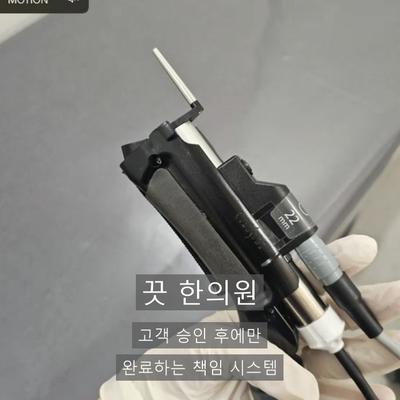
Facial Hair Removal for Women Designed by Kkeut Korean Medicine Clinic
Kkeut Korean Medicine Clinic analyzes the thickness, density, and skin tone of fine facial hair to individually design energy density and pulse duration. For fine and light vellus hair, which has low melanin content, an approach that increases energy or uses repeated pulses to deliver heat to the hair root is necessary. Without this tailored design, performing the treatment with a uniform output may result in reduced effectiveness or unnecessary skin irritation.
For darker skin tones, there is a risk of side effects due to skin melanin. Therefore, Kkeut Korean Medicine Clinic precisely adjusts the output to ensure safety. For areas with dense hair, energy is efficiently dispersed during treatment to prevent burns from overheating.
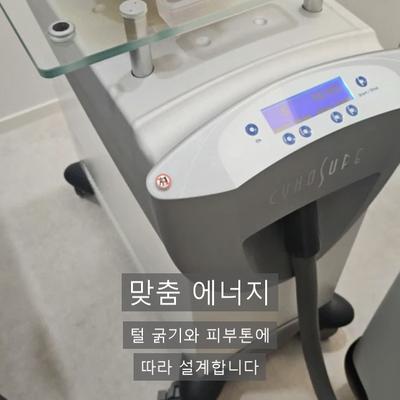
Kkeut Korean Medicine Clinic boasts premium equipment with proven performance and safety, such as Apogee and GentleMax. Apogee uses continuous air cooling to constantly minimize skin irritation before and after laser irradiation. GentleMax provides powerful cooling performance with DCD (Dynamic Cooling Device) gas cooling. Equipment competitiveness directly translates to reduced treatment pain and clean results.

Frequently Asked Questions
Q. Will my skin become sensitive after facial hair removal for women?
A. Temporary redness or sensitivity may occur after facial hair removal for women, but it usually subsides within 1-2 days. Kkeut Korean Medicine Clinic minimizes unnecessary irritation by adjusting energy levels to suit individual skin characteristics.
Q. After how many sessions of facial hair removal for women will I notice a difference in my makeup application?
A. With facial hair removal for women, many experience changes in skin texture from 3-5 sessions. As fine hair reduces, the adherence of base makeup gradually improves. Kkeut Korean Medicine Clinic monitors changes with you throughout each session.
Q. Can I shave during the laser hair removal period?
A. Shaving leaves the hair root intact, so it does not affect the effectiveness of the hair removal treatment. Shaving is recommended from the day after the procedure, rather than on the day of the procedure. However, methods that pull hair out from the root, such as waxing or plucking, are strictly prohibited during the treatment period as they remove the hair root that the laser targets.
Q. Is it true that fine facial hair can become thicker after facial hair removal for women?
A. This is not true. Laser hair removal works by destroying the hair follicle itself, so hair does not become thicker after treatment. This is a misconception often confused with the feeling that hair appears thicker after shaving.
Kkeut Korean Medicine Clinic's Commitment
Kkeut Korean Medicine Clinic provides differentiated results through an unlimited responsibility system, completing the procedure only after the client has directly confirmed and given final approval before its conclusion.
Kkeut Korean Medicine Clinic individually designs pulse duration and energy density based on hair thickness, density, and skin tone, ensuring both effectiveness and safety.
Kkeut Korean Medicine Clinic uses globally verified premium equipment like Apogee and GentleMax to reduce pain and ensure clean treatment results.
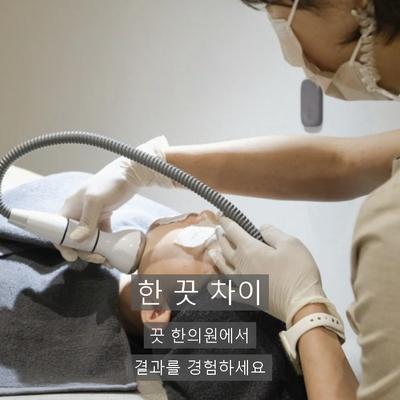
A subtle difference for a distinct result — Experience it at Kkeut Korean Medicine Clinic.
Related notes
Procedure notes worth reading next.


Loading menu…