

Nape Hair Removal: Laser treatment to tidy up persistent fine hairs. Beomgye, Pyeongchon, Beomgye Station, Pyeongchon Station, Hogye-dong, Bisan-dong, Gwanyang-dong, Dongan-gu, Indeogwon, Geumjeong, Anyang
7/11/2026
This is a procedure note for Nape Hair Removal: Laser treatment to tidy up persistent fine hairs. at Gyeonggi Anyang Beomgye KKEUT Korean Clinic.
The reasons why people consider nape hair removal are mostly similar.
It's because stray hairs poking out below the hairline bother them every time they have short hair or tie their hair up.
Many people who are bothered by the sensation of hair rubbing against their uniform or shirt collar also frequently seek nape hair removal.
The nape is a difficult area to check in the mirror yourself, so people often become aware of stray hairs through their hairdresser or the observations of those around them.
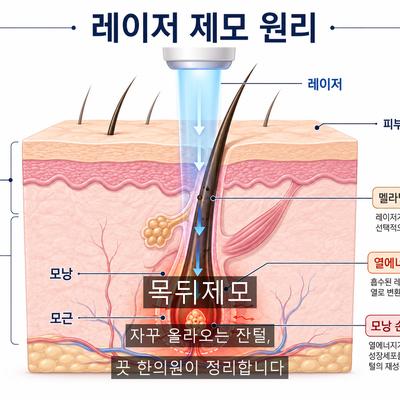
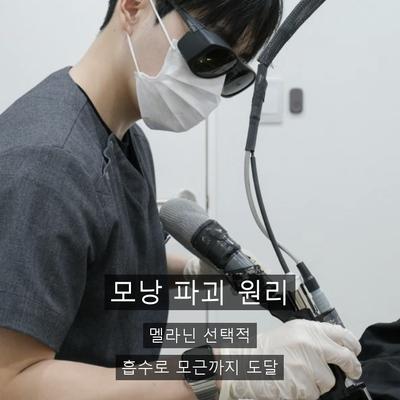
Laser hair removal works on the principle of selectively absorbing energy into the melanin pigment within hair follicles to destroy hair roots.
This energy reacts most distinctly in hair follicles that are in the growth phase.
Hair follicles in the resting phase do not react to the laser, so even hairs that are not visible now will eventually re-enter the growth phase.
The timing of entering the growth phase varies for each hair follicle, so it's not possible to target all follicles simultaneously with a single treatment.
The nape area is characterized by both thick and fine vellus hairs growing together, so the reaction speed varies slightly depending on the state of the hair follicles.
The nape is an area that borders the hairline, so even a small amount of hair growth can appear visually prominent.
Most of the stray hairs are so fine they're only noticeable by touch, so the actual density can sometimes be greater than what is visible to the eye.
Since it's an area prone to sweat and friction from collars, the skin's sensitivity to irritation must also be considered.
While waxing or plucking methods may temporarily make the area look smooth, the hair roots themselves remain intact.
Even if pulled out by the root, hair will grow back if the follicle is alive, so the longevity of results differs from methods like nape hair removal that directly destroy the hair follicle.
Shaving also only cuts the hair on the surface, so stray hairs that become noticeable to the touch after a few days can be bothersome.
For these reasons, the process of finely adjusting the energy intensity is crucial for the results of nape hair removal.
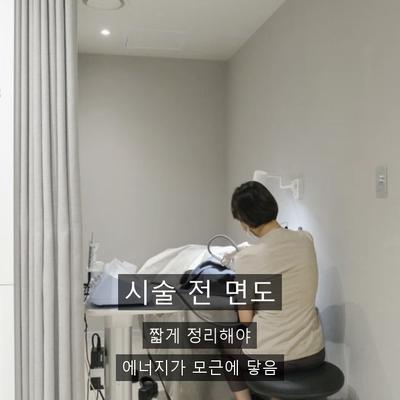
Before receiving nape hair removal, it is best to shave the area short and then visit the clinic.
If hair remains long, the laser energy may not reach the hair root and will instead be absorbed by the surface first, increasing the risk of burns.
The energy is accurately delivered to the hair root only when the area is neatly trimmed short.
Since lasers only react to hair follicles in the growth phase, nape hair removal is not completed with a single treatment.
Repeated treatments are necessary to coincide with hairs in the resting phase re-entering the growth phase, typically requiring 10 sessions or more.
The recommended interval is at least 3 weeks, ideally 4 weeks. Following the skin's regeneration cycle is essential to accurately target the next growth-phase hair follicles.
Rather than viewing it as permanent hair removal where hair never grows back, it's more realistic to approach it as a semi-permanent concept managed with maintenance treatments.
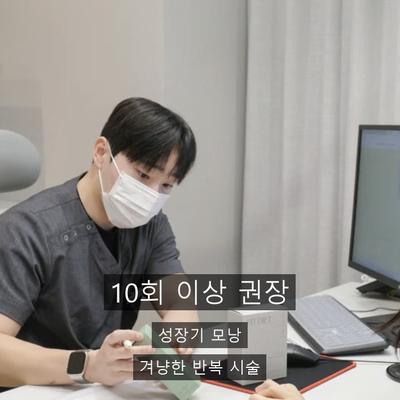
Numbing cream only dulls the sensation on the skin's surface and does not affect the deeper parts of the hair root.
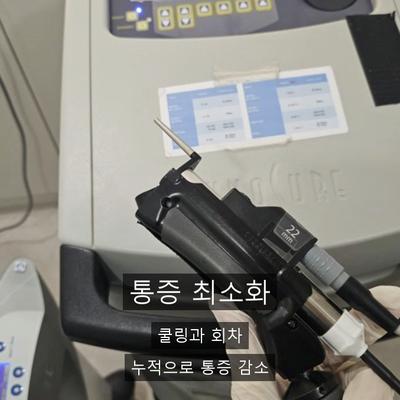
The perceived pain is comparable to receiving treatment after applying ice, and as the number of sessions increases and hair decreases, the pain naturally subsides.
Immediately after treatment, small, red, pimple-like irritations may appear, which is a common reaction when heat is directly delivered to the hair follicles.
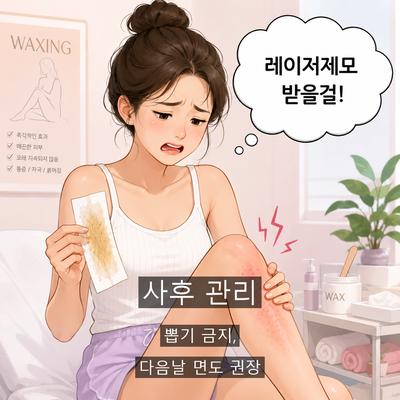
It is recommended to shave from the day after the treatment rather than on the day of treatment. This is because the irritated hair follicles need time to calm down.
Plucking hairs by hand is prohibited. This removes the hair root that the laser is meant to target, reducing the effectiveness of subsequent treatments.
For 1 to 2 days after treatment, it is safer to avoid activities that raise body temperature, such as saunas or strenuous exercise.
If it's a season with high UV exposure, it's advisable to apply sunscreen to the nape as well to prevent hyperpigmentation.
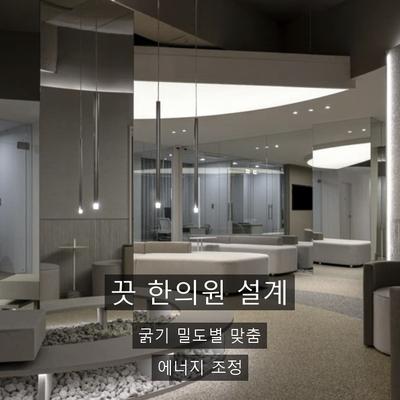
Kkeut Korean Medicine Clinic's Unique Nape Hair Removal Design
Kkeut Korean Medicine Clinic customizes energy settings for nape hair removal based on hair thickness and density.
Thick, dark hairs have a high melanin absorption rate, making them prone to rapid energy absorption. Kkeut Korean Medicine Clinic protects the epidermis by gradually delivering heat with long pulses.
Fine, light vellus hairs tend to react weakly, so Kkeut Korean Medicine Clinic delivers heat to the hair roots by increasing energy or applying repeated pulses.
In areas with densely packed hair, Kkeut Korean Medicine Clinic efficiently disperses energy to prevent irritation from overheating.
Kkeut Korean Medicine Clinic precisely designs the laser paths along the hairline boundary to ensure natural-looking nape hair removal results.
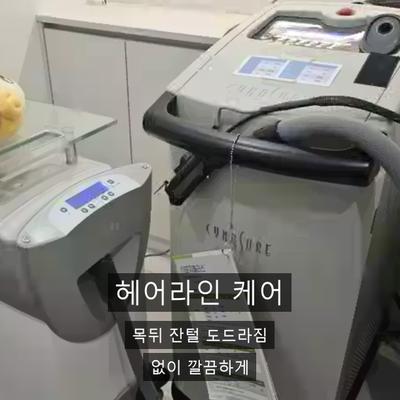
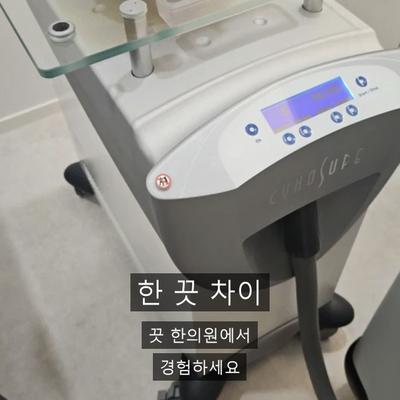
The equipment used by Kkeut Korean Medicine Clinic constantly sprays cool air before and after laser application, allowing even sensitive areas like the nape to maintain low irritation.
Results Only Possible at Kkeut Korean Medicine Clinic
Before concluding the treatment, Kkeut Korean Medicine Clinic re-checks for any missed areas and only finishes the session after the client's final approval.
If there's a particular area of concern, Kkeut Korean Medicine Clinic focuses the energy more finely on that specific spot.
Kkeut Korean Medicine Clinic uses verified high-end equipment such as Apogee and GentleMax to reduce pain and enhance clear results.
Frequently Asked Questions
Q. How many sessions of back-of-neck hair removal are needed to see results?
A. Due to the growth cycle characteristics of hair follicles, stable results for back-of-neck hair removal can be seen after more than 10 repetitions.
Q. Do I need to shave before back-of-neck hair removal?
A. Yes, for back-of-neck hair removal, the hair must be trimmed short so that the laser energy can be accurately delivered to the hair roots.
Q. What is the appropriate treatment interval for back-of-neck hair removal?
A. Considering the skin regeneration cycle, it is safer to perform back-of-neck hair removal at intervals of at least 3 weeks, with 4 weeks being recommended.
Q. Is complete permanent hair removal possible with back-of-neck hair removal?
A. Rather than the concept of never growing back for life, it is more accurate to understand it as a semi-permanent concept, managed with maintenance treatments every few months after back-of-neck hair removal.
Q. Can both men and women receive back-of-neck hair removal?
A. Yes, back-of-neck hair removal can be performed regardless of gender, with energy conditions adjusted only according to hair thickness and density.
The Sincerity of Kkeut Korean Medicine Clinic
Kkeut Korean Medicine Clinic provides differentiated results through a design that precisely adjusts pulse and energy density according to hair thickness and density.
Kkeut Korean Medicine Clinic enhances patient satisfaction by completing treatments only after final approval from the client.
Kkeut Korean Medicine Clinic pursues both safety and effectiveness simultaneously through verified high-end equipment such as Apogee and GentleMax.
A Subtle Difference, Different Results — Experience it at Kkeut Korean Medicine Clinic.
Related notes
Procedure notes worth reading next.


Loading menu…