

Three Reasons for Under-Eye Hollows Beomgye, Pyeongchon, Beomgye Station, Pyeongchon Station, Hogye-dong, Bisan-dong, Gwanyang-dong, Dongan-gu, Indeogwon, Geumjeong, Anyang
8/8/2025
This is a procedure note for Three Reasons for Under-Eye Hollows at Gyeonggi Anyang Beomgye KKEUT Korean Clinic.
Common Factors in Under-Eye Hollows
In aesthetic and reconstructive medicine, 'tear trough hollows' are a frequent concern we encounter.
As under-eye fat repositioning surgery has gained wider acceptance recently, there's been a noticeable increase in male patients seeking this procedure.
This has led to a general perception that under-eye hollows always require surgical intervention.
However, during our detailed patient evaluations, we often observe that
the causes of under-eye hollows are diverse, and surgery is not always the sole or optimal treatment path.
Treatment planning and the necessary level of intervention differ significantly based on the underlying reason.
1. Hollows from Fat Loss or Displacement
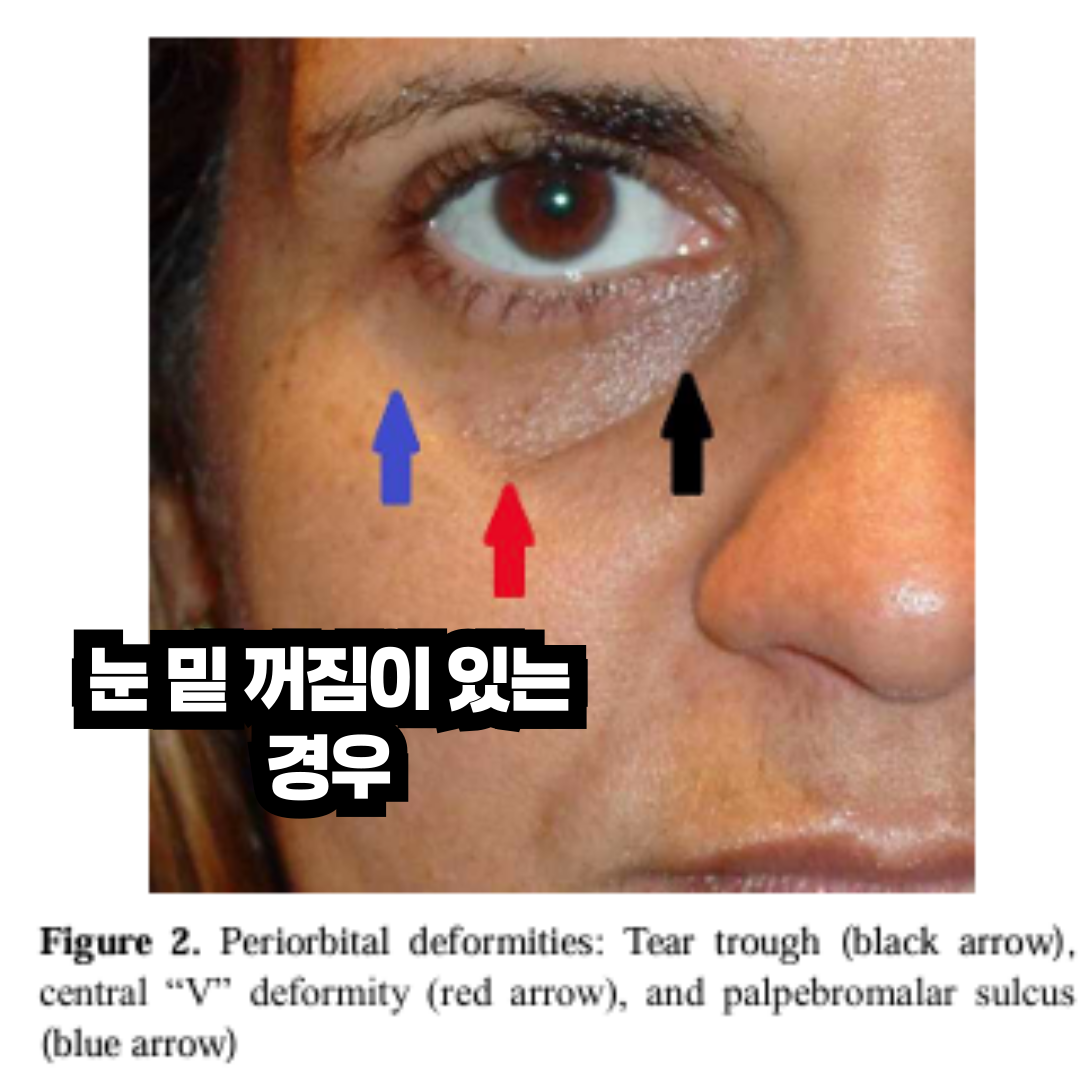
Under-eye hollows can develop when the orbital fat volume decreases or shifts downwards. This may be due to aging, changes in body weight, or repeated facial expressions.
Orbital fat serves as a natural cushion between the eyeball and the infraorbital bone. If the supporting orbital septum and ligament structures weaken, the fat may no longer stay in its intended position.
In these situations, merely adding volume typically offers only a temporary cosmetic improvement.
The goal is to prevent further fat migration and rebuild the internal support structures.
This approach involves stimulating new collagen production, which helps construct a fibrous support network between the periosteum and the dermis.
Such structural reinforcement can reduce downward fat displacement and soften the transition of the hollowed area.
Filling only the superficial layer might lead to the filler moving downwards or creating surface irregularities over time. Therefore, restoring internal support structures should be combined for long-lasting stability.
2. Reduced Skin and Soft Tissue Elasticity

Anatomically, the under-eye area features exceptionally thin skin, minimal subcutaneous tissue, and a dense network of blood and lymphatic vessels.
As individuals age, collagen and elastin naturally diminish, leading to reduced mechanical support within the dermis and subcutaneous tissue.
This can loosen the skin's connection to the epidermal layer, resulting in skin laxity and the formation of wrinkles.
Even without significant actual volume loss, these changes can make hollows appear more pronounced due to how light reflects and casts shadows.
In such instances, simply adding volume might increase tissue burden and potentially accelerate sagging.
Therefore, the primary objective is to restore soft tissue elasticity and provide structural lift.
To achieve this, energy-based technologies like Radiofrequency (RF) or High-Intensity Focused Ultrasound (HIFU) are used. These devices deliver targeted thermal stimulation to the dermal and deep dermal layers, including the SMAS.
This process encourages collagen remodeling and promotes fibrous contraction.
The mechanism helps restore skin tension and can structurally modify the angle and depth of the hollowed region.
3. Anatomical Features and Hereditary Influences
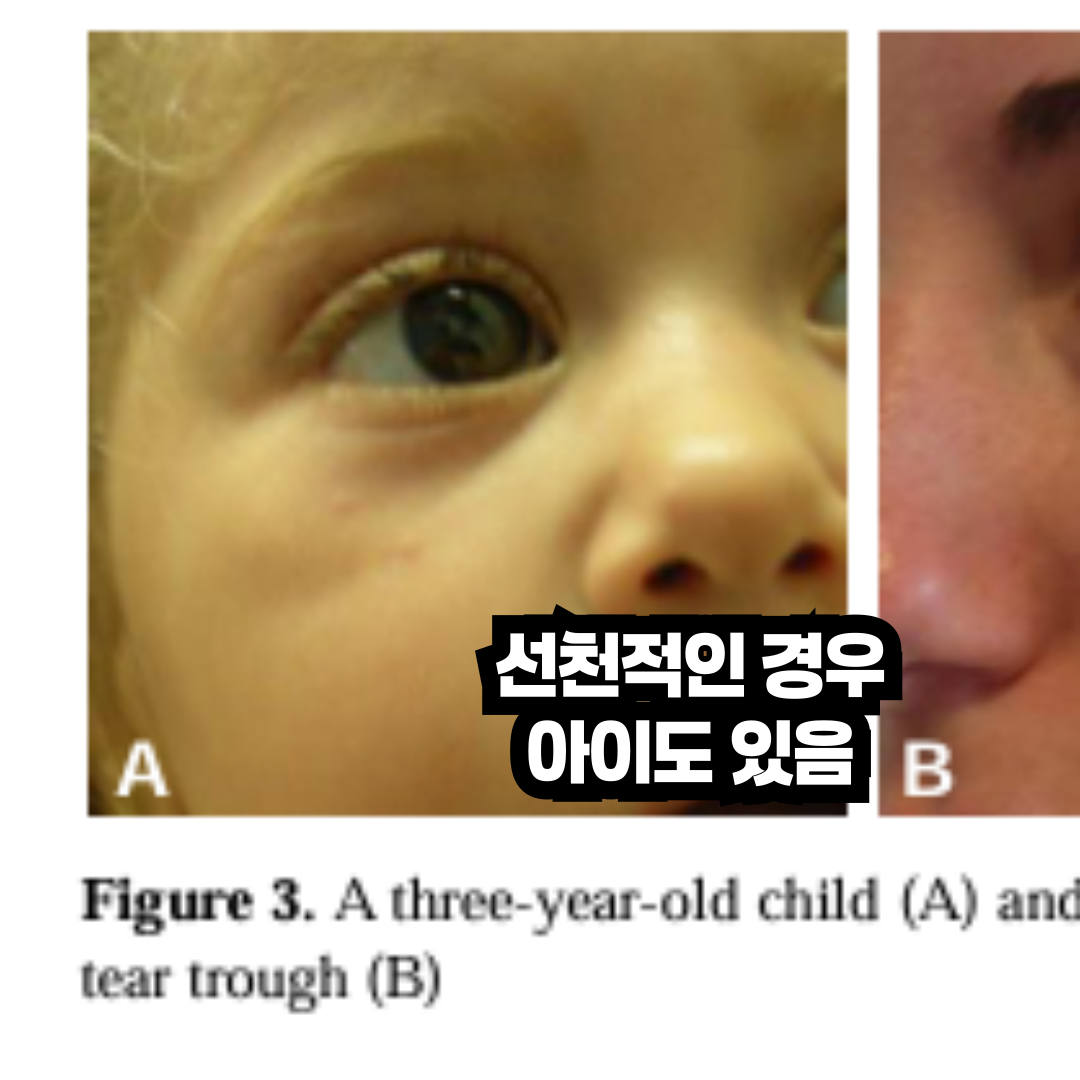
Some individuals are born with a naturally deep tear trough or an infraorbital rim that is set back.
This can lead to a hollowed appearance that becomes visible even at a young age.
In these cases, even if fat volume and skin elasticity are adequate, the root cause is often an anatomical difference at the junction between the bone and soft tissue, specifically the deep ligamentous attachments.
To address this, structural augmentation in the deficient region is often needed.
Injecting only superficially might cause the filler to be visible through the thin skin,
or result in an unnatural transition between the cheek and lower eyelid.
Therefore, precise volume placement is required within stable anatomical layers, such as the supraperiosteal plane or subdermal plane,
using a substance that is known to remain in place.
This method is distinct, as it aims for a reconstruction of an anatomical deficiency, rather than just a cosmetic filling.
Surgical Method Considerations
Fat repositioning surgery aims to create a smoother under-eye contour by relocating protruding fat to fill the sunken areas below. However, this technique
- makes it challenging to precisely control the distribution and quantity of the relocated fat,
- and there is a possibility of tissue injury, scar tissue formation, or asymmetry following a lower eyelid incision,
- and subsequent adjustments are not simple because the changes are permanent.
Surgical approaches often involve a recovery phase that can extend for weeks or longer, and subsequent corrective procedures may present additional complexities.
In contrast, non-surgical methods offer the advantage of progressive modifications. These can be integrated with therapies designed for collagen formation and improved skin elasticity, supporting sustained structural integrity and visual outcomes over time.
Conclusion
Hollowing beneath the eyes often stems from multiple contributing factors, reflecting intricate interactions among the skin, fatty tissue, supporting ligaments, and underlying bone structure.
Therefore,
- Fat Atrophy/Displacement Type: Addressing this involves rebuilding the internal support system by encouraging new collagen formation.
- Reduced Elasticity Type: The focus here is on improving the firmness of soft tissues and achieving a lifting effect.
- Structural Deficit Type: This requires carefully adding volume, considering the distinct anatomical layers.
Consequently, an individualized approach tailored to the specific cause and anatomical layer becomes essential.
Within our practice, emphasis is consistently placed on thorough anatomical evaluation and structural examination.
This helps ensure that treatments, whether conservative or surgical, are precisely matched to each patient's unique needs, preventing excessive interventions.
It is frequently observed that significant improvements may be attained through non-surgical approaches.
Such methods are chosen not only for their aesthetic outcomes but also for their contribution to functional and structural integrity.
Despite its limited size, the region beneath the eyes plays a vital role in shaping a person's general appearance and facial expressions.
Designing a treatment plan that addresses the fundamental aspects of support, elasticity, and underlying structure can contribute to more enduring and harmonious enhancements.
Related notes
Procedure notes worth reading next.


Loading menu…