

Blemish Removal: Why Different Lasers Are Used for Each Type of Blemish Beomgye, Pyeongchon, Beomgye Station, Pyeongchon Station, Hogye-dong, Bisan-dong, Gwanyang-dong, Dongan-gu, Indeogwon, Geumjeong, Anyang
8/17/2026
This is a procedure note for Blemish Removal: Why Different Lasers Are Used for Each Type of Blemish at Gyeonggi Anyang Beomgye KKEUT Korean Clinic.
When considering blemish removal, the first thing to know is that each blemish has a different identity.
Although lentigines, melasma, seborrheic keratoses, and freckles may look similar to the eye, their locations and causes within the skin are distinct.
Ignoring these differences and approaching them with the same laser can lead to reduced effectiveness or side effects such as the pigmentation becoming darker.
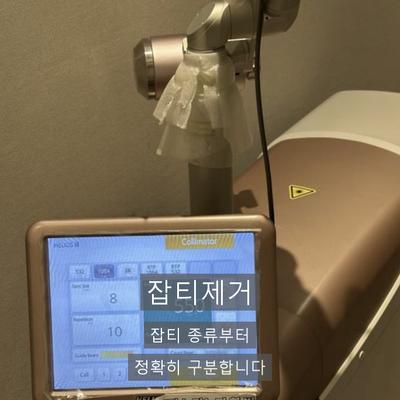
Lentigines are brown spots formed by melanin clusters in the epidermal layer and are the most common lesions referred to as 'blemishes'.
Melasma often involves melanin spreading not only in the epidermis but also into the dermal layer, and stimulation can cause it to recur or spread.
Seborrheic keratoses are lesions where keratinocytes thicken and become pigmented with age, representing a change in the surface structure itself rather than just pigmentation.
Freckles are epidermal pigments with a strong genetic component that tend to darken when exposed to UV light.
As the depth and nature of pigmentation vary with each lesion, it is difficult to determine the treatment approach based solely on appearance.
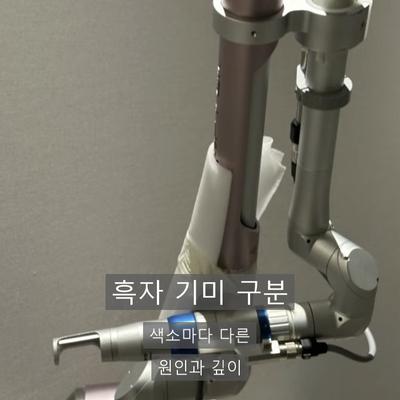
Because the location and nature of lesions differ, the laser wavelength used for blemish removal must also be adjusted to match the lesion.
Lasers are designed with varying depths and intensities of melanin absorption depending on the wavelength.
This design difference is a key factor that simultaneously determines both the results and the recovery speed.
The 532nm wavelength has a high melanin absorption rate, allowing it to precisely target lentigines or blemishes located in the epidermis.
The 1064nm wavelength reaches deeper into the dermal layer and is used for deeply seated pigmentation like melasma or for toning treatments.
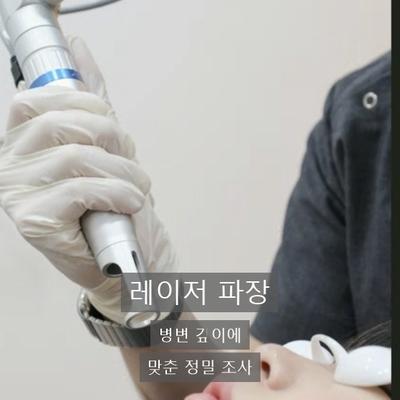
Using a wavelength that reaches the dermis for epidermal lentigines can transfer unnecessary heat to surrounding tissues, potentially increasing downtime or the risk of post-inflammatory hyperpigmentation.
Conversely, strongly approaching melasma spread in the dermis with an epidermal wavelength is likely to cause significant irritation with slow improvement.
The laser's intensity and number of shots must also be adjusted according to the lesion's depth and pigment concentration to ensure safe and effective results.
If blemishes are treated without distinction, both the results and recovery speed will vary.
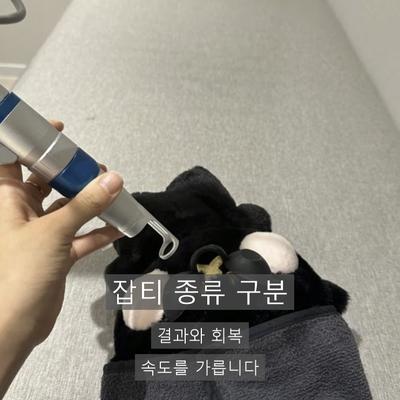
The treatment process involves identifying the lesion, applying anesthetic cream, and then applying the laser with a wavelength and intensity appropriate for the lesion type.
Treatment time varies depending on the extent of the lesion, but localized blemish removal procedures are typically completed in a short amount of time.
Immediately after treatment, the treated area may darken slightly or form scabs, which typically fall off naturally within about a week.
In post-treatment care, UV protection is paramount, and irritating treatments like chemical peels or friction should be avoided during the pigmentation lightening process.
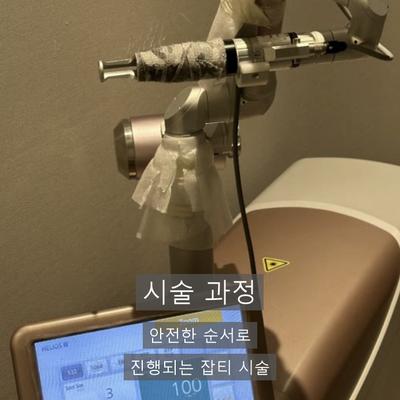
A common misunderstanding after blemish removal is the belief that all lesions will disappear after a single treatment.
Lentiginous lesions often show significant improvement after just one session, but if melasma is present, a multi-session approach is necessary for management without recurrence.
After laser treatment, the lesion transforms into a scab and naturally falls off, so it's important not to pick or remove it artificially.
For blemish treatments, it is safest to proceed to the next session after the lesion has naturally fallen off.
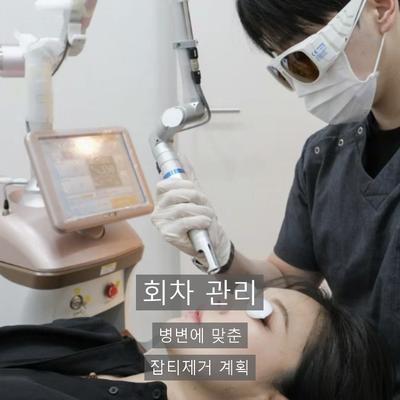
Before treatment, Ggeut Korean Medicine Clinic photographs skin lesions with a Mark-Vu diagnostic device, and the director personally examines the photos to differentiate between lentigines, melasma, and seborrheic keratoses.
It is Ggeut Korean Medicine Clinic's principle to determine the treatment direction after confirming the type and depth of the lesion with diagnostic equipment, rather than judging solely by eye.
The diagnosis results will be presented with pre-treatment photos of the lesions, allowing you to confirm which lesion will be approached with which wavelength.
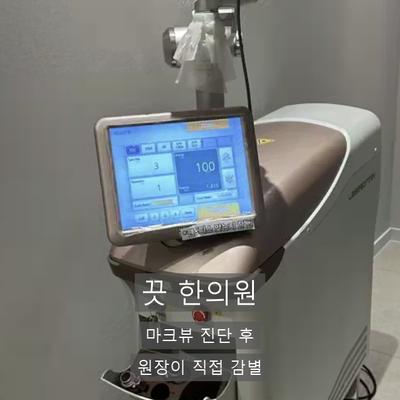
After lesion differentiation, Ggeut Korean Medicine Clinic primarily uses a 532nm wavelength laser for treatment.
This wavelength is in the range with the highest melanin absorption, using the same wavelength band as well-known high-end lentigo lasers such as RÈPUL or Ruby series.
Ggeut Korean Medicine Clinic is equipped with devices and treatment designs to achieve the effects of this wavelength at a reasonable price point.
As a wavelength band that has been verified for a long time, its reliability in terms of safety is high.
Ggeut Korean Medicine Clinic also applies different post-treatment care methods depending on the treated area.
Since this treatment does not create wounds on the surface, DuoDERM gel is not applied; instead, it involves soothing care tailored to the lesion's characteristics.
It is Ggeut Korean Medicine Clinic's principle not to apply the same care method to all treatments, but to design post-treatment care differently according to the essence of each procedure.
Precise Diagnostic Treatment Unique to Ggeut Korean Medicine Clinic
Precise Differentiation and Treatment Possible Only at Ggeut Korean Medicine Clinic
Frequently Asked Questions
Q. Can blemishes be completely removed with a single treatment?
A. It depends on the type of lesion. Lentiginous blemish removal often shows clear changes with one session, but if melasma is mixed in, multiple sessions are required.
Q. Is the laser treatment for blemishes very painful?
A. While there might be a stinging sensation, the treatment is performed after applying anesthetic cream, so the pain during blemish removal is generally tolerable.
Q. Why is sun protection important after blemish removal?
A. Immediately after blemish removal, the treated area is sensitive to pigment changes, and exposure to UV light increases the risk of repigmentation. It is crucial to apply sunscreen thoroughly after the procedure.
Q. Can melasma and blemishes also be removed with the same laser?
A. Melasma and lentiginous blemishes differ in lesion depth, so approaching them with the same wavelength can lead to significant differences in results. Kkeut Korean Medicine Clinic differentiates the lesions and applies different wavelengths for blemish removal.
Q. When can I wear makeup after blemish removal?
A. Starting with light makeup after the scabs naturally fall off is a way to reduce irritation. For the blemish removal area, we recommend applying sunscreen first, then makeup.
Kkeut Korean Medicine Clinic's Sincerity
Kkeut Korean Medicine Clinic provides differentiated results through treatment designs that accurately identify lesions using the Mark-Vu diagnostic device.
Kkeut Korean Medicine Clinic enhances patient satisfaction through precise laser operation with a 532nm wavelength, comparable to leading devices.
Kkeut Korean Medicine Clinic pursues both safety and effectiveness through differentiated post-treatment care tailored to the essence of the procedure.
A Subtle Difference, Remarkable Results — Experience it at Kkeut Korean Medicine Clinic.
Related notes
Procedure notes worth reading next.

Hyperpigmentation & Blemishes: Why Are They Hard to Treat in One Go? An Effective Guide to Toning Treatment Sessions
2026. 8. 23.

Melasma & Blemish Laser Price: 3 Things You Must Check First
2026. 10. 5.

Don't just focus on the price of Ruby laser treatments. It's crucial to first check if a pigmentation removal laser is appropriate for your skin.
2026. 7. 3.
Loading menu…