

Choosing an Ultherapy Clinic: 3 Key Factors for Success! Beomgye, Pyeongchon, Beomgye Station, Pyeongchon Station, Hogye-dong, Bisan-dong, Gwanyang-dong, Dongan-gu, Indeogwon, Geumjeong, Anyang
This is Gyeonggi Anyang Beomgye KKEUT Korean Clinic's procedure note on Choosing an Ultherapy Clinic: 3 Key Factors for Success.
When considering Ultherapy treatment, what's important to look at is not just the equipment specifications.
The posture during treatment design, the method of checking skin layers during treatment, and the information provided after treatment can all influence the actual results.
Through this article, we will examine three key considerations when choosing a medical institution, from consultation to post-treatment care.
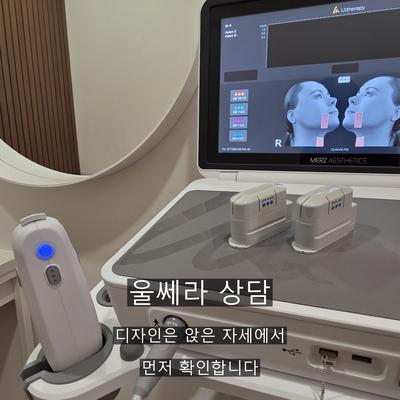
Criterion 1. What to check during the diagnosis and consultation process
The first consideration is the posture during the treatment design.
When a patient is lying down, the direction of gravity changes, causing sagging tissues to appear lifted.
If the design is done in this state, areas that truly need lifting when standing may be excluded from the accurate treatment plan.
Some medical institutions focus on understanding the actual degree of sagging by first performing the design in a sitting position.
When designing in a sitting position like this, the process involves accurately confirming the actual degree of sagging and also considering the skin thickness of each area.
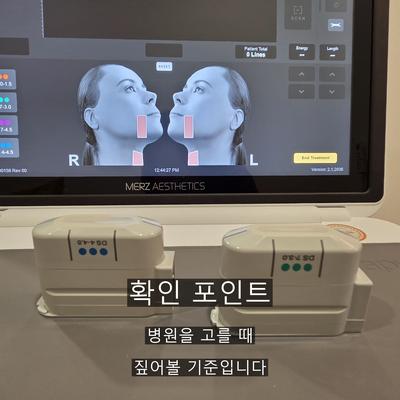
Pre-determining skin thickness is an important criterion for establishing a treatment plan, deciding which areas will receive a 4.5mm tip and which will use 3.0mm, 2.0mm, or 1.5mm tips.
Therefore, during consultation, it is recommended to check if the design is performed in a sitting position, and if they adequately explain why different types of tips are used for each area.
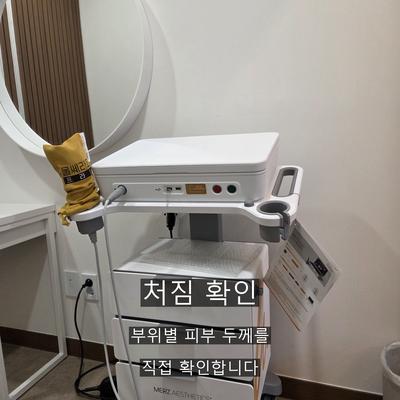
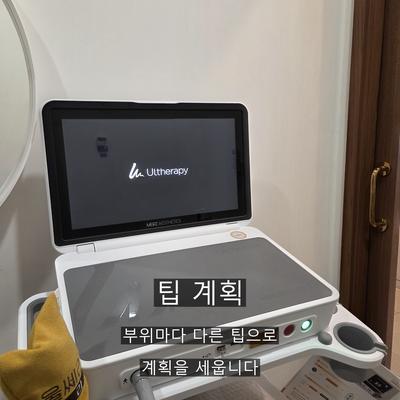
Criterion 2. Considerations when establishing a treatment plan
The second important criterion is how skin layers are verified during the treatment.
The tips used in Ultherapy treatment form a focal point at a predetermined depth. For example, a 4.5mm tip delivers energy to a point 4.5mm deep in the skin, and a 3.0mm tip to a point 3.0mm deep.
However, the actual location of the SMAS layer varies by individual and can even differ between areas on the same face.
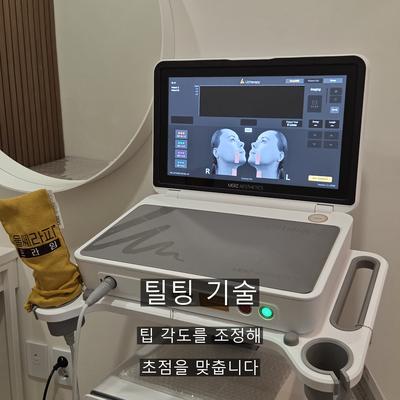
If this SMAS layer is located between the depths of the specified tip sizes, it may be necessary to tilt the tip diagonally during treatment to adjust the precise focal depth.
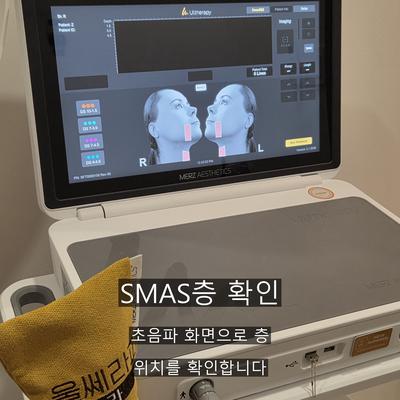
Some medical institutions perform the treatment by checking skin layers in real-time via an ultrasound screen and adjusting the tip's angle.
If one relies solely on the ultrasound screen without an accurate treatment plan, or conversely, only makes a plan and neglects screen verification, there is a possibility of straying from the target area or reducing the treatment's effectiveness.
Furthermore, if there is excessive volume in a specific area, it may be appropriate to plan the treatment targeting the fat layer rather than the SMAS layer. Such a determination can also only be made through real-time ultrasound screen verification.
If a precise treatment plan is absent, differences in treatment results can occur even when using the same equipment.
Therefore, asking during the consultation if they use ultrasound to check skin layers and if tip angle adjustment is possible when needed, can be a good criterion for judgment.

Criterion 3. Post-treatment care and information provision aspects
The third point to consider is what information is provided to the patient after the treatment is completed.
Due to the nature of lifting treatments, it is often not easy for patients themselves to directly verify the treatment details.
Typically, it's common for patients to only be informed of the total number of shots after the procedure and then conclude.
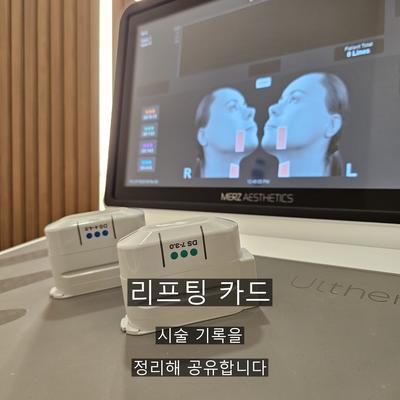
Some medical institutions create and share treatment records with patients in the form of a lifting card or similar document after the procedure.
Such records may include the type of tip used, the number of shots delivered to each area, and the applied energy intensity.
These records can serve as important evidence for discussing future treatment directions by comparing them with past treatment details during the next visit.
Therefore, whether detailed records can be provided after treatment can also be used as a criterion for choosing a medical institution.
A transparently verifiable treatment plan can be an important selection criterion.
Frequently Asked Questions
Q. When considering Ultherapy treatment, what should be checked first?
A. When choosing Ultherapy treatment, it is advisable to check whether the treatment design is performed in a sitting position. Pre-determining the patient's actual sagging condition and the skin thickness of each area can help increase the precision of the tip selection plan.
Q. Can more shots during Ultherapy treatment necessarily lead to better results?
A. While the total number of shots can be one reference indicator for treatment, it is difficult to determine the quality of the treatment based solely on this information. Beyond the number of shots, factors such as tip angle adjustment and real-time verification of skin layers during treatment can have a more significant impact on the treatment results. Therefore, a comprehensive approach is recommended rather than judging solely by the number of shots.
Q. Can there be differences in pain management methods during Ultherapy treatment?
A. Ultherapy treatment delivers energy to the deeper layers of the skin, so a certain level of sensation may be felt. It is commonly performed with topical anesthetic cream, and in some cases, individuals may receive treatment without anesthesia. When choosing a medical institution, it is important to receive clear guidance on pain control methods during the consultation phase.
Q. Can the provision of post-treatment records be a criterion for choosing a medical institution?
A. Yes, medical institutions that provide records such as a lifting card after treatment can offer useful evidence for planning the next procedure. Therefore, it can be helpful to directly inquire about the availability of such records during your consultation.
A Thoughtful Approach for Patients
First, we observe the patient's sitting posture to assess the degree and thickness of skin sagging. This design process is crucial for creating a personalized treatment plan and helps achieve natural-looking improvements.
We confirm the real-time location of the SMAS layer using ultrasound images. Based on this, we use a tilting method to precisely adjust the angle of the treatment tip, allowing for more meticulous procedures.
We provide patients with a card containing detailed lifting procedure information to transparently share treatment details. Through such clear disclosure of information, we strive to create a safe treatment environment and build trust.
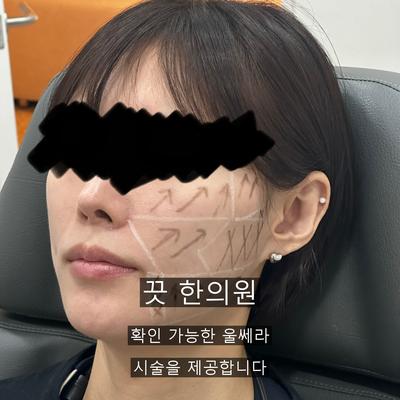
The perfection of Ultherapy treatment is created through meticulous processes. When deciding which clinic to choose, it is important to carefully examine the medical team's expertise and treatment philosophy.
Related notes
Procedure notes worth reading next.


Loading menu…