

Why are at-home male hair removal devices weak on beards? A comparison with medical laser hair removal Beomgye, Pyeongchon, Beomgye Station, Pyeongchon Station, Hogye-dong, Bisan-dong, Gwanyang-dong, Dongan-gu, Indeogwon, Geumjeong, Anyang
9/11/2026
This is a procedure note for Why are at-home male hair removal devices weak on beards? A comparison with medical laser hair removal at Gyeonggi Anyang Beomgye KKEUT Korean Clinic.
Many men looking for a home hair removal device often consider beard removal as their primary goal.
However, actual user reviews frequently indicate that the beard removal effect is often less satisfactory compared to hair removal on limbs or other body parts.
There are several reasons why these devices often show particularly disappointing results for beard removal.
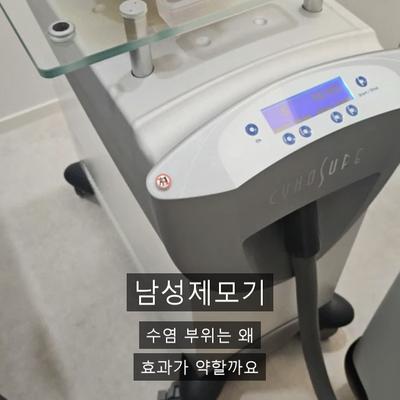
Most home hair removal devices utilize the IPL (Intense Pulsed Light) method.
This method involves irradiating a wide range of light wavelengths simultaneously to stimulate multiple hair follicles.
For safety reasons during home use, the output is limited, and the energy density is designed to be lower compared to devices used in medical institutions.
In contrast, lasers concentrate energy of a specific wavelength on a single point. Therefore, there is a difference in melanin absorption efficiency even within the same area.
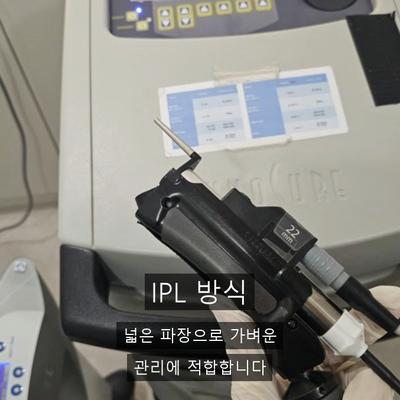
Beard hair is thicker and denser than hair on the limbs, and hair follicles are also characteristically located deep within the dermis.
With low-power light sources, it is difficult to deliver the necessary thermal energy to deeply embedded hair roots.
While skin surface temperature may rise somewhat, it is common that not enough energy is delivered to effectively damage the hair roots.
Rather than home male hair removal devices simply having low output, they are more akin to devices designed for an entirely different purpose.
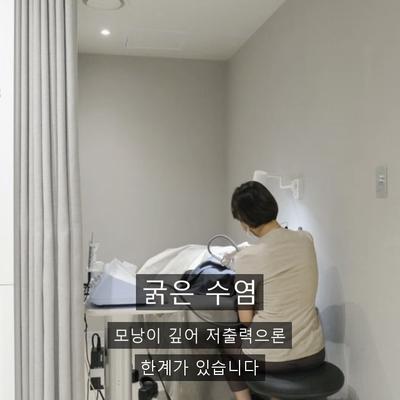
The face, in particular, is more sensitive than other body parts, so manufacturers of home devices tend to prioritize safety by setting the output even lower.
In conclusion, while home devices can offer some effectiveness for areas like the underarms or calves, they may have clear limitations for thick, deeply embedded hair like beards.
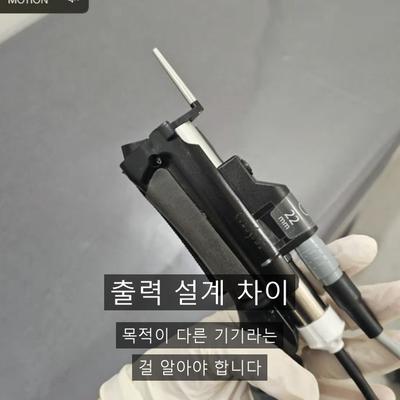
Medical laser hair removal approaches these points in an entirely different way.
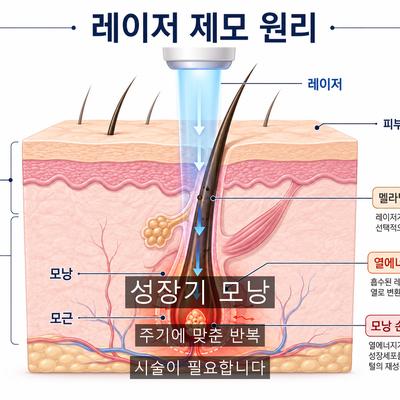
Using a single-wavelength laser from the Alexandrite family, energy can be selectively concentrated on melanin pigment.
The principle is to precisely deliver thermal energy to the hair roots and follicles involved in hair growth, thereby weakening or damaging their function.
The face has a variety of hair, from fine vellus hair to thick beard hair, making it an area that requires precise energy adjustment for each specific part.
Hair removal treatment time varies depending on the area to be treated. Larger, denser areas like the beard may require relatively more time.
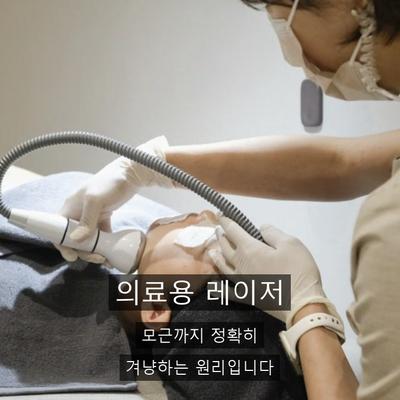
Lasers have the characteristic of effectively acting on hair follicles that are in the anagen (growth) phase of hair.
Therefore, it is important to perform repeated treatments in accordance with the cycle in which dormant hairs transition into the growth phase.
Beard growth cycles vary by area, so cumulative treatments of usually 10 sessions or more, and sometimes over 20 sessions extending beyond a year, may be considered.
Generally, treatment cycles are set at intervals of 3 to 4 weeks.
This approach considers both the skin's exfoliation regeneration cycle and the time it takes for new anagen hairs to appear.
Unlike temporary hair removal methods such as waxing, lasers damage the hair follicle itself, allowing for semi-permanent results.
However, it is important to understand that complete, permanent hair removal where all hair follicles disappear is realistically difficult.
Even after completing the sufficient number of sessions, undergoing maintenance treatments every 2-3 months can help maintain a neat appearance for a relatively long time.
Anesthetic cream helps reduce pain on the skin surface, but its numbing effect does not reach deeply embedded hair roots.
Pain during treatment may feel similar to when an ice cooler is applied, and as the number of treatments increases and hair volume decreases, discomfort also tends to lessen.
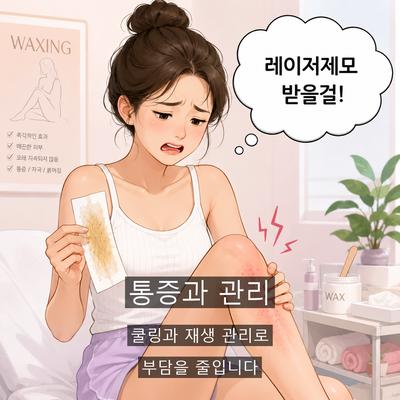
After treatment, as thermal energy is directly delivered to the hair follicles, there is a possibility of temporary folliculitis.
Using a regenerative cream can help it naturally alleviate over time.
It is better to shave from the day after the treatment rather than on the day of treatment, and it is advisable to refrain from plucking hair during the treatment period as it can damage hair roots and hinder the hair removal effect.
In conclusion, the perceived inadequacy of home male hair removal devices for beard areas is not due to a lack of device performance, but rather because their original purpose and output design are different.
Home devices prioritize safety and are suitable for managing lighter hair areas, whereas medical lasers are designed to selectively act on the roots of thick, deep hair.
For thick hair like beards, undergoing treatment with medical-grade equipment from the start can be a more efficient use of time and effort.
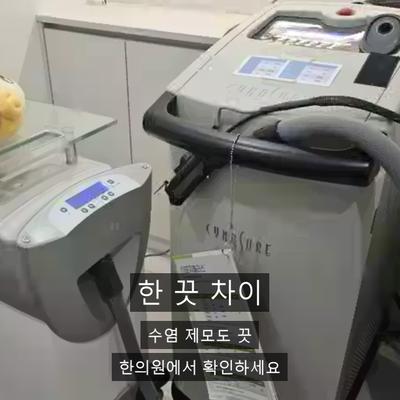
In medical institutions, high-performance devices like Apogee or GentleMax are used to perform treatments with precise adjustments even for thick areas like beards.
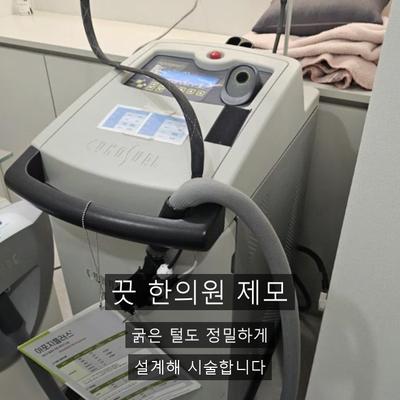
Before treatment, the hair's thickness and density are carefully checked, and the energy intensity and pulse width are adjusted accordingly for each area, ensuring a customized approach.
Frequently Asked Questions
Q. Is beard removal completely impossible with home male hair removal devices?
A. It's not entirely impossible, but these devices are designed with low output, so it can take a long time to see results on thick, deep hair like beards. Medical institutions offer methods to improve this through medical laser treatments that directly target hair roots.
Q. How many sessions are typically required for medical laser hair removal?
A. The number of treatment sessions varies by area, but generally, 10 or more sessions are recommended. For the beard area in particular, 20 or more sessions may be needed, taking a total of about one year. At Kkeut Korean Medicine Clinic, we carefully assess each individual's hair thickness and density before treatment, and then explain a detailed treatment plan tailored to your needs.
Q. Is it possible to have the treatment without anesthesia?
A. Anesthetic cream only temporarily reduces pain on the skin's surface, so it is not an essential part of the treatment. Kkeut Korean Medicine Clinic uses high-performance equipment with a cooling system to minimize discomfort during treatment.
Q. If I've used a hair removal device at home, should I still get treatment at a medical facility for those areas?
A. For areas where you've already achieved satisfactory results, such as underarms or limbs, continuous maintenance may be sufficient. However, for thick and strong hair like beards, treatment with professional medical equipment from the beginning may be more effective.
A Message from Kkeut Korean Medicine Clinic
When treating thick hair, Kkeut Korean Medicine Clinic uses long pulses to gently deliver thermal energy to the skin. This method helps protect the epidermis while effectively targeting the desired area.
For dense and thick hair like beards, Kkeut Korean Medicine Clinic precisely adjusts the energy density according to each individual's condition. This customized approach contributes to increasing the efficiency of the treatment.
At Kkeut Korean Medicine Clinic, we ensure that energy is evenly distributed to densely haired areas. Even after treatment, we carefully monitor the process until the client can confirm the final results, considering both safety and the expected effects of the treatment.
The subtle difference that creates exceptional results. You can experience it at Kkeut Korean Medicine Clinic.
Related notes
Procedure notes worth reading next.


Loading menu…