

Bikini Hair Removal, Optimized laser settings for sensitive areas Beomgye, Pyeongchon, Beomgye Station, Pyeongchon Station, Hogye-dong, Bisan-dong, Gwanyang-dong, Dongan-gu, Indeogwon, Geumjeong, Anyang
7/5/2026
This is a procedure note for Bikini Hair Removal, Optimized laser settings for sensitive areas at Gyeonggi Anyang Beomgye KKEUT Korean Clinic.
The bikini line is a sensitive area for exposure, making self-care difficult, and waxing repeatedly causes pain and irritation.
For those considering laser hair removal for the bikini area, pain and safety are the first things they ask about.
This area has thin, sensitive skin and thick hair, so it should not be approached with the same settings as the face or arms.
For bikini hair removal, laser settings tailored to the area's characteristics determine both results and comfort.
Let's start by outlining the principles, number of sessions, and recommended intervals.
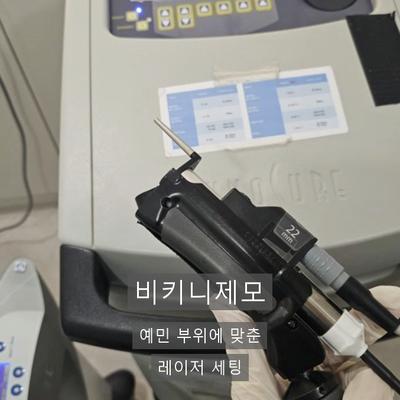
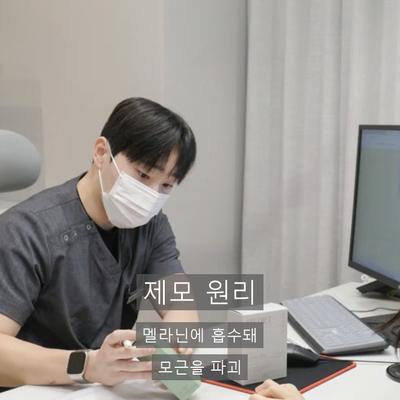
How Laser Hair Removal Works
Laser hair removal works by selectively absorbing energy into the dark melanin pigment in the hair, converting it into heat, which then destroys the hair roots and follicles.
This heat acts on the roots that grow hair, making it fundamentally different from methods like shaving or waxing, which only remove hair from the surface.
Lasers only effectively target hair follicles in the growth phase, and since this phase varies for each hair, it's difficult to remove all hair in one go.
This is why repeated treatments are necessary, timed with the cycle of resting hairs entering the growth phase.
Sessions and intervals create results
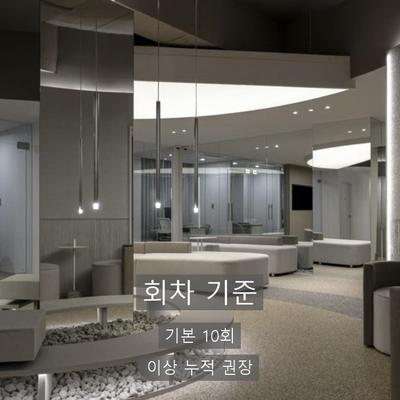
For bikini hair removal, a minimum of 10 sessions is generally recommended for any area, and the number of sessions may increase depending on hair thickness and density.
Since it's an area with thick and dense hair, targeting the growing hair multiple times is necessary for a stable reduction.
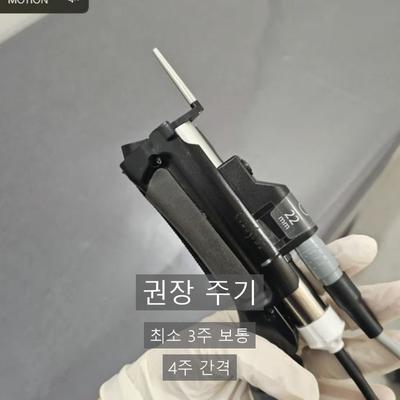
The recommended interval is a minimum of 3 weeks, usually set at 4-week intervals.
Maintaining the skin's exfoliation and regeneration cycle, and allowing time for new growing hairs to emerge, ensures efficiency.
If the interval is too short, energy will be wasted on hairs that are not in the growth phase.
While exceptionally thick areas like men's beards can take over twenty sessions, the bikini line is usually planned based on about ten sessions.
Initially, hair significantly decreases, and as treatments progress, the focus shifts to clearing remaining fine hairs.
Settings are crucial for sensitive areas
The bikini line has thin skin and dense, thick hair, so incorrect settings increase the risk of pain and burns.
Applying strong energy with short pulses to thick hair can irritate the epidermis, so heat is delivered gently with long pulses to protect the epidermis.
For densely haired areas, energy is dispersed during treatment to prevent overheating.
For individuals with darker skin tones, the output power is precisely lowered to prevent side effects caused by skin melanin, ensuring safety.
For fine hairs with less pigment, the energy needs to be increased or repeatedly applied to deliver heat to the hair root for effectiveness.
What about pain and recovery?
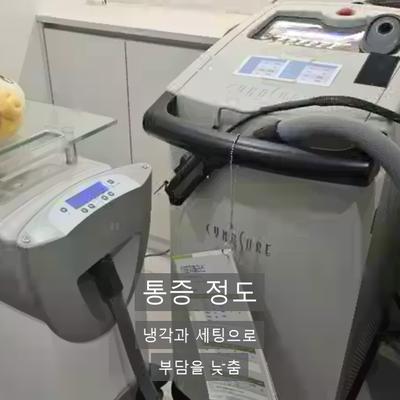
Actual pain is similar to the sensation of having an ice cooler applied during treatment, and it significantly decreases as sessions progress and hair reduces.
Anesthetic cream primarily acts on the surface and does not anesthetize the hair root; it's generally used for psychological comfort.
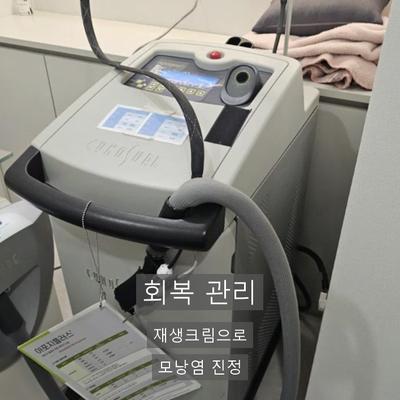
After the procedure, heat is delivered to the hair follicles, which may temporarily cause redness or reactions like folliculitis, but these subside with proper application of regenerative cream.
Using equipment with an excellent cooling system significantly reduces pain in sensitive areas.
Apogee constantly sprays strong cool air to maintain cooling before and after irradiation, while GentleMax and Clarity cool by spraying cooling gas.
On the day of the procedure, avoid hot water, saunas, and strenuous exercise; focus on moisturizing and sun protection for smooth recovery.

Frequently Asked Questions
Q. How many bikini hair removal sessions are needed?
A. For bikini hair removal, a minimum of 10 sessions is recommended. Since it's an area with thick and dense hair, targeting growing hair multiple times is necessary for even reduction.
Q. What is the recommended interval for bikini hair removal treatments?
A. For bikini hair removal, a minimum of 3 weeks, usually 4 weeks, is recommended. Maintaining the skin's exfoliation and regeneration cycle and allowing time for new growing hairs to emerge ensures efficiency.
Q. Is bikini hair removal very painful?
A. Bikini hair removal is performed on a sensitive area, so irritation may be felt, but cooling and setting adjustments reduce discomfort. As sessions accumulate and hair reduces, pain also decreases.
Kkeut Korean Medicine Clinic's Bikini Hair Removal Design
Kkeut Korean Medicine Clinic gently delivers heat with long pulses for thick hair and precisely adjusts energy density for each area to protect sensitive skin.
Kkeut Oriental Medicine Clinic designs different dispersion and output settings to match dense hair areas and dark skin tones, ensuring both safety and effectiveness.
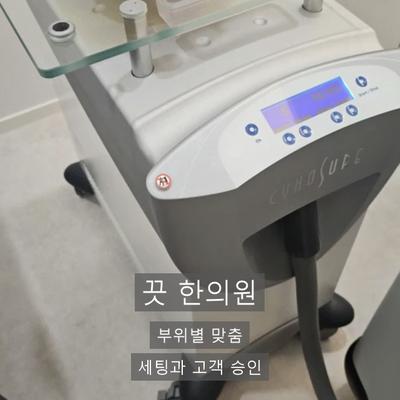
At Kkeut Oriental Medicine Clinic, we adhere to a system where we reconfirm areas of concern before completing the procedure, and only finalize it after client approval.
Kkeut Oriental Medicine Clinic's Sincerity
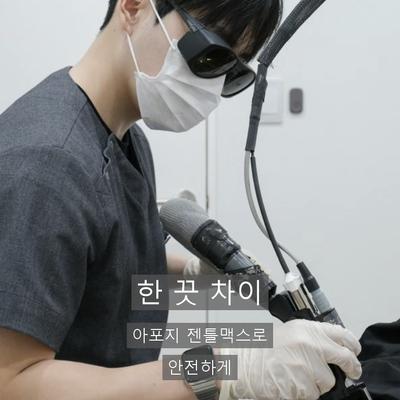
Kkeut Oriental Medicine Clinic uses verified premium devices like Apogee and GentleMax to reduce pain and provide stable results.
Kkeut Oriental Medicine Clinic safely manages even sensitive bikini lines through customized settings for each area.
Kkeut Oriental Medicine Clinic completes treatments without missing any areas, thanks to a responsible system that finalizes after client approval.
Different results with a subtle difference Experience it at Kkeut Oriental Medicine Clinic.
Related notes
Procedure notes worth reading next.


Loading menu…