

Facial Hair Removal: Why Isn't It Completed in One Session? (Understanding Treatment Sessions) Beomgye, Pyeongchon, Beomgye Station, Pyeongchon Station, Hogye-dong, Bisan-dong, Gwanyang-dong, Dongan-gu, Indeogwon, Geumjeong, Anyang
9/6/2026
This is a procedure note for Facial Hair Removal: Why Isn't It Completed in One Session? (Understanding Treatment Sessions) at Gyeonggi Anyang Beomgye KKEUT Korean Clinic.
Many people expect all facial hair to disappear after just one hair removal session.
However, during actual treatment, they experience that a single session is often not enough to achieve satisfactory results.
This can be explained by the unique growth cycle of facial hair follicles.
It is also why the issue of the number of treatment sessions is more frequently mentioned for facial hair removal compared to other body areas.
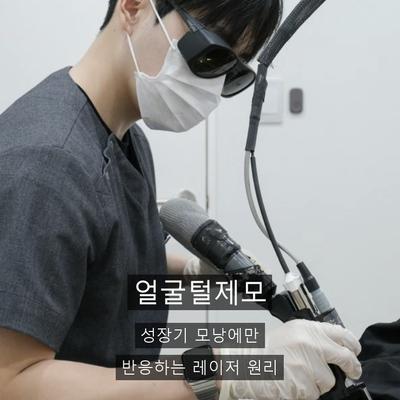
Hair grows through a repeating cycle of three phases: the anagen (growth) phase, the catagen (transition) phase, and the telogen (resting) phase.
Laser energy most effectively targets hair follicles in the anagen (growth) phase, which are rich in melanin pigment.
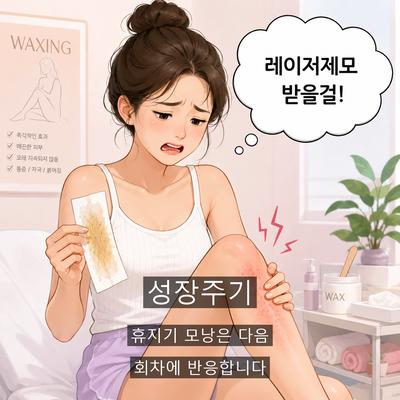
Follicles in the telogen (resting) phase are not affected by current treatments and can only become a target for the laser once they transition into the anagen (growth) phase.
Since not all hair follicles across the entire face are in the anagen (growth) phase at the same time, it is structurally difficult to remove all follicles in a single session.
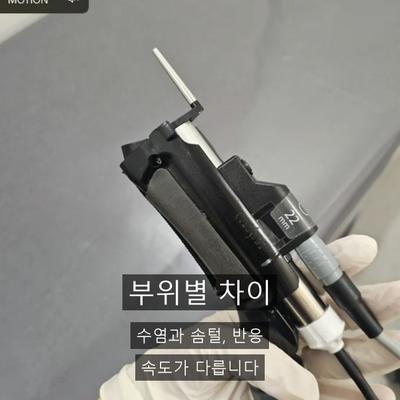
The face is one of the body areas where hair thickness and density vary significantly by region.
Thicker, darker beard-like hair typically grows around the philtrum and chin, while finer, lighter vellus hair is mixed in on the cheeks and forehead.
Thick hair, with its high melanin content, responds well to laser treatment, but fine, light hair has less pigment, making it difficult to achieve a response in a single session.
Due to this diverse hair composition, facial hair removal may show varying response rates depending on the specific area being treated.
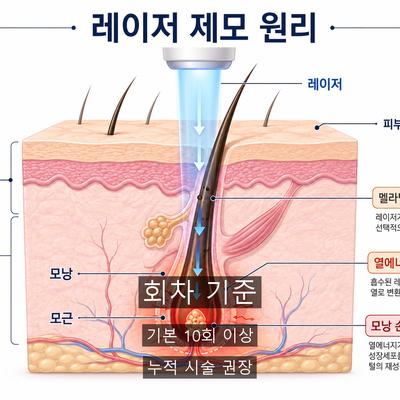
Generally, for facial hair removal, regardless of the area, a minimum of 10 or more sessions are recommended.
Areas with thick, dense hair, like a man's beard, may require more than 20 sessions and approximately a year or more of treatment.
Instead of treating the entire face at once, a staged approach considering the hair condition of each specific area is necessary.
During the treatment period, heat delivered to the hair follicles can sometimes cause folliculitis. In such cases, it is best to apply a soothing cream and wait for recovery.
During this period, plucking hair must be avoided. If the hair root is removed, the effectiveness of subsequent treatment sessions may decrease.
It is recommended to shave from the day after treatment rather than on the day of treatment itself. Since the hair may be somewhat softened, it might not shave as cleanly as usual.
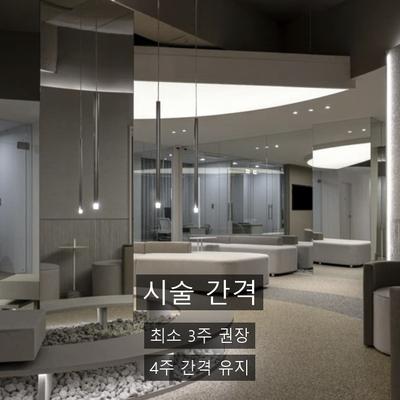
The interval between treatment sessions also plays a crucial role in the outcome of facial hair removal.
Considering the skin cell regeneration cycle and the emergence of new anagen (growth) phase hair, an interval of a minimum of 3 weeks, and ideally 4 weeks, is appropriate.
If the interval is too short, laser energy will be wasted on follicles still in the telogen (resting) phase, and if it's too long, the efficiency of the treatment may decrease.
The larger the treatment area, the longer the laser application time, so treating the entire face may take more time than partial hair removal.
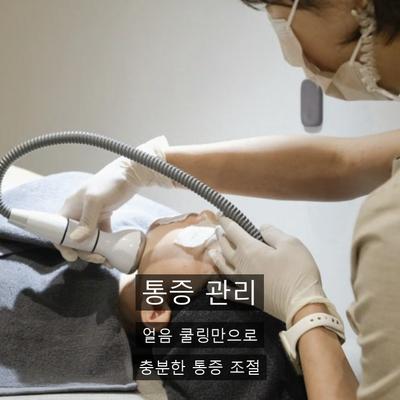
Some people believe they will find it difficult to tolerate the pain without anesthetic cream.
However, anesthetic ingredients only act on the skin's surface, and it is difficult for the anesthetic effect to reach the deeper skin layers where hair roots are located.
The actual pain is similar to the sensation of having an ice cooler applied, and the perceived pain tends to decrease as the number of treatment sessions increases and hair diminishes.
For about 1-2 days after treatment, avoiding activities that can generate heat on the face, such as saunas or strenuous exercise, can aid recovery.
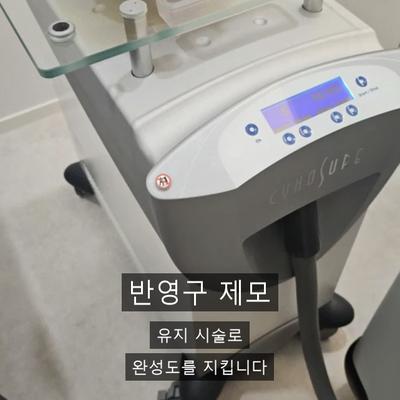
It is often compared to waxing. Waxing only removes surface hair while leaving the hair root intact, so its effects are temporary.
Facial hair removal delivers thermal energy directly to the hair follicle itself to impair its function, thus offering more lasting results than waxing.
However, the concept of completely permanent hair removal does not medically exist.
Even after completing all scheduled treatment sessions, some follicles may reactivate, so receiving maintenance treatments every 2-3 months can help prolong the effect.
Facial hair removal requires completing the necessary number of treatment sessions to achieve satisfactory results.
Our medical institution incorporates precise planning, considering hair thickness and pigment concentration for each individual treatment session.
Strictly adhering to these standards versus not doing so can lead to a clear difference in treatment outcomes.
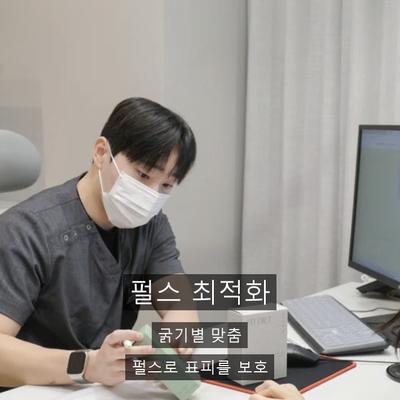
For thick, dark hair with high melanin content, administering short pulses can cause rapid energy absorption, increasing the risk of epidermal damage.
Our medical institution uses long pulses to deliver heat gradually, thereby protecting the epidermis and effectively reaching the hair root with energy.
Delicately adjusting the pulse duration according to the treatment area and hair condition is directly linked to safe and effective results.
Energy density control is also performed according to our medical institution's meticulous standards.
For thick, dark hair, we design high energy density to allow sufficient heat accumulation in the thick hair structure. For fine, light hair, we increase the energy or use repeated pulses to ensure heat reaches the hair root.
In areas with dense hair, energy is efficiently dispersed to prevent the risk of burns from excessive heat, and for darker skin tones, the output is precisely adjusted to prevent melanin-related side effects.
Precise Output Design at Our Medical Institution
Before concluding the procedure, our clinic meticulously checks if any additional refinement is needed in specific areas.
We only conclude the procedure after confirming that the patient is fully satisfied with the results. For areas of particular concern, we meticulously adjust and apply laser energy.
We are also meticulous in our selection of equipment.
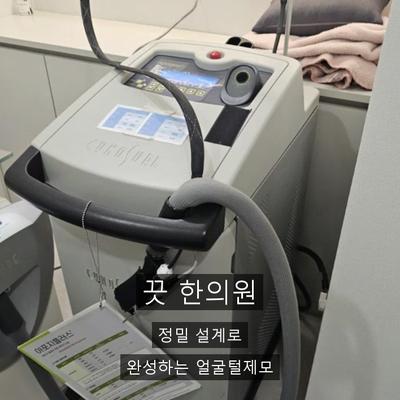
We utilize equipment with proven performance and safety, such as Apogee, which provides continuous air cooling before and after treatment, and GentleMax, which uses a powerful gas cooling method.
These differences in cooling methods are related to the comfort you can experience during the procedure.
We believe that the effort we put into every small detail contributes to making a difference in the procedure's results.
Facial Hair Removal: Ggeut Korean Medicine Clinic's Meticulous Approach
Questions You May Have
Q. How many sessions of facial hair removal are typically needed to see improvement?
A. While facial hair removal may vary by area, we generally recommend 10 or more sessions. We will observe the changes in your skin and hair together during each session.
Q. What is the recommended interval between facial hair removal sessions?
A. Facial hair removal sessions are typically performed at a minimum of 3-week intervals, usually 4-week intervals. We adjust the treatment cycle considering your individual skin condition.
Q. Is it mandatory to use anesthetic cream during facial hair removal?
A. Anesthetic cream helps reduce discomfort on the skin surface but is not mandatory. We utilize a cooling system to minimize pain while performing facial hair removal procedures.
Q. How should I care for my skin after facial hair removal?
A. We recommend shaving from the day after the procedure rather than on the day of the procedure. Avoiding plucking hair can help maintain the treatment results.
Our Approach at Ggeut Korean Medicine Clinic
At Ggeut Korean Medicine Clinic, we adjust the laser pulse and energy density according to the hair's thickness and color concentration. Through this, we strive to achieve more appropriate results.
The procedure is only concluded after we have heard the patient's final opinion. We respect our patients' opinions and aim for a satisfying completion of the procedure.
Ggeut Korean Medicine Clinic strives to perform safe and efficient procedures using verified equipment such as Apogee and GentleMax.
The results created by meticulous differences, you can experience them at Ggeut Korean Medicine Clinic.
Related notes
Procedure notes worth reading next.


Loading menu…