



Men's Leg Hair Removal Devices: Why Are At-Home Methods Limited? The Effective Difference of Professional Hair Removal at a Clinic Beomgye, Pyeongchon, Beomgye Station, Pyeongchon Station, Hogye-dong, Bisan-dong, Gwanyang-dong, Dongan-gu, Indeogwon, Geumjeong, Anyang
9/29/2026
This is a procedure note for Men's Leg Hair Removal Devices: Why Are At-Home Methods Limited? The Effective Difference of Professional Hair Removal at a Clinic at Beomgye(Opening Soon) KKEUT Korean Clinic.
When men look into methods for leg hair removal, there are common concerns they often experience.
Thick, dark leg hair that quickly regrows after shaving, and skin troubles caused by frequent shaving, are among the main concerns.
They often wonder if home hair removal devices can be effective, or what the differences are compared to hair removal treatments at a medical institution.
There are differences between home hair removal devices and medical laser hair removal treatments, primarily in their intended use and energy output.
Here, we have summarized the characteristics of men's leg hair and the differences in hair removal methods.
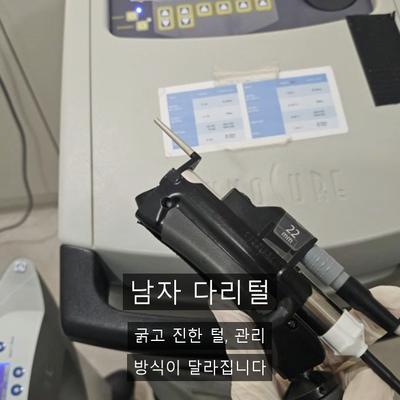
Why should men's leg hair be specially considered?
Thick, dark hair is rich in melanin pigment, a characteristic that allows it to absorb laser energy well.
If energy is concentrated excessively over a short period, there is a risk of irritation or damage to the surrounding skin epidermis.
Therefore, for thick hair, a method using long pulses can be applied to deliver thermal energy more gently.
For areas with dense hair, energy can be delivered in multiple passes to prevent potential skin damage from overheating.
Conversely, fine, light-colored hair has less melanin, which may result in a weaker laser response. Therefore, energy is adjusted or delivered in multiple passes to ensure sufficient heat reaches the hair follicles.
Even within a single leg, hair thickness and density can vary by area, making it difficult to achieve overall satisfactory results with a single laser setting.
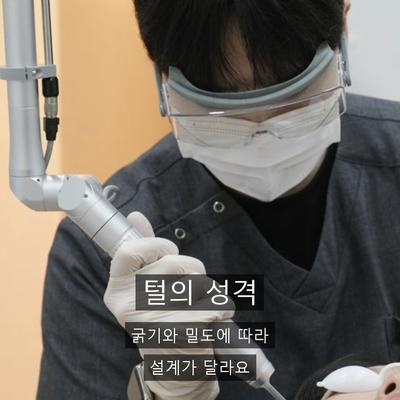
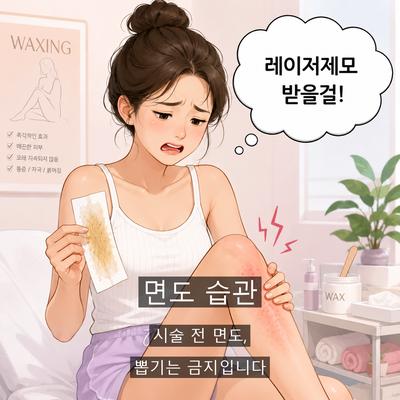
Shaving and Plucking, Habits to Avoid During Hair Removal
It is advisable to shave the treatment area beforehand when coming in for laser hair removal.
This is because if hair remains long, laser energy can be absorbed by the skin surface first, increasing the risk of burns, and potentially preventing sufficient energy from reaching the target hair follicles.
On the other hand, using tweezers or waxing to pull out hair is best avoided during the treatment period.
This is because the hair follicle, which is the target of the laser, may be removed, reducing the effectiveness of the treatment.
If you wish to shave after the treatment, we recommend waiting until the next day, after your skin has had sufficient time to calm down.
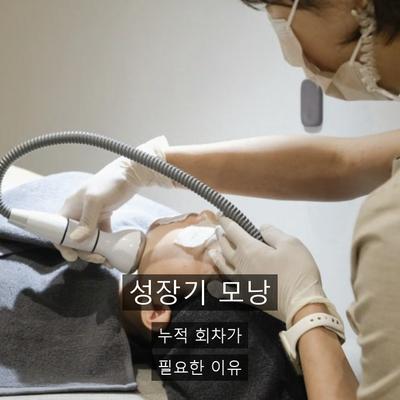
Why Multiple Laser Hair Removal Sessions Are Necessary
Laser hair removal is most effective on hair follicles in the active growth phase, which are rich in melanin pigment.
Since not all hair on our body is in the growth phase simultaneously, multiple repeated treatments are necessary to effectively deliver energy to all hair follicles.
Generally, for any area, a minimum of 10 or more sessions may be recommended, with treatment intervals typically advised to be every 3 to 4 weeks.
Rather than permanent hair removal, semi-permanent management that suppresses hair growth is important. Even after achieving satisfactory hair removal results, maintenance treatments can be considered approximately once every 2-3 months.
Home hair removal devices and medical hair removal differ in purpose and equipment output
Home hair removal devices can be described as tools designed for individuals to conveniently manage hair at home.
Hair removal treatments at medical institutions are performed by medical professionals who meticulously assess hair thickness, density, and the patient's skin tone, then custom-configure the appropriate laser pulse duration and energy density for each specific area.
This individualized treatment design process can be considered the most significant difference between the two hair removal methods.
Furthermore, when performing hair removal alone, areas out of sight, such as the back of the calves, can easily be missed, which is another factor to consider.

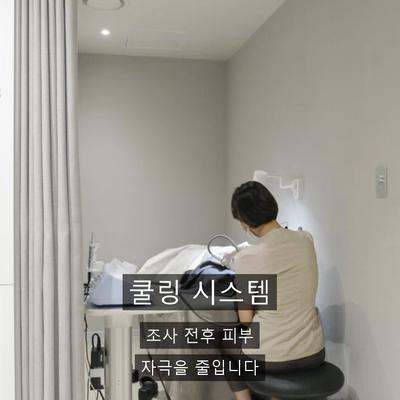
Most laser devices used in medical institutions are fundamentally equipped with cooling systems for skin protection.
For example, Apogee continuously sprays cool air before and after treatment to reduce skin irritation, while devices like GentleMax and Clarity also utilize DCD (Dynamic Cooling Device) gas cooling systems.
The pain felt during treatment varies among individuals but is usually comparable to the sensation experienced during ice packing. As the number of sessions increases and hair quantity decreases, the pain may gradually lessen.
Due to the large surface area of the legs, treatment time can be relatively longer. Additionally, folliculitis may occasionally occur during the process of delivering thermal energy to the hair follicles; in such cases, regenerative creams can be used for management.
Approach to Planning Hair Removal Treatment at a Medical Institution
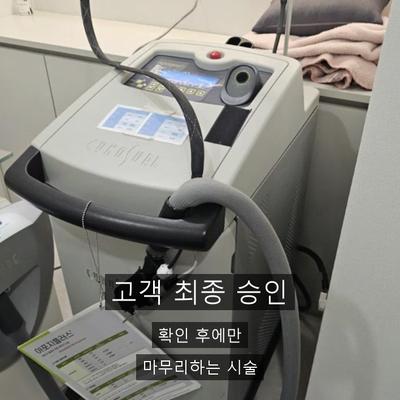
Before concluding the treatment, we double-check for any missed areas and finalize the procedure with the patient's ultimate consent.
For areas of particular concern, laser energy can be focused and delivered with greater precision.
For thick hair, long pulses are used; for densely populated areas, energy is divided and delivered; and for darker skin tones, the output is adjusted with greater precision for the treatment.
We strive to minimize pain and achieve satisfactory hair removal results by using equipment with proven safety, such as Apogee and GentleMax.

Frequently Asked Questions
Q. Even if I manage male leg hair with a home hair removal device, is medical institution treatment still necessary?
A. Home hair removal devices focus on self-management at home, while medical institution hair removal is a treatment that directly targets hair follicles and is conducted with customized designs considering the characteristics of each area; thus, there are differences in their purpose and role.
Q. If I've been using a home hair removal device, is it okay to pluck hairs before the procedure?
A. Even if you've been using a self-hair removal method, plucking hairs is not recommended. Before the procedure, please only shave and then visit us.
Q. If I choose hospital treatments instead of a home hair removal device, how many sessions are usually needed?
A. If you choose hospital hair removal instead of a home hair removal device, we generally recommend 10 or more sessions. The exact number of sessions needed can vary depending on individual hair growth and density, so it's best to consult with a specialist.
The Treatment Philosophy of Kkeut Korean Medicine Clinic
At Kkeut Korean Medicine Clinic, we operate on a system where procedures are concluded only after the patient's final confirmation. Through this, we aim to provide a treatment experience built on trust.
Kkeut Korean Medicine Clinic meticulously diagnoses and analyzes each individual's areas of concern, focusing on helping patients achieve satisfactory results.
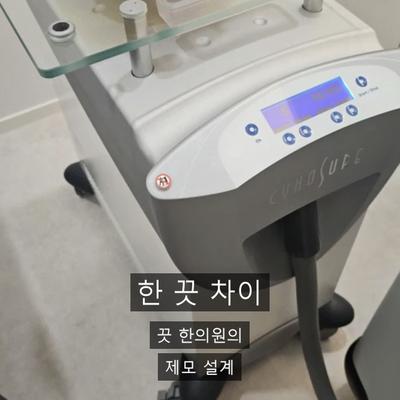
Kkeut Korean Medicine Clinic carefully sets appropriate pulse and energy densities. This is to balance both the safety of the procedure and its expected effects.
The difference made by meticulous care. Based on this dedication, Kkeut Korean Medicine Clinic serves its patients.
Loading menu…