

Leg Scar Removal: Why It's Often Challenging in a Single Session, and How Juvlook Works Beomgye, Pyeongchon, Beomgye Station, Pyeongchon Station, Hogye-dong, Bisan-dong, Gwanyang-dong, Dongan-gu, Indeogwon, Geumjeong, Anyang
This is Gyeonggi Anyang Beomgye KKEUT Korean Clinic's procedure note on Leg Scar Removal: Why It's Often Challenging in a Single Session, and How Juvlook Works.
Many people wonder why leg scars tend to last longer than facial scars.
The skin on the legs has a thicker dermis and relatively slower blood circulation compared to facial skin.
Repetitive movements and skin tension from walking can affect the wound healing process.
Especially in areas close to bone, such as the knees or shins, the skin is thinner and lacks a fat layer, which can make scars more noticeable.
When walking or sitting, the skin on the legs is constantly stretched and pulled, which can continuously stimulate the injured area.
This continuous stimulation increases the likelihood of scar tissue forming thicker than the surrounding normal skin.
Given the characteristics of leg skin, scars are difficult to lighten through natural healing alone.
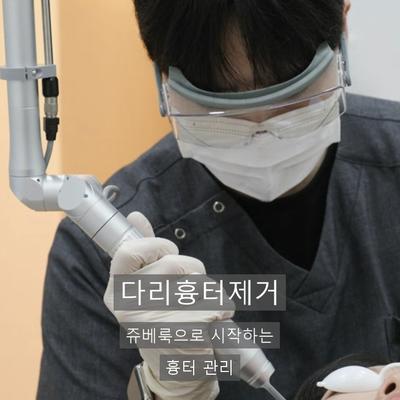
The treatment method for leg scars varies depending on their type.
They can generally be classified into atrophic (indented), hypertrophic (red and raised), and pigmented scars.
Unlike acne scars, leg scars can result from various causes such as trauma, surgery, or burns.
Understanding the exact type of scar is crucial for determining the appropriate treatment direction.
Atrophic scars involve a loss of dermal tissue, making it difficult to sufficiently fill them with surface skin care alone.
Typical scar ointments or creams primarily work near the stratum corneum, and it is difficult for active ingredients to reach the dermis.
If the medication is not properly delivered deep into the dermis, it may be difficult to achieve sufficient collagen regeneration.
This is also one of the reasons why the improvement of leg scars feels slower than that of facial scars.
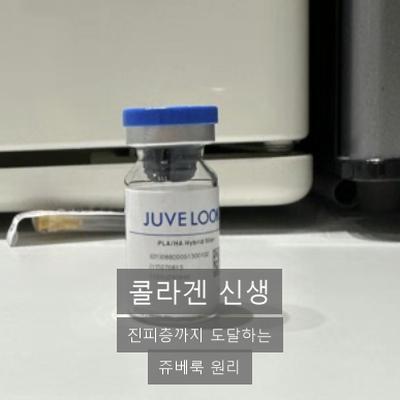
While laser resurfacing alone can lighten surface pigmentation, it is often difficult to sufficiently fill the indented area itself.
Therefore, an approach that encourages the skin to produce collagen on its own is also necessary.
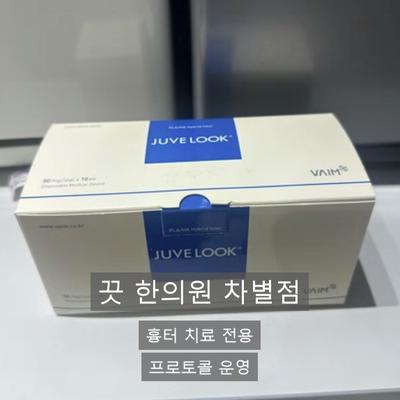
Juvelook treatment involves delivering polylactic acid and hyaluronic acid components into the dermal layer of the skin to help stimulate collagen production.
The principle of this treatment is to induce the skin to produce collagen itself, rather than filling the scar with external substances.
Hyaluronic acid adds some volume in the early stages of treatment, while the polylactic acid component gradually breaks down, consistently promoting collagen production.
Thanks to its collagen-boosting effect, it is an ingredient widely used in scar management.
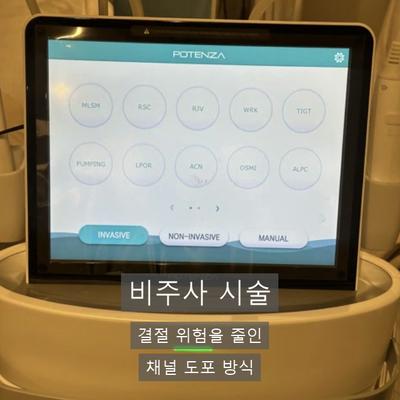
The improvement of leg scars is generally difficult to complete with just one treatment.
It typically involves several sessions depending on the depth and size of the scar, and treatment schedules are usually set considering the collagen remodeling cycle.
As the number of treatments increases, you can expect the scar's borders to gradually soften and the skin texture to improve to some extent.
If the goal is scar improvement rather than pore or fine wrinkle improvement, a consultation for an accurate diagnosis of the individual's scar condition must precede.
When improving scars, it is better to set realistic goals such as softening the scar's contours and evening out the skin texture, rather than expecting them to disappear completely.
As we age, the skin's collagen production ability declines, so older scars may take longer to heal.
In such cases, treatments that directly induce collagen synthesis can bring about more significant changes than natural healing processes.
This treatment principle can be applied not only to facial scars but also to scars on various body parts such as legs and arms.
If you are considering scar improvement, a consultation for an accurate diagnosis of the scar type and current condition is necessary first.
Since skin thickness and scar characteristics differ by body area, a uniform approach may lead to varying treatment results.
If the scarred area is large or scattered in multiple locations, it is advisable to create a detailed treatment plan accordingly.
In such cases, establishing priorities for each area during the initial consultation becomes even more crucial.
At Kkeut Oriental Medicine Clinic, when consulting for leg scars, we first thoroughly assess the scar's type before developing a treatment plan.
Even in areas with varying skin thickness and scar depth, like the legs, Kkeut Oriental Medicine Clinic applies customized settings tailored to the characteristics of each area.
Kkeut Oriental Medicine Clinic thoroughly discusses the treatment priorities for each area with the patient to jointly adjust the treatment plan.
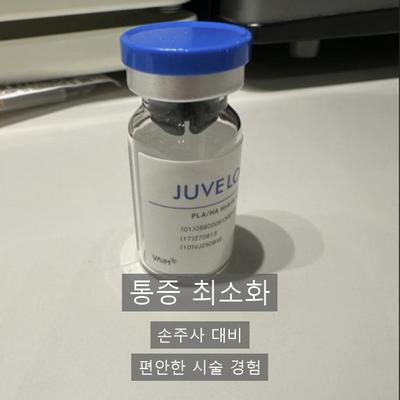
At Kkeut Oriental Medicine Clinic, we use a different method for Juvelook treatment instead of the typical injection method.
This is because manual injections carry the risk of nodule formation, and it can be difficult to ascertain whether the medication has accurately reached the dermis.
Considering these limitations, Kkeut Oriental Medicine Clinic applies a different treatment method instead of manual injections.
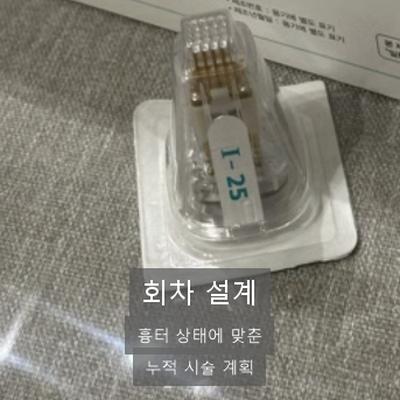
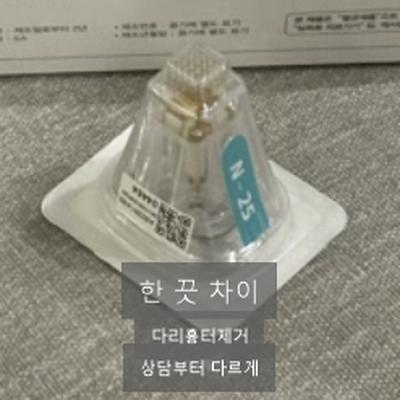
At Kkeut Oriental Medicine Clinic, we utilize a method where micro-channels are created in the skin using a pumping tip or Needle RF device, after which the medication is applied to the targeted area.
This method helps the medication evenly reach the dermis, the deeper layer of the skin.
It is designed to ensure the medication spreads well, especially in areas with thicker skin tissue, such as the legs.
The channel application method used here can help reduce pain during the procedure.
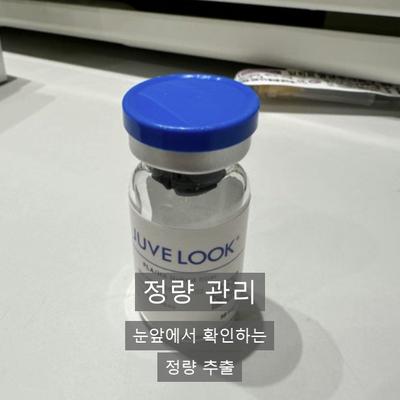
Before the procedure, we will show you the precise amount of medication to be used, directly in front of you.
The procedure is performed without creating direct wounds on the skin surface, which reduces the burden of special additional post-treatment care.
Since only simple UV protection is needed, there is no significant difficulty in returning to daily life after the procedure.
At our clinic, we adhere to these same principles during the execution of this procedure.
We consistently document the changes after the procedure with photos, allowing us to compare with the previous state and monitor progress during your next visit.
Frequently Asked Questions
Q. How many sessions are needed for leg scar removal?
A. The number of treatment sessions may vary depending on the depth and size of the leg scar. Generally, it involves several sessions, and a detailed, personalized plan will be provided to you through consultation.
Q. Is leg scar removal painful?
A. Leg scar treatment using Juvelook may involve less pain compared to conventional hand injection methods. This is because the medication is applied after creating channels in advance, which reduces skin irritation.
Q. Can old leg scars also be removed?
A. Old leg scars can also be considered for treatment. However, it is crucial to accurately diagnose the shape and depth of the scar before determining the appropriate number of sessions and method for the patient.
Q. When can I expect to see results from leg scar removal?
A. The results of leg scar treatment can vary among individuals, with gradual changes typically expected over several weeks to months. A certain amount of time is required as it involves collagen production within the skin.
Q. Is special care required after leg scar removal?
A. Since this procedure does not create direct wounds on the skin surface, the burden of additional post-treatment care is minimal. However, it is recommended to consistently apply UV protection to the treated area.
The Sincerity of Kkeut Clinic
Our focus here is on reducing the risk of nodule formation through procedures that do not involve injections. This is our philosophy to help patients receive treatment more comfortably.
At our clinic, we first create tiny channels in the skin before applying the medication. This expertise ensures the medication is evenly absorbed into the dermal layer, which can help increase satisfaction with the treatment results.
The procedure is conducted transparently, by directly showing patients the precise amount of medication to be used. This focuses on ensuring the stability of the procedure and achieving positive outcomes.
Changes that come from a delicate approach. Why not consider a consultation at Kkeut Clinic?
Related notes
Procedure notes worth reading next.


Loading menu…