

Bikini Hair Removal: Why You Should Stick to the Pres Prescribed Number of Sessions and Cycle Beomgye, Pyeongchon, Beomgye Station, Pyeongchon Station, Hogye-dong, Bisan-dong, Gwanyang-dong, Dongan-gu, Indeogwon, Geumjeong, Anyang
9/7/2026
This is a procedure note for Bikini Hair Removal: Why You Should Stick to the Pres Prescribed Number of Sessions and Cycle at Gyeonggi Anyang Beomgye KKEUT Korean Clinic.
When planning bikini hair removal, important considerations include adjusting the number of sessions and their intervals.
Hair follicles enter the growth phase at different times, so if a consistent treatment cycle is not maintained, the hair removal effect may not be uniform.
At Kkeut Clinic, based on these principles of hair growth, we carefully design and carry out the number of sessions and cycles tailored to each individual.
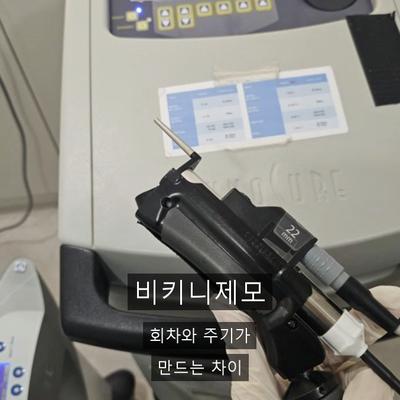
Since the hair in this area is relatively thicker and the skin can be more sensitive than on the face or limbs, it requires a different approach to treatment planning.
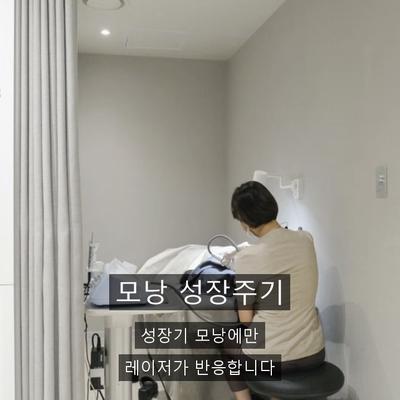
Hair goes through a cycle of growing and shedding in three phases: growth, transition, and resting.
Laser hair removal tends to show more distinct effects on hair follicles in the growth phase, where melanin pigment is densely distributed.
Hair follicles that were in the resting phase at the time of treatment only transition to the growth phase several weeks later, making it difficult to treat all follicles with just a single session.
Due to this cyclical structure of hair, it is effective to undergo hair removal treatments repeatedly over several sessions.
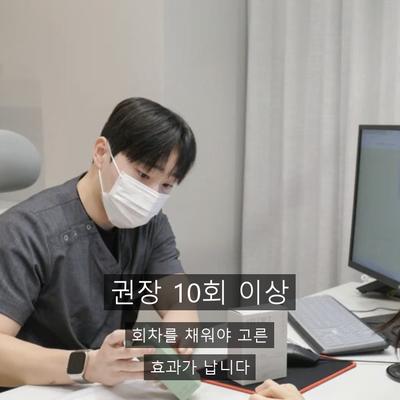
For this area, where hair is thick and dense, we generally recommend 10 or more treatment sessions.
If the recommended number of treatment sessions is not completed, hair follicles that haven't entered the growth phase may remain, leading to hair regrowth after the treatment.
Even if noticeable changes appear quickly, it is important to complete the entire planned number of treatment sessions.
While some individuals experience hair thinning from the first session, there are often individual differences, and many only notice clear changes after a certain number of sessions.
Understanding that hair removal treatment is closer to a semi-permanent reduction in hair quantity rather than 'perfect' removal will help you set realistic expectations.
The recommended treatment interval is a minimum of 3 weeks, with 4-week intervals being standard.
These criteria are set considering the skin exfoliation cycle and the timing when new hair follicles enter the growth phase.
If the interval is too short, energy might be delivered to hair follicles that haven't yet reached the growth phase, reducing efficiency; if it's too long, the period of neglecting already grown hair can be extended.
Even after the full course of treatment, new hair may grow, so receiving maintenance treatments every 2-3 months can be helpful.
Many people are concerned about pain during bikini hair removal, as it is performed on a sensitive area.
Before the procedure, the area is thoroughly cleaned, anesthetic cream is applied, and then the laser is delivered after the skin temperature has been lowered with a cooling device.
The larger the treatment area, the greater the range of laser exposure, which can also extend the duration of a single session.
Anesthetic cream helps dull the sensation on the skin's surface, but it may not completely eliminate the pain originating from the hair follicle itself.
Undergoing a cooling process before the treatment and using cooling devices concurrently helps reduce pain, and as the sessions progress and hair quantity decreases, the perceived pain also tends to lessen.
Shaving the day after the procedure, rather than on the day itself, can be less stressful for the skin and result in a cleaner finish.
During the laser hair removal treatment period, avoid plucking hair.
This is because if the hair root has been removed, there is no target for the laser energy to act upon, which can diminish the effectiveness of the subsequent treatment session.
For about 1-2 days after the procedure, it's advisable to avoid activities that can raise body temperature, such as saunas or strenuous exercise.
Since this area can frequently be irritated by underwear or friction, it is necessary to wear loose-fitting clothes after the procedure to reduce friction.
The treated area may be sensitive to irritation, so it is recommended to avoid using strong cleansers until it has fully recovered.
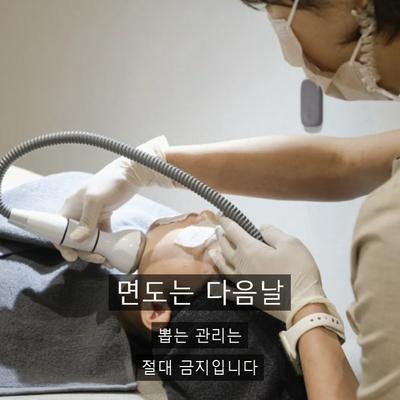
Occasionally, red marks similar to folliculitis may appear after the treatment, which is a common reaction that can occur as laser heat is delivered to the hair follicles.
Most of these tend to naturally subside after applying a regenerating cream and observing for a few days.
For these reasons, it is important to understand hair removal not as a one-time procedure, but as a continuous process of consistently adhering to the prescribed number of sessions and intervals.
Consistently adhering to the treatment sessions and recommended intervals can lead to satisfactory results for bikini hair removal.
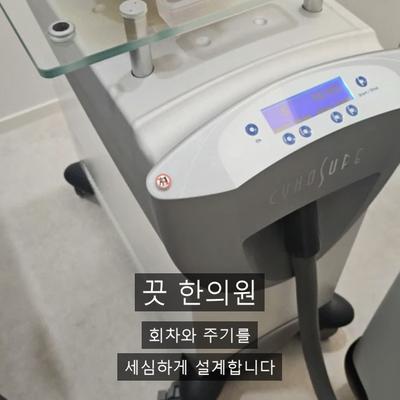
When choosing a clinic for hair removal, it is necessary to check how they plan the number of sessions and intervals tailored to each individual.
At Kkeut Clinic, we provide customized treatments by finely adjusting laser settings, taking into account the individual's hair thickness and skin tone.
Before treatment, Kkeut Clinic carefully checks hair thickness and density and proceeds with the procedure after pre-planning laser settings according to the specific characteristics of each area.
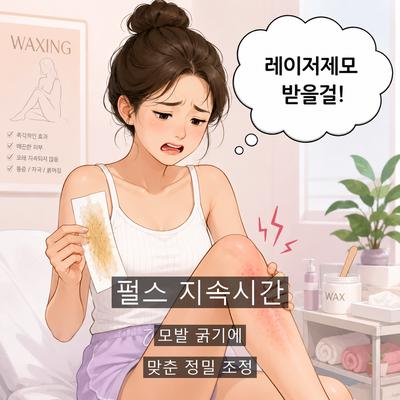
For thick, dark hair, Kkeut Clinic adjusts the pulse duration to be longer, effectively delivering thermal energy to the hair follicles while minimizing stress on the epidermis.
If strong energy is rapidly delivered with short pulses, irritation can concentrate on the skin's surface. Therefore, it is important to plan treatment settings to ensure that laser heat safely reaches the hair root.
Fine and light hairs have a relatively low melanin content, which can result in a lower absorption rate of laser energy.
For such hairs, Kkeut Clinic adjusts the energy density and, if necessary, combines it with repeated exposures to ensure that sufficient thermal energy is delivered to the hair root.
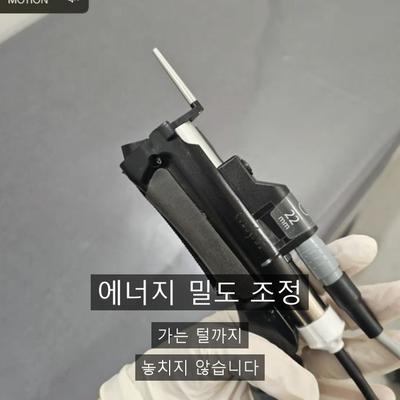
In areas with high hair density, treatment is performed by dispersing energy to reduce the risk of burns due to excessive heat accumulation, and for darker skin tones, laser output is adjusted even more delicately to ensure safe treatment.
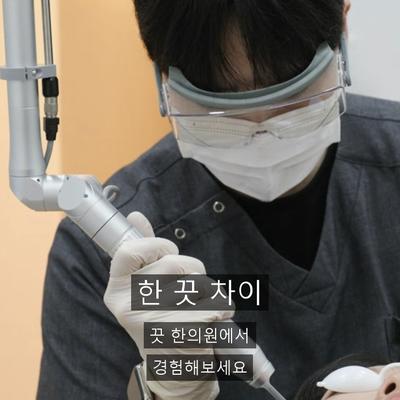
At our clinic, we perform precise treatments using verified equipment such as Apogee and GentleMax. We focus on minimizing patients' pain during treatment.
Before the treatment is completed, we check with the patient to see if any additional care is needed for certain areas. After thorough communication, the treatment is finalized.
We closely observe the degree of hair reduction at each session and adjust the appropriate energy settings for the next treatment. Delicate care tailored to each individual's condition is provided.
Precise Setting Methods Tailored to Each Individual
Frequently Asked Questions
Q. How many bikini hair removal sessions are usually recommended?
A. Hair in the bikini area is often relatively thick and dense. Therefore, you may generally consider 10 or more sessions. The number of sessions will be adjusted after assessing your hair condition.
Q. What is the appropriate interval for bikini hair removal treatments?
A. Considering the hair follicle growth cycle, it is recommended to perform bikini hair removal treatments at intervals of at least 3 weeks, typically 4 weeks. This can lead to more effective hair removal results.
Q. When is it best to shave during bikini hair removal treatment?
A. It may be cleaner to shave the day after your bikini hair removal treatment rather than on the same day. Plucking hairs is not recommended as it can interfere with the treatment's effectiveness.
Q. Is bikini hair removal a painful procedure?
A. The bikini area is sensitive, so there may be concerns about discomfort during treatment. However, we apply cooling systems to help reduce discomfort during the procedure. It is expected that the burden of pain will gradually decrease with each subsequent treatment session.
Our Treatment Philosophy
We precisely adjust the pulse duration and energy density according to hair thickness. Through these meticulous settings, we strive to achieve results tailored to each individual.
Considering hair follicle density and skin tone, we customize energy dispersion and output. We aim to provide a positive experience by performing treatments in a manner suitable for each patient.
We use verified equipment like Apogee and GentleMax, and before completing the treatment, we go through a patient confirmation process. This demonstrates our commitment to creating a safe and trustworthy treatment environment.
Delicate Care Focused on Each Individual. If you have any questions, it's a good idea to consult us.
Related notes
Procedure notes worth reading next.


Loading menu…