

Facial Pigmentation: Type-Specific Causes and How Laser Toning Works Beomgye, Pyeongchon, Beomgye Station, Pyeongchon Station, Hogye-dong, Bisan-dong, Gwanyang-dong, Dongan-gu, Indeogwon, Geumjeong, Anyang
7/3/2026
This is a procedure note for Facial Pigmentation: Type-Specific Causes and How Laser Toning Works at Gyeonggi Anyang Beomgye KKEUT Korean Clinic.
Facial pigmentation is a collective term for pigmentation issues that appear on the skin, but within it, there are several types with completely different causes and depths. Melasma, freckles, post-inflammatory hyperpigmentation, and photoaging pigmentation — these four may look similar on the surface, but their treatment approaches differ. To improve pigmentation problems, type differentiation must precede any procedure.
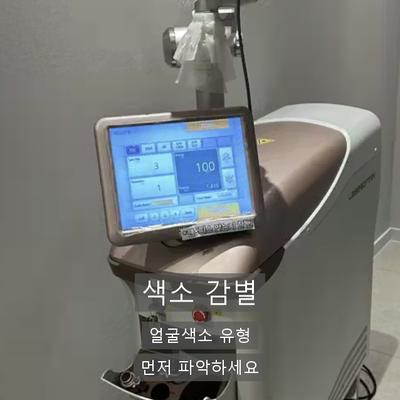
Pigmentation Type 1 — Melasma: Melanocyte Overactivity
Melasma is the most challenging type of facial pigmentation to treat. Melanocytes (pigment cells) located deep in the epidermis continuously overproduce melanin in response to stimuli such as UV radiation, hormonal changes, and stress. It is characterized by indistinct borders and a wide distribution around the cheekbones and forehead. UV protection can slow its progression, but without treatment to calm the already overactive melanocytes themselves, the pigmentation will repeatedly recur.
Pigmentation Type 2 — Freckles (Lentigines): Epidermal Fixed Pigmentation
Freckles are a form of pigmentation fixed in the epidermal layer due to repeated exposure to UV radiation. Compared to melasma, their borders are distinct, they are smaller in size, and their color is relatively uniform. Because melanin is confined to the epidermis, the laser response is relatively quick. They are primarily concentrated in areas directly exposed to UV such as the nose, cheekbones, and forehead. Early management is recommended as their number can increase and borders can become indistinct if neglected in the initial stages.
Pigmentation Type 3 — Post-inflammatory Hyperpigmentation (PIH): Traces of Skin Reaction
Red and dark marks remaining after acne, trauma, or skin procedures are post-inflammatory hyperpigmentation. In areas where the skin has experienced an inflammatory response, melanocytes are overstimulated, leading to excessive pigment secretion. Epidermal types (red marks) show a relatively quick treatment response, but if the pigmentation has reached the dermal layer (brown/gray marks), the treatment period lengthens. Proceeding with laser treatment while active acne remains can worsen the condition, so the starting point must be determined after checking the skin condition.
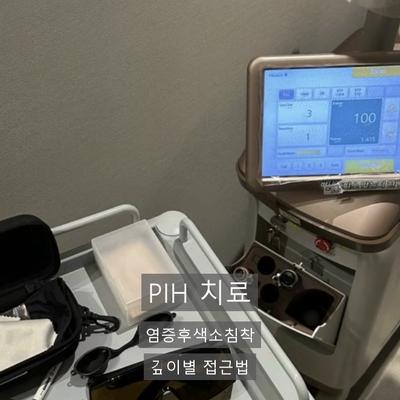
Pigmentation Type 4 — Photoaging: Decreased Skin Pigment Regulation Function
Prolonged and repeated exposure to UV radiation degrades the skin's inherent pigment regulation function. Photoaging occurs, leading to uneven skin tone over a wider area than localized freckles, and a rougher skin texture. An approach that targets individual pigmented lesions along with uniformly refining the overall skin tone is necessary. This is why laser toning is effective even in the photoaging stage.
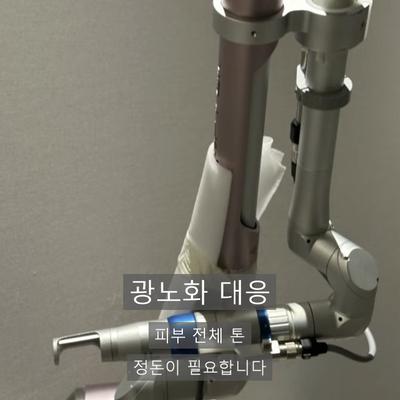
How Laser Toning Works on Facial Pigmentation
Laser toning is a procedure that irradiates the skin with a 1064nm wavelength laser at low power and high repetition. The core principle is Selective Photothermolysis. Melanin pigment selectively absorbs this wavelength, and the absorbed laser energy is converted into heat and shockwaves, finely breaking down pigment particles. The fragmented melanin pieces are absorbed by immune cells (macrophages) and expelled from the body, and as this process accumulates, the pigmentation on the skin gradually lightens.
Picotoning, utilizing a picosecond laser, generates a photomechanical effect with ultrashort pulses. It reduces reliance on thermal energy and breaks down pigment with shockwaves, resulting in minimal damage to surrounding tissues. The strength of picotoning lies in its ability to break down pigment while reducing the burden of thermal stimulation in sensitive pigmentation types like melasma, where melanocytes are delicate.
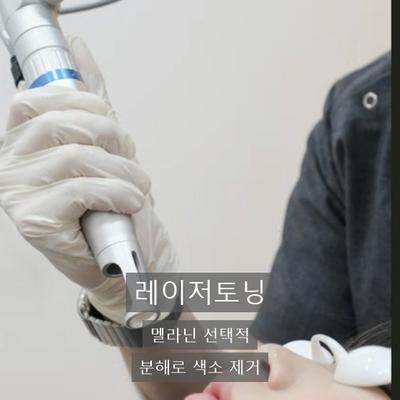
The speed and manner in which each pigmentation type responds to laser toning differ. Freckles, being epidermal, show a faster response per session, while melasma requires accumulated sessions to calm the melanocytes. The treatment period for post-inflammatory hyperpigmentation varies depending on the depth of the pigment. Accurately distinguishing pigmentation types is the starting point for establishing a laser toning treatment plan.
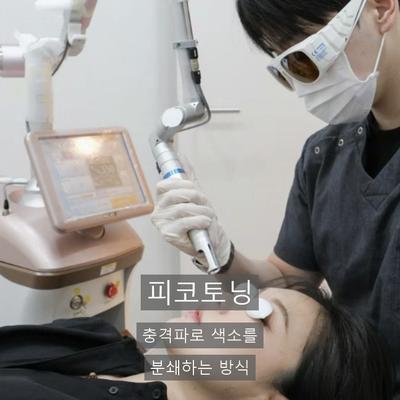
Dramatic changes are difficult to expect with a single laser toning session. Melanin breakdown and expulsion, along with melanocyte stabilization, are processes that accumulate over multiple sessions. Generally, 10 or more cumulative treatments are recommended at intervals of 4-6 weeks, and in the case of melasma, consistent long-term management is required. If the treatment interval is too short, the skin's recovery cycle can be disrupted, reducing efficiency.
Why Get Treatment at Kkeut Clinic
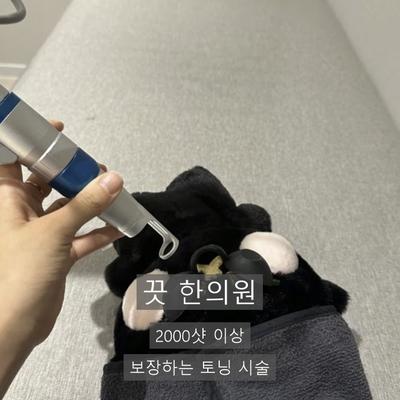
At Kkeut Clinic, we guarantee over 2,000 shots during laser toning procedures. If the number of shots is insufficient, the cumulative energy delivered to the pigment is inadequate, reducing the treatment effect. Kkeut Clinic operates a process where you can directly confirm the shot count with the director after the procedure.
Kkeut Clinic specifically targets problematic areas where pigmentation is concentrated. Instead of irradiating the entire face with uniform intensity, we focus more energy on pigment-dense areas to achieve clearer improvement results.
Kkeut Clinic gradually increases energy levels with each session. Using high energy from the initial sessions carries a risk of worsening pigmentation. Gradually increasing energy while observing skin response is a core principle of laser toning that ensures safety and cumulative effectiveness.
Frequently Asked Questions
Q. Can I start laser toning immediately if I have facial pigmentation?
A. First, differentiate the type of facial pigmentation. Melasma, freckles, and post-inflammatory hyperpigmentation have different laser response speeds and treatment approaches, so it's crucial to start with an appropriate protocol after diagnosis. At Kkeut Clinic, we confirm the pigmentation type before the procedure and establish a customized plan.
Q. How many laser toning sessions are needed for facial pigmentation to show results?
A. While it varies depending on the pigmentation type and depth, generally 10 or more cumulative sessions are recommended for improving facial pigmentation. Melasma requires a longer period of management, while freckles tend to show relatively quicker responses.
Q. Is sun protection important during facial pigmentation treatment?
A. Sun protection before and after the procedure is essential. Even if melanocytes are calmed with laser toning, repeated UV exposure will reactivate facial pigmentation. Consistent use of sunscreen is necessary to maintain the treatment effect.
Q. How do Picotoning and regular laser toning differ for facial pigmentation?
A. Picotoning uses ultrashort pulses to break down pigment with shockwaves without thermal damage. It is a suitable method for facial pigmentation like melasma, where melanocytes are sensitive, as it places less burden of thermal stimulation. At Kkeut Clinic, we select the optimal laser method based on skin condition and pigmentation type.
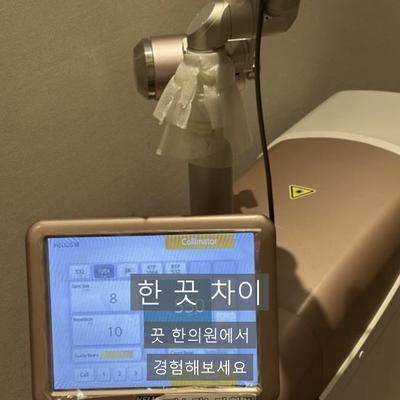
Kkeut Clinic's Sincere Commitment
Kkeut Clinic guarantees over 2,000 shots for laser toning and ensures sufficient energy accumulation through a transparent process where the shot count is verified with the director after the procedure.
Kkeut Clinic intensively targets problematic areas of concentrated pigmentation, producing clearer improvement results than a uniform full-face irradiation method.
Kkeut Clinic pursues both safety and effectiveness simultaneously with a protocol that gradually increases energy with each session.
A Kkeut Difference, Different Results — Experience it at Kkeut Clinic.
Related notes
Procedure notes worth reading next.


Loading menu…