

Spot Removal, Why Customized Treatment is Necessary for Each Type of Blemish Beomgye, Pyeongchon, Beomgye Station, Pyeongchon Station, Hogye-dong, Bisan-dong, Gwanyang-dong, Dongan-gu, Indeogwon, Geumjeong, Anyang
9/4/2026
This is a procedure note for Spot Removal, Why Customized Treatment is Necessary for Each Type of Blemish at Gyeonggi Anyang Beomgye KKEUT Korean Clinic.
The various brown spots that appear on the face can all arise from different causes.
Before removing blemishes from the skin, it is essential to accurately identify the type of blemish.
Although generally referred to as 'blemishes,' the main types can be categorized into four.
These include freckles, age spots (lentigines), melasma, and post-inflammatory hyperpigmentation.
Freckles are small brown spots that result from a combination of genetic predisposition and UV exposure.
They typically appear from childhood and tend to darken, especially in summer.
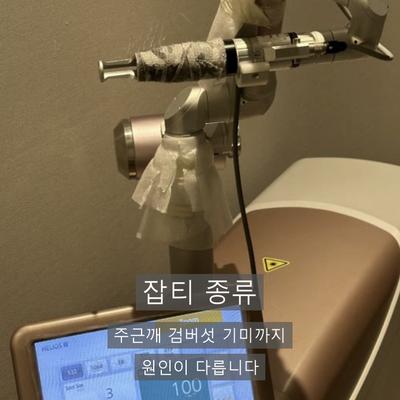
Age spots are medically known as solar lentigines and are pigmented lesions that appear as epidermal keratinocytes and melanocytes partially proliferate with aging.
Prolonged cumulative UV exposure is known to be the primary cause.
Melasma differs from other blemishes in that it tends to widely spread pigment to the dermal-epidermal junction due to a complex interplay of hormonal changes, stress, and UV exposure.
Its borders are often indistinct, and it typically appears symmetrically spread across both cheeks.
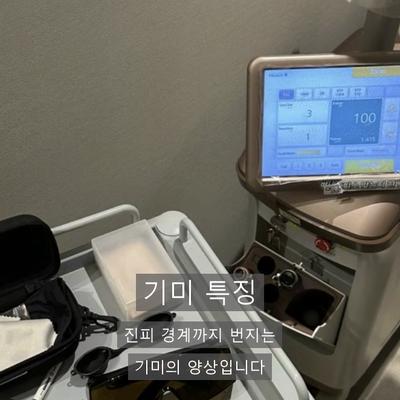
Post-inflammatory hyperpigmentation refers to brown spots that remain on the skin after acne marks or wounds have healed.
It is a secondary pigmentation issue caused by excessive melanin production after an inflammatory response in the skin.
Since each type of blemish differs in pigment depth and cause, the method for removing skin blemishes must also vary accordingly.
Accurately distinguishing the type of blemish is crucial for setting the direction of treatment
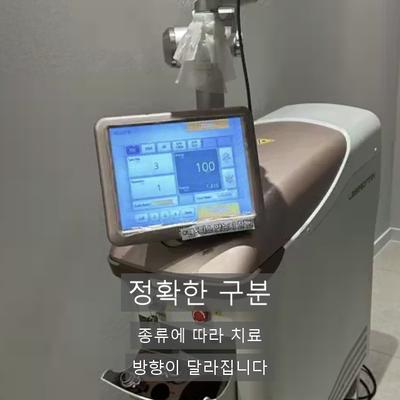
For pigments confined to the epidermal layer, such as freckles or age spots, selectively destroying only surface pigment with a specific wavelength laser can be effective.
The 532 nm wavelength has a high melanin absorption rate, allowing it to react sensitively to epidermal pigmented lesions.
For pigments that have penetrated to the dermal-epidermal junction, like melasma, attempting a single strong energy treatment risks inducing post-inflammatory hyperpigmentation.
In such cases, a laser toning method, which involves gradually applying low energy over multiple sessions, is recommended.

For post-inflammatory hyperpigmentation, it is necessary to first calm the underlying inflammation and then combine it with pigment treatment to reduce recurrence.
Blemish laser treatments are generally divided into multiple sessions, and depending on the type of lesion, 3 to 5 or more repeated treatments may be necessary.
After the treatment, the pigmented area temporarily turns into a scab-like appearance and usually goes through a natural shedding process within 1-2 weeks.
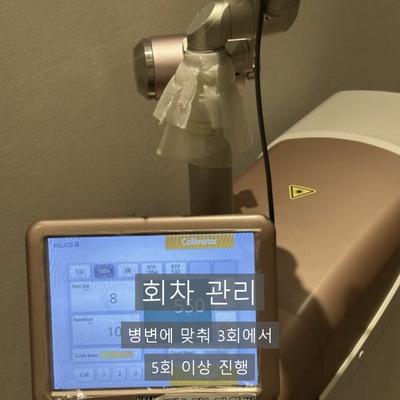
The most important aspect of post-treatment care is UV protection.
Exposure to UV light during the pigment recovery period can cause hyperpigmentation to recur or worsen, so consistent use of sunscreen is recommended.
At Kkeut Korean Medicine Clinic, during consultations for skin blemish removal, we first meticulously photograph the skin condition using a Mark-Vu diagnostic device.
The director personally reviews the captured images to accurately differentiate between freckles, age spots, melasma, and post-inflammatory hyperpigmentation.
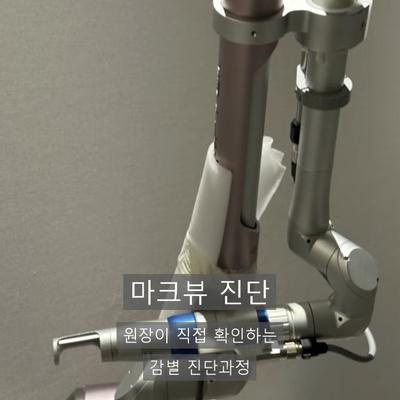
Even if pigments appear similar, if their causes differ, the treatment approach must also vary. Proceeding with treatment without a diagnostic process could potentially worsen the hyperpigmentation.
For these reasons, Kkeut Korean Medicine Clinic prioritizes differential diagnosis.
Kkeut Korean Medicine Clinic utilizes a laser with a 532 nm wavelength.
This wavelength falls within a band with high melanin absorption, and treatments are performed using the same wavelength range as expensive lasers specifically designed for pigmentation.
Kkeut Korean Medicine Clinic's Treatment Plan Through Precise Blemish Differentiation
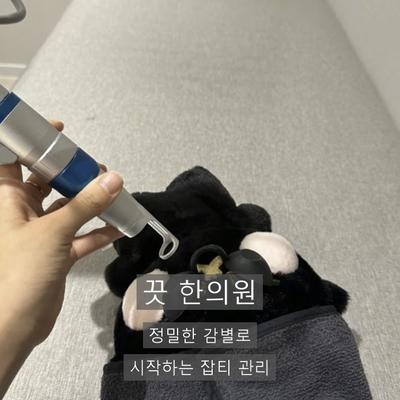
Kkeut Korean Medicine Clinic provides differentiated aftercare instructions, considering the specific characteristics of each treatment area.
Since blemish lasers that primarily act on the epidermal layer do not cause wounds, we advise focusing on soothing care and UV protection instead of applying DuoDerm gel.
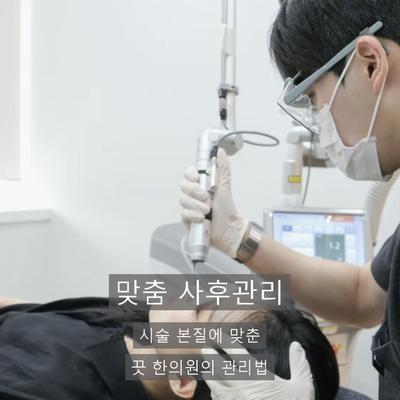
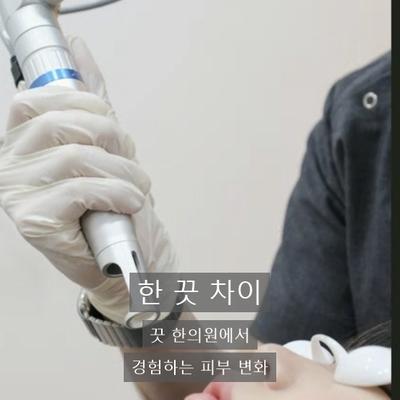
Rather than applying uniform aftercare for the same pigmentation treatment, Kkeut Korean Medicine Clinic's approach is to provide aftercare tailored to the specific characteristics of the procedure.
Frequently Asked Questions
Q. Can skin blemish removal be completed in a single session?
A. While it varies depending on the type of blemish and the depth of the pigment, most skin blemish removal treatments may require multiple sessions. Kkeut Korean Medicine Clinic will guide you on the appropriate number of treatments based on accurate diagnostic results.
Q. Is it normal for scabs to form after skin blemish removal treatment?
A. Yes, this can be considered a natural healing process where epidermal pigments shed. Scabs formed after skin blemish removal should not be forcibly removed; you should wait for them to fall off naturally.
Q. Why is UV protection important after skin blemish removal treatment?
A. Exposure to UV light during the pigment recovery period can lead to a recurrence of hyperpigmentation. Therefore, consistent use of sunscreen is essential to maintain the positive results of skin blemish removal for a long time.
Philosophy of Treatment at Kkeut Oriental Medicine Clinic
At Kkeut Oriental Medicine Clinic, we precisely photograph your skin condition using a Mark-Vu diagnostic device. The director meticulously analyzes the photographed skin and focuses on establishing a diagnosis-based treatment plan tailored to each individual.
We utilize a 532-nanometer wavelength laser to improve epidermal pigmented lesions. This laser is designed to effectively target these lesions, helping to enhance skin condition.
After the procedure, personalized post-treatment care is provided, tailored to each individual's skin condition and recovery progress. This aims to enhance the potential effects of the treatment and support a comfortable recovery.
Through meticulous diagnosis and care, we strive for skin improvement.
Related notes
Procedure notes worth reading next.

Hyperpigmentation & Blemishes: Why Are They Hard to Treat in One Go? An Effective Guide to Toning Treatment Sessions
2026. 8. 23.

Melasma & Blemish Laser Price: 3 Things You Must Check First
2026. 10. 5.

Don't just focus on the price of Ruby laser treatments. It's crucial to first check if a pigmentation removal laser is appropriate for your skin.
2026. 7. 3.
Loading menu…