

Causes of Skin Irritation and Hyperpigmentation from Self-Hair Removal (Self-Hair Removal Part 3) Beomgye, Pyeongchon, Beomgye Station, Pyeongchon Station, Hogye-dong, Bisan-dong, Gwanyang-dong, Dongan-gu, Indeogwon, Geumjeong, Anyang
This is Gyeonggi Anyang Beomgye KKEUT Korean Clinic's procedure note on Causes of Skin Irritation and Hyperpigmentation from Self-Hair Removal (Self-Hair Removal Part 3).
If you frequently remove hair at home, at some point, you might find yourself more concerned about your skin condition than the hair itself.
Common skin reactions include redness, stinging, breakouts, and dark marks that don't disappear over time.
In this article, we will explain the changes that appear on the skin, not the hair, in sequential order.
1. The Process of Skin Irritation Accumulation
The stratum corneum, the outermost layer of the skin, acts as a protective barrier against external irritation and moisture loss.
Razor blades can subtly damage the surface of the stratum corneum along with the hair, and waxing or plucking causes a pulling sensation on the skin in the direction the hair is removed.
Hair removal creams contain ingredients that dissolve hair proteins, which can also directly contact the skin, so the degree of irritation may vary depending on the application time and your skin condition at that moment.
Although these hair removal methods differ, they share one commonality.
That is, the same type of irritation is applied to the same area again before the skin has had enough time to fully recover.
When irritation is repeated like this, the skin can react with redness, dryness, and stinging.
2. Causes of Red Bumps: Folliculitis and Ingrown Hairs
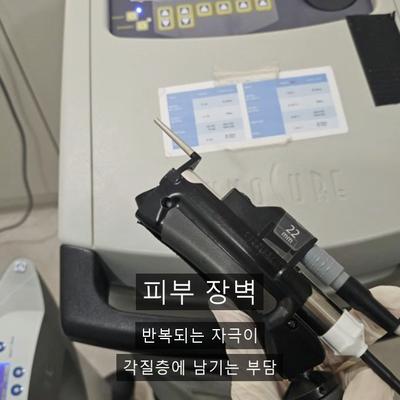
Red bumps appearing in areas where hair has been removed are often folliculitis, an inflammation of the hair follicles.
When hair is plucked or shaved too short, new hair may not be able to emerge from the skin and instead curls inwards, growing beneath the surface.
Hair trapped beneath the skin can act like a foreign body, triggering an inflammatory response.
Refrain from arbitrarily squeezing or scratching red bumps, as this can cause additional irritation to the inflamed area.
Dermatological laser procedures also deliver heat to the hair follicles, so a folliculitis reaction may appear after treatment. In such cases, soothing care with regenerating creams is provided.
3. The Principle of Mark Formation Due to Post-Inflammatory Hyperpigmentation
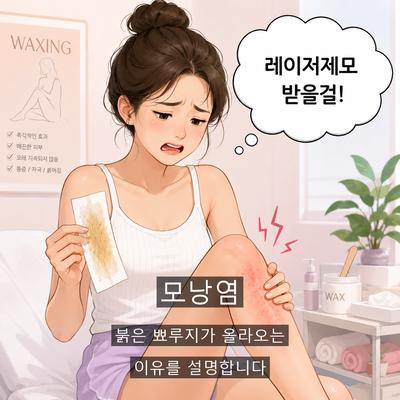
It's easy to understand hyperpigmentation as the trace left behind in an area where inflammation occurred.
When the skin experiences irritation or inflammation, cells called melanocytes, which produce melanin pigment, can react and increase pigment production.
This is called post-inflammatory hyperpigmentation, and it typically appears as brown or grayish-brown marks after the redness subsides.
In some cases, marks may only become noticeable after the redness has disappeared, rather than immediately after hair removal.
Even minor irritation, if repeatedly applied to the same area, can keep melanocytes in a continuously sensitive state.
This is also related to why these marks are more noticeable in areas where the skin is naturally darker or subject to frequent friction, such as the armpits, bikini line, or knees.
If these areas are exposed to UV light, pigment production can be reactivated, so we strongly recommend using sunscreen on exposed areas after hair removal.
4. Lifestyle Management After Hair Removal
Immediately after hair removal, hot showers, sauna use, strenuous exercise, and alcohol consumption can add further heat irritation to already sensitized skin.
Friction from tight clothing, as well as physical exfoliation methods like scrubs or exfoliating mitts, can also stress skin that is in the process of healing.
Plucking hair not only irritates the skin but also removes the hair root that laser hair removal energy needs to target, so it should be avoided while undergoing laser hair removal treatments.
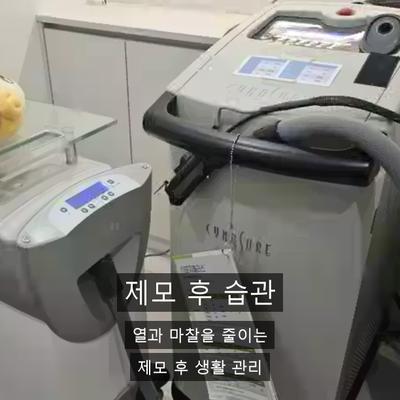
The skin's exfoliation regeneration cycle is approximately 4 weeks, so when determining hair removal treatment intervals, it is important to consider enough time for the skin to fully recover.
5. Differences in Hair Removal Reactions Based on Skin Characteristics and Area
Even with the same hair removal procedure, the way skin reacts can vary depending on the treatment area or individual skin tone.
Fine facial hair, thick beard hair, and body hair on the armpits or limbs differ in skin thickness and hair characteristics, so it may be difficult to uniformly apply the same intensity of hair removal methods.
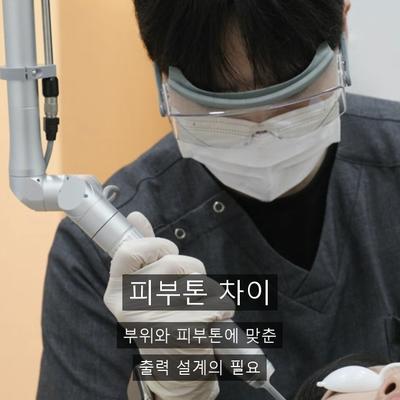
Darker skin tones may have melanin pigments that react more sensitively to hair removal irritation, so delicate adjustment of energy output is necessary to reduce the possibility of discomfort or side effects.
In areas where hair is dense, heat energy can concentrate during the hair removal process, leading to excessive heat sensation, so the energy must be applied evenly.
With at-home hair removal methods, it's not easy to adjust the intensity for each body part, so the skin may continuously be subjected to irritation under the same conditions.
6. When to Pause Hair Removal and Check Your Skin
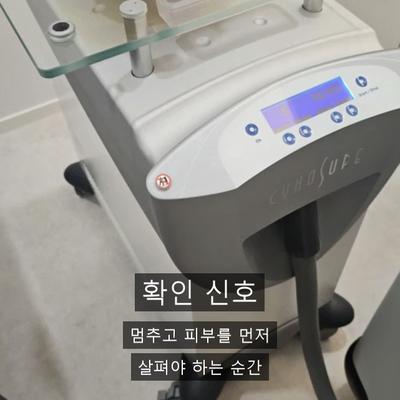
If redness does not subside after several days, or if pus-filled bumps repeatedly appear, it is advisable to stop hair removal and examine your skin condition first.
Similarly, if brown marks appear in the hair removal area and do not easily fade but persist, you should pay close attention to the skin changes.
In such situations, prioritizing skin soothing and protection over hair removal is essential. Basic management includes moisturizing with regenerating creams, minimizing external friction, and sun protection.
Consulting with a specialist can help accurately determine whether the marks currently on your skin are temporary changes or have already established themselves as hyperpigmentation.
Kkeut Oriental Medicine Clinic's Approach to Skin Protection
At Kkeut Oriental Medicine Clinic, we approach hair removal not merely as the elimination of hair, but by focusing on how well the skin can tolerate energy.
For thick hair, we use long pulses to ensure gentle heat delivery, protecting the epidermis. We delicately adjust and apply energy density to match the characteristics of thick, dark hair versus fine, light hair.
In areas with dense hair, energy is diffused, and for darker skin tones, power output is precisely adjusted to minimize side effects caused by skin melanin reactions.
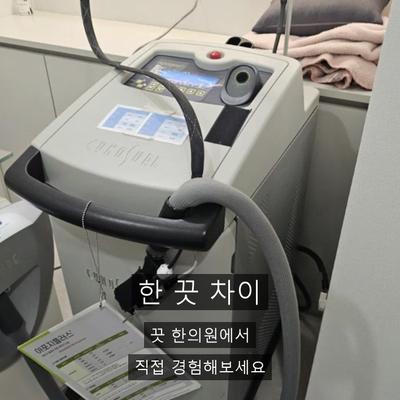
Kkeut Oriental Medicine Clinic operates widely used equipment such as Apogee and GentleMax. The Apogee device, in particular, continuously sprays cool air before and after laser application, helping to alleviate skin irritation.
For areas where improvement is particularly desired, energy is precisely controlled and concentrated, ensuring effective management.
After the procedure, we recommend using a regenerative cream, and shaving is possible from the next day. We also provide detailed guidance to avoid heat stimulation for 1-2 days.
At Kkeut Oriental Medicine Clinic, we perform a check before the procedure concludes to see if there are any additional areas of concern. The procedure is finalized only after you are completely satisfied.
Kkeut Oriental Medicine Clinic's Skin-Centered Hair Removal Philosophy
Frequently Asked Questions
Q. Is it okay to squeeze red pimples that appear after self-hair removal?
A. Red pimples that appear after self-hair removal are likely folliculitis or ingrown hairs. Forcibly squeezing or scratching them can worsen the inflammation, so it's best to avoid doing so. At Kkeut Oriental Medicine Clinic, we recommend soothing and protective care first, without causing irritation.
Q. Do brown marks left after self-hair removal fade over time?
A. The progression of marks caused by self-hair removal can vary depending on the degree of irritation, skin tone, and exposure to UV light. If the marks do not naturally fade and persist, Kkeut Oriental Medicine Clinic can carefully examine your skin condition and suggest appropriate management.
Q. Can I still receive laser hair removal if my skin is sensitive due to self-hair removal?
A. If there is redness or inflammation remaining on the skin due to self-hair removal, it is recommended to proceed with laser hair removal only after the skin has sufficiently calmed down. At Kkeut Oriental Medicine Clinic, during consultation, we prioritize your skin condition to carefully determine the timing of the procedure and the laser output intensity.
Kkeut Oriental Medicine Clinic's Hair Removal Philosophy
Kkeut Oriental Medicine Clinic aims for personalized hair removal by adjusting pulse duration and energy density according to hair thickness and color.
Kkeut Oriental Medicine Clinic utilizes Apogee and GentleMax equipment, along with a continuous cooling system, to help patients receive comfortable procedures.
Kkeut Oriental Medicine Clinic strives to ensure safe and satisfactory results through area-specific energy dispersion technology and and a final confirmation process with the patient.
Anticipate Change with a Delicate Approach — Experience it with Kkeut Oriental Medicine Clinic.
Related notes
Procedure notes worth reading next.


Loading menu…