

Men's Leg Hair Removal: Tips for Effective Session Count and Cycle Setting Beomgye, Pyeongchon, Beomgye Station, Pyeongchon Station, Hogye-dong, Bisan-dong, Gwanyang-dong, Dongan-gu, Indeogwon, Geumjeong, Anyang
This is Gyeonggi Anyang Beomgye KKEUT Korean Clinic's procedure note on Men's Leg Hair Removal: Tips for Effective Session Count and Cycle Setting.
For those considering male leg hair removal, the most common questions revolve around the number of sessions and the intervals between them.
There can be various opinions regarding the number or frequency of hair removal treatments, often making it difficult to establish clear guidelines.
Here, based on the principle of hair growth, we will sequentially explain the criteria for determining the appropriate number of treatment sessions and their frequency.
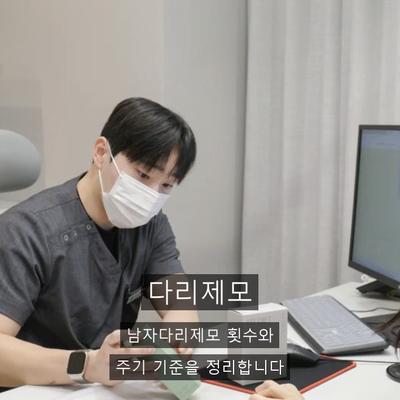
Laser hair removal works on the principle that melanin pigment in the hair absorbs laser energy, and this heat is then transferred to the hair roots and follicles.
This laser selectively affects only hair follicles in the active growth phase, where melanin pigment activity is high.
Since not all hairs are in the growth phase simultaneously, it's difficult to treat all hair follicles with just one session.
The timing when resting hairs transition to the growth phase varies, so multiple treatment sessions are necessary.
Hair in the leg area generally has relatively distinct melanin pigment, leading to a good laser response.
However, this does not mean that the number of treatment sessions can be reduced.
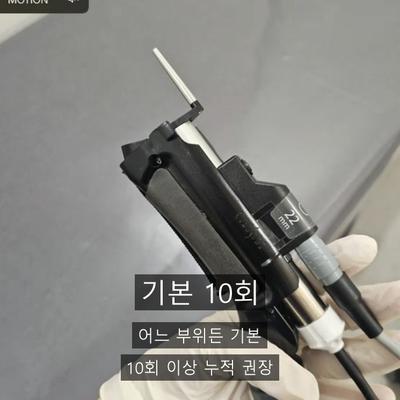
Because hairs in the growth phase appear irregularly, we recommend at least 10 or more treatment sessions for any area.
Male facial hair (beard) may require more sessions, 20 or more, and take over a year, while other areas typically have a guideline of about 10 sessions.
The number of treatment sessions is not just a simple figure; it can be understood as a process of performing treatments aligned with each hair's growth cycle.
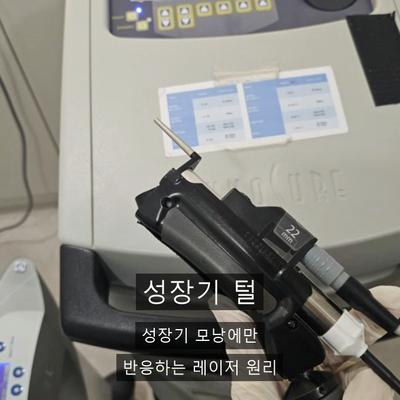
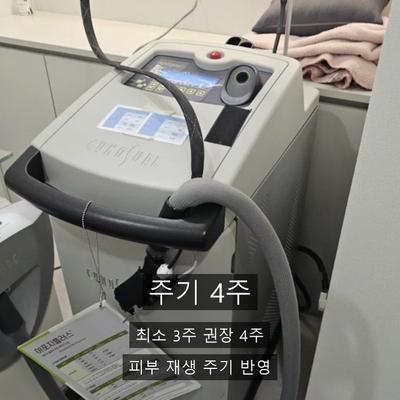
It's best to maintain a minimum interval of 3 weeks between hair removal sessions, with 4-week intervals generally recommended.
This is because the skin's exfoliation and regeneration cycle is approximately 4 weeks. Following this cycle allows you to protect your skin while also targeting newly growing hairs in their growth phase for effective treatment.
If 10 sessions are performed at 4-week intervals, the entire schedule could take approximately 36 weeks, or about 8 months.
After completing the initial treatments, receiving maintenance sessions about once every 2-3 months can help with ongoing management.
It is realistically difficult for hair to disappear completely and permanently. The term 'semi-permanent hair removal' better describes the characteristics of the treatment.
Many people are also curious about the differences between laser hair removal and waxing.
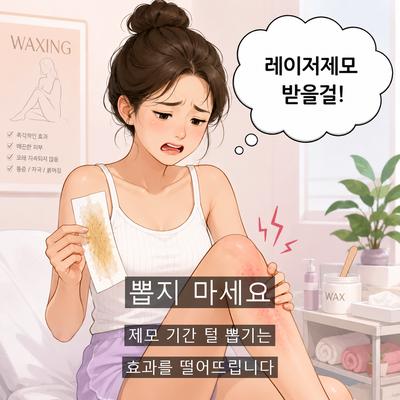
Waxing involves pulling out hair, so its effect is temporary and can irritate the skin, whereas laser hair removal acts directly on the hair follicles, offering the prospect of semi-permanent hair reduction.
It's advisable to follow a few care guidelines during the treatment period.
The most important thing to be aware of during this period is not to pluck the hair directly.
If you pluck the hair, the hair root that the laser targets will be removed, which can diminish the treatment's effectiveness. Therefore, during hair removal treatment, you should only shave to tidy the hair instead of plucking it.
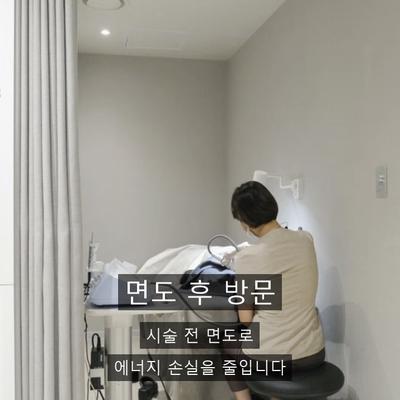
If hair is too long, laser energy may be consumed on the skin's surface and not sufficiently delivered to the hair root, or the risk of burns may increase. Therefore, it is recommended to shave beforehand and visit the clinic on the day of the treatment.
After treatment, it's best to shave from the following day, once the skin has sufficiently calmed down.
For 1-2 days after the treatment, it's advisable to avoid activities that raise body temperature, such as strenuous exercise, saunas, and alcohol consumption.
Since laser treatment delivers heat to the hair follicles, skin reactions such as folliculitis may occasionally occur. Consistently applying a regenerating cream can help alleviate these symptoms naturally over time.
We explain that the pain felt during the procedure is similar to the sensation of receiving a laser treatment while undergoing ice cooling.
Anesthetic cream only reduces sensation on the skin's surface and does not numb the hair root itself. Therefore, it may not be an essential component for all treatments.
When determining the number and intervals of hair removal sessions, we comprehensively consider the following three factors.
The first is hair thickness and density.
Thick and dark hairs are rich in melanin, leading to a good laser response, but fine or light-colored hairs have less melanin, which may result in a relatively weaker treatment effect. In such cases, meticulous planning for energy settings and repetition methods is required.
The second is hair distribution density and the patient's skin tone.
In areas with dense hair, energy must be appropriately dispersed to prevent excessive heat accumulation, and for individuals with darker skin tones, it is crucial to carefully adjust laser output, taking into account the skin's melanin response.
The third is the area to be treated.
Larger areas, such as the legs, may require longer treatment times, which is proportional to the size of the treatment area.
At Ggeut Korean Medicine Clinic, when consulting on the number and frequency of hair removal sessions, we prioritize a thorough examination of the patient's hair and skin condition rather than simply adhering to numbers.
Ggeut Korean Medicine Clinic's Hair Removal Approach
At Ggeut Korean Medicine Clinic, when treating thick hair, we plan the procedure using a long-pulse method to protect the skin's surface and ensure that thermal energy is gently delivered to the hair roots.
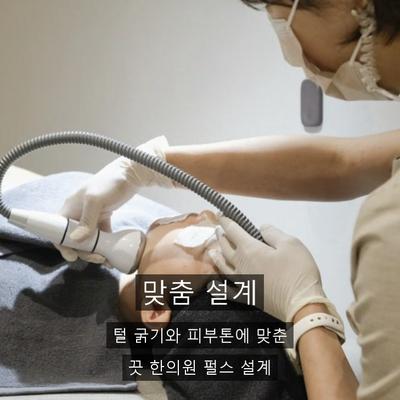
For thick and dark hair, we adjust the energy density to ensure heat effectively accumulates in its dense structure, and for fine and light-colored hair, we carefully adjust the energy level or use repeated pulses to ensure heat is well delivered to the hair roots.
In areas with dense hair, energy is dispersed to prevent excessive heat accumulation, and for individuals with darker skin tones, we prioritize treatment safety through delicate output adjustments.
At Kkeut Korean Medicine Clinic, we meticulously observe the skin reactions from previous treatments and adjust the energy for the next session based on this information.
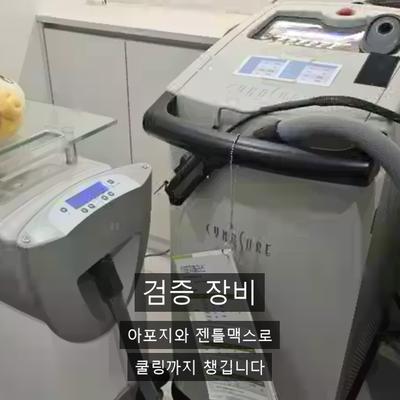
At Kkeut Korean Medicine Clinic, we use verified Alexandrite laser devices such as Apogee and GentleMax.
The Apogee device reduces potential skin irritation through continuous air cooling before and after the treatment. GentleMax, on the other hand, uses a gas-based cooling system to powerfully soothe the skin.
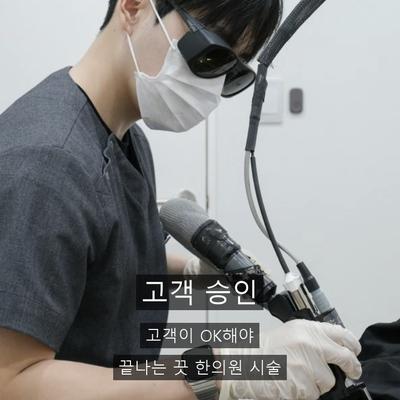
Before concluding the treatment, Kkeut Korean Medicine Clinic carefully checks with the patient to ensure no areas have been missed. Once you confirm that all areas have been properly treated and give your final approval, we will complete the session.
If you have any discomfort or specific areas you'd like us to focus on, we can precisely target those areas with more concentrated laser energy.
Frequently Asked Questions
Q. How many sessions are recommended for male leg hair removal?
A. For male leg hair removal, regardless of the specific area, we generally recommend 10 or more sessions. This is because new hairs continuously grow according to the hair growth cycle, and the number of sessions may vary depending on individual hair thickness, density, and skin tone. At Kkeut Korean Medicine Clinic, we precisely assess your condition during the consultation and provide detailed guidance on the necessary number of sessions.
Q. What is the appropriate interval between male leg hair removal sessions?
A. The treatment cycle for male leg hair removal is a minimum of 3 weeks, and we typically recommend a 4-week interval. This is because the skin's exfoliation cycle is approximately 4 weeks, and sufficient time is needed for the next anagen phase hairs to properly grow out. At Kkeut Korean Medicine Clinic, we carefully observe your skin's reaction after each session to determine the schedule for your next treatment.
Q. Is maintenance necessary after completing male leg hair removal treatments?
A. It's best to understand male leg hair removal as semi-permanent, rather than permanent. Even after a significant portion of hair has been removed through treatment, it's advisable to receive maintenance sessions approximately once every 2-3 months. At Kkeut Korean Medicine Clinic, we assess your hair growth status and guide you on the appropriate timing for maintenance treatments.
The Sincerity of Kkeut Korean Medicine Clinic
At Kkeut Korean Medicine Clinic, we operate a system where we do not conclude the treatment until you are fully satisfied with the results. Through this approach, we strive to achieve results that exceed your expectations.
At Kkeut Korean Medicine Clinic, we carefully adjust the laser pulse and energy intensity, considering each patient's individual hair thickness, density, and skin tone. Through this customized approach, we aim to enhance treatment satisfaction.
Kkeut Korean Medicine Clinic uses verified devices such as Apogee and GentleMax, balancing both the safety and effectiveness of the treatments.
Experience the delicate difference that can lead to superior results. We invite you to experience it at Kkeut Korean Medicine Clinic.
Related notes
Procedure notes worth reading next.

Loading menu…