

Why can't a deep mole on the buttocks be removed in a single session? Beomgye, Pyeongchon, Beomgye Station, Pyeongchon Station, Hogye-dong, Bisan-dong, Gwanyang-dong, Dongan-gu, Indeogwon, Geumjeong, Anyang
5/12/2026
This is a procedure note for Why can't a deep mole on the buttocks be removed in a single session? at Gyeonggi Anyang Beomgye KKEUT Korean Clinic.
When looking into mole removal on the buttocks, you will often hear this.
'It's a deep mole, so it cannot be removed all at once.'
Most people find this statement unhelpful or perceive it as an attempt to charge more.
However, this is an accurate medical explanation.
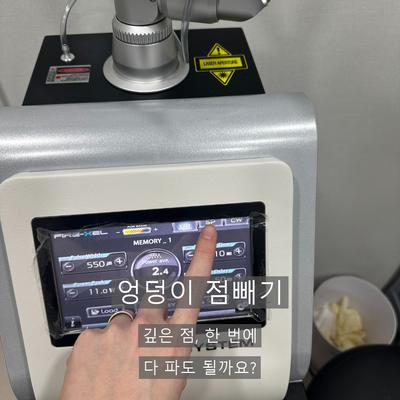
Why the Depth of a Mole Matters
Moles are broadly categorized into two types: those where pigment is concentrated in the epidermal layer, and those where pigment cells are located deep within the dermal layer.
Epidermal moles are relatively shallow, so they can often be cleanly removed in a single session.
The problem lies with moles that have rooted deeply into the dermal layer.
In such cases, attempting to burn off all laser energy to the deepest dermal layer in one go can cause excessive heat damage to surrounding healthy tissue.
As a result, even if the pigment is removed, concave scars or hyperpigmentation may remain.
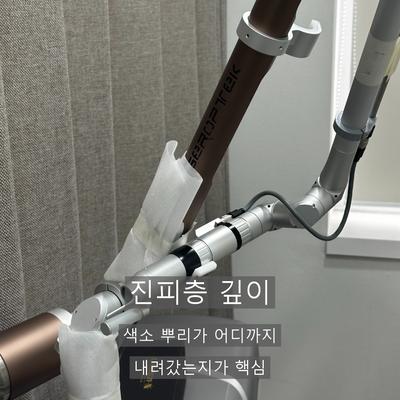
If you try to go too deep, scars will form
Determining the laser depth when removing a mole requires precise judgment.
To completely burn off pigment cells, energy must be delivered to a sufficient depth.
However, if excavated too deeply in one go, the skin tissue itself will be damaged, and scar tissue will fill in during the regeneration process.
This is precisely why attempting to 'remove it all at once' is actually dangerous.
Fractional treatment is not about giving up or being lazy; it's a strategic choice for scar-free removal.
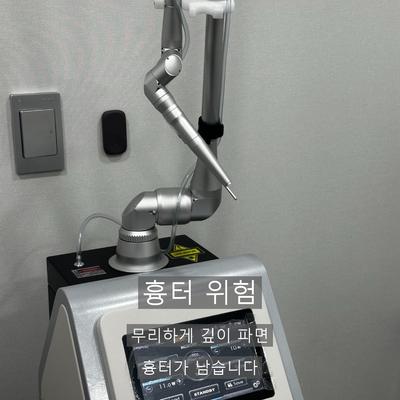
Fractional Treatment Mechanism — How it Works
In the first session, the upper layer of pigment is removed, and skin regeneration occurs.
The regenerated skin is healthier than before, and the remaining lower layer of pigment is targeted in the second session.
This method allows for sufficient depth in each session while minimizing damage to surrounding tissues.
For deep moles, it is common to divide the treatment into 2 to 3 sessions.
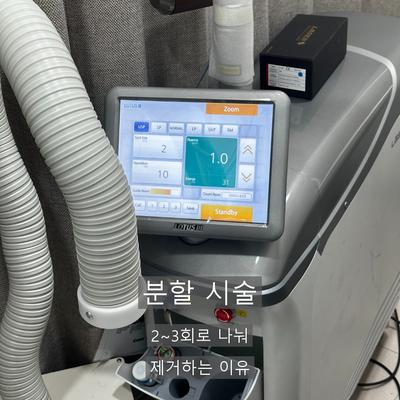
Why is the re-treatment interval 4-6 weeks?
It takes at least 4 weeks for the skin to fully re-epithelialize after treatment.
If a laser is applied again before this period, new heat damage will be added to skin that is still recovering, increasing the risk of scarring.
Adhering to a 4-6 week interval ensures that pigment can be removed step by step without scarring.
Rushing will ultimately lead to more time and cost.

Consider the Specific Characteristics of the Buttock Area
Mole removal on the buttocks heals under different conditions than moles on the face or limbs.
First, pressure is applied to the treated area every time you sit.
Second, repeated friction with clothing occurs.
Third, blood circulation can be restricted in a seated position, making it difficult for scabs to remain for long.
These conditions slow down the healing process and increase the likelihood of scar formation.
This is why post-care must be more meticulous for mole removal on the buttocks.
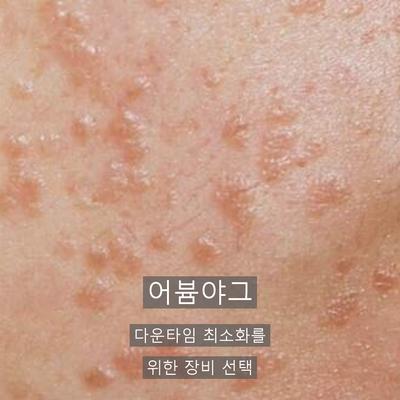
Protruding moles and flat moles also require different approaches.
Protruding moles have densely packed surface pigment cells, making their removal relatively easier.
Conversely, if a mole is flat but dark and wide, the pigment is likely spread deep into the dermal layer, requiring more fractional treatments.
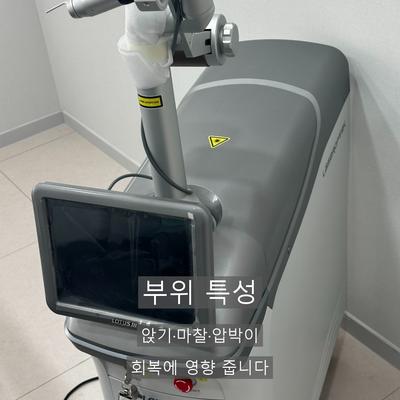
At Kkeut Clinic, Erbium-YAG laser is primarily used for mole treatments.
Erbium-YAG has a narrower thermal spread in tissues compared to CO2, allowing for precise removal and shorter downtime.
If bleeding control is needed, CO2 is used concurrently for hemostasis to ensure a clean treatment surface.
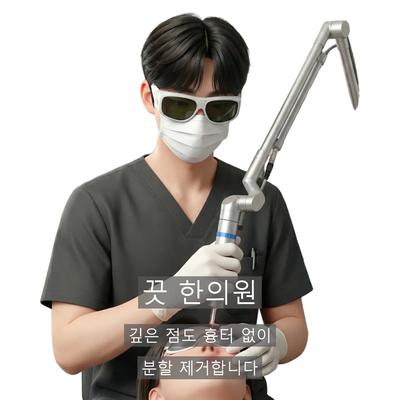
Kkeut Clinic does not perform cosmetic procedures if a suspicious mole (malignancy suspected) is found, and immediately refers the patient to a higher-level institution.
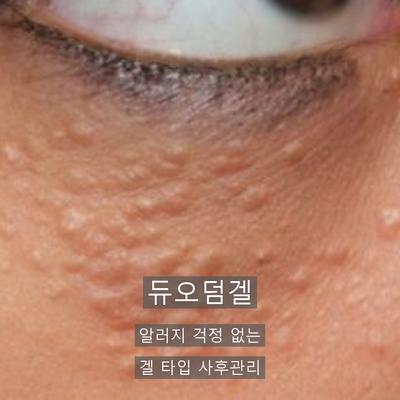
Post-care uses Duoderm Gel.
Unlike regular Duoderm stickers, it's a gel type, so even those with allergic reactions can use it comfortably.
It keeps the wound area moist without the hassle of peeling and sticking, helping with scar-free recovery.
Frequently Asked Questions
Q. Can buttock mole removal really not be done in a single session?
A. If it's an epidermal mole, it can often be neatly completed in one session. However, for buttock mole removal where the pigment has penetrated deep into the dermis, digging too deep in one go increases the risk of scarring. Split treatment is a safer option.
Q. How long should I wait for re-treatment after buttock mole removal?
A. A minimum of 4 weeks is required for skin re-epithelialization. Kkeut Clinic recommends a re-treatment interval of 4 to 6 weeks for buttock mole removal. Observing this interval allows for the gradual removal of pigment without scarring.
Q. For buttock mole removal, which is more difficult: raised moles or flat moles?
A. Raised moles are surface-focused, making them relatively easier. For dark and wide flat moles, pigment has often spread deep into the dermis, which may require more split treatment sessions. An accurate determination is made after consultation.
Q. Since it's on the buttocks, scabs might get pressed when sitting. Is that okay?
A. Due to the nature of the buttock area, mole removal is subject to repeated pressure and friction. After the procedure, it's important to be careful not to apply pressure to the scab area for a certain period and to maintain sufficient protection with Duoderm Gel.
Kkeut Clinic's Sincere Approach
Kkeut Clinic minimizes downtime with erbium YAG-focused procedures and, when hemostasis is required, uses CO2 in conjunction to ensure a clean treatment surface.
Kkeut Clinic operates a safety protocol where, upon discovery of a suspicious malignant mole, it is immediately referred to a higher-level institution without aesthetic treatment.
Kkeut Clinic supports scar-free recovery without allergy concerns through Duoderm Gel post-care.
A subtle difference, a different result — Experience it at Kkeut Clinic.
Related notes
Procedure notes worth reading next.


Loading menu…