

Calf Hair Removal Costs: Why It's Not a One-Time Treatment and What to Consider About the Price Beomgye, Pyeongchon, Beomgye Station, Pyeongchon Station, Hogye-dong, Bisan-dong, Gwanyang-dong, Dongan-gu, Indeogwon, Geumjeong, Anyang
10/19/2026
This is a procedure note for Calf Hair Removal Costs: Why It's Not a One-Time Treatment and What to Consider About the Price at Gyeonggi Anyang Beomgye KKEUT Korean Clinic.
When you inquire about the cost of calf hair removal, focusing only on the price per session often makes it difficult to estimate the total budget.
Laser hair removal is not a one-time procedure, so it's challenging to make an accurate judgment based solely on the cost of a single session.
In this article, instead of specific price information, we've outlined the principles behind why multiple sessions are necessary and what to consider when evaluating treatment costs.

Why it's not a one-time treatment
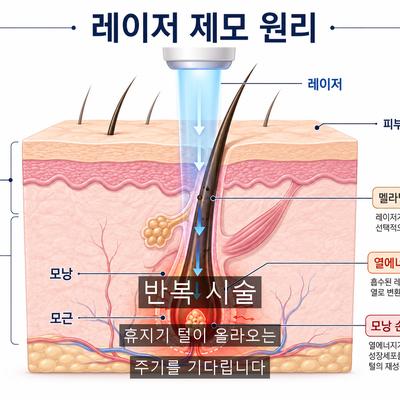
Laser hair removal works by delivering heat energy to the black melanin pigment in the hair, damaging the hair roots and follicle tissues.
This reaction is most effective in hair follicles in the anagen (growth) phase, where melanin production is active.
The problem is that not all hair under our skin is in the anagen phase at the same time.
Some hairs are actively growing (anagen phase), while others are in the resting (telogen) phase, meaning a single laser treatment only affects some follicles.
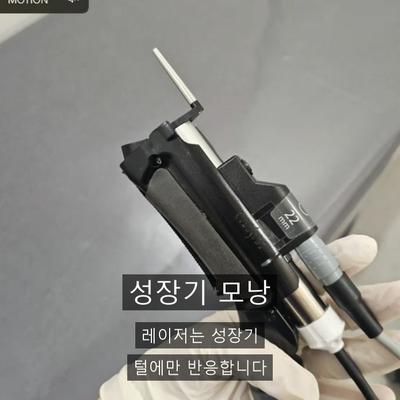
The timing for hairs in the telogen phase to switch back to the anagen phase varies and is difficult to predict.
Therefore, to effectively target all hair follicles, repeated laser treatments over time are necessary.
Even if the cost of calf hair removal is quoted per session, it's advisable to calculate the actual total cost by considering all the necessary sessions.
Criteria for Sessions and Cycles
Regardless of the area, generally, more than 10 treatment sessions are recommended.
For areas with thick and dark hair, like a man's beard, it can take 20 or more sessions, sometimes even over a year.
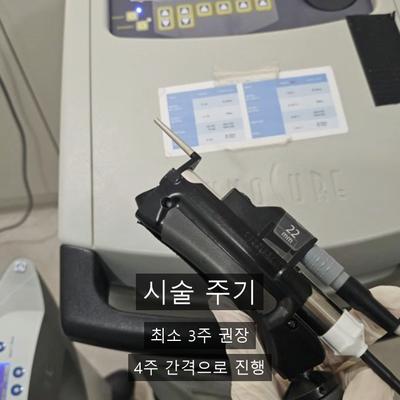
The recommended treatment interval is a minimum of 3 weeks, typically 4 weeks.
The skin's keratin layer regenerates approximately every 4 weeks, so adhering to this interval protects the skin while allowing new anagen hairs to emerge.
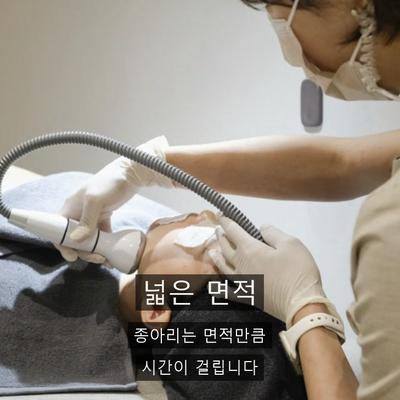
The calf area has a large skin surface and relatively distinct melanin pigment, making it respond well to laser treatments.
However, due to its large surface area, a single treatment session may take longer.
Rather than the concept of permanent hair removal where hair is completely gone, we adopt a semi-permanent approach where the effect is maintained through touch-up sessions approximately once every 2-3 months.
5 Checkpoints When Looking at Costs
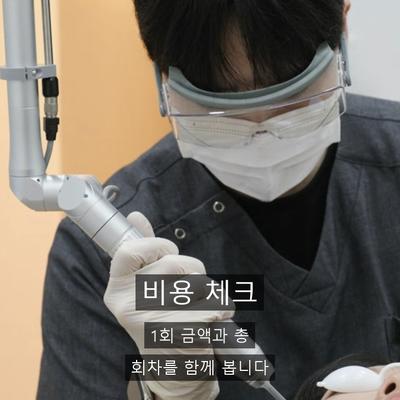
First, it's crucial to confirm whether the quoted price is for a single session or a package deal for multiple sessions.
Second, check the exact scope of calf hair removal. The cost structure may vary depending on whether it includes areas around the knees, instep, or toes.
Third, you should confirm what type of laser equipment is used. Devices like Apogee or GentleMax have different cooling methods and consumable structures, which influence the treatment unit cost.
Fourth, it's a good idea to inquire about the criteria for completing the treatment. It may vary by medical institution whether the treatment ends after a set number of sessions or after checking the state of remaining hair post-treatment.
Fifth, check if there's any information regarding future maintenance sessions or additional treatments, if needed.
There are also some habits that can affect the treatment's effectiveness.
It's best to shave before your treatment. If the hair is long, laser energy can be unnecessarily wasted on the surface, increasing the risk of burns and making it difficult for the energy to reach the hair roots sufficiently.
Avoid plucking hair. This is because the hair root, which the laser targets, is removed, making it difficult to achieve effective results.
After treatment, it's best to shave starting the day after, once any skin irritation has subsided.
How Our Clinic Designs Hair Removal Treatment
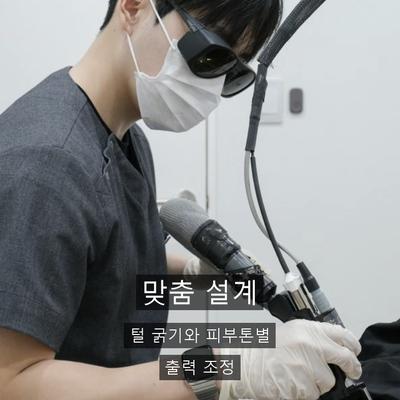
At our clinic, even for the same calf area, we individually adjust the treatment settings to match the hair's thickness, density, and skin tone.
Thick hair has a high melanin content, so excessive energy absorption with short pulses can lead to epidermal damage. We use long pulses to gently deliver heat, protecting the epidermis.
Fine and light hair has less melanin, which can result in a weaker laser response. Therefore, we carefully adjust the energy density or use repeated pulses to ensure heat reaches the hair roots.
In areas with dense hair, we disperse energy to prevent excessive heat accumulation, and for darker skin tones, we precisely adjust the output to reduce side effects caused by melanin.
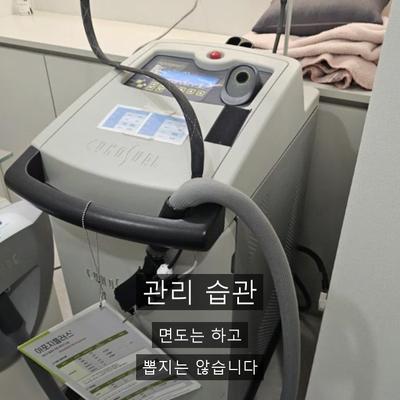
Our clinic utilizes widely used devices such as Apogee and GentleMax to minimize pain and perform treatments.
The level of pain is typically similar to applying an ice cooler, and as the amount of hair decreases, the pain tends to decrease as well.
Folliculitis may occur during the process of directly delivering heat energy to the hair follicles, but consistently applying regenerating cream usually alleviates it over time.

Before concluding the treatment, our clinic carefully checks for any areas that require additional attention and only ends the session after obtaining the client's final consent.
If there are specific areas of particular concern, we can focus the laser energy more precisely on those areas for targeted management.
Frequently Asked Questions
Q. When checking the cost of leg hair removal, is there a reason why you shouldn't only look at the price for a single session?
A. Leg hair removal treatments are generally recommended to be performed consistently for 10 sessions or more. Therefore, rather than simply considering the cost of a single session, it's important to understand the total cost based on the total expected number of sessions. During your consultation with our medical staff, we will provide detailed information on the costs according to the total number of treatment sessions.
Q. What factors influence the cost of leg hair removal?
A. The total cost of leg hair removal can vary depending on the treatment area, the type of equipment used, and the total number of sessions. Checking these three factors in advance during your consultation will help you compare different treatment methods.
Q. When looking into leg hair removal prices, should I also consider the treatment interval?
A. Separate from the cost of leg hair removal, it is important to maintain appropriate treatment intervals. Generally, treatments are based on a minimum of 3 weeks, with a recommended 4-week interval. Consistently maintaining this interval helps effectively manage hairs that are in the growth phase.
Our Clinic's Core Values
At our clinic, we meticulously consider each patient's hair thickness and skin tone, performing treatments with personalized pulse and energy settings. This allows you to expect more delicate and tailored care.
Our clinic highly values listening carefully to our patients' opinions and ensuring that the treatment process is completed without discomfort. We also strive to provide personalized treatments by focusing more intensely on specific areas of concern.
Our clinic uses widely known and performance-proven equipment such as Apogee and GentleMax for treatments. This is to ensure treatment safety while also helping to achieve excellent results.
the delicacy created by subtle differences We will strive to help you experience it.
Related notes
Procedure notes worth reading next.

Loading menu…