

Milia-like Acne at the Dermatology Clinic: How Can Exosomes Improve It? Beomgye, Pyeongchon, Beomgye Station, Pyeongchon Station, Hogye-dong, Bisan-dong, Gwanyang-dong, Dongan-gu, Indeogwon, Geumjeong, Anyang
8/19/2026
This is a procedure note for Milia-like Acne at the Dermatology Clinic: How Can Exosomes Improve It? at Gyeonggi Anyang Beomgye KKEUT Korean Clinic.
Many people look for clinics specializing in milia-like acne due to small, bumpy breakouts that resemble millet seeds.
Small breakouts scattered across the chin, forehead, and cheeks are frustrating because they can be felt when touched and are difficult to cover with makeup.
It's especially common for them to cluster in milia-like forms on areas with high sebum secretion, such as the nose, cheeks, and forehead.
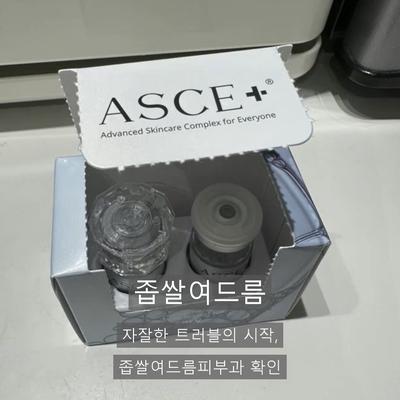
Milia-like acne begins when the pores become blocked with dead skin cells and sebum.
Sebum accumulates within the blocked pores, and acne bacteria multiply there, leading to a small inflammatory reaction.
Unlike general adult acne, milia-like acne is often small in size and does not appear prominently red, making it easy to overlook.
However, even if it doesn't stand out significantly on the surface, inflammation within the pores continues to progress steadily, increasing the risk of rough skin texture and residual marks over time.
Forcibly squeezing milia-like acne with your hands can damage the tissue around the pores, potentially leading to scars or post-inflammatory hyperpigmentation.
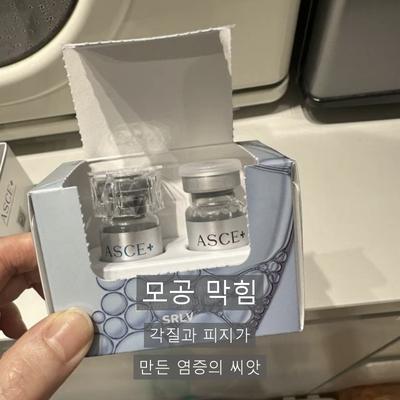
Milia-like acne results from a complex interplay of stress, increased sebum secretion, and dead skin cell buildup, so simple exfoliation often leads to recurrence.
If this condition persists, the pore walls may be repeatedly stimulated and transform into scar tissue.
For this reason, managing inflammation in its early stages is considered the most crucial point in preventing scars from milia-like acne.
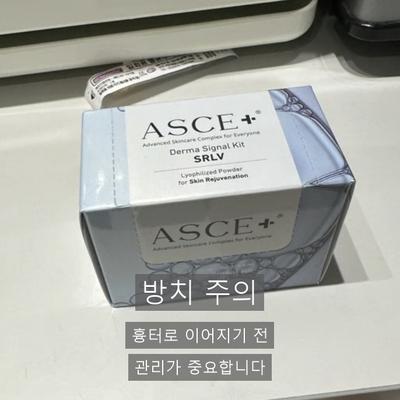
When choosing a clinic for milia-like acne, an approach that not only focuses on simple extraction but also calms inflammation and promotes skin regeneration is necessary.
Methods that only temporarily remove visible milia often fail to address the underlying cause of inflammation within the pores, leading to their reappearance after a few days.
An approach that combines inflammation calming and skin regeneration
At this point, exosomes are attracting attention.
Exosomes are nanoscale vesicles containing signaling molecules secreted by stem cells, playing a role in delivering regenerative signals to damaged or inflamed tissues.
These signaling molecules transmit recovery information to damaged cells, regulating inflammatory responses and aiding in collagen regeneration.
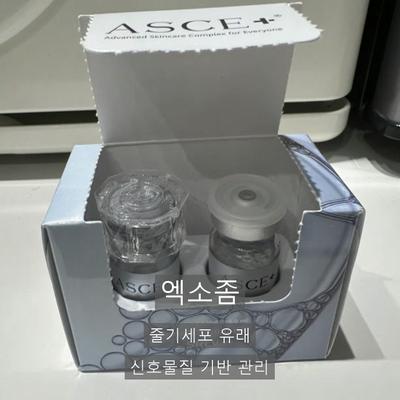
Exosomes are optimized for inflammatory skin trouble management among skin booster categories, making them useful for skin with recurring minor inflammation like milia-like acne.
The method involves applying exosomes primarily to areas with excessive sebum secretion and frequent inflammatory breakouts, thereby boosting the skin's self-healing power.
Simultaneously, it can also be expected to help restore the skin barrier, which aids in stabilizing sensitive skin conditions.
During this process, an improvement in the skin texture around the pores can also be expected.
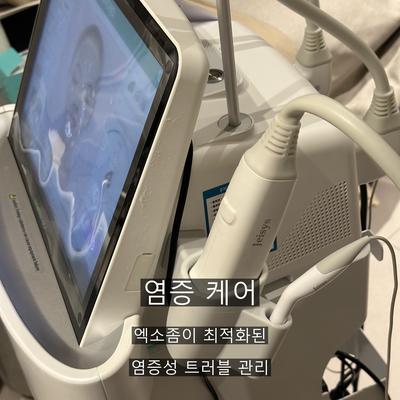
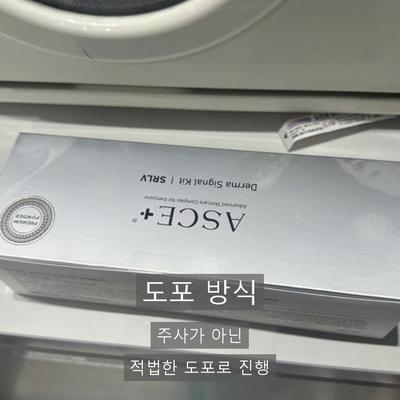
Exosomes are not injected but delivered to the skin through topical application.
Using exosomes in an injectable form is not permitted in Korea, so it must only be administered topically in a lawful manner.
Milia-like acne is not a one-time treatment issue; consistent management that considers sebum secretion and the dead skin cell turnover cycle is necessary to reduce recurrence.
The management cycle and method vary depending on an individual's skin condition and the degree of inflammation, so a customized plan through consultation is important.
Local, concentrated treatment is effective for areas with recurring minor breakouts.
Daily management such as sebum control and UV protection must be performed concurrently to maintain the treatment effect for a long time without recurrence.
Kkeut Korean Medicine Clinic's Unique Exosome Application Method
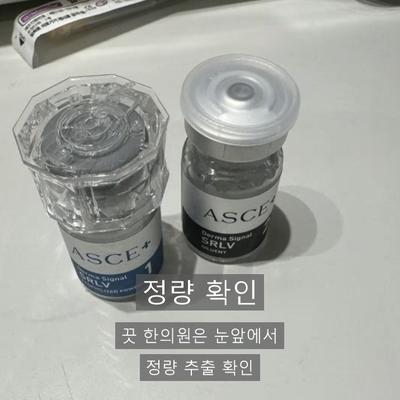
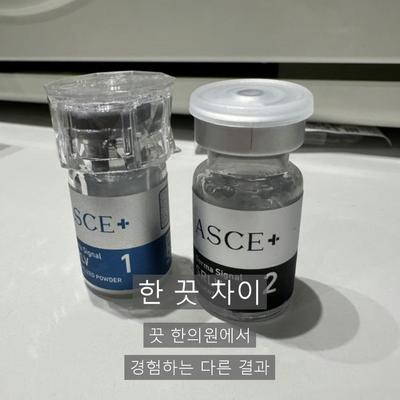
Kkeut Korean Medicine Clinic guides customers to visually confirm the precise extraction process of exosomes right before their eyes prior to application.
Being able to visually confirm the extraction amount allows patients to trust the actual amount of active ingredients used and receive the treatment with confidence.
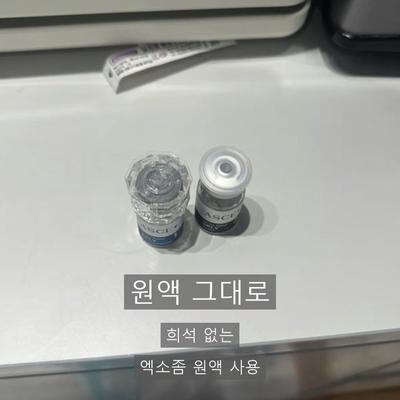
At Kkeut Korean Medicine Clinic, undiluted exosome original solution is used, delivering the full concentration of the ingredients without reduction.
Kkeut Korean Medicine Clinic adheres to lawful topical application rather than injection methods, considering both safety and efficacy.
Kkeut Korean Medicine Clinic applies exosomes by first creating micro-channels with a Potenza-exclusive pumping tip, then layering the exosomes, thereby enhancing absorption.
This method utilizes the pressure generated when the needles are withdrawn to push the ingredients deep into the dermal layer, resulting in higher absorption efficiency than simple topical application.
Absorption Design Possible Only at Kkeut Korean Medicine Clinic
Frequently Asked Questions
Q. What criteria should I use to choose a clinic for milia-like acne?
A. The key to choosing a clinic for milia-like acne is to check if it offers treatments that calm inflammation and promote regeneration, rather than just simple extraction. Kkeut Korean Medicine Clinic thoroughly explains these aspects right from the diagnosis stage.
Q. Is exosome treatment painful?
A. As it is administered topically, it causes less irritation compared to injection procedures. Kkeut Korean Medicine Clinic performs the treatment in a way that minimizes discomfort.
Q. Is it possible to return to daily life immediately after exosome treatment?
A. As the procedure mainly involves topical application, returning to daily life is relatively easy, and subsequent aftercare methods are guided by Kkeut Korean Medicine Clinic according to individual skin conditions.
Q. Why do small bumps (comedones) keep recurring?
A. If the skin environment, where sebum secretion and dead skin cell buildup repeatedly occur, does not change, recurrence is likely. Kkeut Korean Medicine Clinic focuses on fundamentally improving the skin environment.
The Sincerity of Kkeut Korean Medicine Clinic
Kkeut Korean Medicine Clinic provides differentiated results through a transparent process, allowing customers to directly verify the quantitative extraction.
Kkeut Korean Medicine Clinic enhances patient satisfaction by using undiluted exosome original solution and legitimate application methods.
Kkeut Korean Medicine Clinic simultaneously pursues safety and efficacy through Potenza pumping tip layering.
A Subtle Difference, Different Results — Experience it at Kkeut Korean Medicine Clinic.
Related notes
Procedure notes worth reading next.


Loading menu…