

Thread Lift Side Effects: 3 Things to Check Before Your Procedure (Part Two) Beomgye, Pyeongchon, Beomgye Station, Pyeongchon Station, Hogye-dong, Bisan-dong, Gwanyang-dong, Dongan-gu, Indeogwon, Geumjeong, Anyang
This is Gyeonggi Anyang Beomgye KKEUT Korean Clinic's procedure note on Thread Lift Side Effects: 3 Things to Check Before Your Procedure (Part Two).
Many people wonder how long the various reactions that appear after a face thread lift will last.
As this procedure uses threads to pull up skin tissue, it's good to be aware of the reactions that may occur during the recovery process.
Here, we will sequentially examine three essential things to check before the procedure.
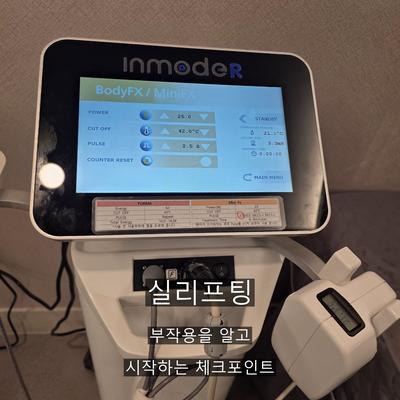
First, whether the treatment goal matches your facial condition
Thread lifting is a structural method that inserts threads under the skin to support and lift sagging tissue.
If you aim to improve sagging, important considerations include what type of threads to use and in which direction to insert them.
Sometimes, the reason your face appears heavy is due to fat volume under the chin or around the cheeks, rather than sagging.
Procedures that lift tissue upwards and procedures that reduce the fat layer target different skin layers.
Therefore, it may sometimes be appropriate to consider a procedure with a different purpose, such as InMode FX, which manages the fat layer.
If you already have hollow cheeks, you should assess the overall volume status together when planning the procedure.
If the procedure is performed without accurately distinguishing the cause, there may be a discrepancy between the expected results and the actual appearance.
Therefore, the first thing to check is to differentiate, through consultation, whether sagging or volume is the primary concern.
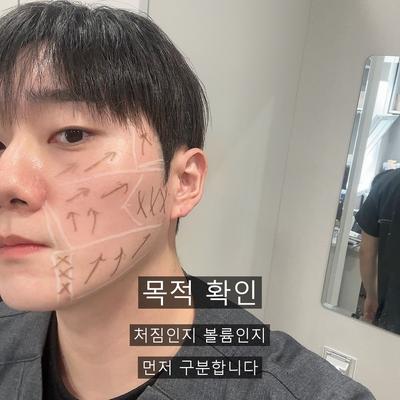
Second, the types of reactions that may appear and their course
Common reactions that may appear after a facial thread lift include bruising, swelling, a pulling sensation, and pain in the treated area.
These reactions typically begin immediately after the procedure and usually tend to subside gradually over time. However, the course may vary among individuals.
The extent of bruising can vary depending on individual skin characteristics or constitution.
Rarely, side-to-side asymmetry, a sensation of threads being felt above the skin, dimpling of the skin due to pulling, or infection may occur.
If a feeling of heat or redness persists for several days or gradually worsens, it is necessary to inform the clinic where you received the procedure.
During consultation, providing information about current medications, allergy history, and the presence of skin conditions is crucial for predicting potential reactions.
If you are sufficiently informed before the procedure about which reactions are part of the natural recovery process and which require further attention, you can reduce unnecessary worries.
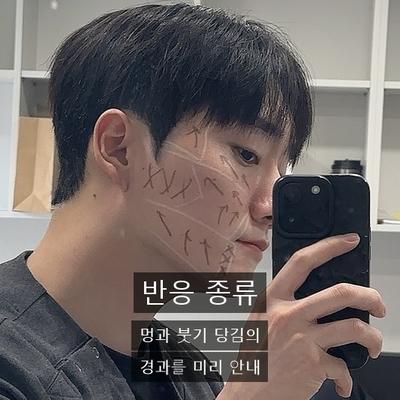
Third, post-procedure care methods and follow-up system
For several days after the procedure, patients are often advised to avoid pressing their face strongly or making large facial movements. The duration and precautions to observe may vary by clinic.
We also advise refraining from activities that can raise facial temperature, such as saunas, strenuous exercise, and alcohol consumption.
It is important to confirm in advance where to contact if unexpected reactions occur, when to visit again, and whether follow-up care is available at the same clinic.
It is difficult to determine the final results before swelling or bruising has completely subsided. Therefore, it is advisable to plan a follow-up visit to check on your progress.
If there is a record of what type of threads were inserted, how many, and in which direction, it can serve as an important reference for subsequent procedures.
The three criteria presented above can be applied equally regardless of which facial procedure you choose.
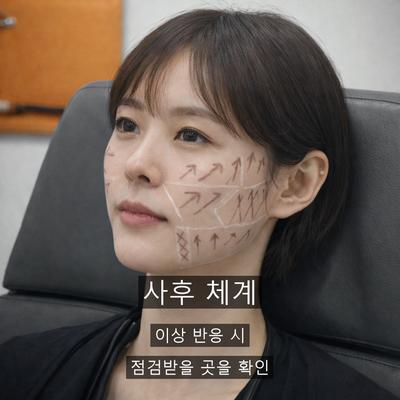
How Kkeut Korean Medicine Clinic designs procedures tailored to your goals
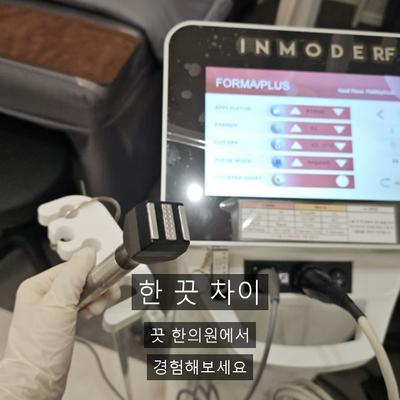
Unlike thread lifting, which is a structural procedure that lifts sagging tissue, InMode FX uses radiofrequency (RF) energy to heat the fat layer to over 40°C and applies high-voltage pulses (HVP) to reduce fat cells.
Since these two procedures have different goals, it is important to choose the appropriate procedure based on each individual's facial condition, rather than replacing one with the other.
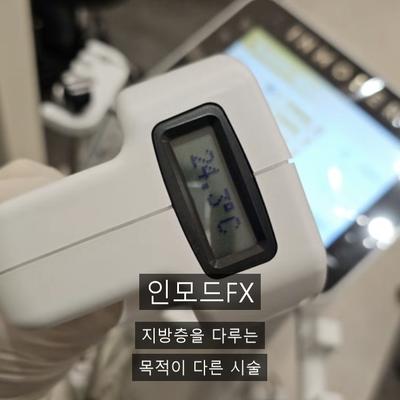
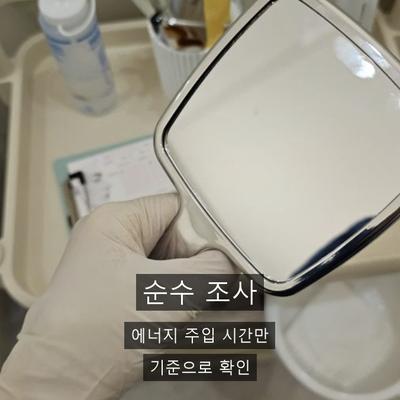
At Kkeut Korean Medicine Clinic, when performing InMode FX procedures, only the actual energy delivery time is used as the basis for billing.
The time spent turning on the device or moving the handpiece is not measured, and patients can directly verify the pure treatment time recorded on the monitor after the procedure.
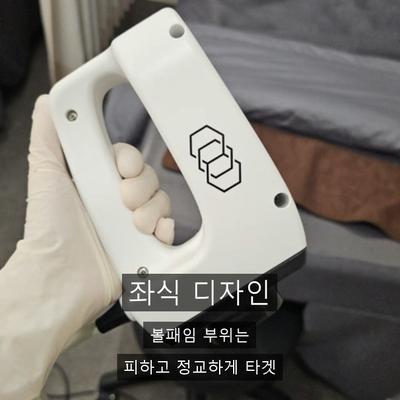
At Kkeut Korean Medicine Clinic, pre-procedure design is performed while the patient is in a seated position.
As InMode FX actively reduces fat, caution is needed regarding cheek hollowing. Therefore, areas where cheek hollowing is a concern are avoided, and only sagging fat is precisely targeted for treatment.
At Kkeut Korean Medicine Clinic, the pulse duration is flexibly adjusted and applied during the procedure.
Initially, the focus is on rapidly raising skin temperature to 40°C, so the pulse duration is kept long. Once the target temperature is reached, the pulse duration is shortened to increase the proportion of HVP (High Voltage Pulse) delivery.
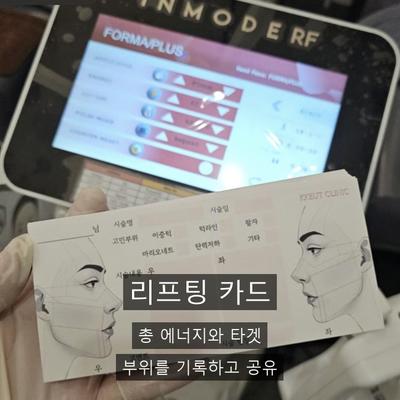
After the procedure, Kkeut Korean Medicine Clinic creates and shares a lifting card with the patient.
This card records the total energy (KJ) delivered on the day, the actual treatment time, and the areas that were intensively treated. This allows for continuous care at any point.
InMode FX is equipped with a thermal sensor that checks skin temperature 1,000 times per second and a safe temperature limit function. Therefore, anesthetic cream is not used to prevent the risk of burns.
Based on research papers, the recommended number of treatments is around 5 sessions, with a standard interval of 1 to 2 weeks. If weekly visits are difficult, it is recommended to receive treatments every 2 to 4 weeks.
After the procedure, we recommend sufficient water intake to help dead fat cells be smoothly discharged from the body.
Frequently Asked Questions
Q. What are the side effects of facial thread lifting?
A. After a facial thread lift, temporary bruising, swelling, skin tightness, and pain may occur. Rarely, some may experience asymmetry or a sensation of the threads being palpable. The outcome of all procedures may vary for each individual.
Q. If I'm concerned about facial thread lift side effects, is InMode FX an alternative?
A. Facial thread lifting and InMode FX have different treatment objectives. Thread lifting primarily aims for structural improvement of sagging skin, while InMode FX can be used for fat volume reduction and improving skin elasticity. It is best to determine the most suitable treatment method for you through thorough consultation with a medical professional.
Q. What should I do if I suspect facial thread lift side effects?
A. If you experience persistent or worsening heat, redness, or pain in the treated area, it is necessary to visit the medical institution where you received the procedure for an examination by the medical staff. Through the examination, the exact cause and presence of side effects can be confirmed.
The Sincerity of Kkeut Clinic
Kkeut Clinic determines costs based on the thread insertion energy time, and after the procedure, we carefully check the patient's condition via a monitor.
Kkeut Clinic provides a floor seating design space for patient comfort and flexibly adjusts the pulse duration to suit each individual during treatment.
Kkeut Clinic considers both the safety and expected effects of the procedure through the process of creating and sharing lifting cards.
Experience different results with a subtle difference at Kkeut Clinic.
Related notes
Procedure notes worth reading next.

Loading menu…