

Ultherapy: The Principle of Long-Lasting Effects from a Single Session and Who It's Recommended For Beomgye, Pyeongchon, Beomgye Station, Pyeongchon Station, Hogye-dong, Bisan-dong, Gwanyang-dong, Dongan-gu, Indeogwon, Geumjeong, Anyang
10/26/2026
This is a procedure note for Ultherapy: The Principle of Long-Lasting Effects from a Single Session and Who It's Recommended For at Gyeonggi Anyang Beomgye KKEUT Korean Clinic.
When considering Ultherapy, one of the main concerns is how long the effects can be maintained with a single treatment.
The lasting effects of Ultherapy are due to the depth of skin the energy reaches and the principles of the treatment.
In this article, we aim to explain the skin layers Ultherapy acts upon, cases where one session is sufficient versus multiple sessions, and who might be a suitable candidate for the treatment.
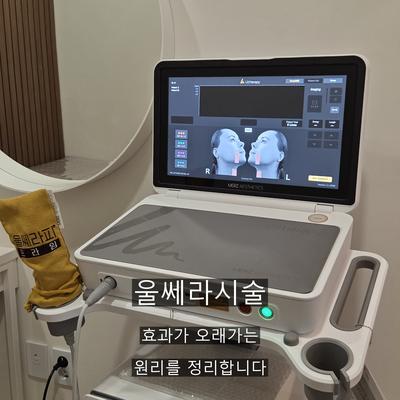
Factors for long-lasting effects lie in the deep layers of the skin
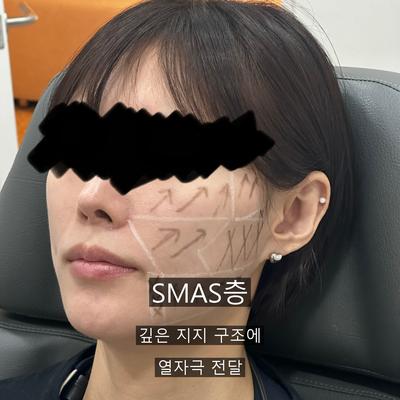
Ultherapy is a procedure that utilizes High-Intensity Focused Ultrasound (HIFU) technology to precisely deliver thermal energy to the deep SMAS layer of the skin.
The SMAS layer is located beneath the skin and subcutaneous fat, serving as a crucial supportive tissue that maintains the overall structure of the face.
Skin sagging can occur due to excessive fat, but it can also appear even with less fat if the SMAS layer becomes loose.
Tissue stimulated by heat undergoes a remodeling process for a certain period, so it may take time to observe noticeable changes.
Immediately after the procedure, a slight tightening sensation may occur as a temporary reaction, and mild swelling is also common in the initial stages.
While there can be individual differences, generally, signs of gradual improvement can be felt starting about a month after the procedure.
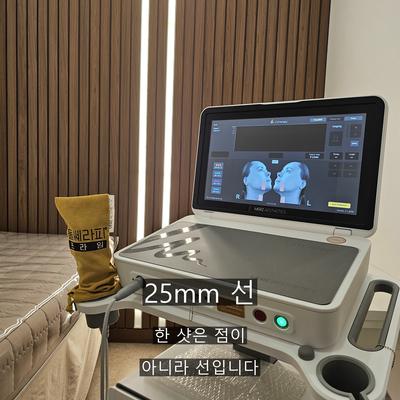
Each Ultherapy shot is delivered in a line, not a dot
Ultherapy energy is not delivered to a single point, but passes through the skin in the form of a long, continuous line.
Ultrasound energy is continuously delivered at extremely short intervals to form a precise line, and these lines are densely arranged across the facial area to promote an overall lifting effect.
The basic length of each line formed is set at 25mm, which is also the standard length recommended by the equipment.
Because these thin lines collectively affect the entire face, a minimum number of shots is required to cover a sufficient area. Typically, 600 shots or more are recommended.
The appropriate number of shots may vary depending on individual face size, the degree of skin sagging, and the extent of areas requiring focused improvement.
Even when using the same 600 shots, adjusting the line length in the equipment settings changes the area covered by a single shot, which can alter the actual amount of energy delivered to the skin.
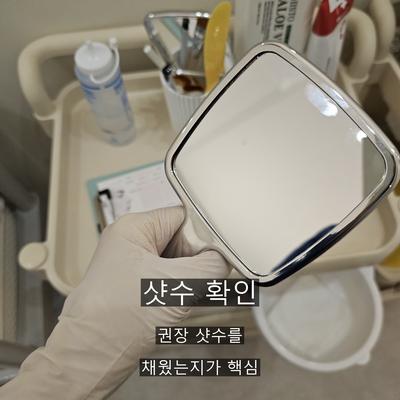
To expect sufficient results from a single treatment, adhering to the recommended shot count is important
Experiencing lasting effects from a single treatment is based on the premise that the recommended total number of shots has been sufficiently applied.
If all recommended shots have been applied, we typically advise considering the next treatment with an interval of approximately 6 months to 1 year.
If the number of shots is insufficient and the treatment needs to be done over several sessions, we might recommend replenishing the remaining shots at approximately one-month intervals.
Who is this treatment suitable for?
It can be expected to be suitable for individuals whose overall facial contours are sagging, making their mouth corners or jawline appear blurred.
This treatment can also be helpful for individuals who do not have much fat on their face but whose overall lines appear to have collapsed.
This is because if there is a lack of volume in the face, the supportive structures may be relatively weak, making line sagging appear more pronounced.
It is also a treatment to consider for those who find it difficult to visit the clinic frequently or who desire consistent management with relatively long intervals.
Since the skin surface texture and elasticity are different areas from the deep layers Ultherapy acts upon, it is often combined with treatments that manage the superficial layers, such as Denssity, Onda, or Tenssarma.
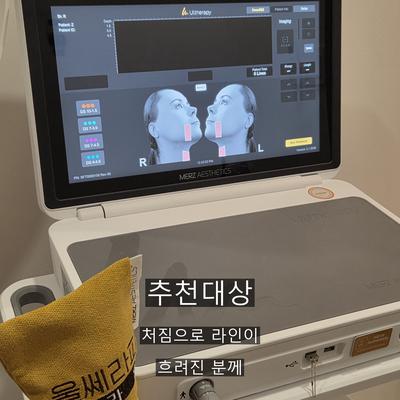
Information on pain and anesthesia during the procedure
As energy is delivered to the deep layers of the skin, a certain level of sensation may be felt.
The procedure is mainly performed using topical anesthetic cream, and in some cases, individuals opt to proceed without anesthesia.
We generally do not recommend general anesthesia (sedation).
During an Ultherapy procedure, ultrasound energy must be delivered with the tip fully adhered to the skin, and this adherence must be consistently maintained for the energy to be accurately delivered to the intended skin layer.
During sedation, the patient's head may move without their conscious awareness, causing the tip to detach from the skin, which can lead to the energy being delivered to an inaccurate location.
In a conscious state, such movements can be minimized, and the sensations felt during the procedure can help in understanding which areas are receiving energy.
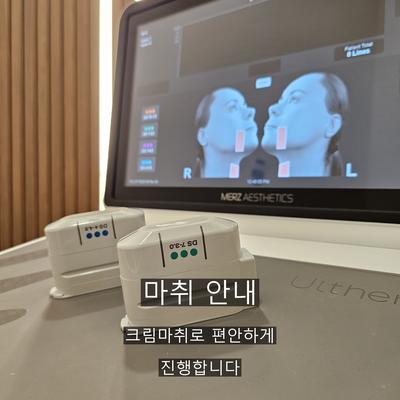
Ultherapy treatment approach at KKEUT Oriental Clinic
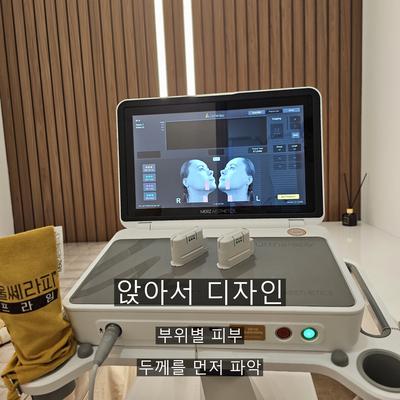
At KKEUT Oriental Clinic, for Ultherapy procedures, even if the patient will be lying down during the actual treatment, the design phase is first conducted in a seated position.
This is because when a patient lies down, the direction of gravity changes, causing sagging tissues to shift backwards and upwards, which can make them appear less saggy than they actually are.
In a seated position, we meticulously observe the current state of skin sagging and palpate directly to accurately determine the skin thickness for each area.
Since the skin thickness varies for the cheekbones, under the chin, and cheek areas, a meticulous plan is established before the procedure regarding whether to apply the 4.5mm tip or the 3.0mm tip to each respective area.
This approach allows for differentiation from procedures that uniformly apply the same tip and settings to the entire face.
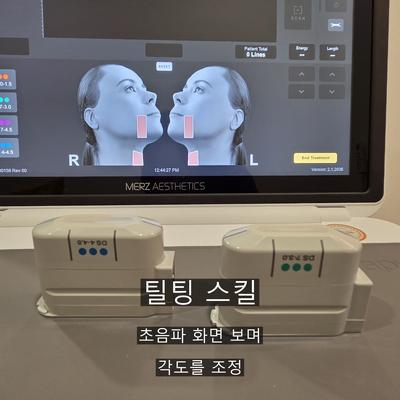
At our clinic, we employ a tilting technique during procedures for a more meticulous approach.
The tips used in Ultherapy create a focal point at different fixed depths. For example, a 4.5mm tip focuses energy at a depth of 4.5mm in the skin, and a 3.0mm tip at a depth of 3.0mm.
However, the actual depth of the SMAS layer varies from person to person and even differs in various areas within the same face.
If the SMAS layer is located at a depth of approximately 3.8mm, a 4.5mm tip would deliver energy deeper than this layer, and a 3.0mm tip would deliver it shallower. When using the tips vertically in this manner, energy may not be accurately delivered to the target SMAS layer.
In this case, by tilting the treatment tip diagonally, the focal depth can be adjusted. This aims to efficiently deliver energy even to SMAS layers that lie within the intermediate range of the fixed tip specifications.
At our clinic, we confirm the real-time location of the SMAS layer using an ultrasound screen during the procedure, allowing us to perform customized treatments through angle adjustment.
Although such delicate angle adjustments require additional time, our clinic dedicates sufficient time to these processes, aiming for meticulous treatments.
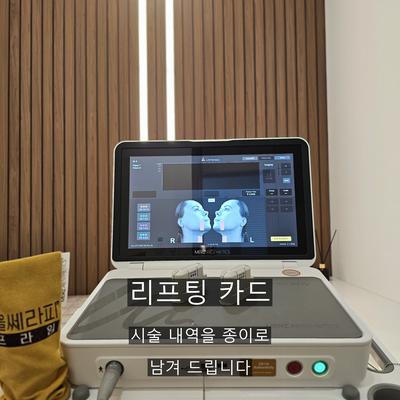
Upon completion of the procedure, we issue a lifting card to the patient.
This card contains detailed information about the procedure, including the type of tip used, the number of shots delivered to each area, and the intensity settings for each area.
Since many aspects of the procedure are difficult for the patient to directly observe, this card serves as a clear record of the treatment information. It can be utilized as important reference material when planning future retreatment or discussing changes.
Our clinic performs treatments based on a standard length of 25mm, and we strive to enhance trustworthiness by transparently disclosing the equipment settings screen before the procedure.
Frequently Asked Questions
Q. How many shots are recommended for an Ultherapy procedure?
A. Ultherapy delivers energy to the skin layers in fine lines, so generally, more than 600 shots are recommended. However, the number of shots needed can vary depending on individual face size or the degree of sagging, so it is best to decide after a thorough consultation with medical staff.
Q. When do the effects of Ultherapy typically appear?
A. The onset of Ultherapy's effects can vary from person to person. Generally, patients begin to notice gradual changes about 1 month after the procedure, and temporary swelling may accompany the initial stages of treatment.
Q. How often should Ultherapy be repeated?
A. The retreatment interval for Ultherapy can vary depending on several factors. If the recommended total number of shots was administered in a single session, an interval of 6 months to 1 year can be considered. If the shots are divided into multiple sessions, they may be performed at approximately 1-month intervals. Consultation with medical staff is important to establish the most appropriate treatment plan based on individual skin laxity and condition.
Our Clinic's Sincerity
At our clinic, we strive to achieve more precise and personalized treatment results by utilizing design performed with the patient in a seated position and ultrasound-guided tilting technology.
Through our lifting cards, we meticulously record treatment details to help patients clearly understand the procedure and plan for their next steps.
At our clinic, we carefully consider both the safety and anticipated effects of the procedure through the use of 25mm standard length treatments and transparent disclosure of equipment settings.
Our clinic's delicate approach can positively impact treatment results. Please consult with a specialist to verify the detailed information.
Loading menu…