

3 Key Factors for Choosing a Clinic for Successful Tattoo Removal Beomgye, Pyeongchon, Beomgye Station, Pyeongchon Station, Hogye-dong, Bisan-dong, Gwanyang-dong, Dongan-gu, Indeogwon, Geumjeong, Anyang
This is Gyeonggi Anyang Beomgye KKEUT Korean Clinic's procedure note on 3 Key Factors for Choosing a Clinic for Successful Tattoo Removal.
When choosing a tattoo removal clinic, it can be difficult to decide which criteria to use for comparison.
Since each clinic uses different types of equipment and recommends different numbers of treatment sessions, objective comparison is often a challenge.
This article will start with the basic principles of tattoo removal and then sequentially outline three main criteria to consider when choosing a clinic.
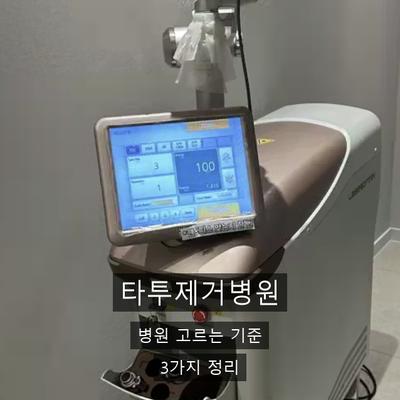
How is Tattoo Removal Performed?
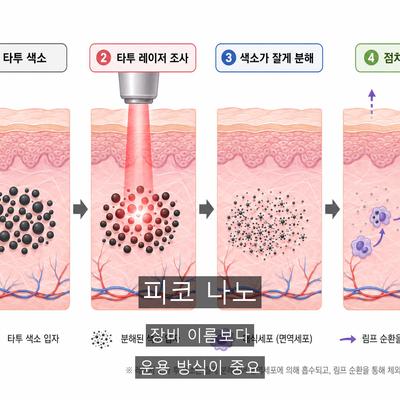
Tattoo removal treatment proceeds by laser energy being absorbed by the tattoo pigment, finely breaking down these pigment particles.
These finely broken-down pigment particles are processed by macrophages, our body's immune cells, and then naturally expelled from the body via the lymphatic system.
In other words, the principle is that when the laser destroys the tattoo pigment, our body takes on the role of expelling it.
Even if the treatment principle is the same, the treatment plan varies depending on the laser equipment's wavelength configuration and irradiation method, so these aspects should be important considerations when choosing a clinic.
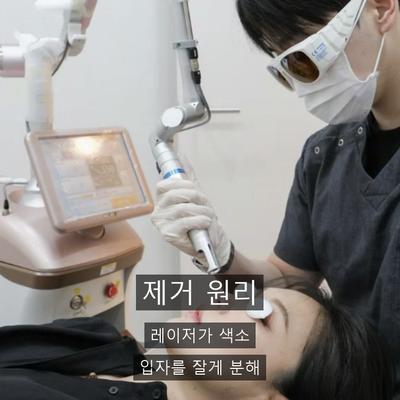
Criterion 1. Does the clinic have wavelengths suitable for tattoo pigments?
The first consideration is whether the equipment used by the clinic can effectively address various tattoo pigments.
This is because the wavelength absorbed by the laser differs depending on the type of pigment used in the tattoo.
Therefore, confirming whether the clinic is equipped with devices that can utilize various wavelengths, such as 1064nm and 532nm, to match different tattoo colors is the starting point for choosing a treatment.
It is crucial to select the appropriate wavelength for each pigment, covering not only general tattoos but also semi-permanent makeup like eyebrows or eyeliners, and even faint residual pigments left after treatments elsewhere.
During your consultation, inquiring about the wavelength configuration of the available equipment can help you determine if the clinic is prepared for various treatment cases.
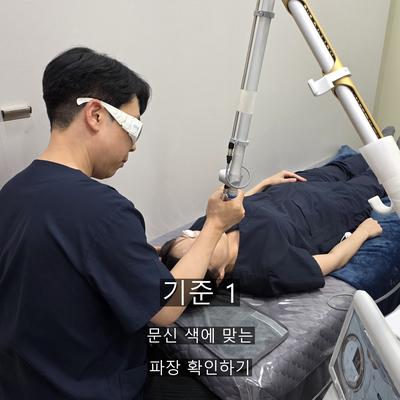
It's also necessary to understand some common misconceptions regarding the use of picosecond devices.
There's a common assessment that picosecond devices, which have shorter laser pulse durations, are more effective at removing fine pigment particles.
However, tattoo removal treatment is entirely possible with nanosecond lasers, though in such cases, additional treatment sessions may be required compared to the picosecond method.
Rather than simply deciding on a clinic based solely on the name of the equipment, it's wiser to also consider how that equipment is operated to perform the treatment, which aids in making an informed choice.
Criterion 2. Is the irradiation method capable of efficiently reducing the number of treatment sessions?
Typically, tattoo removal treatments involved a recovery period of about 6-8 weeks, and often required an average of 10 or more repeated sessions.
Due to the white bubbles (frosting) that appear on the skin during laser irradiation, it was previously necessary to wait for tens of minutes for these bubbles to subside.
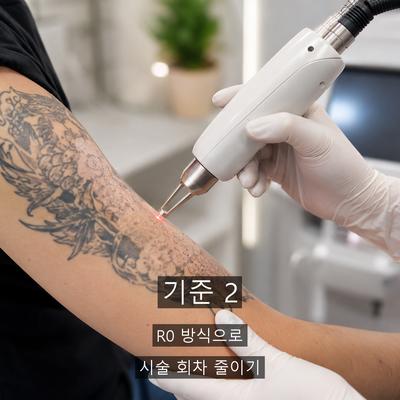
The R0 method uses a special solution called PFD to remove bubbles on the skin in just a few seconds. This allows the laser to be re-irradiated within 1-2 minutes.
By irradiating the same area multiple times during a single visit, pigment destruction efficiency can be increased. Some reports suggest that this can reduce the total number of treatment sessions by approximately 30-50%.
Therefore, it's necessary to check not only the total number of visits but also how many times the laser is irradiated during a single visit.
Inquiring about the application of the R0 method and the use of PFD can be the second criterion for consideration.
Criterion 3. Is there sufficient guidance on pain management and aftercare methods?
Understanding potential post-treatment situations and appropriate management becomes the third crucial criterion.
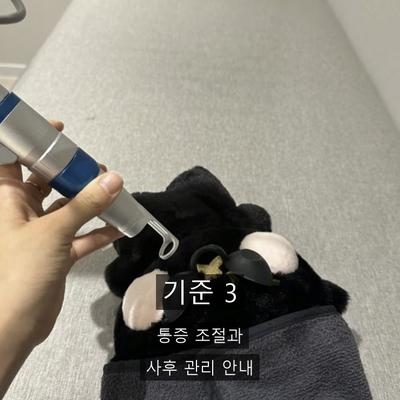
Tattoo removal treatment can be more painful than getting a tattoo, and we can help reduce pain through the application of anesthetic cream or cooling before the procedure.
Immediately after the procedure, swelling, redness, and temporary skin whitening may appear. Generally, these recover within 1-2 weeks, but the recovery period can vary individually depending on skin condition, tattoo depth, and treatment intensity.
Blisters that occasionally form after treatment serve a protective function for the skin, so care must be taken not to burst them intentionally.
To prevent dryness of the treated area, it is recommended to consistently apply a regenerating ointment and to carefully use sunscreen on areas expected to be exposed to UV light to prevent hyperpigmentation.
If the laser selectively removes only tattoo ink, concerns about scarring may be reduced. However, it is crucial to strictly follow the treatment frequency and intensity recommended by specialized medical staff.
Kkeut Korean Medicine Clinic's Unique Tattoo Removal Protocol
At Kkeut Korean Medicine Clinic, we apply the three criteria explained above to perform treatments as follows.
Kkeut Korean Medicine Clinic performs tattoo removal treatments using a hybrid protocol that combines the R0 method with the stability of the R20 method.
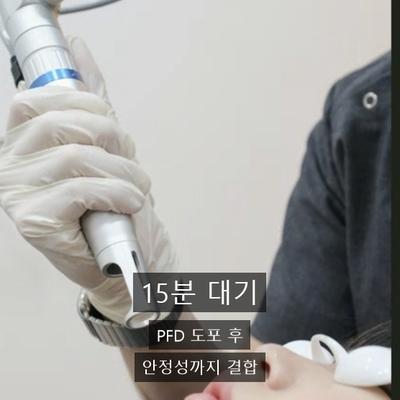
After applying the PFD solution, we do not immediately irradiate with the laser; instead, we have a waiting period of about 15 minutes.
During this waiting period, the PFD medication acts sufficiently, and most of the frosting phenomenon disappears. This helps the subsequent laser energy be delivered more deeply and precisely to the pigment.
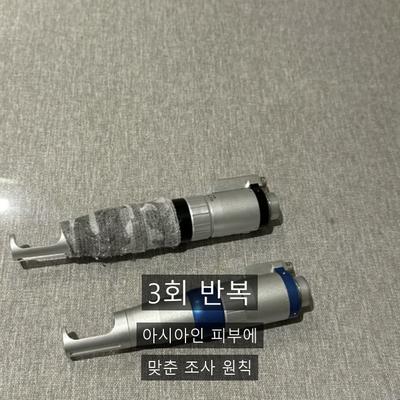
Considering the skin characteristics of Asians, who are sensitive to melanin reactions, Kkeut Korean Medicine Clinic's treatment principle involves three immediate repeated irradiations.
This number of treatments allows for safely expecting results while reducing the risk of post-inflammatory hyperpigmentation (PIH).
Tattoo removal treatments at Kkeut Korean Medicine Clinic may take slightly longer compared to conventional methods.
We focus on efficiency, reducing the number of visits while ensuring sufficient treatment progress in a single visit.
Kkeut Korean Medicine Clinic's Design: Prioritizing Results Over Time
At Kkeut Korean Medicine Clinic, during consultation, we thoroughly check the tattoo's color, location, whether it's semi-permanent or residual traces, and then guide you through a personalized treatment plan accordingly.
Frequently Asked Questions
Q. Do I absolutely need to choose a place equipped with a pico laser for tattoo removal?
A. It's difficult to conclude that a picosecond laser is essential for tattoo removal. Tattoo removal is also possible with a nanosecond laser, though additional treatment sessions may be required in some cases. At Kkeut Korean Medicine Clinic, we explain the most suitable method based on your tattoo's condition.
Q. How many treatment sessions are generally expected for tattoo removal?
A. Traditional methods may require an average of 10 or more sessions. The R0 method is known to reduce the total number of treatment sessions by approximately 30-50%. Since operating methods vary by medical institution and individual differences exist, Kkeut Korean Medicine Clinic provides specific guidance after consultation.
Q. What kind of aftercare is needed following tattoo removal treatment?
A. It is important not to pop blisters if they appear after treatment. You should focus on moisturizing with a regenerative ointment and protecting from UV rays. Kkeut Korean Medicine Clinic also provides guidance on these same aftercare principles.
Q. Is there no possibility of scarring during tattoo removal treatment?
A. If the laser precisely targets only the tattoo ink, concerns about scarring can be reduced. However, it is crucial to adhere to the treatment cycle and intensity recommended by the medical staff. Kkeut Korean Medicine Clinic assesses the patient's skin condition and adjusts the appropriate cycle and intensity for the treatment.
Kkeut Korean Medicine Clinic's Sincerity
Kkeut Korean Medicine Clinic strives for more efficient tattoo removal through a 15-minute waiting protocol that combines the R0 and R20 techniques.
Considering the skin characteristics of Asians, Kkeut Korean Medicine Clinic utilizes a 3-session immediate repetitive irradiation method to help raise expectations for treatment effectiveness.
Kkeut Korean Medicine Clinic prioritizes a design that simultaneously considers the safety of the treatment and the effectiveness of the results, rather than merely saving time.
This is Kkeut Korean Medicine Clinic, where you can expect different results with just a subtle difference.
Loading menu…