

Permanent hair removal for legs is not possible. It is semi-permanent hair removal. Beomgye, Pyeongchon, Beomgye Station, Pyeongchon Station, Hogye-dong, Bisan-dong, Gwanyang-dong, Dongan-gu, Indeogwon, Geumjeong, Anyang
5/13/2026
This is a procedure note for Permanent hair removal for legs is not possible. It is semi-permanent hair removal. at Gyeonggi Anyang Beomgye KKEUT Korean Clinic.
Permanent hair removal on legs is not possible. It is semi-permanent hair removal.
Many people search for 'permanent leg hair removal' and look for clinics.
However, we need to be clear about something from a medical perspective. It is impossible to permanently destroy hair follicles 100%, regardless of the equipment or clinic used.
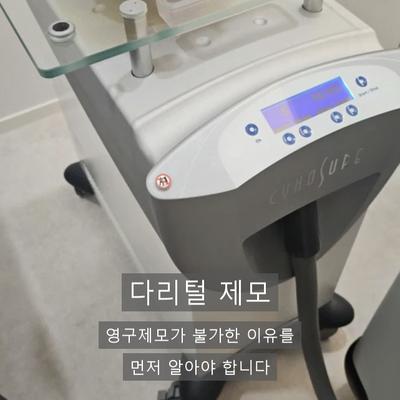
The hair growth cycle is key
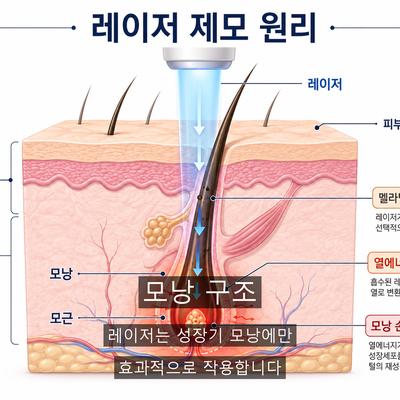
The principle of laser hair removal is simple. The laser is absorbed by the melanin pigment in the hair, converted into thermal energy, and that heat destroys the hair root and follicle.
The problem is that the laser only works effectively on hair follicles in the 'anagen' (growth) phase.
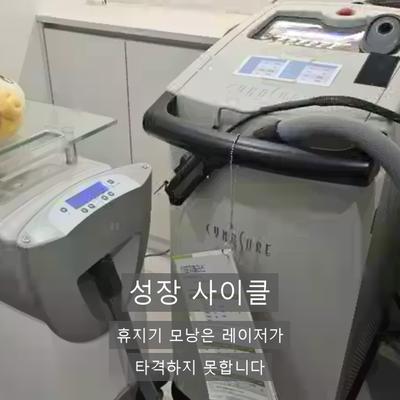
Hair goes through a cycle of anagen (growth) → catagen (transitional) → telogen (resting) phases. At the moment the laser is applied, follicles in the telogen phase have very little melanin pigment, so they cannot absorb laser energy. No impact occurs at all.
Furthermore, follicles that appeared to be destroyed can reactivate over time. There have been reports of some follicles regaining function due to hormonal changes or the influence of stem cells around the hair follicle.
This is why permanent leg hair removal is medically impossible.
Why Legs are More Challenging
Compared to other areas, legs have a larger surface area and higher hair density. Delivering energy evenly across a large area is technically challenging in itself.
Leg hair varies in thickness and color depending on the area. The inner and outer calves, and thigh areas each have different hair characteristics, so treating the entire leg with the same energy settings will not yield consistent results.
Precisely at this point, Kkeut Korean Medicine Clinic's approach differs.
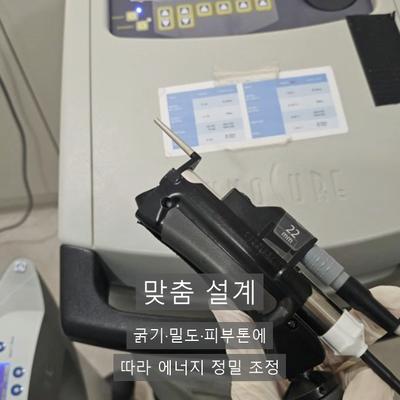
Kkeut Korean Medicine Clinic sets different Pulse Durations for thick and fine hairs. Thick hairs have a higher melanin content, posing a risk of rapid energy absorption. In such cases, Kkeut Korean Medicine Clinic uses longer pulses to deliver heat gradually, safely protecting the epidermis.
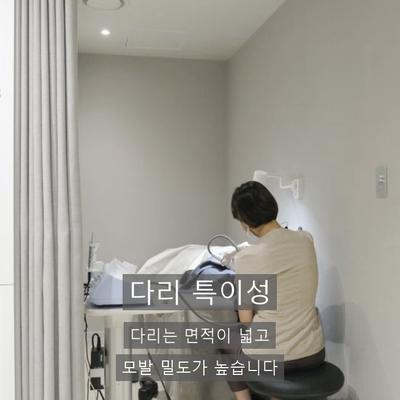
The energy density (J/cm²) settings are also adjusted accordingly. For thick, dark hair, a higher energy density is planned, while for fine, light hair, the energy is increased or repeated pulses are used to ensure sufficient heat reaches the hair root.
For areas with dense hair, energy is dispersed during treatment to prevent burns from overheating. All these processes are determined during the planning stage before the procedure.

Equipment and Operation Possible Only at Kkeut Korean Medicine Clinic
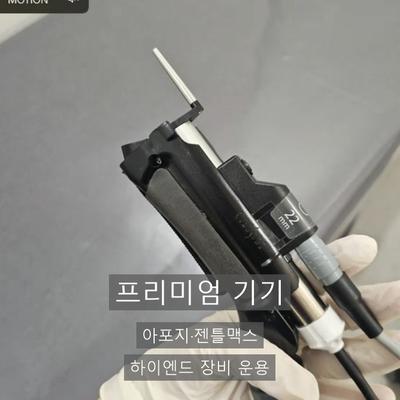
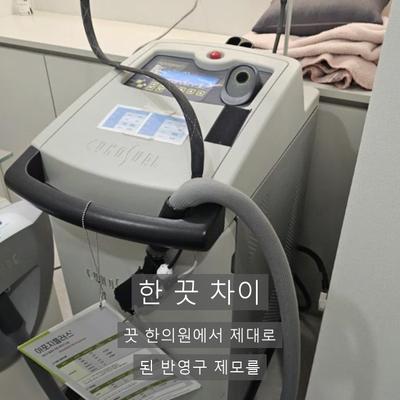
Kkeut Korean Medicine Clinic operates globally verified high-end equipment such as Apogee and GentleMax. They are not just famous names. We understand the cooling methods and characteristics of each device and select and use them according to the patient's skin condition.
At Kkeut Korean Medicine Clinic, before the end of the treatment, the patient personally checks for any additional treatment areas, and the procedure is only concluded after the customer's final approval. If any areas are missed, they are addressed immediately. We do not unilaterally conclude the treatment just because it's 'finished'.
If you understand why permanent leg hair removal is not possible, the important thing now is to accurately define the concept of 'semi-permanent'.
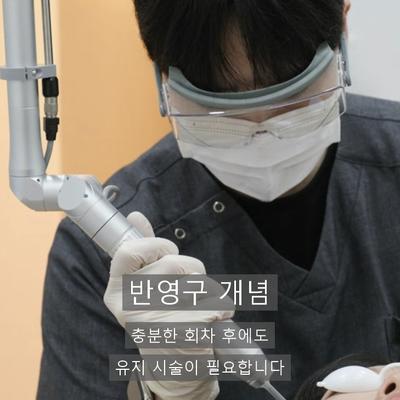
After completing a sufficient number of sessions (typically 10 or more), most hair follicles are destroyed, resulting in a state where hair barely grows. However, continuing maintenance treatments every 2-3 months to address remaining and reactivated follicles that have returned to the anagen phase is a realistic and accurate management method.
Frequently Asked Questions
Q. Some clinics claim to offer permanent leg hair removal. Is that true?
A. Permanent leg hair removal is medically impossible. There is no equipment or technology that permanently destroys hair follicles 100%. While it is true that most hair disappears after a sufficient number of sessions, referring to this as 'permanent' is not accurate. 'Semi-permanent' is the correct term.
Q. How many sessions are needed for permanent leg hair removal?
A. For the leg area, a minimum of 10 sessions is recommended. It's important to maintain 3-4 week intervals because the proportion of hair follicles in the anagen phase varies with each session. After 10 sessions, maintenance treatments every 2-3 months are advised to manage reactivated follicles.
Q. How long does a full leg hair removal session take?
A. As the legs have a large surface area, a full treatment typically takes around 30-60 minutes. The time is determined by the area size and hair density. At Kkeut Korean Medicine Clinic, we apply energy more precisely to areas of particular concern for each individual, which may result in slightly longer treatment times.
Q. When can I shave after leg hair removal?
A. It is recommended to shave starting the day after the procedure, once your skin has calmed down, rather than on the day of the procedure. Immediately after treatment, hairs may be weakened and might not shave cleanly. Plucking hairs during the laser hair removal period is strictly prohibited. This removes the hair root that the laser targets, rendering the treatment ineffective.
Kkeut Korean Medicine Clinic's Commitment
Kkeut Korean Medicine Clinic designs customized treatments tailored to leg hair thickness and density through optimized pulse duration and precise energy density adjustment.
Kkeut Korean Medicine Clinic ensures thorough results without missed areas through its unlimited responsibility system, where treatments are only concluded after the client's final approval.
Kkeut Korean Medicine Clinic provides safe hair removal results with minimal pain through verified high-end equipment like Apogee and GentleMax.
A Subtle Difference, Superior Results — Experience it at Kkeut Korean Medicine Clinic.
Related notes
Procedure notes worth reading next.

Underarm Permanent Hair Removal: The principle of achieving lasting results without hyperpigmentation.
2026. 7. 1.

What if you could also get semi-permanent belly hair removal with a laser?
2026. 6. 17.

Permanent hair removal price. Actually, 'semi-permanent hair removal' is the more accurate term than 'permanent hair removal'.
2026. 5. 13.
Loading menu…