

Instead of Cova filler or Perfectha filler, we recommend this to patients with these needs! Beomgye, Pyeongchon, Beomgye Station, Pyeongchon Station, Hogye-dong, Bisan-dong, Gwanyang-dong, Dongan-gu, Indeogwon, Geumjeong, Anyang
This is Gyeonggi Anyang Beomgye KKEUT Korean Clinic's procedure note on Instead of Cova filler or Perfectha filler, we recommend this to patients with these needs.
You may have come across COVA while looking into filler procedures, especially Perfectha filler.
Both procedures aim to improve sunken areas of the skin, but their mechanisms of action differ, leading to consideration of which procedure might be more suitable.
For those contemplating between Perfectha filler and COVA procedures, we will compare the characteristics of the two procedures.
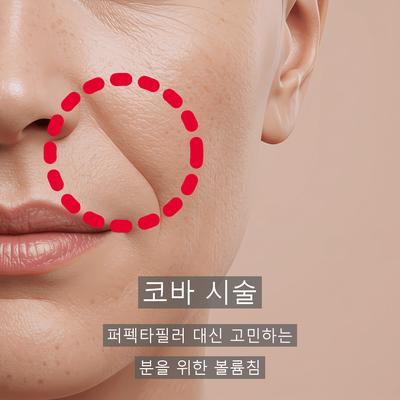
COVA is a procedure where PDO components, which induce collagen production in the skin's dermal layer, are injected.
It is often referred to as 'volume needles' and can be considered for naturally filling in areas of lacking volume within the skin.
Some choose it when seeking a procedure that adds volume similar to fillers, and it can help improve sunken wrinkles.
Sunken skin typically occurs due to a decrease in volume within the skin.
Areas with frequent facial movements such as the forehead, glabella, and nasolabial folds can cause the skin to crease, potentially leading to deep wrinkles.
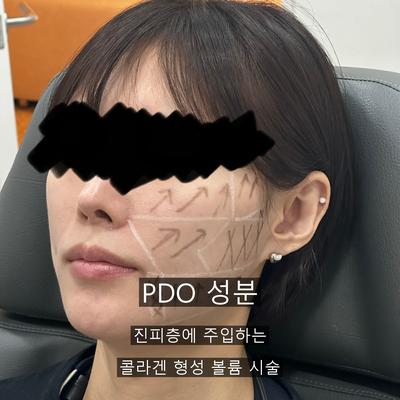
To improve such sunken areas, it's necessary to replenish the volume within the skin rather than just managing the skin's surface.
The COVA procedure operates on the principle of replenishing this volume in the dermal layer.
The injected PDO components are naturally absorbed by the body over a certain period, and during this process, they help our body generate its own collagen.
Ultimately, the key aspect of COVA is that the primary agent forming the volume is self-generated collagen induced by the procedure.
Filler vs. COVA Approach
General filler procedures, such as Perfectha filler, involve directly injecting external substances to immediately fill the volume in the targeted area.
Fillers are characterized by the ability to see volume changes immediately after the procedure.
For those who prefer immediate volume changes after the procedure, filler procedures may be more suitable.
The COVA procedure works on the principle that the injected components induce self-collagen production, leading to a natural increase in volume over time.
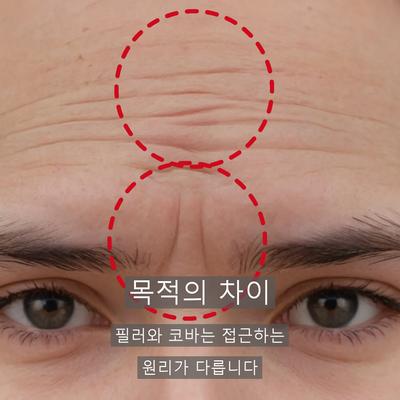
If you are concerned about an artificial feeling due to external substance injection or substance migration, you may consider COVA.
Both procedures aim to improve sunken areas, but there are fundamental differences in the underlying principles of how they create volume.
Therefore, rather than concluding which procedure is better, it is important for each patient to choose the appropriate procedure based on the desired outcome they seek.
When can COVA be considered?
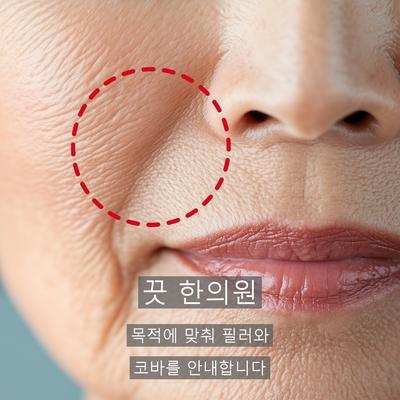
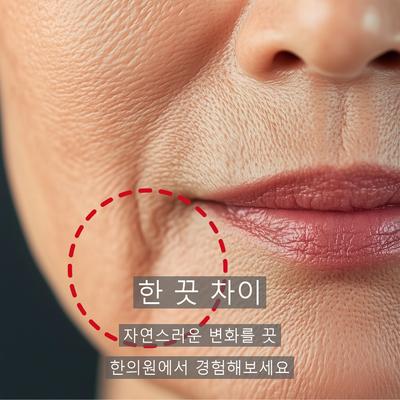
Individuals concerned about volume loss in specific areas such as forehead wrinkles, frown lines, sunken cheeks, or nasolabial folds can consult about the COVA procedure.
It can also be considered for forming and improving volume in sunken areas like marionette lines or Indian bands.
Sunken cheeks are a phenomenon primarily observed when there is a lack of volume due to weight loss or a general decrease in skin elasticity.
In such cases, methods like COVA, a volume procedure, can be considered to add natural volume to the deficient areas.
It may be suitable for those who prefer a natural increase in volume over time rather than an immediate and excessive change after the procedure.
With a relatively long-lasting effect, it is one of the procedures that can be comfortably considered by those who do not frequent hospital visits.
The duration of the procedure's effect varies individually, but generally, it can last from 6 months to as long as 1 year.
If you wish to see clear shape changes immediately on the day of the procedure, it is important to clearly set the procedure goals and direction through consultation with medical staff.
Procedure Process and Expected Recovery Period
The COVA procedure begins with a consultation with a medical professional to assess the individual's condition, followed by the application of anesthetic cream, the volume needle procedure, and finally, soothing aftercare.
During the consultation, the doctor will meticulously examine the patient's sunken areas and their depth, and discuss the necessary amount for the procedure.
Before the procedure, anesthetic cream is applied for a sufficient amount of time to minimize discomfort.
Pain during the procedure can be minimized through anesthesia, and the actual procedure time is expected to be approximately 30 minutes.
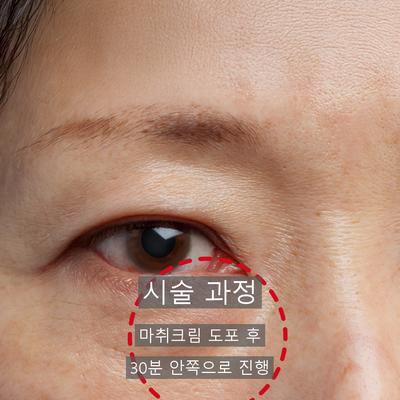
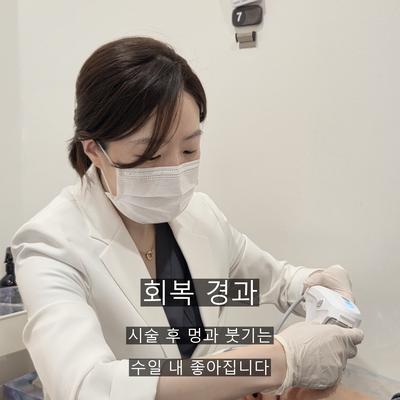
After the procedure, mild bruising or swelling may temporarily appear depending on the individual, but most tend to subside naturally within a few days.
Normal daily activities are usually possible within 1 week, though the exact recovery speed varies individually.
If an important event is planned, it is advisable to allow about 1 week of recovery time after the procedure.
Recommended Procedure Cycle and Frequency
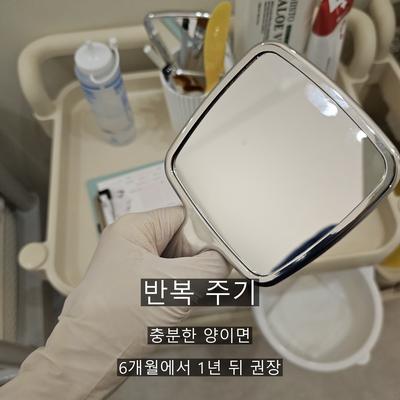
If a sufficient amount was administered in the initial procedure, additional procedures can be considered at intervals of 6 months to 1 year thereafter.
Conversely, if the amount injected during the first procedure was insufficient or if further improvement is desired, additional procedures can be discussed with the medical staff after about 2 weeks.
When it's difficult to determine the required amount at once, you can also consider dividing the procedure into multiple sessions.
Compared to collagen injection procedures like Juvelook Volume, changes can be felt a little faster.
However, the interval between repeated procedures is adjusted according to the individual's skin indentation and the amount injected.
Things to Consider During Consultation
It is advisable to clarify in advance whether the desired change is an immediate improvement in shape or a natural appearance that emerges over time.
The amount of procedure required may vary depending on whether the indented area is one spot or multiple spots.
If you have previous experience with filler procedures, informing us of the timing and area of treatment will be helpful for the consultation.
Considering in advance the time needed for bruising or swelling to subside in accordance with your schedule can reduce the burden of recovery.
Kkeut Clinic's Approach to COVA Procedures
Kkeut Clinic introduces COVA not as a filler substitute, but as another option for replenishing volume.
At Kkeut Clinic, we first listen to the patient's indented areas and desired changes, and if a filler procedure is more suitable, we explain it in that direction.
Kkeut Clinic sufficiently applies anesthetic cream before the procedure to reduce discomfort from pain.
We provide detailed guidance in advance on when bruising or swelling is expected and the recovery process, helping patients reduce their worries.
If the initial amount of the procedure is deemed insufficient, Kkeut Clinic will coordinate an additional procedure schedule for 2 weeks later.
At Kkeut Clinic, during consultation, we first identify the goals you wish to achieve through the procedure.
The suitable treatment method may vary depending on whether you prefer natural improvement or prioritize immediate shape change.
Kkeut Clinic doesn't just focus on a single procedure; we plan while also considering the duration of its effect.
At Kkeut Clinic, we carefully compare whether a filler or COVA is more suitable for the patient's objective and provide guidance.
Frequently Asked Questions
Q. Can I consider a COVA procedure instead of Perfectha filler?
A. Those considering COVA instead of Perfectha filler generally expect a natural plumping of volume. However, for some individuals, a filler procedure might be more suitable, so it's important to determine the right approach through consultation.
Q. How long do the effects of a COVA procedure last when chosen instead of Perfectha filler?
A. If you receive a COVA procedure instead of Perfectha filler, the maintenance period can last up to 1 year. When treated with an appropriate amount, receiving the procedure again approximately 6 months to 1 year later helps maintain its effectiveness.
Q. How much pain is involved in a COVA procedure when chosen instead of Perfectha filler?
A. A COVA procedure instead of Perfectha filler is performed after applying anesthetic cream, so pain is generally minimal. Bruising and swelling usually subside naturally within a few days.
Q. How long does a COVA procedure take when chosen instead of Perfectha filler?
A. Even if you choose a COVA procedure instead of Perfectha filler, the actual procedure, excluding numbing time, is completed within 30 minutes. If there are multiple treatment areas, we will provide detailed information on the estimated time during the consultation.
Kkeut Clinic's Philosophy
Kkeut Clinic focuses on enhancing natural beauty through procedures that induce self-collagen production to naturally replenish volume.
At Kkeut Clinic, we fully explain to patients that changes can be felt a little faster after the procedure compared to collagen injection treatments.
Kkeut Clinic strives to ensure patients can receive procedures more comfortably by providing effects that can last up to 1 year and using anesthetic cream to alleviate pain.
Experience changes beyond expectations with a delicate approach. Let's discuss it together at Kkeut Clinic.
Loading menu…