

Is herbal peeling right for my skin? A comprehensive guide on which concerns it's recommended for (Herbal Peeling, Part 3) Beomgye, Pyeongchon, Beomgye Station, Pyeongchon Station, Hogye-dong, Bisan-dong, Gwanyang-dong, Dongan-gu, Indeogwon, Geumjeong, Anyang
This is Gyeonggi Anyang Beomgye KKEUT Korean Clinic's procedure note on Is herbal peeling right for my skin? A comprehensive guide on which concerns it's recommended for (Herbal Peeling, Part 3).
When considering herbal peeling, many people first wonder if this treatment is suitable for their skin.
In the previous article, we looked at the basic principles of exfoliation and post-treatment care. In this article, we will focus on what skin problems herbal peeling can help with.
We will explore six situations where the treatment can be recommended, and four cases where sufficient consultation or intensity adjustment is necessary beforehand.
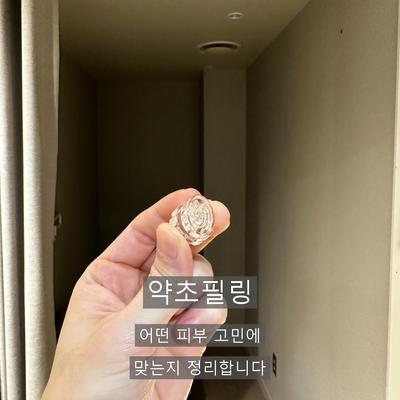
If you have the following skin concerns, you may consider it
First, individuals with skin conditions where pores easily become clogged.
When old dead skin cells and sebum accumulate and harden within the pores, the pathway for sebum to be discharged can narrow or become completely blocked.
If pores remain clogged for a long time like this, skin troubles accompanied by inflammatory reactions may occur.
Herbal peeling is a treatment that can be expected to improve clogged pores by gently breaking down these blockages with an acidic solution and removing them with a suction head.
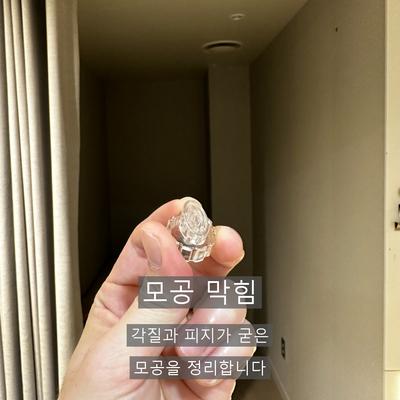
Second, individuals with a noticeable number of dark blackheads around their nose and chin.
If blackheads are forcefully extracted by hand, there is a risk of damaging and weakening the skin barrier.
Since the treatment first softens blackheads with a specialized solution and then removes them by suction, it can help reduce irritation to the skin compared to manual extraction.
Third, individuals with skin that frequently appears oily due to excessive sebum secretion.
Especially in areas where a lot of sebum is produced, such as the forehead, nose, and jawline, dead skin cells and sebum can accumulate even more easily.
For such skin, improvements in pores and skin texture can become more noticeable when consistently managed at 2-4 week intervals, rather than with just a single treatment.
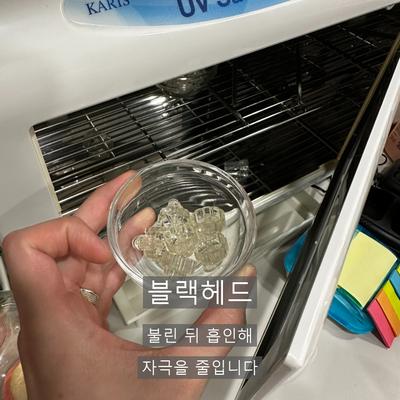
Fourth, situations where skin texture feels uneven and rough, and makeup tends to lift easily.
If old dead skin cells remain on the skin surface, the overall skin texture can appear uneven, and base makeup products may have difficulty adhering smoothly.
Many people feel their skin texture becoming smoother after just one treatment once the dead skin cells on the skin surface are cleared away.
Fifth, individuals who are hesitant about management methods that involve significant burden from treatment may consider herbal peeling.
Herbal peeling minimizes pain, and the treatment time is relatively short, approximately 30 minutes per session. There is also almost no recovery time needed after the procedure.
Immediately after the treatment, mild tingling or temporary redness may occur, but it does not significantly interfere with daily life, making it convenient to plan the treatment even on days with scheduled activities.
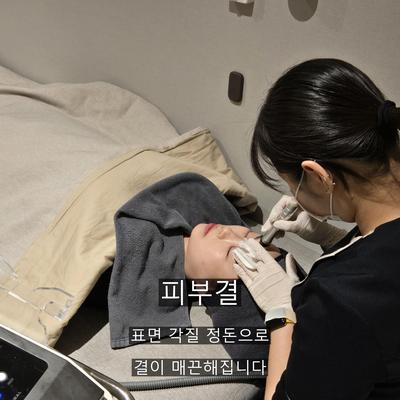
Sixth, individuals with sensitive skin may also be curious about the treatment.
The treatment is possible even for sensitive skin, and the duration of contact and concentration of the treatment solution are adjusted according to individual skin condition to control the level of irritation.
Since this treatment uses products containing acidic ingredients, it is crucial to undergo a thorough skin condition check before the procedure.
The common characteristic of the six cases mentioned above is that the main concerns are primarily old dead skin cells on the skin surface and excessive sebum.
On the other hand, problems caused by structural changes below the skin surface, such as sunken scars, deep-set wrinkles, and skin sagging, are areas that are difficult to resolve with herbal peeling.
Therefore, accurately understanding which layer of the skin your concerns originate from is a crucial first step in choosing the appropriate treatment.
Cases requiring sufficient consultation and delicate adjustments before treatment
Herbal peeling is not a treatment applied with the same intensity to everyone.
If any of the following apply, it is important to thoroughly check each individual's skin condition and appropriately adjust the contact time and concentration of the treatment solution before proceeding with the procedure.
If it's difficult to determine which case applies to you, it is more accurate to consult directly with a specialist for a skin diagnosis rather than relying solely on photos.

First, caution is required for skin that currently has severe redness or active inflammatory breakouts.
Performing additional exfoliation on skin that is already sensitive due to external irritation can put a strain on the skin.
In such cases, rather than forcing a peel, it is better to start with a less irritating management method to stabilize the skin condition.
Second, skin types that frequently show sensitive reactions, such as easy stinging or redness, even normally.
Since herbal peeling uses an acidic solution, for skin that frequently exhibits sensitive reactions, it is necessary to delicately adjust the contact time and concentration of the treatment solution to suit the skin.
Third, individuals who regularly and frequently use scrubs, peeling pads, toners containing acidic ingredients, etc., at home.
Using multiple exfoliating products simultaneously can potentially put an excessive burden on the skin barrier.
If you inform us in advance during the consultation about the products you are currently using, it will help us formulate a treatment plan considering your skin condition and product usage habits.
Fourth, if you expect pores to disappear completely with a single treatment, consultation is necessary.
While surface dead skin cells and blackheads can be immediately improved after the treatment, changes in pore size can be expected to gradually occur through multiple sessions.
It is important to have realistic expectations about the results you can achieve before considering the treatment.
If redness or a stinging sensation persists on your skin after the treatment, stop applying additional products and consult with your medical team first.

Kkeut Korean Medicine Clinic's Treatment Suitability Assessment Criteria
At Kkeut Korean Medicine Clinic, we carefully listen to your skin concerns and meticulously examine your current skin condition before judiciously determining whether herbal peeling treatment is suitable for you.
During consultation, we primarily check the areas where you feel discomfort, the types of cosmetics you currently use, and whether your skin tends to be sensitive.
Even if you have the same pore concerns, the contact time or concentration of the herbal solution must be adjusted during treatment depending on your skin's redness, sensitivity, and the products you use.
Kkeut Korean Medicine Clinic's herbal peeling process consists of a total of 5 steps, starting with a phase to gently soften sebum and concluding with a Jaugo modeling mask.
Unlike a typical 3-step treatment method, our process involves gently softening dead skin cells and sebum, followed by meticulous refinement at each stage. This minimizes skin irritation while achieving a refining effect.
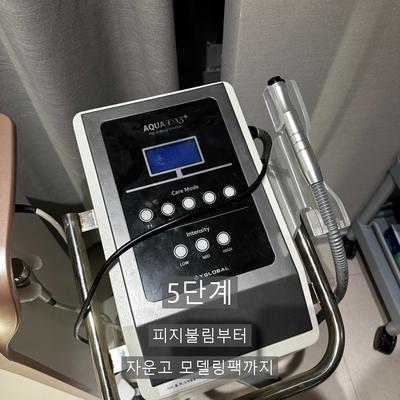
At Kkeut Korean Medicine Clinic, we use an undiluted, precise amount of peeling solution for each treatment to refine the skin with a consistent concentration.
When applying solutions 1, 2, and 3, we switch to different types of tips, using those suitable for the patient's specific areas and current skin condition. This is one of the customized treatment approaches Kkeut Korean Medicine Clinic aims for.
In the final step of the treatment, a Jaugo modeling mask is applied to effectively soothe and stabilize the refined skin into a comfortable state.
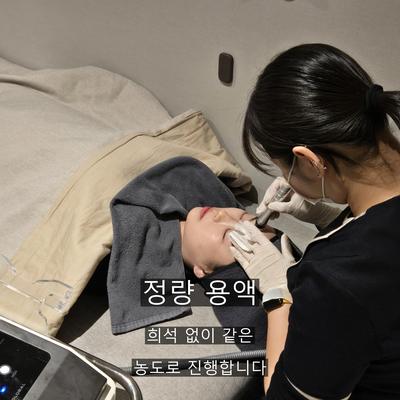
Even when the suitability for treatment is not clear, we directly assess your skin condition through thorough consultation and provide detailed guidance on whether to proceed with the treatment and its recommended cycle.
At Kkeut Korean Medicine Clinic, we consider this meticulous assessment process a crucial part of the treatment.

Frequently Asked Questions
Q. Which skin types are well-suited for herbal peeling?
A. Herbal peeling is a treatment that can be considered for those who have clogged pores, many blackheads, excessive sebum secretion, or feel that their skin texture is rough. At Kkeut Korean Medicine Clinic, we evaluate your precise skin condition before guiding you on its suitability.
Q. Can I receive herbal peeling even if I have breakouts?
A. For skin with redness or inflammatory breakouts, it's better to prioritize methods that minimize irritation rather than forcing a peel. In such cases, we recommend visiting Kkeut Korean Medicine Clinic for a professional consultation.
Q. Is sensitive skin also a candidate for herbal peeling?
A. Herbal peeling treatment may be possible for sensitive skin. In such cases, the contact time and concentration of the herbal solution are carefully adjusted, considering the skin's reaction, to ensure the irritation is at an appropriate level.
Q. How often should I receive herbal peeling treatments?
A. While some changes can be experienced with just one herbal peeling treatment, improvements in pores and skin texture are usually more noticeable when treatments are consistently received at 2-4 week intervals. Treatment effects may vary by individual.
Kkeut Korean Medicine Clinic's Treatment Philosophy
At Kkeut Korean Medicine Clinic, we strive to provide a customized skin care experience to our patients through a systematic 5-step protocol, starting with the sebum softening process and concluding with a Jaugo modeling mask.
Kkeut Korean Medicine Clinic meticulously manages treatments by using an undiluted, precise amount of peeling solution to ensure consistent treatment effects.
At Kkeut Korean Medicine Clinic, we aim to reduce skin irritation and achieve refining effects suitable for each stage's purpose through the use of customized tips, replacing different tips for solutions 1, 2, and 3 respectively.
Expect skin improvement through a delicate approach. Begin your careful skin care journey with Kkeut Korean Medicine Clinic.
Related notes
Procedure notes worth reading next.


Loading menu…