

Apogee Hair Removal, Part 2: A Smart Guide to Addressing Concerns About Pain and Skin Irritation Beomgye, Pyeongchon, Beomgye Station, Pyeongchon Station, Hogye-dong, Bisan-dong, Gwanyang-dong, Dongan-gu, Indeogwon, Geumjeong, Anyang
This is Gyeonggi Anyang Beomgye KKEUT Korean Clinic's procedure note on Apogee Hair Removal, Part 2: A Smart Guide to Addressing Concerns About Pain and Skin Irritation.
For those considering Apogee hair removal, the main concerns are the pain experienced during the procedure and potential skin irritation after the treatment.
If we previously discussed the hair regrowth process, the number of sessions, and intervals, this article will cover the sensations during hair removal, subsequent skin reactions, and appropriate aftercare methods.
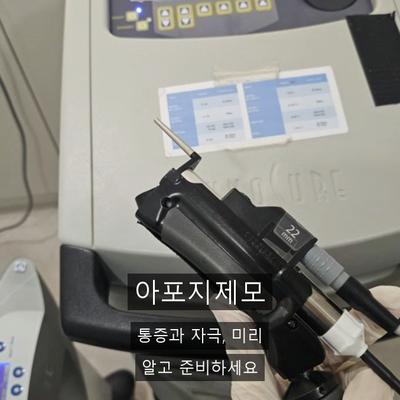
Many people wonder if pain completely disappears when using anesthetic cream.
You might commonly think that if you use an anesthetic cream for laser hair removal, you will hardly feel any pain.
However, anesthetic ingredients primarily act topically on the outer layers of the skin, so the anesthetic effect may not fully reach the hair follicles located deep within the skin.
From a medical perspective, the use of anesthetic cream during laser hair removal is not an essential process. It is primarily considered to enhance the psychological comfort of those receiving the treatment.
We explain that the sensation felt during the procedure may be similar to the feeling when the treatment area is pre-cooled with an ice cooler.
As the number of treatment sessions increases and the amount of hair decreases, the pain also tends to gradually reduce.
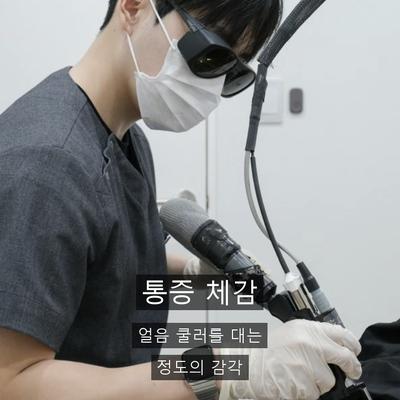
Apogee hair removal equipment uses a unique cooling method.
Apogee laser uses an Alexandrite wavelength and features an air cooling system that continuously sprays strong cold air during the procedure.
Cooling continues uninterrupted from before the laser is applied to the skin until after, which can be beneficial in alleviating potential skin irritation during the procedure.
GentleMax and Clarity devices use the DCD method, which directly sprays cooling gas. This method offers excellent cooling intensity, but the cooling gas is not sprayed continuously.
Since each device has differences in its cooling method, it can be helpful to confirm this during a consultation before the procedure.
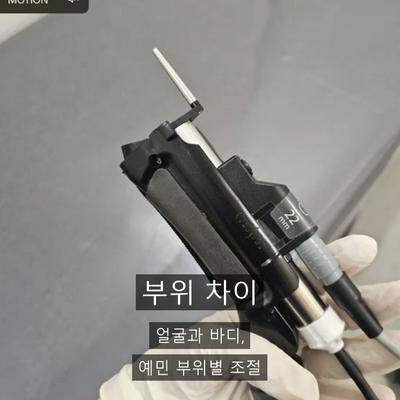
The sensation experienced during hair removal can vary by body part.
The facial area has a variety of hairs, from fine vellus hair to relatively thick beard hair, requiring precise adjustment of laser energy intensity during the procedure.
Body areas with a relatively large surface area, such as armpits, arms, and legs, are known to respond well to laser treatment due to the prominent melanin pigment in the hair.
Sensitive special areas like the Brazilian area have delicate skin and thick hair, making appropriate pain management crucial.
The time required for the procedure is determined by the area to be treated; larger areas may require longer treatment times.
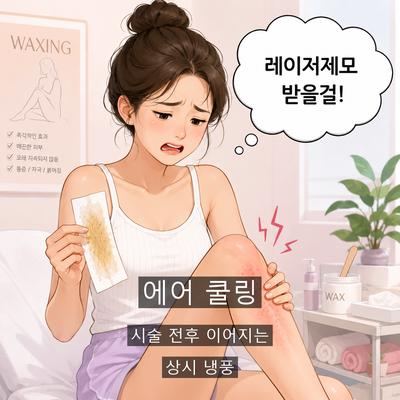
Shaving beforehand can help reduce skin irritation during the procedure.
Shaving before laser hair removal is an important step to reduce pain and skin irritation that may occur during the procedure.
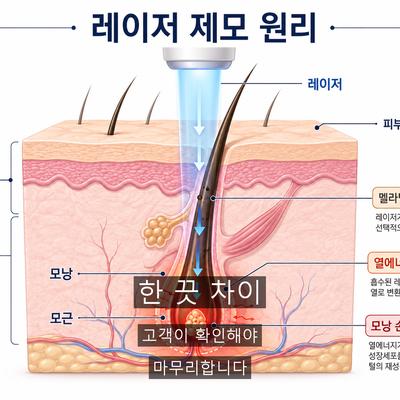
If the laser is applied when hair is too long, the energy can concentrate on the hair on the skin surface and dissipate as heat. This increases the risk of burns, and the laser energy reaching the hair follicles may decrease, potentially reducing the effectiveness of hair removal.
Therefore, it is a general guideline to clean shave the treatment area before your visit on the day of the procedure.
However, if hair is plucked or removed by waxing, the hair follicle itself, which the laser targets, will be absent, making it difficult to achieve sufficient hair removal effects. Therefore, it is advisable to avoid plucking hair during the laser hair removal period.
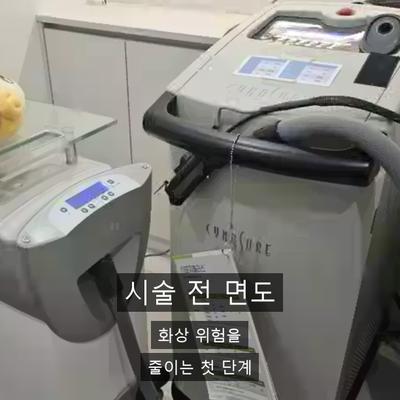
Redness and Folliculitis Reactions That May Appear Immediately After the Procedure
Immediately after laser hair removal, you might notice redness around the pores or a bumpy reaction resembling small pimples.
This reaction is a common temporary symptom of folliculitis, given the nature of the procedure where direct thermal energy is delivered to the hair follicles.
Regular application of a regenerating cream often helps it subside naturally over time, so there's no need to worry too much.
However, if redness persists for a long time or pain intensifies, it is advisable to contact the clinic where you received the treatment to have your current condition checked.
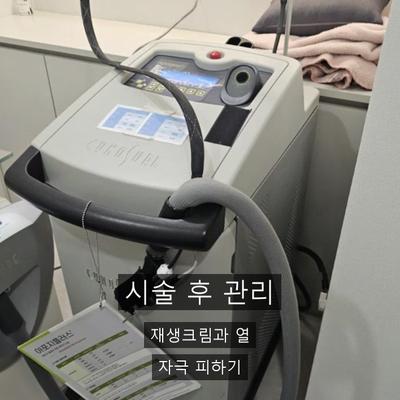
Post-Procedure Skin Care Methods
For 1-2 days after the procedure, it is advisable to refrain from activities that can raise your face or body temperature, such as exercise, sauna use, and alcohol consumption.
We recommend starting shaving from the day after the procedure, once the skin has sufficiently calmed down, rather than on the day of the procedure itself.
Since the removed hair will be in a softened state, it may not shave as cleanly as usual. It's important not to rub too hard to avoid straining the skin.
Post-procedure moisturizing, regenerating cream application, and sun protection are essential elements of skin care.
Kkeut Korean Medicine Clinic's Approach to Minimizing Pain and Skin Irritation During Procedures
At Kkeut Korean Medicine Clinic, we strive to alleviate potential pain and skin irritation during procedures not just by relying on equipment performance, but through meticulous treatment planning tailored to each patient's skin condition.
Thick hair has a high melanin content, so if short-pulse laser energy is rapidly absorbed, there may be a risk of epidermal damage.
To reduce this risk, Kkeut Korean Medicine Clinic applies a method that protects the epidermis by using a long pulse width to deliver thermal energy to the skin relatively gently.
For thick and dark hair, energy density is adjusted to allow sufficient thermal energy to accumulate in the hair follicles, and for fine and light hair, energy is delicately controlled or repeatedly applied to effectively deliver heat to the hair follicles.
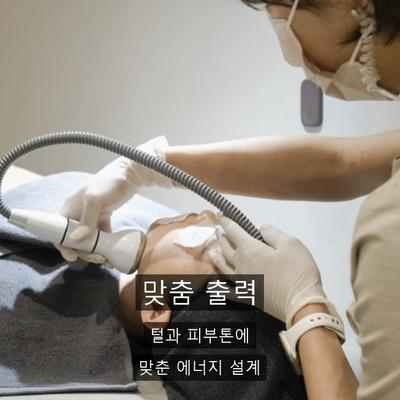
For areas with densely distributed hair, the procedure is performed by dispersing laser energy to reduce the possibility of burns due to excessive heat accumulation.
For individuals with darker skin tones, laser output is precisely adjusted to consider the safety of the procedure, minimizing the potential for side effects caused by melanin.
Kkeut Korean Medicine Clinic strives to minimize discomfort and provide comfort during treatment by using equipment with confirmed stability, such as Apogee and GentleMax.
Kkeut Korean Medicine Clinic utilizes a method of precisely delivering energy to specific areas of concern, taking into account each client's individual skin condition and hair characteristics.
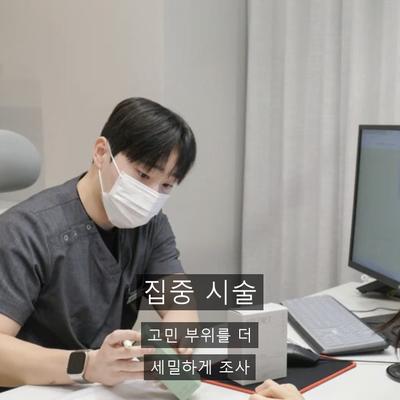
Before concluding the treatment, we go through a process of checking if there are any areas that have not been treated or require additional care. This is ultimately decided through communication with the client.
Frequently Asked Questions
Q. Is Apogee hair removal very painful without anesthetic cream?
A. During Apogee hair removal, anesthetic cream primarily affects only the skin surface and does not penetrate deep into the hair follicles. Therefore, it is not an essential step for the treatment, and you may feel a sensation similar to applying an ice cooler to the skin. At Kkeut Korean Medicine Clinic, if you have any concerns about pain, we will address your questions with thorough explanations before the treatment.
Q. What should I do if my skin turns red and swells after Apogee hair removal?
A. After Apogee hair removal treatment, the skin may turn red or a reaction similar to folliculitis, where the hair follicle area swells, may occur. This is one of the temporary reactions observed after energy is delivered to the hair follicles. After the procedure, it is recommended to carefully apply a regenerating cream and avoid environments with strong heat stimulation, such as saunas, for about 1-2 days. Most reactions can gradually subside after a sufficient amount of time.
Q. How should I prepare my hair before Apogee hair removal?
A. Before coming for Apogee hair removal treatment, please tidy your hair cleanly with a razor instead of plucking, and then visit us. After the treatment, it is best to start shaving from the day after your skin has completely calmed down. Kkeut Korean Medicine Clinic asks you to follow these recommendations.
The Sincerity of Kkeut Korean Medicine Clinic
At Kkeut Korean Medicine Clinic, we meticulously analyze the client's hair thickness, skin tone, and hair density. Based on this, we carefully set the appropriate pulse duration and energy density for each individual, expecting more satisfying improvements.
Kkeut Korean Medicine Clinic focuses on treating each individual's areas of concern, and reconfirms if there are any additional parts needed before finishing. Through this process, we strive to ensure clients are satisfied with their treatment results.
Kkeut Korean Medicine Clinic uses equipment with confirmed stability, such as Apogee and GentleMax. Furthermore, we delicately adjust the output during treatment to protect the client's skin while achieving excellent results.
An experience transformed by subtle differences, available at Kkeut Korean Medicine Clinic.
Related notes
Procedure notes worth reading next.


Loading menu…