

How about Koba instead of neck filler? Koba treatment overview Beomgye, Pyeongchon, Beomgye Station, Pyeongchon Station, Hogye-dong, Bisan-dong, Gwanyang-dong, Dongan-gu, Indeogwon, Geumjeong, Anyang
This is Gyeonggi Anyang Beomgye KKEUT Korean Clinic's procedure note on How about Koba instead of neck filler? Koba treatment overview.
More and more people are encountering the name COVA while looking into neck fillers.
Both procedures address insufficient volume, but they differ in purpose and method.
In this article, we will explain what COVA is, and which areas and concerns it is suitable for, in order.
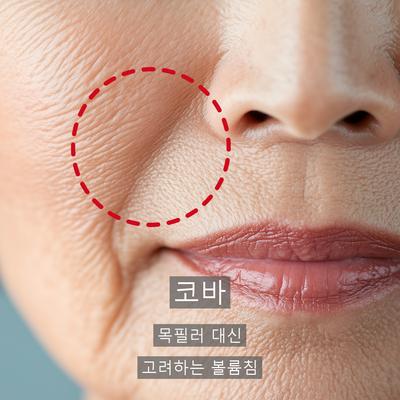
COVA is a procedure that involves injecting a substance called PDO, which forms collagen, into the dermal layer.
It's also known as 'volume needles' and can be understood as a volume-forming procedure that addresses insufficient volume.
It's considered an alternative to fillers and is effective for depressed wrinkles.
The injected PDO is gradually absorbed and converted into your own collagen.
The converted collagen fills the volume in the treated area, making natural plumping a characteristic feature.

Neck Fillers and COVA: Different Purposes
This isn't to say that fillers are bad and COVA is good.
The choice depends on how you want to create volume.
Fillers create volume by the injected substance itself.
COVA works differently from its principle: your own collagen takes over the space where the injected PDO has been absorbed.
Some people worry about filler migration, and others find the artificial feeling bothersome.
COVA is more natural compared to fillers because it fills the volume in the treated area solely with your own collagen.
COVA is suitable for areas where volume creation is needed in sunken spots.
Forehead wrinkles, sunken cheeks, frown lines (glabellar lines), nasolabial folds (smile lines), marionette lines, and Indian band lines are typical examples.
Depressed areas are often caused by a lack of volume, so an approach that fills volume rather than just smoothing wrinkles is needed.
If the area you were considering for neck fillers is not on this list, a direct examination of your skin condition is necessary to determine its suitability.
During your consultation, letting us know which areas are sunken and to what extent will help us make a more accurate assessment.

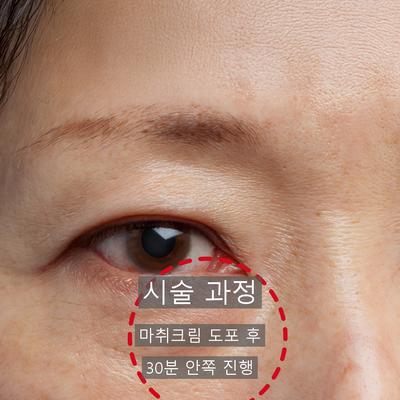
The procedure involves applying anesthetic cream, followed by injecting the volume needles.
The procedure time is under 30 minutes.
Since it's performed after anesthesia, there's generally little to no pain.
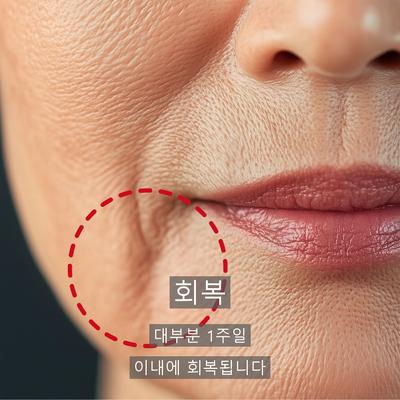
Some bruising or swelling may occur immediately after the procedure, but it will improve within a few days.
There is some downtime, but most people recover within a week.
The recommended treatment cycle varies depending on the amount injected.
If you received a sufficient amount, a repeat procedure is recommended 6 months to 1 year later.
If you received an insufficient amount, an additional procedure is recommended after 2 weeks.
The duration of results can last up to 1 year.
This is why it's recommended for those who find it difficult to visit the clinic frequently.
Compared to general collagen injections like Juvelook Volume, COVA tends to have a slightly more immediate effect.
The criteria for comparing the two procedures can be summarized into four points.
First is the method of volume creation. Fillers create volume with the injected substance, while COVA uses your own collagen.
Second is the sense of unnaturalness. Some people mention an artificial feeling or worry about migration with fillers, while COVA provides a natural plumping effect.
Third is maintenance and frequency of visits. COVA can last up to 1 year, reducing the burden of frequent clinic visits.
Fourth is procedure time and recovery. COVA is completed in under 30 minutes, and most people recover within 1 week.
If you prepare these three things before your consultation, making a choice will be easier.
First, which areas appear sunken.
Second, whether you desire natural changes without an artificial look.
Third, how often you can visit the clinic.
Depending on these three factors, either filler or Kova may be suitable.
Since their purposes are different, we cannot definitively say that one is the correct answer.
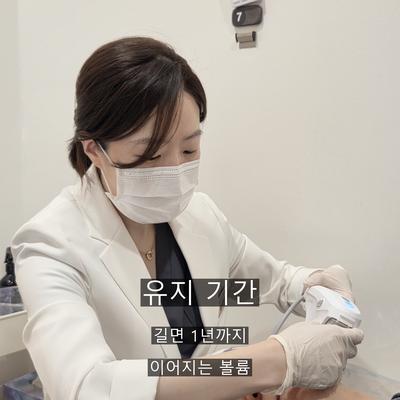
Criteria for Ggeut Korean Medicine Clinic Recommending Kova
Ggeut Korean Medicine Clinic does not push Kova as a filler substitute, but rather guides patients to it as an option with a different purpose.
At Ggeut Korean Medicine Clinic, during consultation, we first check the area of concern and the degree of depression, then determine if Kova is suitable.
Ggeut Korean Medicine Clinic emphasizes the amount of treatment.
This is because depending on whether the amount is sufficient, the timing of the next treatment is divided into 6 months to 1 year later, or 2 weeks later.
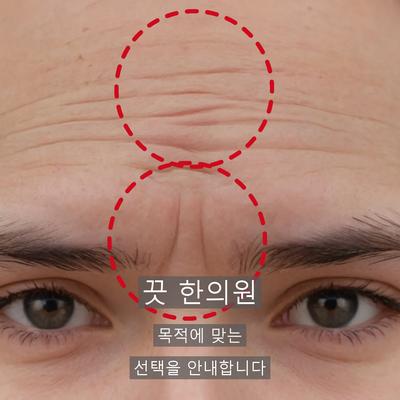
Ggeut Korean Medicine Clinic performs the procedure after applying anesthetic cream to reduce the burden of pain.
Ggeut Korean Medicine Clinic also explains in advance how bruising and swelling will progress after the procedure.
Ggeut Korean Medicine Clinic thoroughly explains why Kova is recommended for those who desire long-lasting results with a single treatment.
Frequently Asked Questions
Q. What are the reasons for considering Kova instead of neck filler?
A. Neck filler creates volume by injecting a substance, while Kova works by PDO converting into natural collagen, leading to a gradual plumping effect. Those who seek Kova instead of neck filler prioritize natural results and a long-lasting effect.
Q. Can Kova be applied to areas where I was considering neck filler?
A. Kova is used for creating volume in depressed areas such as the forehead, sunken cheeks, glabella, nasolabial folds, marionette lines, and Indian bands. If the area you were considering neck filler for does not fall into these categories, we will assess your skin condition during a consultation at Ggeut Korean Medicine Clinic.
Q. How is daily life after a Kova procedure, compared to neck filler?
A. Individuals who receive Kova instead of neck filler may experience slight bruising or swelling, but these usually subside within a few days, and most recover within 1 week. The procedure is performed after applying anesthetic cream, so there is usually little to no pain.
Q. If I choose Kova instead of neck filler, how many treatments are needed?
A. If you choose Kova instead of neck filler and receive a sufficient amount, a repeat treatment is recommended 6 months to 1 year later. If the amount is not sufficient, an additional treatment is recommended 2 weeks later.
The Sincerity of Ggeut Korean Medicine Clinic
Ggeut Korean Medicine Clinic provides differentiated results through naturally plumping volume created by your own collagen.
Ggeut Korean Medicine Clinic enhances patient satisfaction by providing periodic guidance based on the treatment amount.
Ggeut Korean Medicine Clinic simultaneously pursues safety and efficacy through procedures performed after anesthetic cream application and maintenance periods lasting up to 1 year.
A subtle difference, a distinct result — Experience it at Ggeut Korean Medicine Clinic.
Related notes
Procedure notes worth reading next.


Loading menu…