

If you're hesitant about filler treatments, here's why Cova is also a great option. Beomgye, Pyeongchon, Beomgye Station, Pyeongchon Station, Hogye-dong, Bisan-dong, Gwanyang-dong, Dongan-gu, Indeogwon, Geumjeong, Anyang
7/4/2026
This is a procedure note for If you're hesitant about filler treatments, here's why Cova is also a great option. at Gyeonggi Anyang Beomgye KKEUT Korean Clinic.
There are people who hesitate to make a decision about filler procedures despite considering them.
They know they need volume, but concerns about foreign body sensation, clumping, and migration hold them back.
COVA is an emerging treatment option for such individuals.
Kkeut Korean Medicine Clinic explains the differences between fillers and COVA, and which types of cases are better suited for COVA.
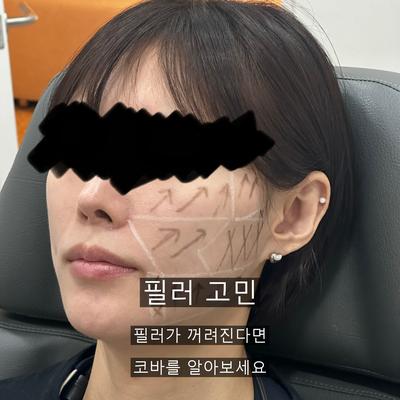
Filler procedures, why are they avoided?
Hyaluronic acid (HA) filler procedures involve directly injecting a gel-like substance into the skin tissue to immediately add volume.
While its rapid effect and absorbable nature are advantages, concerns arise because it involves an external substance remaining within the tissue.
Typical concerns include the substance slowly migrating in areas with a lot of movement, clumping and forming nodules over time, or leading to more unnatural results than expected.
As these experiences become known, more people are developing a vague aversion to fillers themselves.
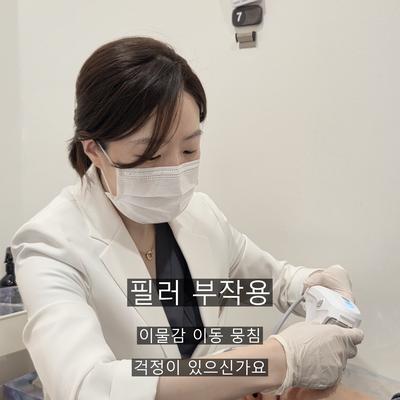
What is COVA?
COVA is a volume-building procedure that involves injecting PDO (Polydioxanone) into the dermal layer. It is also known as a volume needle.
PDO is a component that stimulates collagen synthesis as it slowly breaks down and is absorbed by the body, and it is a material with proven safety that has been used in medical fields for a long time.
The key is that it's not a method where an external substance remains directly within the tissue.
As the PDO component is absorbed, new collagen is created within your own body, and this collagen fills in the volume, leading to a naturally enhanced result.
It is suitable for those who need volume restoration in sunken areas such as forehead wrinkles, hollow cheeks, nasolabial folds, marionette lines, and Indian band wrinkles.

The method of adding volume itself is different
Fillers achieve an immediate volumizing effect by an external substance directly occupying the space, whereas COVA creates volume as the PDO component breaks down and your own collagen is formed.
If concerns about migration or clumping are the main reasons for avoiding fillers, COVA has an advantageous structure in that regard.
Since it is a component that breaks down and is absorbed, there is no possibility of migration.
While fillers show results faster, COVA provides a slightly more immediate sense of volume compared to typical collagen injections.
When treated with an adequate amount, the duration of effect can range from 6 months to up to 1 year.
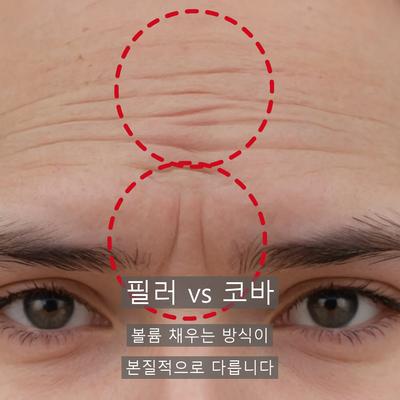
Types of cases well-suited for COVA
COVA is a practical option for those who hesitate about filler procedures due to concerns about foreign body sensation or migration, those who need natural volume for sunken wrinkles or hollow cheeks, and those who wish to reduce the frequency of clinic visits.
You can expect naturally increasing volume as your own collagen is produced in deeply sunken areas such as the forehead, cheeks, and nasolabial folds.
Compared to typical collagen injections, it provides a slightly more immediate sense of volume, so the results are perceived relatively faster.
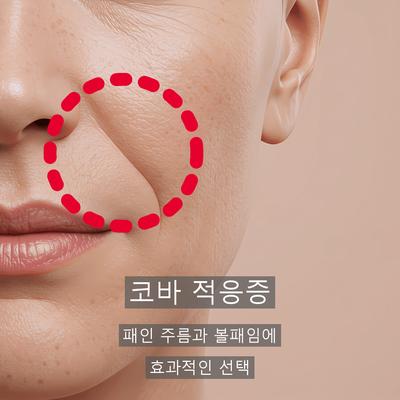
The right treatment varies depending on the type
While COVA is a good option, it does not mean it is superior to fillers in all cases.
If rapid volume correction is needed or if immediate contouring of a specific area is required, fillers may be more suitable.
COVA's effects develop gradually, so it is not suitable if results need to be seen quickly.
It is important to consider the area of concern, the desired speed of results, and the current skin condition together to determine which treatment is appropriate.
At Kkeut Korean Medicine Clinic, we suggest a treatment direction tailored to each individual's situation through consultation.
Procedure process and downtime
The COVA procedure is performed after applying anesthetic cream, so there is little to no pain, and the procedure time is short, within 30 minutes.
Some bruising or swelling may occur, but it usually subsides within 1 week.
After the procedure, you can return to daily life without any complicated special care.

Treatment cycle and repeat treatments
If you have received COVA with an adequate amount, the next treatment is recommended 6 months to up to 1 year later.
This is why COVA is suitable for those who find it difficult to visit frequently. Thanks to its long-lasting effect, the burden of clinic visits is reduced.
If you feel the volume is insufficient after the first treatment, additional treatment is possible after 2 weeks.
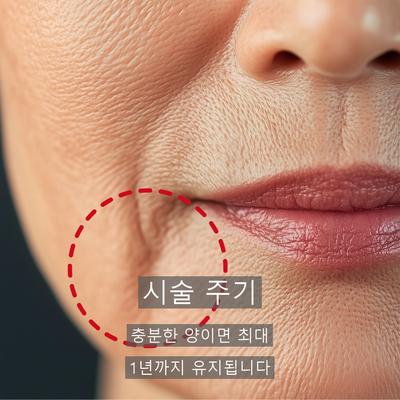
At Kkeut Korean Medicine Clinic, prior to the COVA procedure, we design the target volume and cycle together through thorough consultation, check the post-procedure condition, and guide you on the timing of your next visit.
Frequently Asked Questions
Q. If I receive Coba instead of filler treatment, will I see immediate results?
A. Since Coba involves the process of your own collagen forming as the PDO component is absorbed, it's more accurate to expect gradual changes rather than immediate volume changes like with filler treatment. Kkeut Korean Medicine Clinic fully explains this aspect before the procedure.
Q. I experienced migration or clumping after filler treatment. Will Coba have the same problem?
A. The PDO component used in Coba is a material that is absorbed by the body, so problems like migration or clumping, which occur with filler treatments, structurally do not happen. Kkeut Korean Medicine Clinic explains this difference during consultations for those considering Coba.
Q. How can I know whether filler treatment or Coba is right for me?
A. It depends on the area of concern, the desired speed of results, and your current skin condition. Sometimes filler treatment is more suitable, and sometimes Coba is better. Kkeut Korean Medicine Clinic determines the direction that fits each person's situation through consultation.
Q. How many Coba treatments do I need to receive?
A. Unlike an initial filler treatment with sufficient volume, Coba is recommended to be received every 6 months to 1 year. If you feel unsatisfied after the first treatment, additional treatment is possible after 2 weeks. Kkeut Korean Medicine Clinic determines the appropriate amount of treatment for your target volume during the initial consultation.
The Sincerity of Kkeut Korean Medicine Clinic
Kkeut Korean Medicine Clinic provides natural volume without worries of foreign body sensation or migration through Coba treatment, where the PDO component converts into your own collagen.
Kkeut Korean Medicine Clinic operates a consultation process that suggests options tailored to your type for those who are hesitant about fillers due to concerns about looking unnatural.
Kkeut Korean Medicine Clinic designs treatments with sufficient volume and precise cycle guidance to reduce the burden of visits and ensure long-lasting effects.
A subtle difference, a different result — experience it at Kkeut Korean Medicine Clinic.
Related notes
Procedure notes worth reading next.


Loading menu…