

A Complete Guide to Dermatological Laser Types and 3 Key Selection Criteria for You Beomgye, Pyeongchon, Beomgye Station, Pyeongchon Station, Hogye-dong, Bisan-dong, Gwanyang-dong, Dongan-gu, Indeogwon, Geumjeong, Anyang
This is Gyeonggi Anyang Beomgye KKEUT Korean Clinic's procedure note on A Complete Guide to Dermatological Laser Types and 3 Key Selection Criteria for You.
When you first encounter dermatological laser procedures, the various equipment names and numbers can be confusing.
However, if you categorize them by treatment purpose, you might find them surprisingly easy to understand.

Dermatological Lasers Are Categorized by Treatment Purpose
Generally, lasers used in dermatological procedures can be broadly classified into three types.
These are divided into methods for improving pigmentation issues and skin tone, managing pores or scars, and enhancing skin sagging and elasticity.
Understanding which of these three main categories your concerns fall into can make consultations with medical staff much smoother.
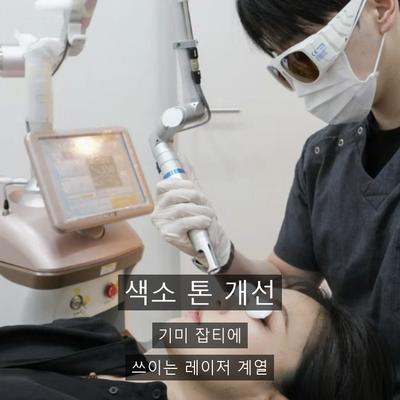
The first type is lasers for pigmentation and skin tone improvement.
If you are concerned about melasma, freckles, various types of hyperpigmentation, and a generally dull-looking skin tone, you might consider this type of laser.
Key equipment in this category includes Q-switched lasers, picosecond lasers, and laser toning.
They share a common principle of using short-wavelength energy to selectively target melanin pigment.
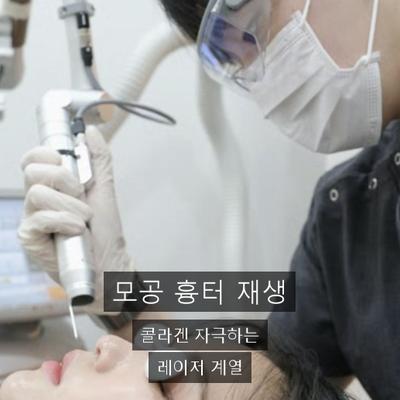
The second type is laser procedures that help with pore and scar regeneration.
This type is suitable when you have concerns about skin texture, such as enlarged pores, acne scars, or fine lines.
Fractional lasers and needle RF systems are representative examples, and these procedures stimulate collagen production in the dermis to induce improvements in skin structure.
Devices that deliver energy through fine needles, such as Potenza or Secret lasers, fall into this category, and the needle length is adjusted according to the depth of the scar.
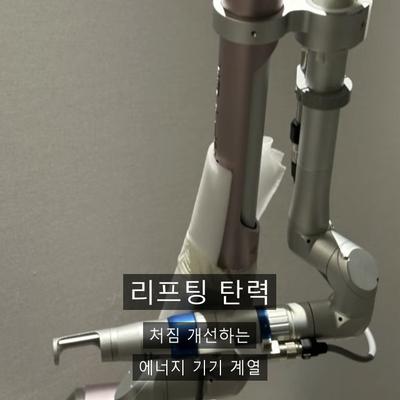
The third type is energy devices for lifting and improving skin elasticity.
If you are concerned about sagging skin, a double chin, or facial contour lines, you might consider this type of procedure.
Strictly speaking, this category primarily involves devices that utilize ultrasound or radiofrequency energy rather than lasers, but they are often introduced in a similar category during consultations.
Devices that use ultrasound energy, such as Ultherapy and Shurink, or radiofrequency lifting devices are included here.
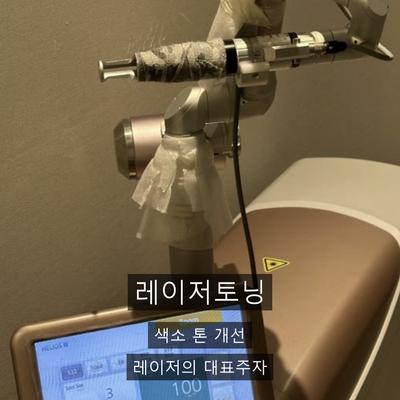
The Role of Laser Toning Among Various Dermatological Laser Procedures
Laser toning is one of the procedures that many people are interested in for pigmentation and skin tone improvement.
It uses the principle of repeatedly irradiating a 1064 nm wavelength with low energy multiple times to gradually lighten melanin pigment.
Since melanin pigment effectively absorbs this wavelength, consistent, repeated treatments can be expected to gradually break down the pigment.
Instead of using strong energy all at once, it works gently over several sessions, which helps reduce irritation to the skin.
For these reasons, it can be recommended for those who want overall skin tone improvement, in addition to melasma, freckles, and hyperpigmentation.
For laser toning, completing a consistent number of sessions is crucial for effective management.
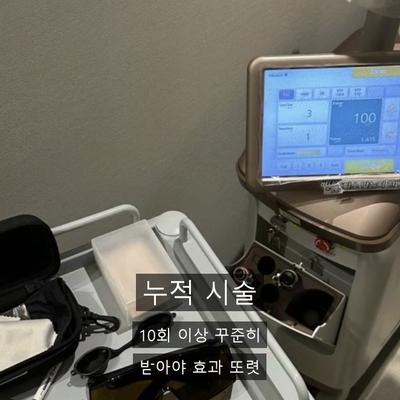
Generally, you can more clearly notice changes in hyperpigmentation reduction after consistently receiving 10 or more treatments.
As significant improvement is difficult to expect with just one or two sessions, it is important to adhere to the prescribed treatment cycle and consistently manage your skin.
After the procedure, paying special attention to UV protection and proper skin soothing care will help maintain the treatment effects.
Using whitening functional skincare products together can positively influence the speed of pigmentation improvement.
Laser Toning Procedure Process
If you understand the types of various dermatological laser procedures, next it's important to know how the actual procedure is performed.
Laser toning procedures can generally be performed based on a minimum of 2000 shots per session.
If the number of shots is insufficient, it can be difficult to effectively stimulate melanin pigment, and even if the treatment sessions are completed, the expected changes may appear slowly.
Some clinics may offer a process where patients can directly verify the number of shots administered with the medical staff after the procedure.
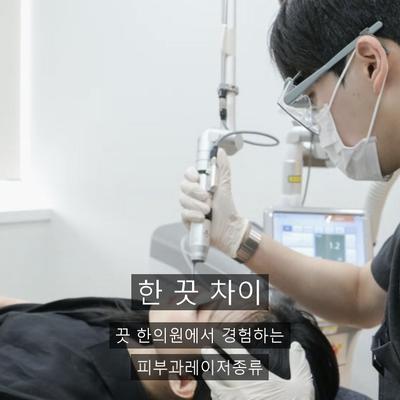
Generally, during the procedure, there are cases where a more meticulous approach is adopted for specific areas of concern.
In addition to evenly irradiating energy across the entire face, areas with high pigment density can be treated more intensively to expect improvement.
Rather than repeating with the same intensity for each treatment session, it is common to gradually adjust the energy while closely observing the patient's skin response.
Through these fine-tuning adjustments, more satisfying results can be expected as the number of treatment sessions accumulates.
Questions You Might Have
Q. Among the various dermatological laser procedures, which one is right for me?
If you have skin concerns, such as pigmentation or uneven skin tone, laser toning treatments may be an option. If your concerns are pores or scars, regenerative treatments might be suitable, and if sagging skin is a worry, lifting treatments would be worth considering. At Kkeut Clinic, we provide thorough consultations to explore suitable laser treatment directions tailored to each individual's skin condition and concerns.
Q. What is the pain level of laser toning among dermatology laser treatments?
Laser toning is performed by irradiating light multiple times with low energy. Therefore, you may feel a tingling sensation during the procedure, but generally, significant pain is not experienced.
Q. Is it okay to receive multiple types of dermatology laser treatments together?
Yes, combining different types of laser treatments can be appropriate. At Kkeut Clinic, we comprehensively consider the patient's skin condition and concerns to guide them on whether to combine treatments and what the most effective approach would be.
Q. How many sessions of laser toning are usually recommended?
Laser toning is one of the treatments where consistent sessions are important. Gradual improvement can be expected through approximately 10 or more cumulative sessions, so it can be helpful to consult with medical staff and adhere to the prescribed treatment cycle.
The Sincerity of Kkeut Clinic
Kkeut Clinic strives to achieve the expected results by performing treatments based on sufficient treatment volume. We aim to help improve skin through ample irradiation of over 2000 shots.
Kkeut Clinic carefully identifies patients' main areas of concern and performs customized treatments by focusing more on those specific areas. This delicate approach focuses on increasing satisfaction with improvements.
At Kkeut Clinic, we observe the skin's reaction during each treatment session and adjust the energy. By delicately adjusting the energy to match changes in an individual's skin condition, we consider both the safety of the treatment and effective improvement.
A meticulous approach tailored to each individual. Kkeut Clinic is dedicated to improving our patients' skin.
Loading menu…