

Why Pore-Minimizing Cosmetics Don't Reduce Pore Size, and How Potenza Works Beomgye, Pyeongchon, Beomgye Station, Pyeongchon Station, Hogye-dong, Bisan-dong, Gwanyang-dong, Dongan-gu, Indeogwon, Geumjeong, Anyang
9/3/2026
This is a procedure note for Why Pore-Minimizing Cosmetics Don't Reduce Pore Size, and How Potenza Works at Gyeonggi Anyang Beomgye KKEUT Korean Clinic.
Many people feel disappointed when they don't see significant changes in pore size, even after consistently using pore-minimizing cosmetics.
Looking in the mirror, your pores might seem unchanged, leaving you feeling like you're just constantly trying different cosmetic ingredients.
This is because there might be underlying causes that cannot be fully resolved by simply managing the skin's surface.
It's important to understand the basic principles behind why pores appear enlarged, and what the limits are to how much cosmetics can help.
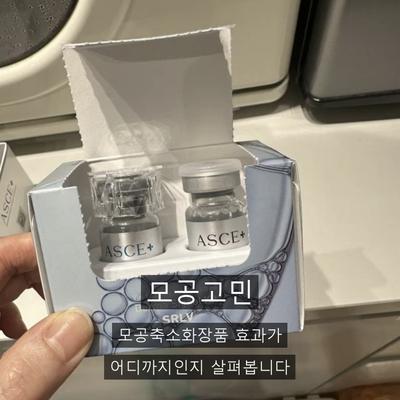
Several complex factors can contribute to pores appearing noticeably larger.
When sebum production becomes excessive, pore openings can appear enlarged.
Pores can appear even more prominent in areas where sebaceous glands are concentrated, such as the T-zone.
Additionally, as skin elasticity decreases with age, the tissues around the pores can sag, making pores appear larger.
There are also cases where deep, indented, scar-like pores remain after an inflammatory reaction due to acne.
If the types of pores differ in this way, then the appropriate management methods should also differ.
Pores primarily caused by sebum production are a type that can expect some improvement through cosmetics containing sebum-controlling ingredients.
With just ingredients that exfoliate and manage sebum, these oily-type pores can feel smoother on the skin's surface relatively quickly.
On the other hand, pores enlarged due to reduced elasticity indicate a loosened dermal tissue, making it difficult for cosmetic ingredients to induce fundamental structural changes by only acting on the skin's surface.
Scar-like pores are a typical case where the dermis already has indentations from physical damage, making it difficult for cosmetics alone to fill these areas.
While these three pore types may appear similar on the surface, there are clear differences in the scope and limitations of what cosmetics can achieve.

Pore-minimizing cosmetics primarily help to refine dead skin cells and sebum accumulated on the epidermis, the outer layer of the skin.
Certain ingredients that regulate sebum production can smooth out the pore openings, making pores temporarily appear less prominent.
Many of you have probably experienced pores temporarily looking less noticeable immediately after washing your face.
From this perspective, the role of pore-minimizing cosmetics is certainly meaningful.
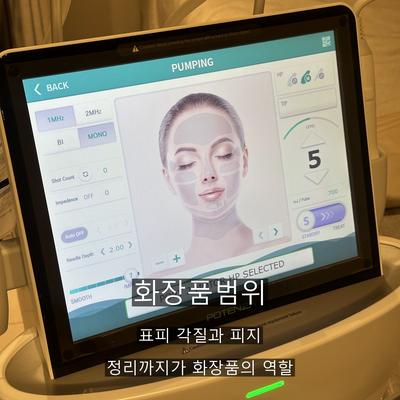
However, the real issue lies in the dermis, which is beneath the epidermis.
Pores enlarged due to reduced elasticity or scarring indicate a weakened internal structure of the dermis.
Due to their molecular size, it is practically difficult for active cosmetic ingredients to deeply penetrate into the dermis.
Even ingredients known for their effectiveness have limitations in reaching the dermis when simply applied to the skin's surface.
Smoothing out the skin's surface and rebuilding its internal structure require fundamentally different approaches.
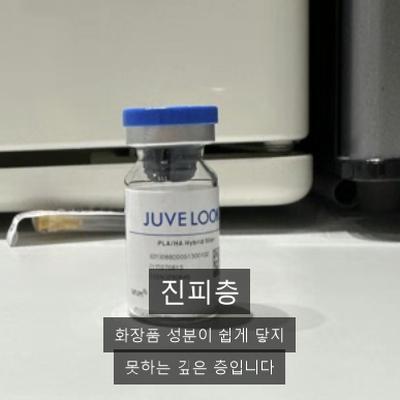
Pore-minimizing cosmetics and Potenza have different roles
To fundamentally manage pore size, it is necessary to reactivate collagen and elastin fibers in the dermis.
When collagen in the dermis is sufficiently regenerated, the supporting structure around the pores is strengthened, and you can expect the pore openings to become tighter.
Such changes in the dermis are difficult to induce simply by applying certain ingredients to the skin's surface.
Therefore, procedural approaches that directly stimulate the dermis to induce regeneration can be an important consideration.
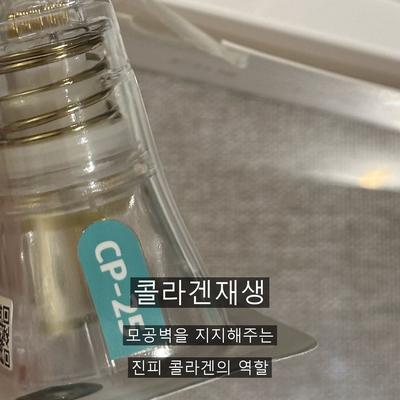
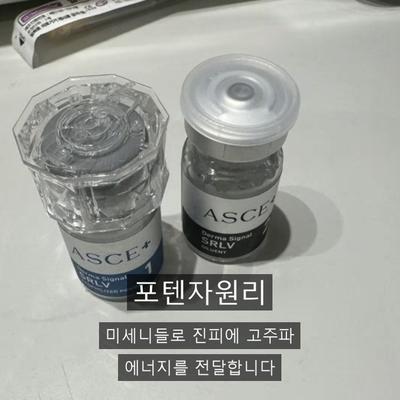
Potenza works by precisely delivering tiny needles (microneedles) to the skin's dermis, creating micro-channels, and directly transmitting radiofrequency (RF) energy from the needle tips.
This RF energy is delivered directly to the dermis, effectively stimulating the production of collagen and elastin.
Unlike traditional Fraxel lasers that induced regeneration by causing damage to the skin's surface, Potenza aims for dermal regeneration while minimizing surface impact.
The depth of the microneedles can be precisely adjusted from 0.5 millimeters to a maximum of 3.5 millimeters, depending on the treatment goal and application area.
Potenza can be considered for sagging pores, acne scars, fine line management, and overall skin elasticity improvement.
Furthermore, it can help regulate excessively active sebaceous glands, making it useful in managing skin troubles.
Treatments are usually performed at intervals of about 4 to 6 weeks, and more noticeable changes are expected after accumulating 3 to 5 sessions.
Immediately after the procedure, some redness or tiny red spots may appear, but these typically subside within one to two days.
For 1-2 days after the procedure, it's advisable to avoid activities that can generate heat in the treated area, such as saunas, strenuous exercise, and alcohol consumption.
To aid skin barrier recovery, apply moisturizer generously, and it's crucial to diligently use sunscreen to protect your skin from UV rays.
Makeup is possible from the day after the procedure, but to minimize skin irritation, it may be helpful to apply it lightly for about 3 days.

When it comes to pore management, pore-minimizing cosmetics alone may have clear limitations.
When deep stimulation of the skin's dermal layer is needed, we explain that Potenza treatment can be an effective solution.
Potenza Treatment Approach
When applying a skin booster concurrently, a dedicated pumping tip is used to help effective ingredients penetrate well into the dermal layer. This considers absorption efficiency.
All needle tips used in the treatment are used only once per patient and are immediately discarded after use, adhering to strict hygiene principles.
We meticulously adjust the needle depth to match the specific characteristics of each skin concern area and control the treatment density by applying a layering technique.
We diligently apply the prescribed number of shots to ensure that energy is delivered evenly to the skin.

Frequently Asked Questions
Q. Can pore size be reduced just by consistently applying pore-minimizing cosmetics?
A. Pore-minimizing cosmetics can primarily help manage dead skin cells or excessive sebum on the skin's surface. However, there may be limitations in inducing structural changes in the dermal layer. Therefore, when necessary, procedural approaches like Potenza can be considered.
Q. Is it okay to use pore-minimizing cosmetics and Potenza together?
A. Yes, it is possible to use them together. This method involves continuing regular surface care with pore-minimizing cosmetics while stimulating the dermal layer with Potenza treatment, combining different perspectives of care.
Q. Should I continue to apply pore-minimizing cosmetics after a Potenza treatment?
A. Even after treatment, consistently managing sebum and dead skin cells with pore-minimizing cosmetics can have a positive effect on managing the process of pores re-enlarging.
Q. Can scar-related pores also be resolved with pore-minimizing cosmetics?
A. In the case of scar-related pores, the cause is often damage to the dermal layer, which cosmetic ingredients have difficulty reaching sufficiently. Therefore, improvement may be challenging with pore-minimizing cosmetics alone, and procedural approaches like Potenza may be considered.
Our Approach
We strive to ensure that the active ingredients of skin boosters are effectively delivered to the skin using dedicated pumping tips, thereby positively influencing treatment results.
We adhere to the principle of using one tip per patient and immediately discarding it after use, and we create a trustworthy treatment environment by applying a layering technique tailored to the characteristics of each area.
We diligently follow the prescribed number of treatment shots to contribute to the stability of the treatment and help achieve the desired results.
Anticipated Changes Through a Meticulous Approach — Learn more about this treatment after consulting with a specialist.
Related notes
Procedure notes worth reading next.


Loading menu…