

How to remove milia: Self-extraction is dangerous! Beomgye, Pyeongchon, Beomgye Station, Pyeongchon Station, Hogye-dong, Bisan-dong, Gwanyang-dong, Dongan-gu, Indeogwon, Geumjeong, Anyang
This is Gyeonggi Anyang Beomgye KKEUT Korean Clinic's procedure note on How to remove milia: Self-extraction is dangerous.
When looking for ways to remove milia, the first thing that often comes to mind is directly squeezing them out with a needle.
It's natural to want to touch the white bumps that appear around the eyes and on the cheeks with your fingernails or a needle.
However, milia are not lesions that can be resolved by squeezing them.
Kkeut Korean Medicine Clinic often encounters patients who have tried to treat milia at home, resulting in wounds and hyperpigmentation, before coming for treatment.
This article explains what milia are, why squeezing them yourself can cause problems, and how they are removed in a clinic, in order.
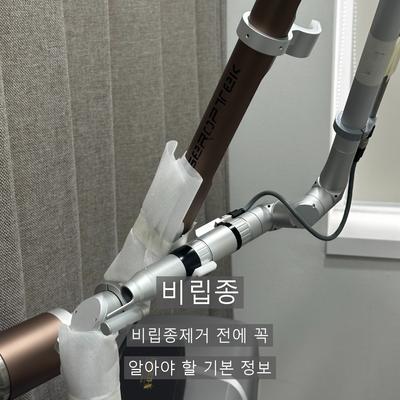
Milia are small, white or yellowish bumps that form when keratin accumulates under the skin's surface.
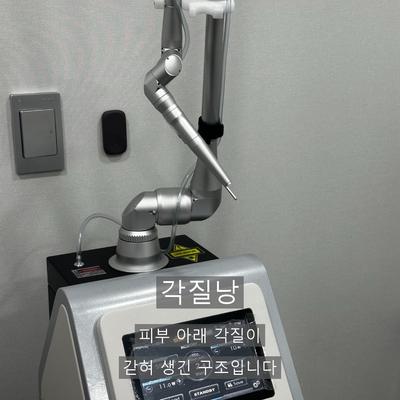
Medically, they are described as a structure where keratin gets trapped in a pocket and cannot escape.
This pocket is called a keratin cyst, and the key to milia treatment lies in this keratin cyst.
They primarily appear around the eyes, on the cheeks, and on the forehead, resembling tiny bumps.
They cause little to no pain or itching, so they are not harmful to the body, but they rarely disappear on their own and tend to persist for a long time.
They are firmly embedded beneath smooth skin, so the contents do not easily come out when pressed from the surface.
There are four main reasons why you shouldn't squeeze them yourself.
First, the keratin cyst remains inside the skin.
If only some of the bump's contents are removed and the pocket is left behind, keratin will accumulate again, and milia will return in the same spot.
Second, it can cause skin damage.
Milia are covered by skin, so they have no exit.
If you try to force them open with a needle or fingernail, you will create a wound wider than necessary.
Third, there is a risk of infection and inflammation.
Touching the skin with unsterilized needles and hands can introduce bacteria, leading to redness, swelling, and pus formation.
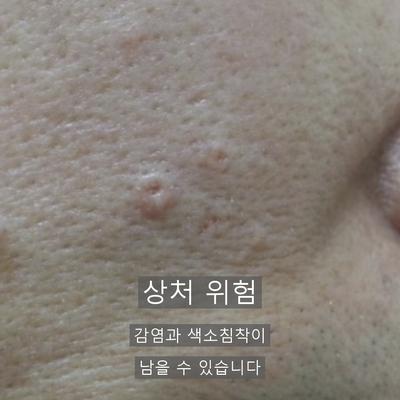
Fourth, it can lead to hyperpigmentation and scarring.
The area around the eyes, in particular, has thin skin, making it prone to leaving brown marks even from small wounds.
It's not uncommon for efforts to remove a single bump to result in a more noticeable mark that lasts longer.

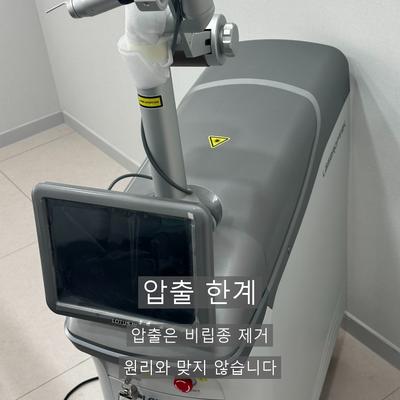
Using an extractor or cotton swab to press and squeeze also has the same limitations.
Extraction is a method for removing clogged sebum from the skin surface and is not suitable for eliminating keratin cysts beneath the skin.
Bumps whose contents are not exposed to the surface often do not come out when pressed, and only the surrounding skin gets damaged.
If, after trying at home, the bumps have grown larger or the surrounding area has become red, please refrain from touching them further and seek medical attention.
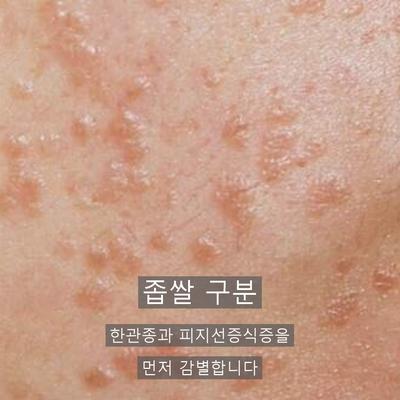
There are small, milia-like lesions that are often confused with actual milia due to their similar appearance.
Typical examples include syringomas and sebaceous hyperplasia.
Syringomas originate from sweat glands, while sebaceous hyperplasia involves enlarged sebaceous glands forming lesions.
All appear as small bumps, making them difficult to distinguish at home.
If you presumed it was milia and removed it, but it turned out to be a different lesion, the approach would need to be different.
Kkeut Korean Medicine Clinic first distinguishes between similar-looking small bumps before deciding on the treatment method.
Milia are treated with a procedure to remove the keratin cyst, while syringomas or sebaceous hyperplasia are addressed with separate programs designed to remove their underlying causes.
Milia removal at the clinic proceeds in the following order: diagnosis, sterilization, laser treatment, and aftercare.
First, the location and shape of the bump are checked to confirm if it is indeed milia.
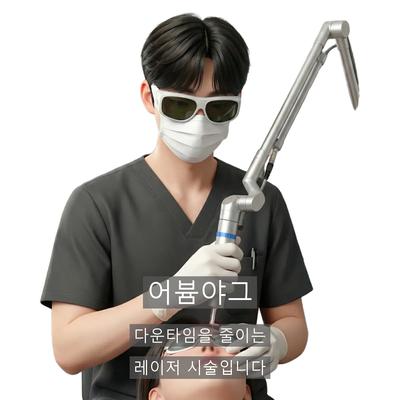
After sterilization, an Er:YAG laser is used to create a very small channel in the thin skin above the bump.
Through that channel, the contents and the keratin cyst are removed.
Removing the entire keratin cyst is essential to reduce the chance of recurrence in the same spot.
The Er:YAG laser is a device with minimal heat spread to surrounding tissues, resulting in less downtime.
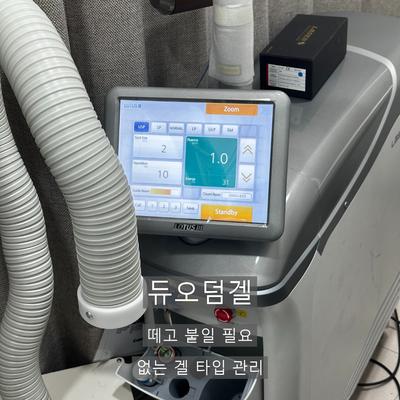
After the procedure, apply DuoDERM gel to the treated area and ensure proper moisturizing and sun protection.
Do not rub the treated area or forcefully remove scabs to allow new skin to emerge stably.
Treatment time and the scope of work performed in one session vary depending on the number and area.
For areas with many lesions or sensitive areas like around the eyes, the scope of treatment is determined after consultation.
Milia are not lesions to be squeezed out, but rather lesions where the keratin sac is removed
Here are the differentiating standards for milia treatment at Kkeut Oriental Medicine Clinic.
Kkeut Oriental Medicine Clinic begins with a diagnostic process to distinguish between milia, syringoma, and sebaceous hyperplasia before treatment.
Even if they look like similar small bumps, each lesion requires a different removal method, so Kkeut Oriental Medicine Clinic devises a treatment plan after making a clear distinction.
Kkeut Oriental Medicine Clinic uses an Er:YAG laser to minimize skin damage and downtime during treatment.
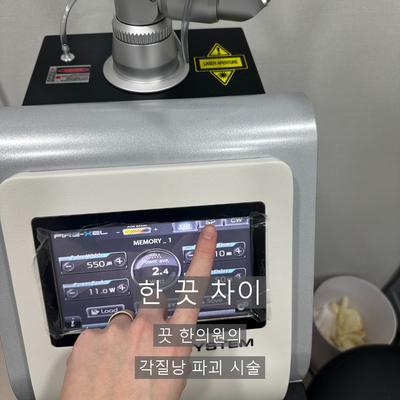
Kkeut Oriental Medicine Clinic's unique standard lies in thoroughly destroying the keratin sac.
Since only treating the surface granules leads to recurrence, the destruction of the keratin sac is considered the core of the treatment.
Kkeut Oriental Medicine Clinic finishes the treatment with DuoDerm Gel.
Unlike regular DuoDerm stickers, it's a gel type, so there's no hassle of peeling and sticking.
It can also be used by those with sticker allergies.
Kkeut Oriental Medicine Clinic also checks the condition first, even if there are wounds or marks from squeezing at home.
We adjust and guide the treatment timing according to the wound condition.
Frequently Asked Questions
Q. Isn't directly squeezing milia with a needle an acceptable removal method?
A. We do not recommend directly squeezing milia as a removal method.
This is because the keratin sac may remain and reappear, carrying risks of scarring and hyperpigmentation.
At Kkeut Oriental Medicine Clinic, we remove the keratin sac using a laser.
Q. Is there no recurrence after milia removal?
A. What determines recurrence in milia removal is how thoroughly the keratin sac has been removed.
Kkeut Oriental Medicine Clinic focuses on destroying the keratin sac during treatment to reduce the possibility of recurrence.
New milia may appear in different locations depending on the individual's skin condition.
Q. Does laser treatment for milia removal leave scars?
A. Among milia removal methods, the Er:YAG laser is a device with minimal downtime, and post-treatment care involves DuoDerm Gel and sun protection.
There may be differences depending on individual skin condition, which will be confirmed during consultation.
Kkeut Oriental Medicine Clinic's Commitment
Kkeut Oriental Medicine Clinic provides differentiated results through a diagnostic process that distinguishes between milia, syringoma, and sebaceous hyperplasia.
Kkeut Oriental Medicine Clinic enhances patient satisfaction through Er:YAG laser treatment focused on keratin sac destruction.
Kkeut Oriental Medicine Clinic pursues both safety and effectiveness through DuoDerm Gel post-treatment care.
A subtle difference, a distinct result — experience it at Kkeut Oriental Medicine Clinic.
Loading menu…