

Nose Acne Scars: Causes of Inadequate Filling and the Principle of Juvelook Treatment Beomgye, Pyeongchon, Beomgye Station, Pyeongchon Station, Hogye-dong, Bisan-dong, Gwanyang-dong, Dongan-gu, Indeogwon, Geumjeong, Anyang
10/25/2026
This is a procedure note for Nose Acne Scars: Causes of Inadequate Filling and the Principle of Juvelook Treatment at Gyeonggi Anyang Beomgye KKEUT Korean Clinic.
Acne scars on the nose are often more stubborn to treat than those on other parts of the face, and many find that improvements are slow even after receiving treatments.
Even when treatments are performed in the same manner, many people notice that while the skin texture on their cheeks becomes smoother, the changes on their nose are minimal.
In this article, we will first explore the characteristics of nose skin, then examine why recessed scars do not heal easily, and finally, how JUVÉLOOK treatment addresses these issues.
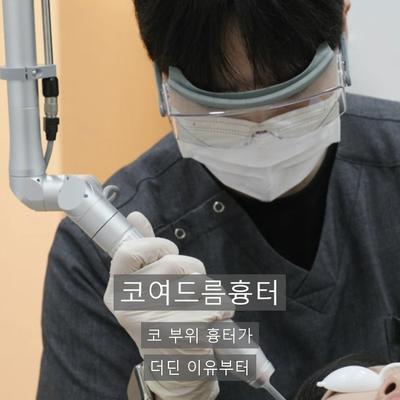
The nose is a part of the face with a particularly high distribution of sebaceous glands.
With large pores and active sebum production, when acne occurs, inflammation tends to recur repeatedly in the same spot.
Repeated inflammation can gradually deepen the damage to the dermis, ultimately leaving behind recessed scars and enlarged pores even after healing.
If you also have a habit of picking or squeezing acne, the damage to the dermis can become even deeper.
On the tip of the nose or the alar areas, the skin is thick and the surface is not smooth, sometimes making scars and pores appear mixed together.
Recessed scars are not merely a problem of the skin surface; they can be understood as empty spaces formed by the loss of collagen structures within the dermis.
Therefore, approaches that only focus on smoothing the skin surface are fundamentally insufficient to fill the base of depressed scars.
Scars are classified into narrow, deep, pitted forms and wide, shallow, depressed forms, and the treatment response may differ depending on each type. Therefore, it is important to clearly diagnose the scar type through consultation with a specialist.
There are three main reasons why scars on the nose area are more difficult to heal than those elsewhere.
First, the sebaceous glands are densely packed, causing sebum to frequently fill the pores, which can make the shadows of recessed scars appear more prominent.
Second, due to the thick skin characteristic of the nose area, it is crucial that the stimulation applied during treatment effectively reaches deep into the dermal layer.
Third, scar and pore issues often appear complexly, making treatments that address only one problem feel insufficient in their improvement effects.
Ultimately, to improve nose acne scars, it is important to induce collagen regeneration in the dermis, and a treatment approach that also considers enlarged pore issues is necessary.
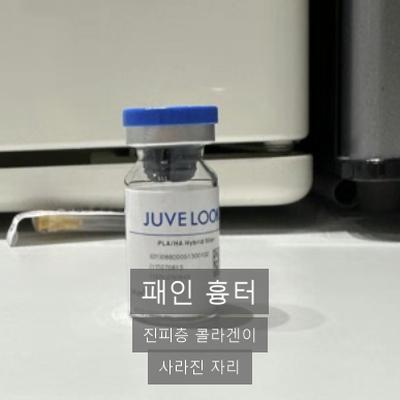
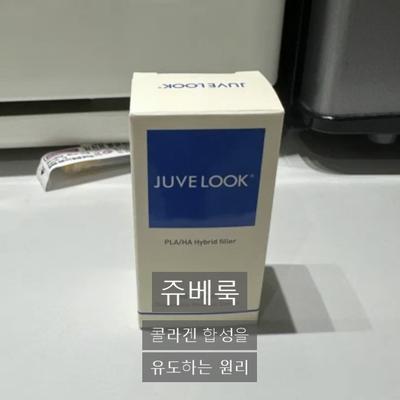
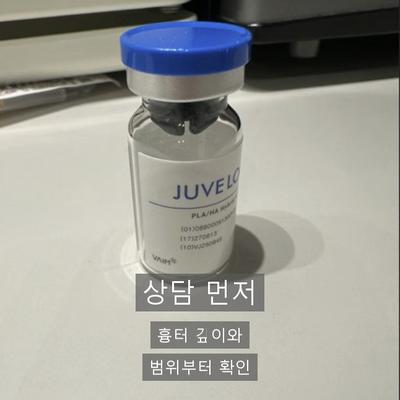
JUVÉLOOK is a skin booster based on PLLA (poly-L-lactic acid) and HA (hyaluronic acid) ingredients that helps stimulate collagen production.
The ingredients injected into the skin induce collagen synthesis within the dermis, helping the skin to naturally fill in depressed areas.
JUVÉLOOK is used for scar treatment because it can help form new collagen structures in the dermis, which is the fundamental base of depressed scars.
Unlike fillers, which simply fill empty spaces, this method induces the skin to produce its own collagen, leading to gradual and natural changes after treatment.
Compared to other skin boosters, it is known to have a good effect on inducing collagen synthesis, making it suitable for managing recessed scars that require collagen production.
JUVÉLOOK's indications include acne scars, pores, and fine lines, connecting to various skin concerns in the nose area.
JUVÉLOOK treatment results can vary depending on the injection method, even with the same medication.
When injecting manually, there is a risk of nodule formation, and it should be considered that the drug may not be uniformly absorbed into the dermis.
The nose has many curves and varying skin thickness in different areas, making uniform absorption of the treatment drug into the dermis important.
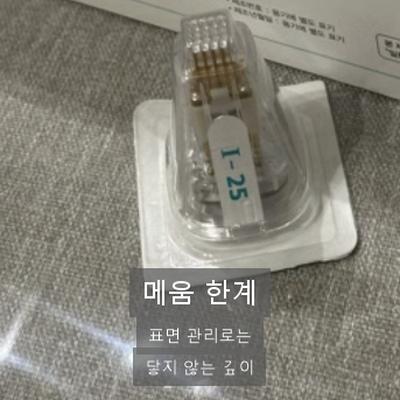
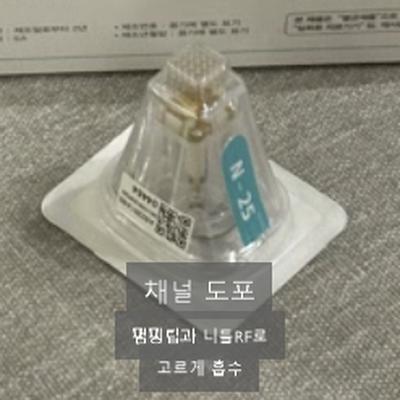
By first creating microscopic channels in the dermis using a pumping tip or Needle RF device and then applying the drug, the drug can uniformly penetrate deep into the dermis along these channels.
Needle RF works by directly delivering radiofrequency (RF) energy to the dermis to induce collagen production, so it can help improve the regenerative environment of the scar area in addition to forming micro-channels.
It is difficult to expect immediate filling of scar areas right after JUVÉLOOK treatment.
Since the process of new collagen generation within the skin is required, changes after treatment will appear after a certain period of time.
The number of treatments and intervals may vary depending on individual skin characteristics, such as scar depth, area, and pore condition.
It is advisable to consult with a specialist to first determine the depth of nose scars and discuss whether to also address pore issues when planning the treatment.
To objectively confirm the treatment progress, comparing photos taken under the same lighting conditions can be helpful.
For deep or large scars, JUVÉLOOK monotherapy alone may not achieve the desired changes. In such cases, it is advisable to receive guidance through consultation on whether to combine it with other treatments, such as Needle RF.
Our Clinic's Unique JUVÉLOOK Treatment Method
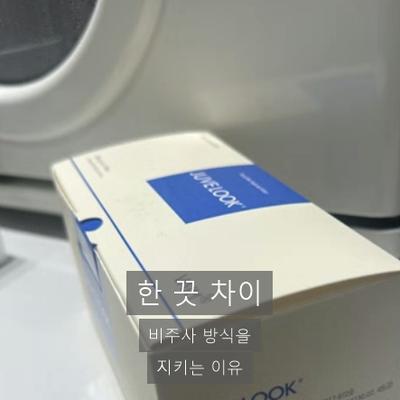
At our clinic, we do not use injection methods for JUVÉLOOK treatment based on medical judgment.
We focus on reducing the risk of nodule formation and increasing dermal absorption by creating micro-channels in the dermis using a pumping tip or Needle RF device, then applying the medication.
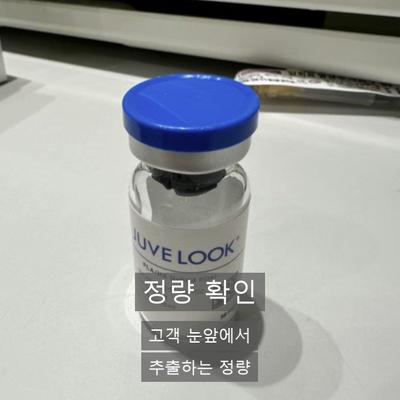
We transparently inform you of the exact amount of medication used in the treatment.
At our clinic, through consultation with a specialist, we recommend JUVÉLOOK treatment tailored to concerns such as pores, fine lines, and acne scars.
Our clinic's treatment method generally involves less pain compared to injection methods and leaves no significant wounds on the skin surface, so extensive post-care may not be significantly necessary.
Customized Treatment Design for the Nose Area
Frequently Asked Questions
Q. Can nose acne scars also be improved with Juvelook?
A. Nose acne scars typically appear as depressed skin due to a reduction in collagen in the dermal layer. Juvelook treatment can help improve these types of scars by stimulating collagen production. However, since the depth and area of scars vary for each individual, it is best to first confirm suitability through a thorough consultation with medical staff before treatment.
Q. Is Juvelook treatment for nose acne scars very painful?
A. Juvelook treatment for nose acne scars is performed by creating micro-channels in the skin and then applying the medication, rather than direct injection. This significantly reduces pain and lowers the burden of the procedure.
Q. Is there any special post-treatment care needed after Juvelook for nose acne scars?
A. Juvelook treatment for nose acne scars is performed in a way that does not cause significant damage to the skin's surface. Therefore, complex special post-treatment care is usually not required. If you have any questions or concerns after the treatment, please feel free to ask the medical staff, and we will provide detailed guidance.
The Sincerity of Kkeut Clinic
At our medical institution, we utilize a micro-channel application method instead of direct injection. Through this, we strive to reduce the burden during the procedure and provide a more comfortable experience.
To earn the trust of our patients, we adhere to the principle of precisely extracting and using the exact amount of medication right before your eyes. We aim to build trust through a transparent process.
Before any procedure, we always conduct a thorough consultation with our medical staff to carefully confirm its suitability for each individual. Through this, we exercise utmost care to ensure a safe procedure and to help you expect positive results.
We focus on the possibilities that meticulous differences can create. We recommend consulting with our medical staff at our institution.
Loading menu…