

Men's Hair Removal Cream: Why It's Ineffective at Home and the Crucial Differences of Clinic Treatments Beomgye, Pyeongchon, Beomgye Station, Pyeongchon Station, Hogye-dong, Bisan-dong, Gwanyang-dong, Dongan-gu, Indeogwon, Geumjeong, Anyang
10/28/2026
This is a procedure note for Men's Hair Removal Cream: Why It's Ineffective at Home and the Crucial Differences of Clinic Treatments at Gyeonggi Anyang Beomgye KKEUT Korean Clinic.
Many consider hair removal cream as an easier alternative to shaving or waxing for male hair management.
However, there are clear differences in the purpose and duration of hair removal creams and hair removal procedures performed at medical institutions. We will explain the characteristics of both methods.
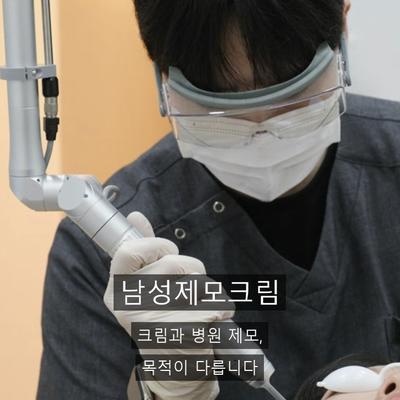
How Hair Removal Cream Works
Hair removal cream works by chemically dissolving the protein of hair exposed on the skin's surface, which is then wiped away. Similar to shaving, it is primarily used to tidy up visible hair and has the advantages of being relatively painless and easy to use.
However, this method does not act on the hair roots or follicles beneath the skin. Since the hair roots remain intact, hair will grow back over time. This is not due to a lack of product effectiveness but because its scope of action is limited to the skin's surface.
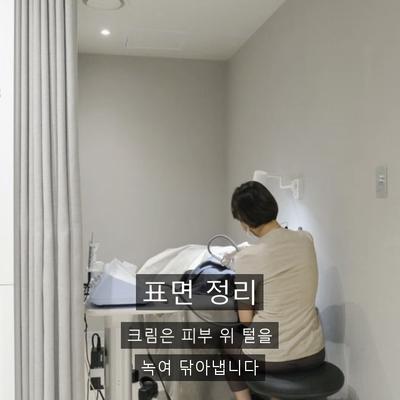
Limitations of Hair Removal Cream for Beard Management
Men's beards are generally thick and dense, so even after using hair removal cream, hair will visibly grow back within a few days. The cream must be used repeatedly, and facial skin is delicate and sensitive, which may lead to redness or stinging. When using it, adhere to the recommended time and it's helpful to perform a patch test on a small area of skin beforehand.
If you wish to go beyond simply tidying up hair and aim to reduce dark marks caused by beards or the hassle of daily shaving, an approach that directly targets the hair follicles is necessary.
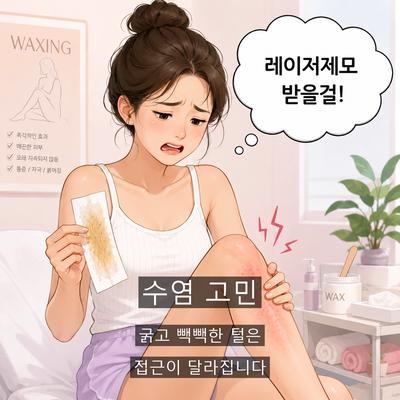
How Medical Laser Hair Removal Works
Laser hair removal uses a method where laser energy is intensely absorbed by the melanin pigment in the hair and converted into heat. This heat is then delivered to the hair roots and follicles, which are the source of hair growth. This can be described as a method that directly targets the hair roots rather than the skin surface.
However, lasers only effectively react to hair follicles in the active growth phase, where melanin pigment is actively produced. Since it's a probabilistic phenomenon that not all hairs enter the growth phase simultaneously, it's difficult to treat all follicles at once with a single session. For this reason, repeated sessions must be performed over a certain period.
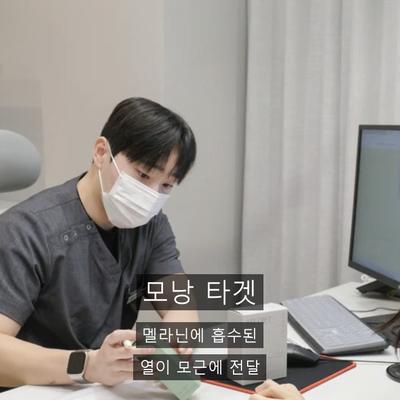
Number of Sessions and Recommended Interval
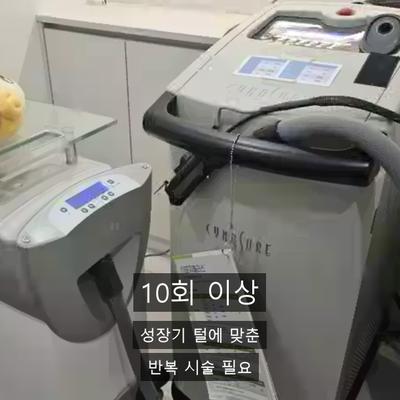
Generally, we recommend 10 or more sessions for all hair removal areas. For men's beards in particular, due to the nature of the hair, 20 or more sessions, or a period of over one year, may be necessary. The treatment interval is a minimum of 3 weeks, with 4-week intervals being typical. This is to align with the skin's keratin renewal cycle and the emergence of new hairs in the growth phase.
Laser hair removal is closer to 'semi-permanent hair removal,' which suppresses hair growth and reduces its quantity, rather than 'permanent hair removal,' which prevents hair from growing for a lifetime. Even after completing sufficient sessions, receiving maintenance treatments once every 2-3 months can help with hair management.
Precautions Before and After Laser Hair Removal
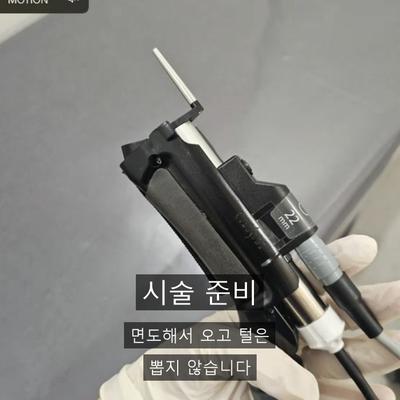
It is recommended to shave the area on the day of your appointment before visiting. If hair is left long, the laser energy can unnecessarily burn on the skin's surface, increasing the risk of burns, and making it difficult to effectively deliver energy to the hair roots.
During hair removal treatment, refrain from plucking hairs. If hairs are plucked, the hair roots that the laser targets will disappear, which can reduce the effectiveness of the treatment. Shaving is recommended starting from the day after the procedure, and for 1-2 days after the treatment, it is advisable to avoid strenuous exercise, sauna use, and alcohol consumption.
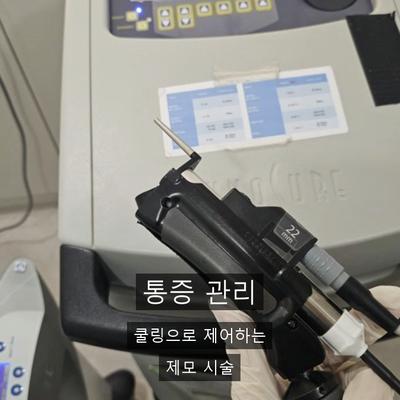
During the procedure, pain may feel similar to having an ice cooler applied, and the perceived pain may gradually decrease as the amount of hair reduces. Anesthetic cream primarily acts on the skin's surface, so its numbing effect may not fully reach the hair roots. Since heat is directly delivered to the hair follicles, there is a rare possibility of folliculitis. In such cases, managing it with a regenerative cream typically helps it subside over time.
In summary, hair removal cream is a suitable method when you want to easily tidy up visible hair immediately. On the other hand, medical hair removal can be considered when you wish to reduce the frequency of hair growth itself and lessen the inconvenience in daily life. Rather than competing, these two methods can be chosen as management approaches based on different objectives.
Kkeut Korean Medicine Clinic's Customized Hair Removal Design
Even for male hair removal procedures, individual hair thickness, density, and skin tone vary. Therefore, a uniform laser setting may not yield optimal results. Kkeut Korean Medicine Clinic customizes pulse duration and energy density, considering these individual characteristics.
Thick hair, rich in melanin, risks epidermal damage if energy is rapidly absorbed during a short pulse. Kkeut Korean Medicine Clinic utilizes long pulses to gradually deliver heat, protecting the epidermis, and sets a high energy density for thick, dark hair to ensure sufficient thermal energy accumulates for effective treatment.
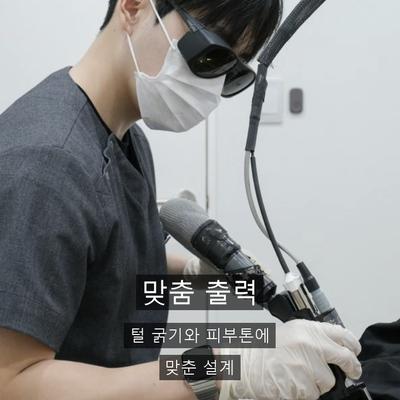
For dense beard areas, treatment is performed with dispersed energy to prevent burns from excessive heat. For darker skin tones, laser output is delicately adjusted to prevent side effects that may arise from an excessive reaction of melanin pigment. Conversely, fine and light hair tends to have reduced treatment efficacy, so energy is increased or multiple passes are performed to ensure sufficient heat is delivered to the hair roots.
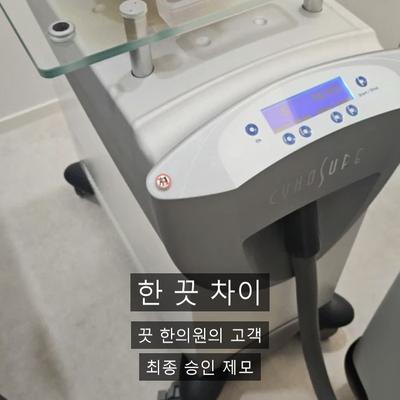
We are equipped with widely used and safety-verified devices such as Apogee and GentleMax. Apogee, in particular, continuously sprays cool air before and after treatment, helping to reduce skin irritation.
Treatment Completion After Patient Confirmation
At Kkeut Korean Medicine Clinic, before concluding the treatment, we confirm with the patient if there are any additional areas they wish to have treated. The procedure is only completed after obtaining the patient's final consent, and energy is focused even more finely on areas of particular concern.
Frequently Asked Questions
Q. Can I manage my beard with men's hair removal cream?
A. Men's hair removal cream is suitable for easily tidying up visible hair on the skin's surface. However, it does not directly act on the hair roots, so hair may grow back. If you desire long-term management, you may consider hair removal procedures at a medical institution.
Q. If I get professional hair removal instead of using men's hair removal cream, how many sessions will I need?
A. Unlike men's hair removal cream, medical hair removal procedures directly target the hair follicles, requiring multiple repeated sessions. Beard hair removal may require 20 or more sessions and a period of over one year, with treatment intervals of a minimum of 3 weeks, and a recommended 4-week spacing.
Q. Can I receive treatment while I'm using men's hair removal cream?
A. Men's hair removal cream does not remove hair roots, so the hair roots targeted by laser treatment still remain. However, if you experience skin irritation due to hair removal cream use, it is best to consult with a specialist after your skin has sufficiently calmed down.
Kkeut Korean Medicine Clinic's Sincerity
Kkeut Korean Medicine Clinic strives to enhance treatment efficiency by designing pulse duration and energy density tailored to each individual.
Kkeut Korean Medicine Clinic operates a system where treatment is completed only after the client's final approval, and we highly value communication with our patients throughout the treatment process.
Kkeut Korean Medicine Clinic uses devices such as Apogee and GentleMax, and adjusts output according to individual skin tone, considering both the safety and effectiveness of the treatment simultaneously.
You can experience the changes created by meticulous differences at Kkeut Korean Medicine Clinic.
Loading menu…