

Anyang Beomgye Flat Warts: Why Do They Spread If Left Untreated? Effective Treatment Options. Beomgye, Pyeongchon, Beomgye Station, Pyeongchon Station, Hogye-dong, Bisan-dong, Gwanyang-dong, Dongan-gu, Indeogwon, Geumjeong, Anyang
This is Gyeonggi Anyang Beomgye KKEUT Korean Clinic's procedure note on Anyang Beomgye Flat Warts: Why Do They Spread If Left Untreated? Effective Treatment Options.
Flat warts can increase in number or spread if the treatment timing is missed. Therefore, it is important to correctly diagnose skin lesions when they first appear.
The official medical term for flat warts that appear on the skin is 'flat warts'. However, many people also search for them under the name 'pyeongpyeon-samagwi' (a common misspelling/alternative pronunciation).
In this text, we will explain in detail the causes of flat warts spreading and possible treatment methods.
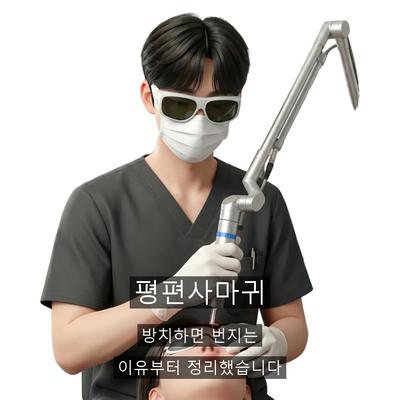
First, the reasons why flat warts spread
Flat warts are one of the viral skin diseases caused by the human papillomavirus (HPV).
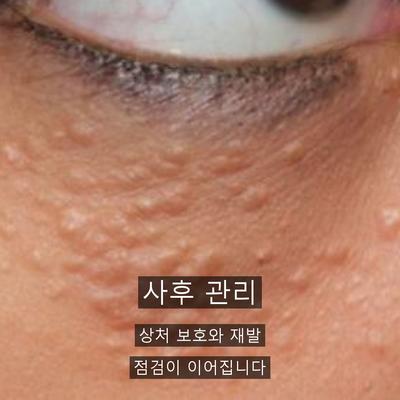
They typically appear as small, slightly raised papules with a relatively flat surface, similar in color to the skin or light brown.
They can often be observed in areas frequently exposed to the outside, such as the face, neck, and back of the hands.
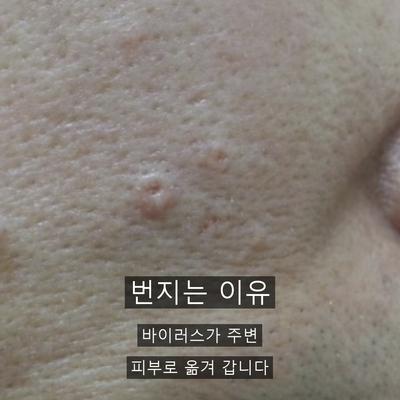
One of the main causes of the lesions spreading is 'autoinoculation'. This refers to the phenomenon where the virus transfers from an existing wart to the surrounding healthy skin.
It is common for new warts to appear in a linear fashion along microscopic scratches caused by scratching or picking at the skin, or during shaving.
The virus mainly penetrates through tiny gaps in the stratum corneum. As a result, areas with a weakened skin barrier can become more susceptible to viral infection.
Repeated irritation such as frequently touching the skin with hands, using razors, or exfoliating too often can be a cause of flat warts spreading.
Sometimes, the virus can lie dormant in the surrounding skin, in addition to the visible lesions. Therefore, the possibility of recurrence should be considered when only visible lesions are removed.
The course of flat warts can vary depending on an individual's immune status and overall skin condition. Accordingly, the speed at which warts spread can also differ from person to person.
Second, what changes when left untreated
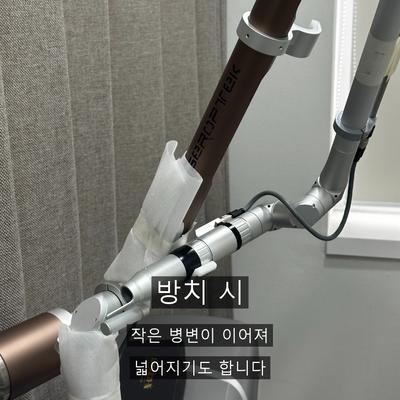
Initially, they may appear as small, inconspicuous spots. However, if left untreated, multiple lesions can merge and spread to a wider area.
They may also gradually spread from the forehead to the cheeks and neck area.
Once they begin to spread, their number can rapidly increase to a point where it becomes difficult to keep track.
Many cases are left untreated because there is no particular itchiness or pain. However, it is important to be aware that the absence of symptoms does not mean the lesions will no longer spread.
Occasionally, spontaneous disappearance is observed, but the timing of this is difficult to predict. While the lesions remain, there may be a risk of the virus transmitting to the surrounding skin.
After the lesions' scope widens, the area that needs to be removed also increases.
Consulting a specialist when the number of lesions is small allows for a more careful diagnosis and treatment plan.
Third, reasons why they are confused with melasma, blemishes, and milia
Flat warts are often flat and light-colored, making them difficult to distinguish from melasma, blemishes, or small, grain-like lesions.
If these are mistakenly identified as hyperpigmentation lesions and toning procedures are received first, the treatment may not be appropriate for the actual cause.
Milia, syringomas, and sebaceous hyperplasia are also small lesions that appear on the face, so it is often difficult to clearly distinguish them with the naked eye alone.
Therefore, the very first step is to accurately diagnose the type of lesion.
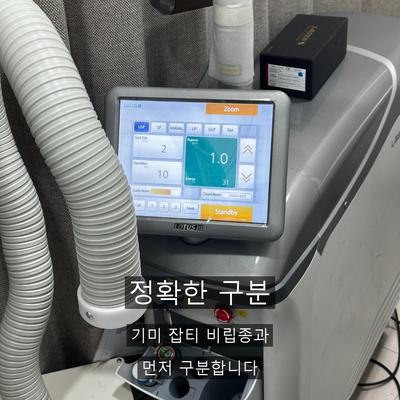
At Kkeut Korean Medicine Clinic, during the consultation process, lesions are meticulously observed using a special light, and the decision regarding treatment is made based on a precise diagnosis.
Fourth, the basic flow of treatment methods
Medical institutions can consider various methods such as cryotherapy, topical medication, or laser procedures. Which method is applied may vary depending on the number of lesions or their location.
Facial areas have a relatively higher risk of scarring or post-treatment hyperpigmentation, thus requiring a more precise and delicate approach.
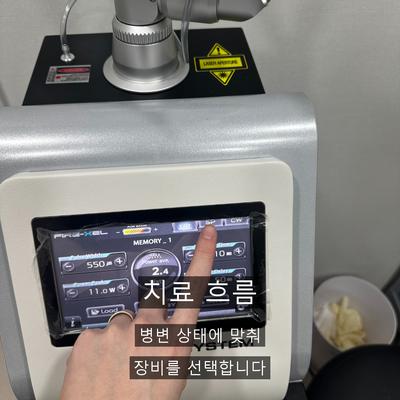
Laser treatment can be a useful method for precisely removing flat wart lesion tissue.
Erbium YAG laser can relatively reduce the burden of recovery time after treatment. In contrast, CO2 laser has the characteristic of using thermal energy to affect even the periphery of the lesion.
Since the characteristics of each laser device differ, the approach may vary by selecting the appropriate device or using two in combination, depending on the individual's lesion condition.
After the procedure, the skin may temporarily redden or show pigment changes. Therefore, appropriate post-procedure care should be given important consideration.
It is advisable not to squeeze or pick at warts with your hands at home, as this can transmit the virus to other areas.
Fifth, post-treatment care and recurrence check
After flat wart removal, protecting the wound area well is an important part of smooth recovery.
At Kkeut Korean Medicine Clinic, after the procedure, Duoderm gel is applied to the lesion area to help the wound heal well.
Duoderm gel helps patients continue their care comfortably during daily life without the need to apply and remove it like a sticker.
It is advisable to consistently apply sunscreen and sufficient moisturizer to the treated area. Also, care should be taken not to forcibly remove scabs until they fall off naturally.
Please refrain from using scrubs or exfoliants on the treated area.
Even after the procedure, you should carefully observe whether new lesions appear for a certain period.
Before your consultation, it helps for a more accurate diagnosis if you can identify when the lesion first appeared, its rate of spread, and the areas where it primarily appeared.
Kkeut Korean Medicine Clinic's Approach to Flat Wart Treatment
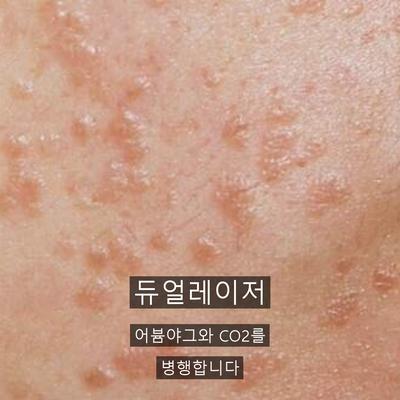
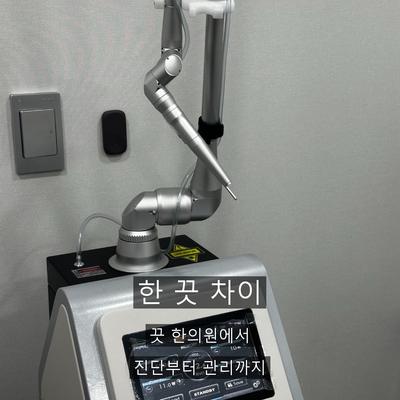
At Kkeut Korean Medicine Clinic, we apply a dual approach using both Er:YAG laser and CO2 laser to treat flat warts.
The thermal damage to surrounding tissue during CO2 laser treatment is intentionally utilized. This is to treat potential dormant viruses in the vicinity.
Using only a CO2 laser can prolong the recovery period. Therefore, at Kkeut Korean Medicine Clinic, our main principle is to use it in conjunction with an Er:YAG laser, depending on the situation.
More important than simply having various equipment is understanding the dormant characteristics of the virus and selecting a strategic treatment method that considers this.
At Kkeut Korean Medicine Clinic, we clarify the diagnostic process by confirming lesions with a special light in the consultation room, definitively diagnosing flat warts, and then proceeding with the treatment.
This is an important step to accurately differentiate, ensuring that unnecessary procedures are not performed on lesions that are not flat warts.
If you choose Kkeut Korean Medicine Clinic's unlimited treatment program, touch-ups (additional treatments) are fundamentally included after the initial procedure.
Due to the nature of viral diseases, there is a possibility of recurrence. Therefore, the program is designed so that if recurrence occurs, patients can have the lesions removed again without additional cost.

After the procedure, Kkeut Korean Medicine Clinic meticulously manages the treated area using Duoderm Gel.
This is a systematically planned management that goes beyond simply removing visible lesions, also considering the possibility of future recurrence.
One of Kkeut Korean Medicine Clinic's characteristics is that it designs the entire process, from diagnosis to effective use of equipment, response to recurrence, and post-procedure care, by organically connecting them.
Frequently Asked Questions
Q. Do flat warts disappear on their own if left untreated?
A. Flat warts occasionally disappear naturally. However, it is difficult to predict when this will happen, and the possibility of lesions spreading to surrounding areas during this process cannot be ruled out.
Therefore, Kkeut Korean Medicine Clinic recommends seeking professional treatment before the lesions spread more widely.
Q. Why do flat warts keep spreading?
A. Flat warts are a viral disease. The virus can easily spread to other areas through tiny scratches or micro-injuries that occur during scratching or shaving.
At Kkeut Korean Medicine Clinic, we consider these dormant characteristics of the virus and apply a dual-laser method that manages even potential dormant viruses in the surrounding area.
Q. What if flat warts recur after treatment?
A. Since flat warts are a disease caused by viral infection, the possibility of recurrence should always be considered even after treatment.
Kkeut Korean Medicine Clinic's unlimited treatment program includes touch-up procedures, so if recurrence occurs, we will remove the lesions again without additional cost.
Kkeut Korean Medicine Clinic's Values
Kkeut Korean Medicine Clinic approaches treatment based on the use of Er:YAG and CO2 dual lasers and precise light-assisted definitive diagnosis. Through this, we aim for more meticulous care.
Kkeut Korean Medicine Clinic prepares for the possibility of recurrence with a systematic response, including touch-up procedures, thereby alleviating patients' psychological and financial burdens.
Kkeut Korean Medicine Clinic assists in the recovery process through meticulous post-procedure care using Duoderm Gel.
Kkeut Korean Medicine Clinic's Delicate Management. Kkeut Korean Medicine Clinic strives to provide integrated care for flat warts.
Related notes
Procedure notes worth reading next.

Loading menu…