

3 Key Points for Choosing a Dermatology Clinic for Mole Removal, Procedure Process, and Aftercare Guide Beomgye, Pyeongchon, Beomgye Station, Pyeongchon Station, Hogye-dong, Bisan-dong, Gwanyang-dong, Dongan-gu, Indeogwon, Geumjeong, Anyang
This is Gyeonggi Anyang Beomgye KKEUT Korean Clinic's procedure note on 3 Key Points for Choosing a Dermatology Clinic for Mole Removal, Procedure Process, and Aftercare Guide.
When looking for a dermatology clinic for mole removal, it's common to feel overwhelmed about what to prioritize, as each medical institution may have different guidance.
Moles are often easily considered a mere cosmetic issue, but depending on their shape and how they change, there are medical factors that need to be checked before any procedure.
In this article, we would like to guide you through three key criteria to consider when choosing a medical institution, as well as the general mole removal procedure and post-procedure care methods, in order.
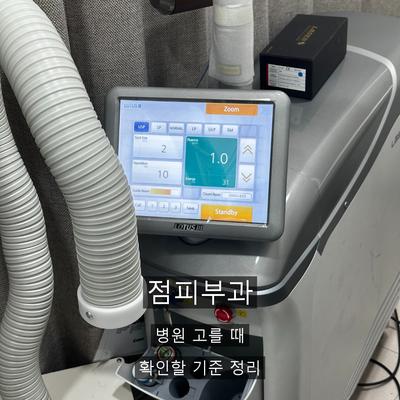
First point to check: The presence of a diagnostic process
Even if moles appear similar on the surface, their inherent characteristics can differ.
If a mole changes rapidly in size, has irregular borders, or uneven color, professional medical judgment must precede its removal.
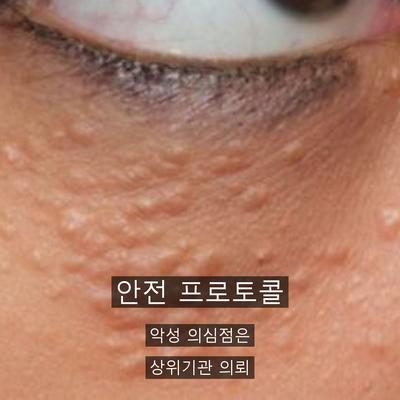
It's advisable to check if the medical staff directly examines and thoroughly explains the condition of the mole during consultation, and if there's a referral system to a higher-level medical institution should suspicious findings be present.
If a mole is accompanied by itching, bleeding, or changes in color, it's crucial to prioritize a professional examination to accurately assess its condition before proceeding with any procedure.
Places that immediately recommend laser treatment without prior diagnosis, simply because it's a cosmetic procedure, should be chosen with caution.
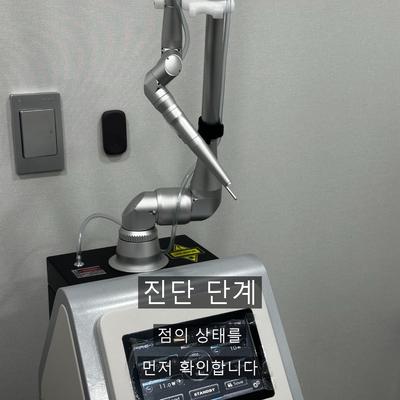
Second point to check: Type of equipment and scope of treatment
Er:YAG laser and CO2 laser are mainly used for mole removal procedures.
The Er:YAG laser is suitable for precisely removing skin tissue, which can help minimize damage to surrounding skin and reduce the burden of recovery.
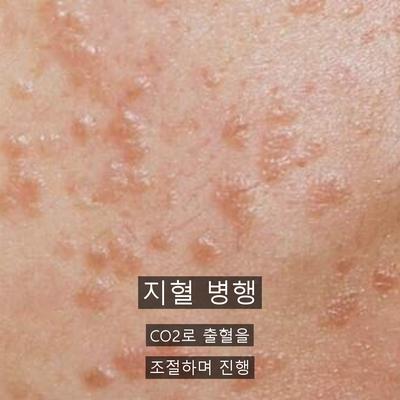
The CO2 laser has hemostatic capabilities, which can be used to control bleeding during the procedure and ensure a clean finish of the treatment area.
It's advisable to check beforehand whether both types of equipment are appropriately used in combination to suit each patient's condition, and if procedures are possible even for delicate areas such as raised moles or around the eyes.
More important than just the type of laser is the medical staff's proficiency and operational capability in precisely adjusting the laser output according to the mole's characteristics, such as its depth and location.

Third point to check: Guidance on post-procedure care methods
Mole removal procedures involve minor damage to the skin's surface, so post-procedure care can significantly affect the final outcome.
It's necessary to confirm whether you can receive detailed explanations about what type of protective dressing to use after the procedure and how to manage it specifically.
Some individuals may experience redness or irritation from the adhesive components of typical hydrocolloid bandages. Therefore, it can be helpful to check if various options, such as gel-type protective dressings, are offered.
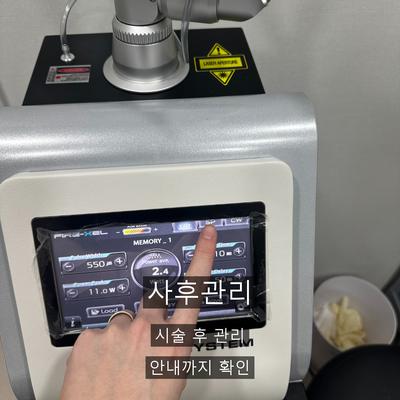
Mole Removal Procedure
Mole removal procedures generally consist of consultation, sterilization, anesthesia, laser irradiation, and soothing and protection stages.
During consultation, the individual characteristics of the mole, such as its size, depth, and location, are confirmed to determine the appropriate treatment plan.
After thoroughly sterilizing the treatment area, an anesthetic cream is applied, and then the mole tissue is carefully removed using a laser.
For moles with significant depth, a staged approach, rather than aggressive removal in a single session, may be adopted to reduce the burden on the skin.
Once the procedure is complete, a protective dressing is applied to the treated area, and patients are given instructions for home care before being discharged.
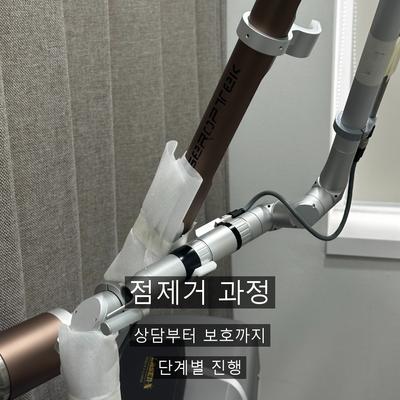
Post-Mole Removal Care Methods
For a few days after the procedure, a small scab may form on the treated area, and slight redness might be visible.
It's important not to intentionally pick at scabs and allow them to fall off naturally, as this can help reduce the possibility of hyperpigmentation and scar formation.
Continue consistent moisturizing and dressing care for the treated area, and when washing your face, it's best to do so gently to avoid irritating the skin.
Until the newly formed skin from the procedure has fully settled, you must pay special attention to UV protection.
Avoiding activities that raise body temperature, such as saunas, alcohol consumption, and strenuous exercise, for a certain period can aid in recovery.
If redness persists for a long time, or if discharge or pain worsens, it's necessary to contact the medical institution for appropriate action.
The recovery speed and the pattern of color change in the treated area may vary depending on the depth of the mole and individual skin characteristics.
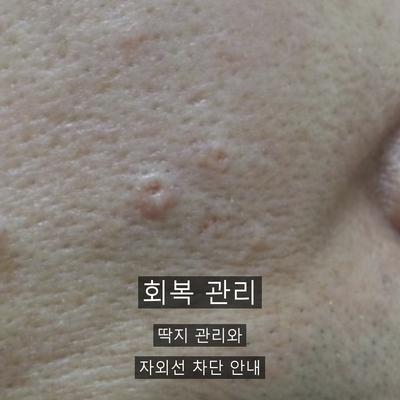
Our Kkeut Korean Medicine Clinic's Approach to Mole Removal
Kkeut Korean Medicine Clinic performs various types of mole removal procedures.
For delicate areas such as raised moles or around the eyes, where a precise approach is required, we carefully assess the possibility of treatment through thorough consultation.
At Kkeut Korean Medicine Clinic, if a mole suspected of being malignant is found, we prioritize recommending a precise examination at a higher-level medical institution rather than proceeding with the procedure.
This is to approach mole removal procedures not merely for cosmetic purposes, but according to medical protocols that prioritize patient safety above all.
At Kkeut Korean Medicine Clinic, we use both Er:YAG laser and CO2 laser, primarily utilizing the Er:YAG laser to reduce the burden of recovery time.
The CO2 laser is used complementarily to delicately control bleeding through its hemostatic action and to ensure a cleaner finish of the treated area.
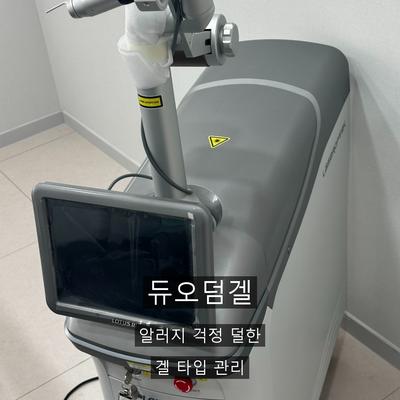
After mole removal, Kkeut Korean Medicine Clinic provides post-procedure care using Duoderm Gel.
Duoderm Gel is not a sticker type, so even those with allergies to existing sticker-type dressings can use it without concern. Additionally, it reduces the inconvenience of applying and removing it like a regular sticker.
At Kkeut Korean Medicine Clinic, we provide detailed guidance on the characteristics of moles and removal methods through pre-procedure consultation. After the procedure, we also explain the correct aftercare methods.
Frequently Asked Questions
Q. Is a consultation necessary before mole removal?
A. A consultation before mole removal is an important process to assess the current condition of the mole. At Kkeut Korean Medicine Clinic, we meticulously check the size, shape, and location of the mole before discussing appropriate treatment plans. If any suspicious findings are observed, we will refer you to a higher medical institution for further detailed examination.
Q. Can scars remain after mole removal?
A. The possibility of scarring after mole removal can vary depending on the depth of the mole, the patient's skin characteristics, and post-procedure care. At Kkeut Korean Medicine Clinic, we explain in detail the importance of managing with Duoderm Gel and protecting against UV rays.
Q. How much pain is involved in mole removal?
A. To alleviate pain during the procedure, anesthetic cream is applied before treatment to minimize discomfort. Kkeut Korean Medicine Clinic designs treatment plans tailored to the size and location of each mole, and the degree of pain experienced may vary among individuals.
Kkeut Korean Medicine Clinic's Medical Philosophy
Kkeut Korean Medicine Clinic diagnoses various types of moles and seeks appropriate treatment plans. If a mole suspected of being malignant is found, we promptly refer the patient to a higher medical institution for specialized medical care to ensure their health.
Kkeut Korean Medicine Clinic primarily uses Er:YAG laser for mole removal, and when necessary, combines it with CO2 laser for hemostasis to enhance the efficiency of the procedure.
At Kkeut Korean Medicine Clinic, meticulous post-procedure care using Duoderm Gel helps in the recovery of the treated area and allows for stable results.
Experience the difference expected from a delicate approach with Kkeut Korean Medicine Clinic.
Loading menu…