

Unlocking quicker Onda results: How many lines do you need, and when do the effects typically emerge? Beomgye, Pyeongchon, Beomgye Station, Pyeongchon Station, Hogye-dong, Bisan-dong, Gwanyang-dong, Dongan-gu, Indeogwon, Geumjeong, Anyang
12/12/2025
This is a procedure note for Unlocking quicker Onda results: How many lines do you need, and when do the effects typically emerge? at Gyeonggi Anyang Beomgye KKEUT Korean Clinic.
To grasp when noticeable changes from an Onda procedure might be observed,
it's important to first clarify several key points.
These include the number of Onda lines to be delivered during the treatment,
and which handpiece will be utilized.
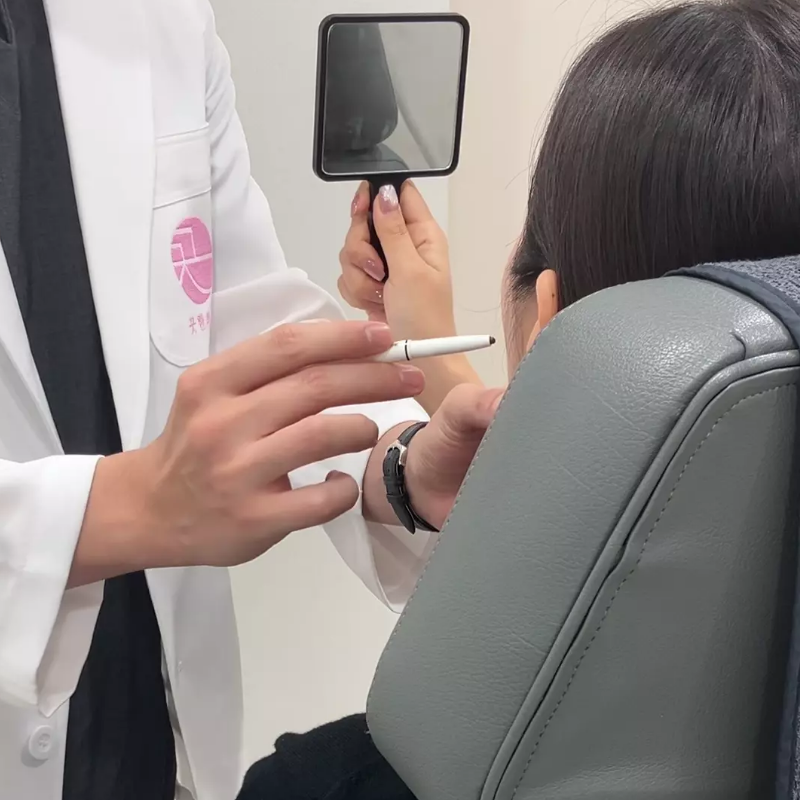
When patients consider Onda treatments, many often first think about numerical aspects.
Common questions include what number of lines is sufficient, and when they might observe the effects.
and when the effects are noticeable.
While the total number of Onda lines administered is certainly an important factor,
it is even more crucial to first accurately identify 'from which area the desired change should begin'.
While skin tissue may outwardly appear as a thin, single layer,
in reality, its various layers respond differently to thermal energy.
For instance, in areas with diminished elasticity, the dermal layer needs primary consideration,
whereas in regions with excessive fat accumulation, effectively elevating the temperature of the fat layer is a key approach.
Therefore, with Onda treatment, prior to determining the number of lines, it is paramount to first establish which skin layer will be targeted.
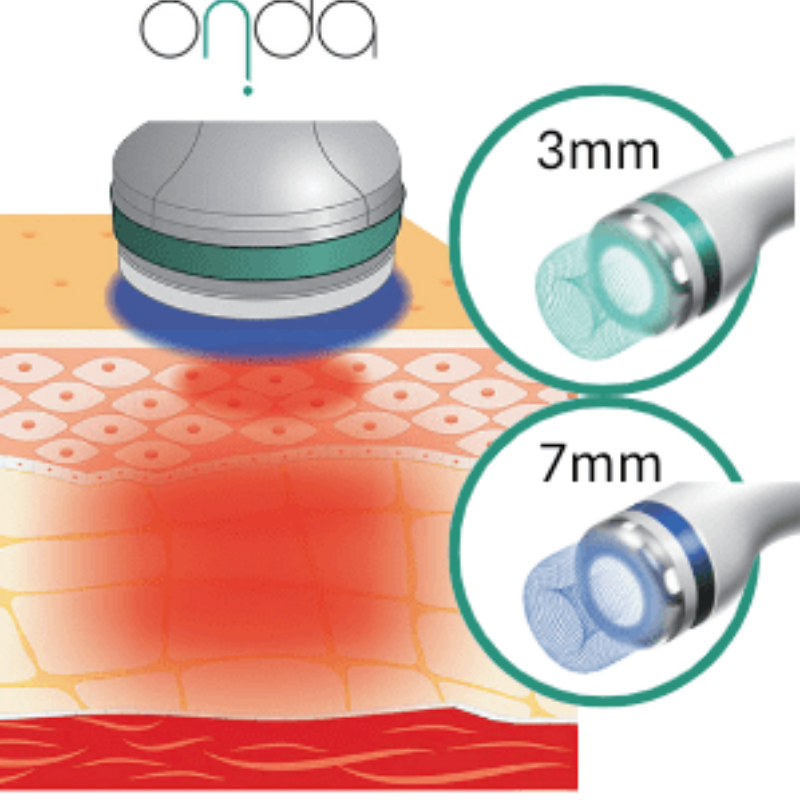
1. Two Depths That Influence Tissue Response
Onda can deliver energy to two distinct depths.
One of these is the dermal layer,
and the other is the subcutaneous fat layer.
Because the tissues at each depth respond to thermal energy at different speeds and in varied ways,
at a different speed and in a different manner,
the outcomes may differ even when the same number of lines are applied.
Characteristics of the Dermal Layer
- Its high water content leads to a swift thermal response.
- Reorganization of collagen and elastic fibers is the core mechanism that initiates change.
- Consequently, one may expect a sense of smoother skin texture and more defined facial contours.
Characteristics of the Fat Layer
- The thermal response rate is comparatively slower, but the magnitude of change can be more substantial.
- This requires a process where fat cells experience stress and subsequent restructuring.
- Actual volume reduction may be observed at this depth.
Deciding which of these two layers needs to be primarily targeted
becomes the most critical criterion.
It is an essential factor for assessing how many Onda lines are truly necessary.
2. Once the Target Layer is Identified, the Direction for Line Selection is Established
Onda energy can truly yield its desired effects
when it is precisely and effectively delivered to the targeted area.
For this reason,
prior to planning an Onda treatment, we first carefully assess which of the following three skin types best describes the patient's condition.
which of the following three skin types the patient most closely fits.
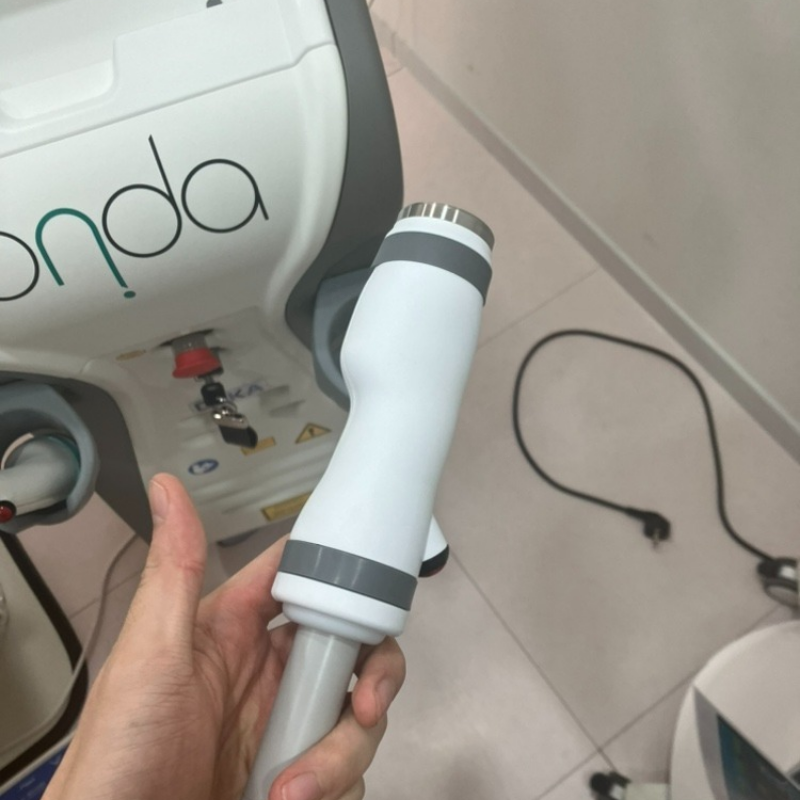
A. Weakened Superficial Layer Support (Primarily Elasticity Loss)
In such cases, adequately stimulating the layers closer to the skin's surface is important.
For dermal targeting, a 3mm depth energy application is primarily employed.
Suggested Energy Levels
A base level of approximately 60,000J is generally suggested.
Should there be a minor presence of fat, an additional 20,000~40,000J may be applied to the deeper tissue.
This energy range tends to support a consistent degree of change when the goal is to enhance superficial elasticity.
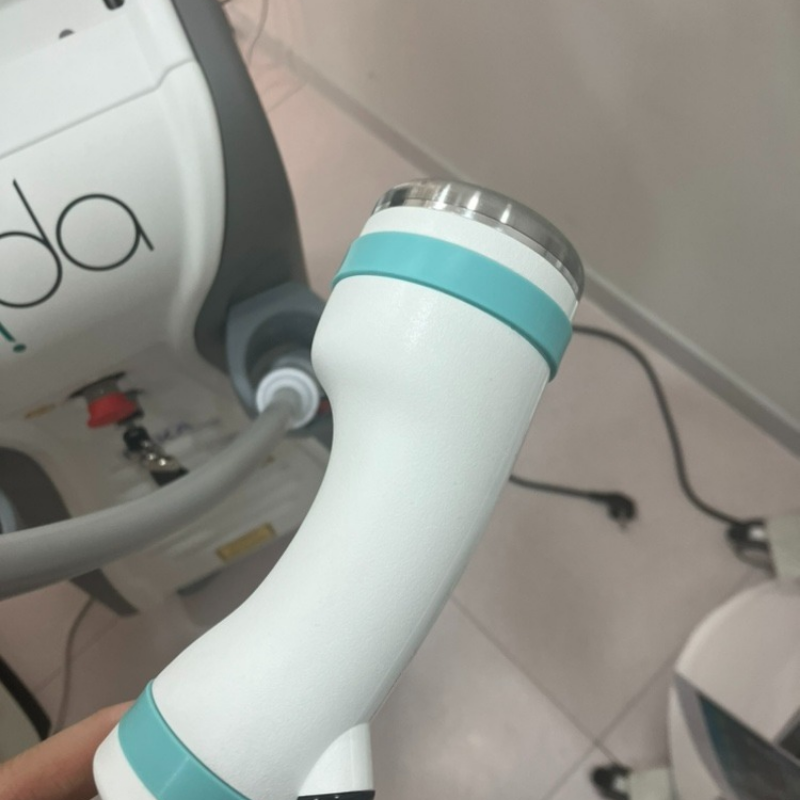
B. For Concerns Primarily Related to Deeper Layer Volume (Mainly Excess Fat)
In cases where fat is broadly distributed or gathers in localized areas,
energy directed at the subcutaneous fat layer (7mm depth) becomes the primary focus.
Suggested Energy Levels
A minimum of 60,000J or greater is typically considered.
For larger areas, applying 80,000~100,000J or more might be taken into consideration.
Should there also be a concern with elasticity, dermal stimulation may be incorporated to achieve a balanced approach.
Significant heat accumulation in the fat layer is often necessary for discernible changes to become apparent.
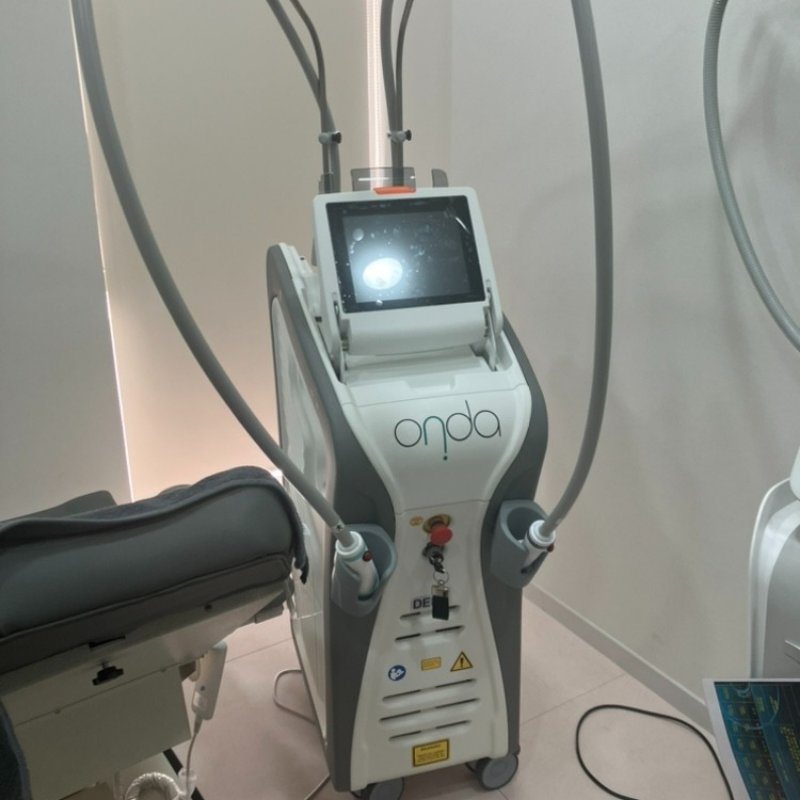
C. When Both Superficial and Deeper Layers Present Concerns (Mixed Type)
A considerable number of individuals often present with this mixed set of concerns.
In these situations, overlooking one aspect may lead to results that appear less natural.
To achieve clear and lasting improvements, it is often necessary to address both the superficial and deeper layers concurrently.
Suggested Energy Levels
Dermis: 40,000~80,000J
Fat Layer: 40,000~80,000J
While the ratio can be adjusted according to the primary concern, both layers typically benefit from a degree of stimulation.
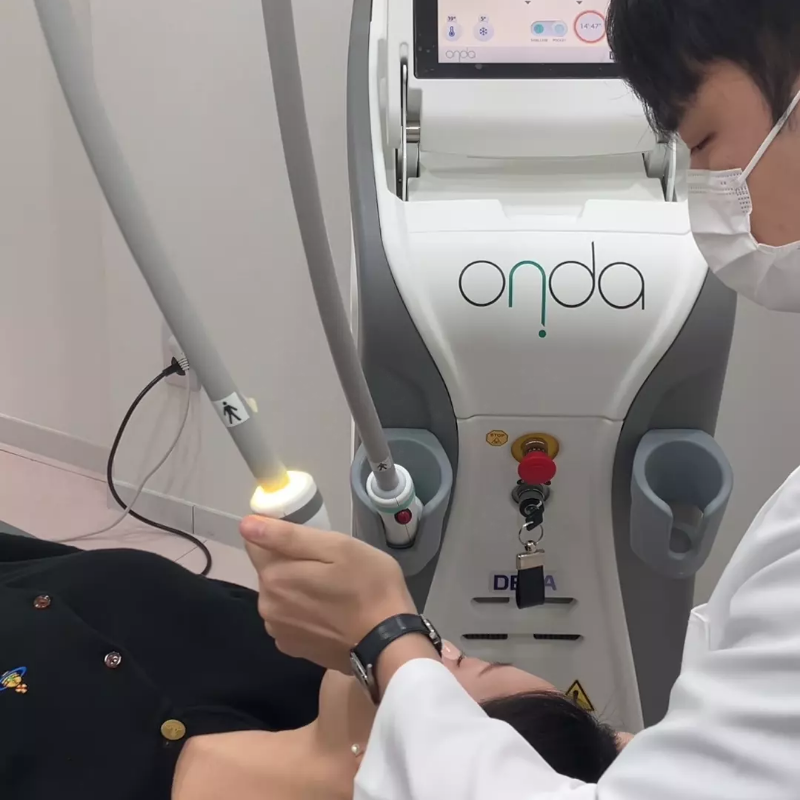
3. Why Do the Effects of Onda Treatment Manifest After a Period?
Many often inquire about the onset of Onda treatment effects. This question is naturally addressed by understanding how different skin layers respond.
Dermal Layer Response Time
The dermis, being rich in moisture, absorbs heat rapidly,
often resulting in a comparatively swift sensation of firmness and improved elasticity.
Noticeable changes typically commence within 1-2 weeks.
Fat Layer Response Time
The fat layer's response tends to unfold gradually;
however, once changes commence, a reduction in volume becomes perceptible.
The process of fat cell reduction itself requires time,
therefore, most individuals observe changes within the
3-6 weekrange. In essence, Onda's effects manifest at varying speeds and directions across different layers, resulting in this time differential.
4. Re-evaluating Onda's Shot Count The number of shots is not a set standard; instead, it varies based on “which layer requires primary attention.”
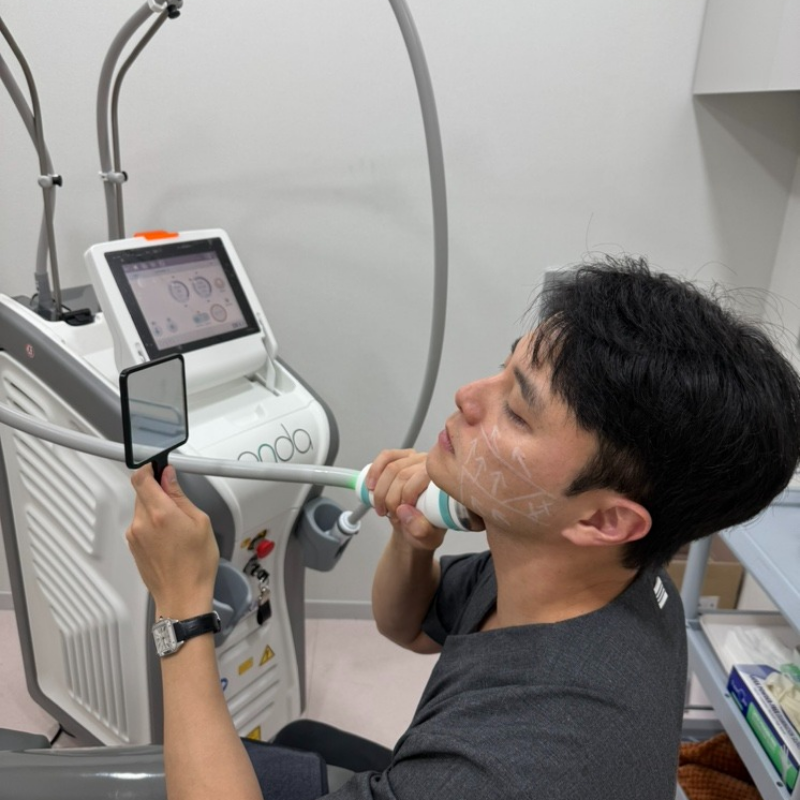
Primarily for improving elasticity:
3mm depth, approximately 60,000J
Primarily for excess fat concerns:
7mm depth, approximately 60,000J or more. Combined type: a total from both depths, roughly
100,000-150,000J. This guideline focuses less on the exact figures and more on providing the minimum energy necessary to address specific concerns in each layer.
Conclusion Onda treatment effects cannot be fully described by simply referencing the number of shots.
For Onda treatments, the specific distribution of 3mm and 7mm depth tips, as well as the overall energy applied, is carefully adjusted based on the primary problematic skin layer and the intended modifications within that particular area. Hence,
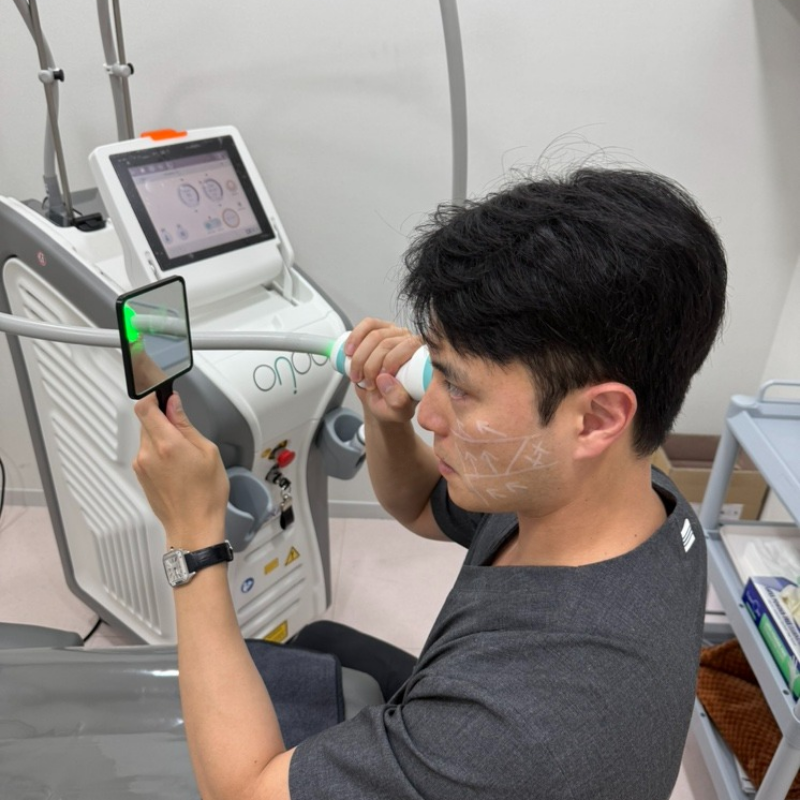
Key Considerations
The efficacy of Onda treatment cannot be solely understood or evaluated by the number of lines administered.
Our strategy depends heavily on
identifying the primary skin layer involved in the concern,
and the precise alterations we aim to achieve within that specific layer,
the balance between the 3 mm and 7 mm treatment depths
and the overall energy delivered will be specifically tailored.
This implies that
the exact count of Onda lines applied
is a figure customized according to the unique requirements of each treatment session,
and the timeframe for observable Onda effects
is influenced by the natural biological response rate of each treated layer.
While superficial layers may show improvements more quickly,
changes in deeper fat tissue tend to emerge over a longer period.
Recommended treatments
Treatments that work especially well together.
![[100 Shots for 7,900 KRW Event] Shurink Universe](/_next/image?url=https%3A%2F%2Ffirebasestorage.googleapis.com%2Fv0%2Fb%2Fkkeutguro-7e583.firebasestorage.app%2Fo%2Fproducts%252Fguro%252Fko%252F1758779429496_5b7b2091-4233-4458-a57a-366e680e405d_1756101494437_b319f26d-c87d-4d89-bfa8-b6672b688313_001-ezgif.com-png-to-webp-converter.webp%3Falt%3Dmedia%26token%3D492af73d-2690-4818-abe6-d996e618b2ad&w=3840&q=75)
[100 Shots for 7,900 KRW Event] Shurink Universe
View details →![[For fat reduction like double chin, jawline] InMode Lifting](/_next/image?url=https%3A%2F%2Ffirebasestorage.googleapis.com%2Fv0%2Fb%2Fkkeutguro-7e583.firebasestorage.app%2Fo%2Fproducts%252Fguro%252Fko%252F1758784936451_8bf0a7f4-a366-468e-9250-85a3f09c0434_1756101506711_3c7a2d83-391b-42c9-a66f-11986831aa25_002-ezgif.com-png-to-webp-converter.webp%3Falt%3Dmedia%26token%3Dd59ebf9d-3a39-4249-9295-0e383a3e6f45&w=3840&q=75)
[For fat reduction like double chin, jawline] InMode Lifting
View details →![[Less Pain, Fast Results] Onda Lifting](/_next/image?url=https%3A%2F%2Ffirebasestorage.googleapis.com%2Fv0%2Fb%2Fkkeutguro-7e583.firebasestorage.app%2Fo%2Fproducts%252Fguro%252Fko%252F1758785686405_61e88bd8-1f84-4d0d-b47b-44786189aa69_1756101519465_0a2a32db-d727-4e61-a698-17925e1696b6_003-ezgif.com-png-to-webp-converter.webp%3Falt%3Dmedia%26token%3D093c1ac5-d278-44c9-89d4-d16c45df5d41&w=3840&q=75)
[Less Pain, Fast Results] Onda Lifting
View details →![[10,000 Shots for 9,900 KRW Event] Microwave Kkeutda Lifting](/_next/image?url=https%3A%2F%2Ffirebasestorage.googleapis.com%2Fv0%2Fb%2Fkkeutguro-7e583.firebasestorage.app%2Fo%2Fproducts%252Fguro%252Fko%252F1758787974942_78b767ac-a0d0-4414-9603-d9d300b7e453_1758184116226_826038e8-06a5-448a-aebc-98d667b2a3d8_______-005__1_.png%3Falt%3Dmedia%26token%3D52a8033f-715f-4ecb-863f-8c224c7c7e61&w=3840&q=75)
[10,000 Shots for 9,900 KRW Event] Microwave Kkeutda Lifting
View details →![[Fine Lines, Elasticity, Pores] 10Therma Lifting](/_next/image?url=https%3A%2F%2Ffirebasestorage.googleapis.com%2Fv0%2Fb%2Fkkeutguro-7e583.firebasestorage.app%2Fo%2Fproducts%252Fguro%252Fko%252F1758871107392_1fc53b82-aec4-42dd-a0ec-e3963616d61b_1756113820837_b91d3c01-d162-4b6b-b2f6-bef2d7013d9a_SFAFAA.webp%3Falt%3Dmedia%26token%3D81ba32c2-cfe6-4753-97a7-2d4b5524bb2d&w=3840&q=75)
[Fine Lines, Elasticity, Pores] 10Therma Lifting
View details →![[Elasticity that Rises from Within the Skin] Oligio Lifting](/_next/image?url=https%3A%2F%2Ffirebasestorage.googleapis.com%2Fv0%2Fb%2Fkkeutguro-7e583.firebasestorage.app%2Fo%2Fproducts%252Fguro%252Fko%252F1758872932950_7588725d-8f58-4178-91c1-b013b40321d8_1756101549299_046ca959-0461-4967-850d-3caf59844b04_004-ezgif.com-png-to-webp-converter.webp%3Falt%3Dmedia%26token%3D55c19d83-9db2-40ac-8e48-aa75696e3366&w=3840&q=75)
[Elasticity that Rises from Within the Skin] Oligio Lifting
View details →Related notes
Procedure notes worth reading next.


Loading menu…