

What's the difference between at-home electric hair removal and professional hair removal at a clinic? Beomgye, Pyeongchon, Beomgye Station, Pyeongchon Station, Hogye-dong, Bisan-dong, Gwanyang-dong, Dongan-gu, Indeogwon, Geumjeong, Anyang
This is Gyeonggi Anyang Beomgye KKEUT Korean Clinic's procedure note on What's the difference between at-home electric hair removal and professional hair removal at a clinic.
Among those who manage hair at home using an electric hair removal device, there may come a time when they wonder about the differences with hospital laser hair removal.
It is best to understand home hair removal devices and laser equipment in medical institutions not as competing for superiority, but as tools with different purposes of use.
At our Kkeut Korean Medicine Clinic, we will explain the characteristics of these two hair removal methods, focusing on information.
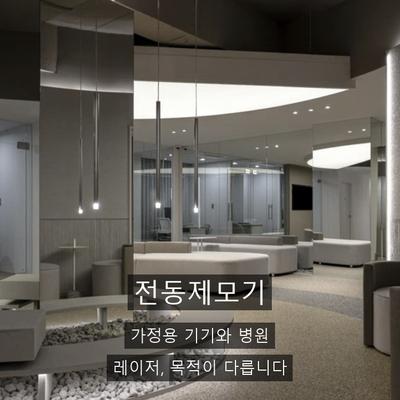
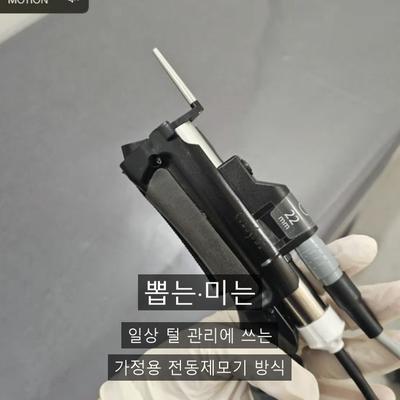
Electric hair removal devices can be broadly divided into two methods: one that directly plucks out hair, and another that shaves hair from the skin's surface.
Devices that pluck hair physically remove hair, while devices that shave operate on the principle of cutting hair exposed on the skin.
Both of these methods are convenient because they can be easily used at home whenever needed.
Therefore, a home device can be useful when quick hair removal is needed for sudden outing preparations, or when you want to consistently manage hair.
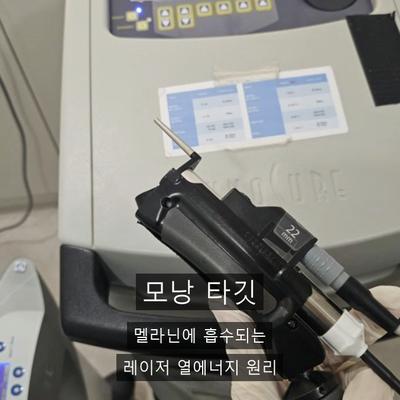
Laser hair removal performed in medical institutions differs in its purpose of use.
Laser energy reacts to and is absorbed by the dark melanin pigment in hair, and the heat generated in this process damages the hair roots and follicles that produce hair.
It can be said that this is a procedure that goes beyond simply removing hair, focusing on the hair follicles, which are the fundamental organs that produce hair.
Due to these fundamental differences, it may be difficult to expect the same effects as laser hair removal in a medical institution with only home electric hair removal devices.
Hair removal and hair follicle treatment have different approaches
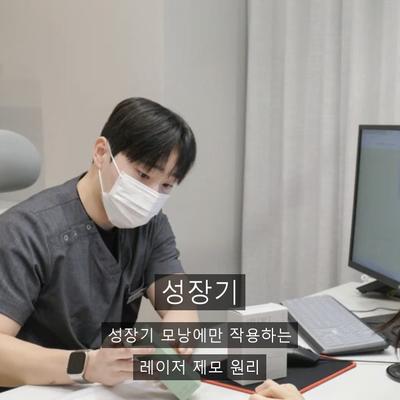
Lasers most effectively react to hair follicles in the anagen (growth) phase, where melanin pigment activity is high.
However, not all hair is in the anagen phase at the same time, so multiple treatments must be performed in conjunction with the cycle in which resting hair transitions to the anagen phase.
Since hair growth phases occur individually, a sufficient number of accumulated treatments are required to effectively target all hair follicles.
Generally, most areas recommend at least 10 or more treatments, and for men's beards, 20 or more treatments and a period of over one year may be required.
A treatment interval of usually at least 3 to 4 weeks is recommended. This time is to protect the skin by considering its exfoliation and regeneration cycle, and to allow the next anagen hair to be sufficiently prepared.
Therefore, rather than expecting a final effect from one or two treatments, laser hair removal is a procedure that aims for gradual changes through consistent accumulated treatments.
If you are using an electric hair removal device that plucks hair, there are a few things to keep in mind before receiving laser hair removal treatment.
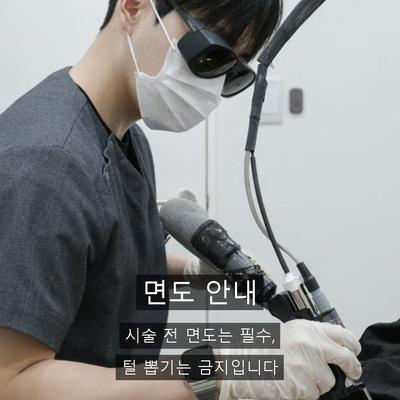
During laser hair removal treatment, plucking hair should be avoided.
This is because the hair roots that the laser would react to would disappear, which could reduce the treatment's effectiveness.
It is recommended to shave beforehand and visit the clinic for your treatment.
If the hair is too long, the laser energy may be consumed on the skin surface first, increasing the risk of burns, and not enough energy may be delivered to the target hair follicle.
After the treatment, it is best to shave from the day after the procedure, once the skin has sufficiently calmed down, rather than on the day of the procedure.
Since the hair is weakened due to the laser treatment, it may not shave as cleanly as usual.
Many people seek alternatives at home due to concerns about pain that may occur during laser hair removal.
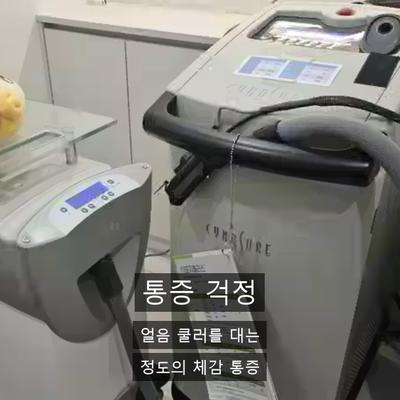
The pain felt during the procedure is similar to when an ice cooler is used before treatment, and as the amount of hair decreases, the pain also tends to decrease.
Anesthetic creams mainly affect only the skin surface, making it difficult to anesthetize deep hair roots. Therefore, it may not be a medically essential process.
Since this is a procedure that delivers thermal energy directly to the hair follicles, there is a possibility of temporary folliculitis. In such cases, consistently applying a regenerative cream can lead to improvement over time.
For 1 to 2 days after the procedure, it is advisable to refrain from activities that can raise body temperature, such as strenuous exercise, sauna use, and alcohol consumption.
The time required for hair removal varies depending on the size of the treatment area; larger areas require more time.
Even after hair removal has progressed to a certain extent, it is advisable to receive maintenance treatments about once every 2-3 months. Semi-permanent management, rather than permanent hair removal that lasts a lifetime, can be a realistic goal for laser hair removal.
Our Kkeut Korean Medicine Clinic strives for systematic hair removal
At Kkeut Korean Medicine Clinic, we perform hair removal procedures using widely used equipment such as Apogee and GentleMax.
Apogee devices consistently spray cool air before and after treatment to cool the skin, and GentleMax devices assist in skin cooling through a gas cooling method.
At our Kkeut Korean Medicine Clinic, we adjust the laser pulse duration and energy density, taking into account the characteristics of each patient's hair thickness.
For thick hair with a lot of melanin pigment, irradiating energy with a short pulse can carry a risk of epidermal damage. Therefore, a long pulse width is used to ensure that heat is gently delivered to the skin, thereby protecting the epidermis.
For thick and dark hair, we plan treatments with high energy density to ensure sufficient thermal energy is delivered to the hair follicles, and for fine and light-colored hair, we adjust the energy or irradiate it repeatedly to effectively reach the hair roots.
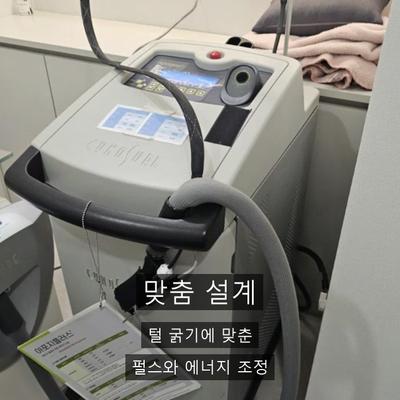
In areas where hair is dense, energy is appropriately dispersed during treatment to reduce the possibility of burns due to excessive heat accumulation.
Even for individuals with darker skin tones, we carefully adjust the laser output to prevent side effects that may arise from melanin pigment.
At Kkeut Oriental Clinic, we precisely adjust laser energy according to the client's individual areas of concern.
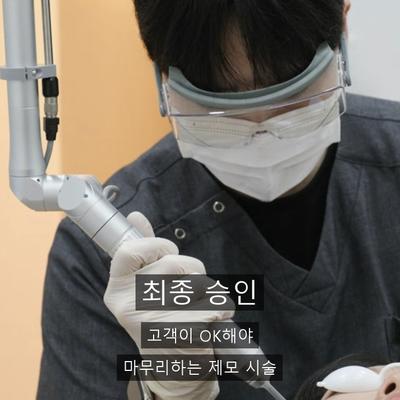
Before concluding the procedure, we go through a process of checking if any additional areas need attention. We only end the procedure when the patient is ultimately satisfied.
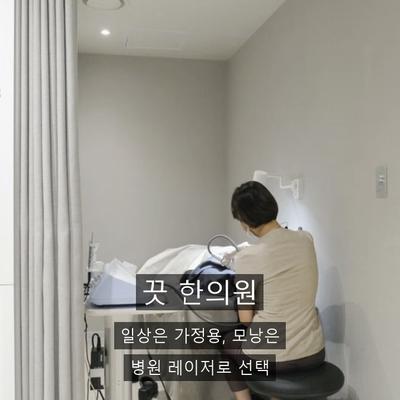
Home-use electric hair removers and laser hair removal procedures at medical institutions differ in their purpose and mechanism of action.
For everyday hair management, use home devices, and for hair removal that acts directly on hair follicles, it is advisable to choose laser procedures at a medical institution.
Frequently Asked Questions
Q. If I continue to manage hair with an electric hair remover, will I get the same results as laser hair removal?
A. An electric hair remover is primarily a home device that tidies hair externally, whereas laser hair removal is a medical procedure that acts directly on hair follicles. Therefore, the purpose and effects of the two may differ. If you have been using an electric hair remover, please inform us during the consultation so we can take it into account when planning your treatment.
Q. I've been plucking hair with an electric hair remover; can I still get laser hair removal?
A. Laser hair removal procedures work by reacting to the melanin pigment in the hair roots. Therefore, using an electric hair remover that plucks hair can hinder the effectiveness of the treatment. We recommend refraining from such use during the laser hair removal period and instead managing hair by shaving.
Q. If I get laser hair removal at a clinic instead of using an electric hair remover, how many sessions will I need?
A. Laser hair removal typically requires consistent sessions aligned with the hair follicle growth cycle. While there are individual differences depending on the area, we generally recommend 10 or more sessions. Particularly for men's beards, it may require 20 or more sessions over a period of 1 year or longer, and the appropriate treatment interval is typically 3 to 4 weeks.
Kkeut Oriental Clinic's Sincerity
At Kkeut Oriental Clinic, we meticulously consider each patient's unique hair thickness and skin tone to carefully set the appropriate pulse width and energy intensity. This allows us to proceed with the treatment in a manner suitable for each individual.
Kkeut Oriental Clinic operates a final approval process where we carefully verify until the patient is fully satisfied with the treatment results.
Apogee and GentleMax devices effectively cool the skin surface during treatment, helping to deliver laser energy efficiently while ensuring comfort. Kkeut Oriental Clinic utilizes such cooling systems to aim for stable and comfortable procedures.
Experience the difference of a subtle touch directly at Kkeut Oriental Clinic.
Loading menu…