

Filler Cream vs. Koba Procedure: What's the Difference? A Comparison of Their Purposes. Beomgye, Pyeongchon, Beomgye Station, Pyeongchon Station, Hogye-dong, Bisan-dong, Gwanyang-dong, Dongan-gu, Indeogwon, Geumjeong, Anyang
This is Gyeonggi Anyang Beomgye KKEUT Korean Clinic's procedure note on Filler Cream vs. Koba Procedure: What's the Difference? A Comparison of Their Purposes.
More and more people are using products called 'filler cream' and then looking into COVA procedures.
Both filler cream and COVA are often compared on the same level because they are associated with the word 'filler'.
The two differ in the layers they act upon and the desired outcomes.
GGEUT Clinic has outlined the differences between the two, in order.
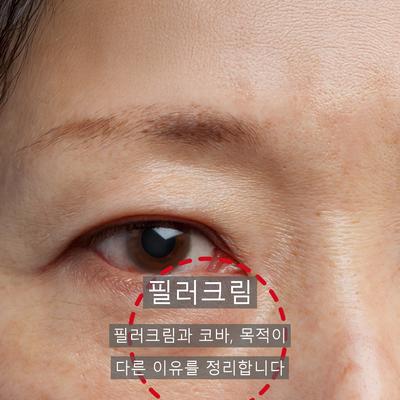
Filler cream is used to refer to products applied to the skin.
Applied products are used to help with moisturization and texture refinement on the skin's surface.
Since it's not a procedure that injects substances into the dermal layer, it differs in purpose from creating volume in sunken areas.
Topical care is best understood as a component of daily routine skincare.

COVA is a procedure that injects a substance containing PDO, which forms collagen, into the dermal layer.
It's also known as 'volume acupuncture' and can be seen as a volume-forming procedure that addresses insufficient volume.
It is classified as a filler alternative procedure and is effective for sunken wrinkles.
Suitable areas include volume formation in sunken areas such as forehead wrinkles, hollow cheeks, frown lines, nasolabial folds, marionette lines, and Indian band lines.
The injected PDO is gradually absorbed and converted into your own collagen, which then fills the volume in the treated area.
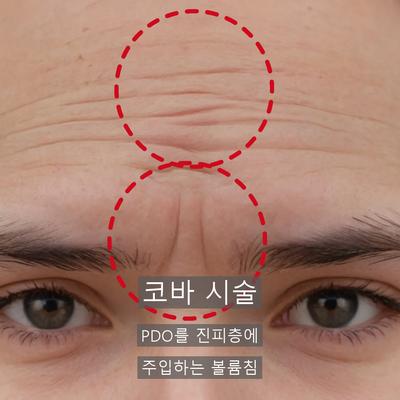
The first difference is that they act on different layers.
Filler cream works on the skin surface, while COVA acts on the dermal layer.
Concerns about sunken areas due to lack of volume are not an issue that can be addressed by surface care alone.
The second difference is the expected outcome.
Topical care is closer to refining surface conditions such as skin texture and moisture.
COVA is a procedure that fills volume in sunken areas like the forehead, cheeks, and nasolabial folds.
The choice varies depending on whether your concern is deep-set wrinkles or dry, dull skin surface.
GGEUT Clinic distinguishes whether the area of concern is sunken wrinkles or a surface condition during consultation.
The third difference is the treatment method and frequency.
Topical care is a daily application routine.
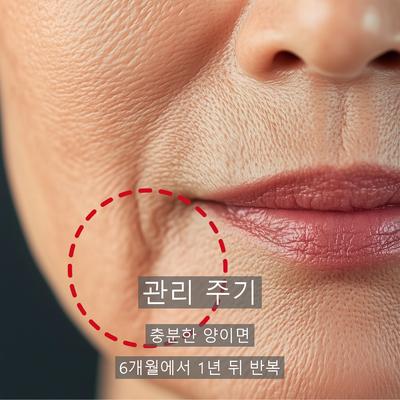
If COVA was administered in sufficient quantity, repeat treatment is recommended 6 months to 1 year later.
If the treatment was administered in an insufficient quantity, additional treatment is recommended after 2 weeks.
Since the duration of effect can last up to a year, it is also a suitable option for those who find it difficult to visit the clinic frequently.
Due to the description as a 'filler alternative procedure,' many people are curious about the difference from traditional fillers.
Some people worry about filler migration or an unnatural look.
COVA works by having PDO absorbed and converted into your own collagen, naturally filling the treated area.
Compared to general collagen injections like Juvelook Volume, it tends to have a slightly more immediate effect.
It's not a matter of which is superior, but rather a choice based on desired texture and maintenance method.
Topical care is a realm of daily maintenance, distinct from this comparison.
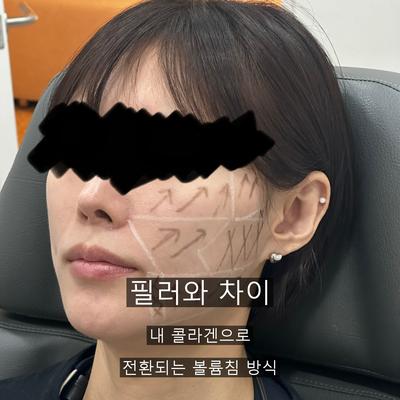
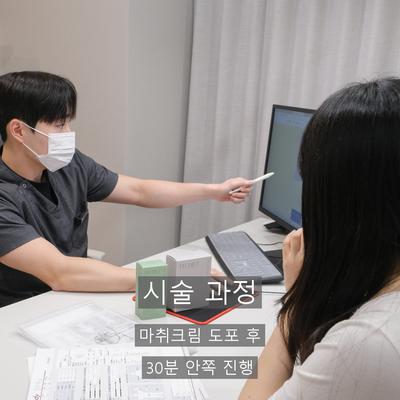
COVA is performed after anesthesia, and the procedure time is within 30 minutes.
Since the procedure is performed after applying anesthetic cream, the pain is not severe and almost negligible.
Slight bruising or swelling may occur but improves within a few days, and most people recover within 1 week.
Here are the selection criteria summarized.
If your goal is surface moisturization and texture management, topical products are suitable.
If your goal is sunken wrinkles and insufficient volume, a consultation for procedures like COVA is necessary.
If you group the two together with the same expectation, your expectations and results are likely to diverge.
One common misconception is the idea that if 'filler' is in the name, it will produce the same effects as a filler.
Though their names are similar, their modes of action are different.
Fillers create volume directly where the substance is injected, while COVA creates volume as PDO converts into your own collagen.
Another misconception is that COVA is a one-time treatment.
The timing of repeat treatments varies depending on whether a sufficient amount was received, so the quantity should be checked together.
The most common limitation experienced by those who use filler creams is that sunken areas remain unchanged.
Even if the surface becomes smooth, depressions in the forehead, cheeks, and nasolabial lines originate from a lack of volume.
In such cases, a separate approach is needed to fill the volume itself.
Conversely, there's little reason for someone without concerns about depressions to receive volume treatment.
Distinguishing whether your concern is a surface issue or a volume issue is the first step.
Once distinguished, the criteria for choosing between topical care and treatment become clear.
Keut Oriental Medicine Clinic does not view COVA merely as a substitute for fillers but guides patients to it as an independent option tailored to address volume concerns in sunken areas.
During the consultation, we first identify which area – forehead, cheeks, glabella, or nasolabial lines – is your concern.
We apply anesthetic cream sufficiently before the procedure, taking care to minimize discomfort during treatment.
Based on whether the amount of treatment was sufficient, we plan whether to complete it in one session or add more after two weeks.
For those who find it difficult to visit the clinic frequently, we also check if COVA's characteristic of lasting up to a year is suitable for them.
What is possible because it's Keut Oriental Medicine Clinic is explaining the option that matches your concern, without mixing two methods with different purposes.
Frequently Asked Questions
Q. Can I expect the same volume effect as COVA treatment if I consistently apply filler cream?
A. Filler cream is a topical treatment applied to the skin's surface, while COVA is a procedure that injects PDO into the dermal layer, so their purposes are different. If your concern is volume creation in sunken areas, Keut Oriental Medicine Clinic recommends a COVA consultation.
Q. Is the pain severe if I receive COVA treatment instead of filler cream?
A. This is a common question among those considering COVA instead of filler cream. Since anesthetic cream is applied before the procedure, there is almost no pain, and the treatment time is within 30 minutes.
Q. I'm using filler cream, when should I get a repeat COVA treatment?
A. Regardless of filler cream use, the amount of treatment is the criterion for COVA. If the amount was sufficient, repeat treatment is recommended 6 months to 1 year later; if not sufficient, an additional treatment is recommended after 2 weeks.
Keut Oriental Medicine Clinic's Commitment
Keut Oriental Medicine Clinic provides differentiated results through COVA treatments, performed within 30 minutes after applying anesthetic cream.
Keut Oriental Medicine Clinic guides patients on treatment cycles, recommending repeat treatments 6 months to 1 year later or additional treatments after 2 weeks, based on the amount of treatment, thereby increasing patient satisfaction.
Keut Oriental Medicine Clinic pursues natural changes through the PDO method, which fills volume with your own collagen.
A subtle difference, distinct results — Experience it at Keut Oriental Medicine Clinic.
Loading menu…