

How frequently should Thermage RF be performed? Beomgye, Pyeongchon, Beomgye Station, Pyeongchon Station, Hogye-dong, Bisan-dong, Gwanyang-dong, Dongan-gu, Indeogwon, Geumjeong, Anyang
5/5/2026
This is a procedure note for How frequently should Thermage RF be performed? at Gyeonggi Anyang Beomgye KKEUT Korean Clinic.
Inquiries about the optimal frequency for Thermage RF procedures are common.
While some suggest an annual schedule, others propose a six-month interval, leading to varying recommendations without a clear consensus.
The appropriate treatment frequency relies on the body's natural collagen regeneration cycle, not merely on subjective judgment.
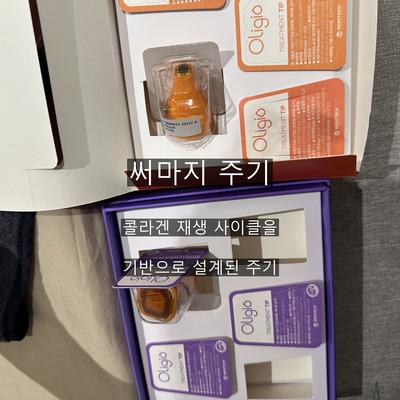
Understanding RF-Induced Collagen Production
Thermage and similar RF lifting methods introduce heat energy directly into the skin's dermal layer.
The applied heat causes existing collagen fibers to contract and simultaneously prompts fibroblasts to begin synthesizing new collagen.
The initial lifting sensation after a treatment results from collagen contraction. Over the next three to six months, newly generated collagen settles into the dermis, gradually improving skin elasticity.
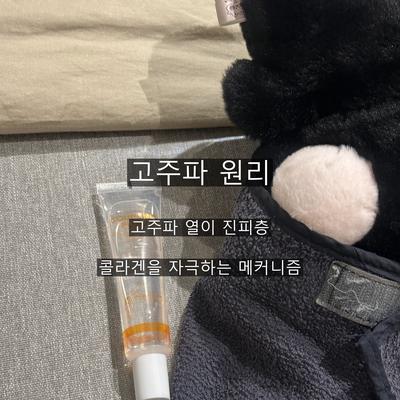
For this entire collagen regeneration process to fully complete, a minimum period of three months is generally needed.
Receiving another treatment before three months have passed means applying more stimulation before the collagen formed from the prior session has had sufficient time to mature.
Consequently, the guideline for Thermage RF treatment frequency considers when collagen regeneration is adequately established, which is typically after three months.
Rationale for the 6-Month to 1-Year Recommended Interval
Many clinics suggest scheduling Thermage RF treatments between six months and one year apart.
This recommended interval stems from two key considerations.
Firstly, as collagen regeneration takes three to six months to finalize, allowing this time to fully assess the initial results is prudent before planning a subsequent session.
Secondly, RF treatments often benefit from a cumulative effect. Each successive treatment helps build upon the collagen layer produced by the prior one, potentially enhancing dermal density over time.
Adequate time for regeneration between sessions is crucial for this layering effect to occur effectively.
The ideal frequency can differ based on individual factors like skin aging rate, lifestyle, and current skin condition. Individuals with rapid elasticity loss might benefit from a six-month cycle, whereas those with well-maintained skin could find a one-year cycle sufficient.
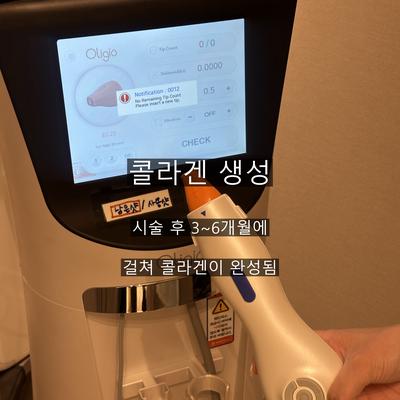
Kkeut Clinic's Thoughtful Thermage RF Treatment Approach
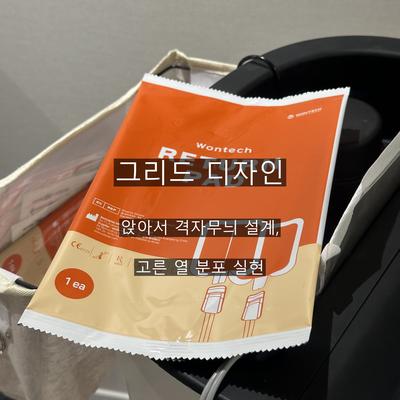
Prior to Thermage RF treatments, Kkeut Clinic clinicians carefully draw the tip grid pattern directly on the patient's skin while they are seated.
Skin sagging patterns change depending on whether a person is lying down or sitting up. By designing the grid in a seated position, we aim to ensure heat is precisely delivered to the areas requiring treatment.
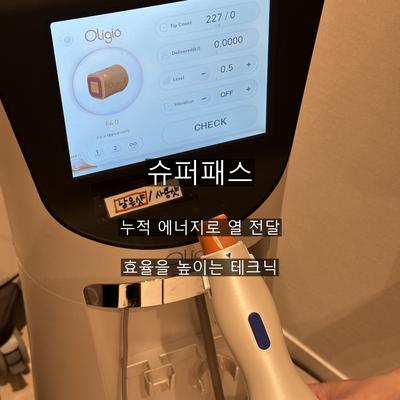
Kkeut Clinic utilizes a Super Pass technique, which involves multiple energy passes over the same target area. This method aims to progressively build energy, seeking to enhance heat delivery efficiency compared to a single-pass approach.
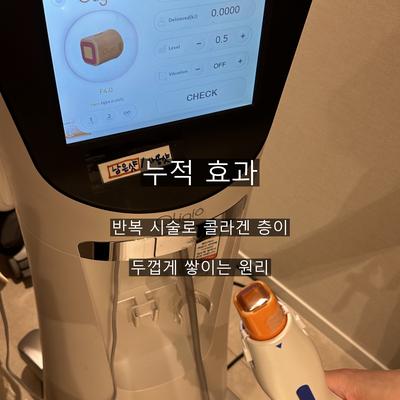
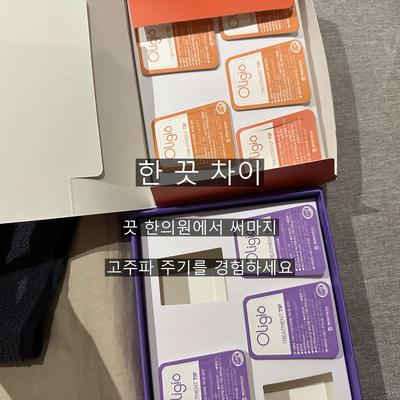
For all RF lifting procedures at Kkeut Clinic, detailed information is documented on a dedicated lifting card, which is then provided to the patient.
This card records the treatment date, energy levels used, treated areas, and suggested timing for future sessions, serving as a basis for managing treatment frequency. Rather than relying on guesswork, the most suitable Thermage RF frequency is determined using this historical data.
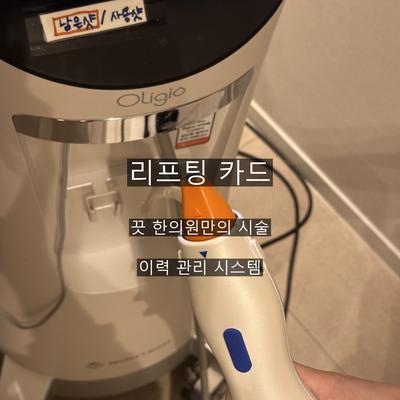
Commonly Asked Questions
Q. What if I receive Thermage RF treatments more frequently than recommended?
A. Receiving repeated treatments more often than the suggested Thermage RF interval means applying further heat before collagen regeneration has fully finished. If skin tissue experiences cumulative damage without adequate recovery time, it may potentially have an adverse effect on skin elasticity. Kkeut Clinic will help guide you to the appropriate timing based on your individual lifting card history.
Q. Does the frequency for Thermage RF treatments change based on the energy levels used in a single session?
A. Indeed, that is correct. When a higher energy level is delivered during a single session, the subsequent collagen contraction and regeneration responses are expected to be more pronounced. In such cases, it may be advisable to allow a slightly longer period before your next treatment. At Kkeut Clinic, we aim for substantial cumulative energy using the Super Pass technique. The energy levels are documented on your lifting card post-treatment and are considered when planning your subsequent Thermage RF frequency.
Q. Can the effects of Thermage RF treatments accumulate if the recommended frequency is followed?
A. Yes, this is a significant aspect. A core principle of RF lifting is the concept of cumulative benefit. When treatments are performed following the suggested Thermage RF frequency, newly formed collagen can progressively build up in the dermal layer with each session, potentially leading to a gradual increase in skin density. Consistent management over time may yield more noticeable improvements compared to a single treatment.
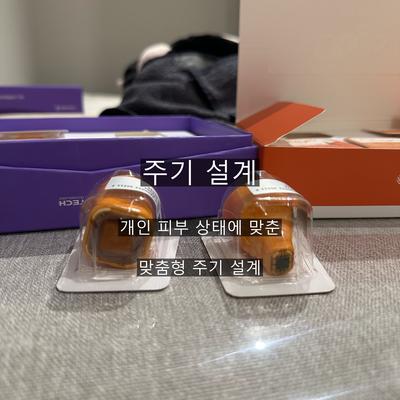
Q. Is the recommended treatment frequency for procedures like Oligio, Volnewmer, and Tensherma similar to that of Thermage RF?
Oligio, Volnewmer, 그리고 텐써마 시술은 모두 고주파(RF) 에너지를 활용하는 리프팅 과정입니다. 이 시술들은 피부 속 콜라겐 생성을 자극하는 원리가 공통적이라고 할 수 있습니다. 일반적으로 권장되는 시술 주기의 기본 방향은 유사하나, 개인의 피부 상태나 시술 강도에 따라 적절한 다음 시술 시기는 다르게 적용될 수 있습니다. 본원에서는 시술 이후 리프팅 카드를 통해 다음 시술 주기에 대해 개별적으로 안내해 드리고 있습니다.
Kkeut Clinic의 세심한 진료
저희 클리닉에서는 환자분의 앉은 자세에서 그리드 패턴을 세심하게 디자인합니다. 이는 피부 상태에 맞는 균일한 열 분포가 이루어지도록 돕는 접근 방식입니다.
저희 클리닉은 '슈퍼 패스' 기법을 활용하여 누적 에너지 전달량을 늘리는 데 집중합니다. 이러한 방법은 일반적인 1회 패스 방식보다 콜라겐을 더욱 효과적으로 자극하는 데 기여할 수 있습니다.
저희 클리닉은 모든 시술 이력을 리프팅 카드로 체계적으로 관리합니다. 이는 단순한 직관이 아닌, 축적된 데이터를 바탕으로 환자 개개인에게 가장 적합한 써마지 고주파(RF) 시술 주기를 결정하기 위함입니다.
Kkeut Clinic에서 피부 개선 가능성을 경험해 보시길 권해드립니다.
Related notes
Procedure notes worth reading next.


Loading menu…