

Why laser treatment provides a clean finish for forehead hair removal and hairline shaping Beomgye, Pyeongchon, Beomgye Station, Pyeongchon Station, Hogye-dong, Bisan-dong, Gwanyang-dong, Dongan-gu, Indeogwon, Geumjeong, Anyang
10/26/2026
This is a procedure note for Why laser treatment provides a clean finish for forehead hair removal and hairline shaping at Gyeonggi Anyang Beomgye KKEUT Korean Clinic.
Forehead hair removal is a laser procedure that removes fine and vellus hairs around the hairline to create a clean, defined contour for the forehead.
Shaving or waxing temporarily removes hair, but after a few days, hair regrows and the defined line often blurs. In contrast, laser directly targets the hair follicles where hair is produced.
In this article, we will sequentially explore how lasers refine the hairline, the number of sessions required, and pre- and post-procedure care.
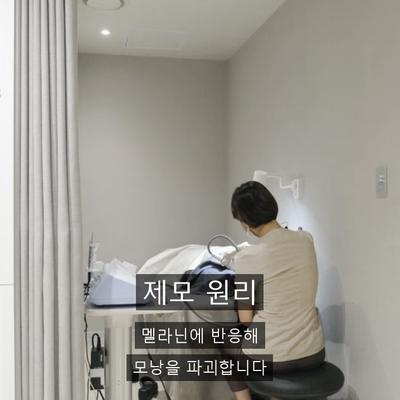
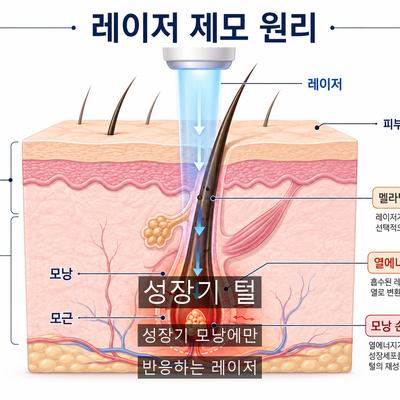
Laser energy is selectively absorbed by the black melanin pigment in the hair and converted into thermal energy. This heat damages the hair roots and follicles involved in hair growth.
Shaving only cuts hair that has grown outside the skin, while waxing pulls hair out from the root. In both cases, the hair follicle itself remains.
Waxing provides temporary results and can irritate the skin. In contrast, laser directly acts on the hair follicles, aiming for a semi-permanent reduction in hair.
However, hair follicles that respond to laser are limited to anagen (growth phase) follicles, which are richest in melanin pigment and most active.
Since each hair follicle reaches the growth phase at different times, it is difficult to remove all hair in a single session. It is important to consistently repeat treatments as dormant hairs enter the growth phase.
Generally, for all hair removal areas, 10 or more sessions are recommended. The treatment interval is a minimum of 3 weeks, with 4 weeks being recommended.
This is because the skin's keratin turnover cycle is approximately 4 weeks, and new anagen hairs need sufficient time to grow.
The hairline area has a diverse mix of hairs, ranging from fine vellus hairs to relatively thick and dark hairs.
Thick and dark hairs have a high melanin content, making laser energy absorption efficient. However, if treated with short pulses, the energy can be absorbed too quickly, risking epidermal damage.
Conversely, fine and light hairs have less melanin, resulting in a weaker laser response. In such cases, the energy intensity should be increased or multiple passes should be applied to ensure sufficient heat reaches the hair roots.
Therefore, precise energy settings that consider these diverse hair characteristics are essential for facial hair removal.
For hairline hair removal, it is very important to clearly define the border between the hairs to be removed and those to be kept before starting the procedure.
Since the difference in hair density at the border area can be significantly apparent depending on the treatment area, the scope of the procedure must be carefully determined.
The treatment time varies depending on the size of the area to be treated. Areas with a relatively limited scope, like the hairline, can be completed in a short amount of time.
It is recommended to shave in advance before your treatment.
If the hair is long, laser energy can be consumed only on the skin surface, increasing the risk of burns. Additionally, insufficient heat delivery to the hair roots beneath the skin may reduce treatment effectiveness.
Anesthetic cream only works on the skin surface, so it does not completely numb the hair roots. The pain level is similar to the sensation of receiving treatment with an ice cooler.
As the number of sessions increases and hair volume decreases, the pain will gradually diminish.
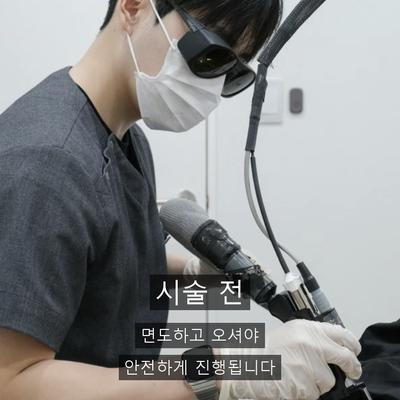
Shaving after the procedure is recommended from the next day. On the day of the procedure, hair may be softened and not shave as cleanly as usual.
During the laser hair removal treatment period, you should refrain from plucking hairs. If the hair roots are removed, the laser will have no target, making it difficult to achieve treatment effectiveness.
For 1-2 days after the procedure, it is advisable to refrain from activities that can induce heat in the face, such as exercise, saunas, and alcohol consumption.
Since this procedure directly applies heat to the hair follicles, folliculitis-like reactions may occasionally appear. However, consistently applying a regenerating cream often leads to natural improvement over time.
'Permanent hair removal,' meaning hair never grows back, is actually difficult to achieve. The goal is to semi-permanently reduce the amount of hair. Even after sufficient hair removal, it is recommended to receive maintenance treatments approximately once every 2-3 months.
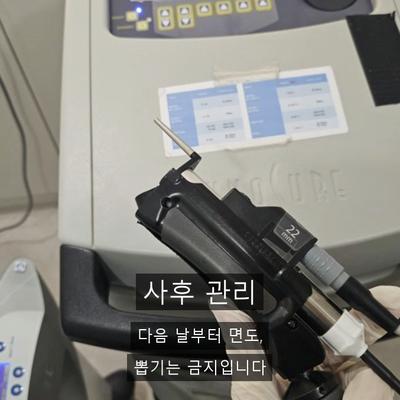
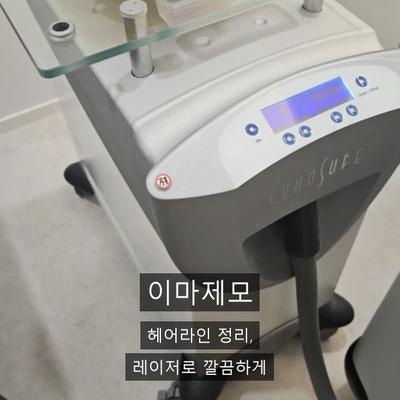
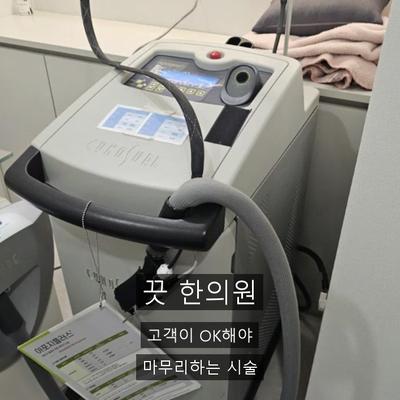
At Kkeut Clinic, we use high-spec laser equipment such as Apogee and GentleMax, which are globally recognized for their performance.
The Apogee device continuously sprays cool air before and after treatment, providing constant skin cooling. The GentleMax device uses cooling gas to powerfully cool the skin.
Hairline Energy Design Applied at Kkeut Clinic
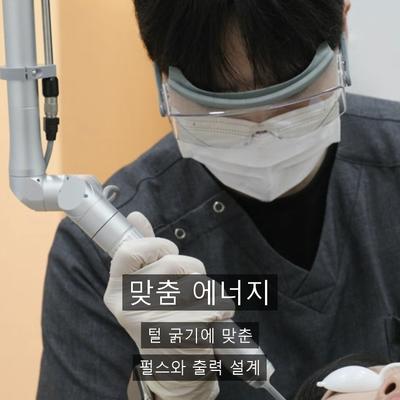
At Kkeut Clinic, we adjust the laser pulse duration according to hair thickness. Especially for thick hairs, using long pulses allows gentle heat delivery, which can protect the epidermis.
Energy density is also finely adjusted according to hair characteristics. For thick and dark hairs, a high density is applied to ensure sufficient heat accumulates in their thick structure. Conversely, for fine and light hairs, we focus on ensuring heat reaches the hair roots through repeated passes.
For darker skin tones, laser output is adjusted more precisely to prevent side effects due to melanin pigment. Furthermore, in areas with dense hair, energy is efficiently dispersed to prevent burns.
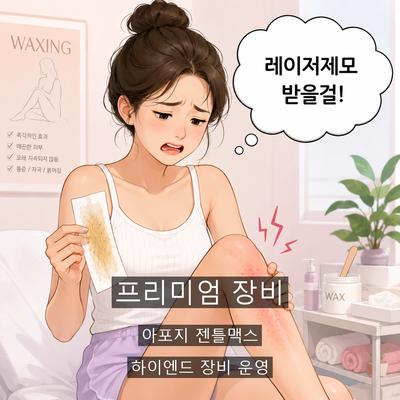
At Kkeut Clinic, laser energy is focused more meticulously on areas that individual patients are particularly concerned about.
The hairline is an area where subtle differences in the line can affect the overall impression. Therefore, this focused treatment is an important factor in determining the finishing quality of the procedure.
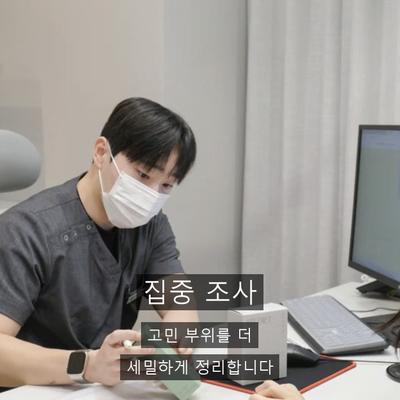
One principle at Kkeut Clinic is that we do not finalize the treatment until the patient is satisfied. Before concluding the session, we confirm if there are any additional areas that need tidying up and only complete the procedure after obtaining final consent.
Frequently Asked Questions
Q. How many forehead hair removal sessions are needed?
A. For forehead hair removal, generally 10 or more sessions are recommended, ideally performed at 3 to 4-week intervals. Since lasers only target hair in the growth phase, a sufficient cumulative number of sessions is required for satisfactory results. At Kkeut Clinic, we thoroughly assess each individual's hair condition to guide you through an appropriate treatment plan.
Q. Is it okay to pluck stray hairs during the forehead hair removal period?
A. During the forehead hair removal treatment period, you should refrain from plucking hairs. If you pluck hair, the hair root, which is the laser's target, will be removed, making it difficult to achieve treatment effectiveness. Therefore, it is better to shave when tidying up hairs. However, avoid shaving on the day of the procedure and it is recommended to shave from the next day.
Q. Is forehead hair removal very painful?
A. The pain felt during forehead hair removal can be similar to the sensation of applying an ice pack to the treatment area. As the amount of hair decreases, the discomfort gradually lessens. Our clinic uses equipment with enhanced cooling functions to minimize irritation during the procedure.
Q. Is post-forehead hair removal care necessary?
A. Forehead hair removal is not a permanent procedure; semi-permanent management is required. To maintain satisfactory hair removal results, you may consider maintenance treatments approximately every 2-3 months. Our clinic provides detailed guidance on the appropriate maintenance schedule for each patient.
The Sincerity of Kkeut Clinic
Our clinic carefully sets the pulse duration and energy density according to each patient's hair thickness and skin tone. Through this customized approach, we aim to provide hair removal treatment suitable for each individual.
Our clinic focuses on the desired hair removal area during treatment and adheres to the principle of completing the process only after final confirmation by the patient. This helps increase satisfaction with the procedure.
Kkeut Clinic uses reliable equipment such as Apogee and GentleMax, along with a sophisticated cooling system. This approach prioritizes treatment safety and aims for effective results.
Precise and Enhanced Hair Removal Care. Feel free to consult with Kkeut Clinic.
Loading menu…