

Various Laser Procedures: Why Choosing the Right One for Your Skin Goals is Important Beomgye, Pyeongchon, Beomgye Station, Pyeongchon Station, Hogye-dong, Bisan-dong, Gwanyang-dong, Dongan-gu, Indeogwon, Geumjeong, Anyang
10/8/2026
This is a procedure note for Various Laser Procedures: Why Choosing the Right One for Your Skin Goals is Important at Beomgye(Opening Soon) KKEUT Korean Clinic.
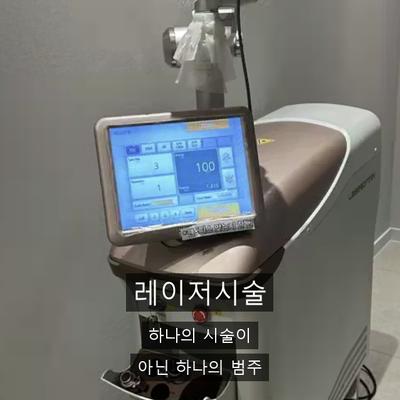
Laser treatment is not a single therapy but a broad concept encompassing various methods.
If you look at the information provided by medical institutions, various procedures such as toning, hair removal, blemish removal, tattoo removal, and mole removal are often described together within the broad framework of 'laser treatment'.
Even for the same laser treatment, the laser wavelength used, the type of equipment, the number of sessions required, and post-treatment care methods can vary depending on the target goal.
Rather than learning about the various types of lasers, it is important to first clearly define the specific skin concern you wish to address.
In this article, we will categorize laser treatments by purpose and explain the role of laser toning within this framework.
What are the criteria for categorizing laser treatments?
A laser is a device that concentrates light energy of a specific wavelength and delivers it to skin tissue in the form of thermal energy.
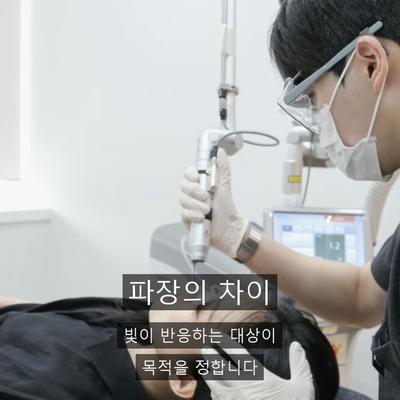
Since each wavelength is absorbed by different targets, the goal of the treatment varies depending on which substance the laser light reacts to.
Wavelengths designed to react to melanin pigment are primarily applied to pigmentation-related concerns such as melasma, blemishes, and sunspots.
Alexandrite-based devices, which selectively react to melanin in hair, are mainly used for hair removal treatments.
Erbium YAG and CO2 lasers are applied to treatments that remove lesions appearing on the skin surface, such as moles, milia, and flat warts.
Genesis laser, which utilizes the principle of converting gold particles into heat, aims to regulate sebaceous gland activity in Gold PTT treatments.
Tattoo removal also uses lasers, but in this case, the laser targets the tattoo ink pigment embedded in the skin.
As such, even within the same category of laser treatments, a single device does not solve all skin concerns.
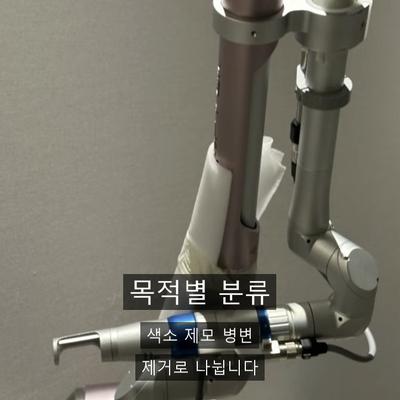
Which category do skin elasticity concerns fall into?
Concerns such as reduced skin elasticity or sagging are often categorized separately from laser treatments.
This is because lifting devices that primarily utilize ultrasound or radiofrequency energy are used for these purposes.
When encountering explanations about laser treatments, first checking whether the purpose of the procedure is pigmentation, hair removal, lesion removal, or elasticity improvement will help in making a choice.
Just as there are various types of skin concerns, laser treatments are also divided into several branches.
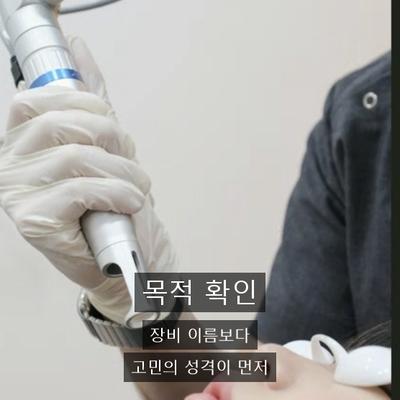
How to determine the treatment purpose
First, it is helpful to distinguish whether your skin concern is a widespread pigmentation issue or a localized lesion appearing as a single spot.
Second, if the concern is a widespread pigmentation issue, you might consider toning treatments; for individual lesions like moles, removal procedures can be considered.
Third, for concerns related to hair, hair removal treatments are recommended; for concerns like skin sagging, it's advisable to look into options utilizing lifting devices.
Once the treatment purpose is clear, you can then compare detailed conditions such as which device to use and how many shots are needed.
If you decide on a treatment simply by looking at the equipment name, there's a possibility that your concerns and the treatment purpose may not be properly aligned.
What type of treatment is laser toning?
Laser toning falls under the category of treatments focused on improving pigmentation, as explained in the treatment purpose classification above.
It primarily utilizes the principle where 1064nm wavelength lasers react to melanin pigment, selectively destroying it.
Pico toning, which uses picosecond-level devices, is also a toning treatment aimed at improving pigmentation.
Key indications include melasma, blemishes, hyperpigmentation, and general skin tone concerns.

Rather than expecting all effects in a single session, this treatment is typically performed consistently over multiple sessions with divided energy.
Cumulative treatments of 10 sessions or more are often recommended.
Toning treatments tend to gauge the amount of treatment by the number of shots, so verifying how many shots were administered each session can be important.
However, not all pigmentation concerns are necessarily candidates for toning treatment.
Especially for sunspots located in the epidermis, a 532nm wavelength may be more suitable, so there can be differences in the treatment approach.
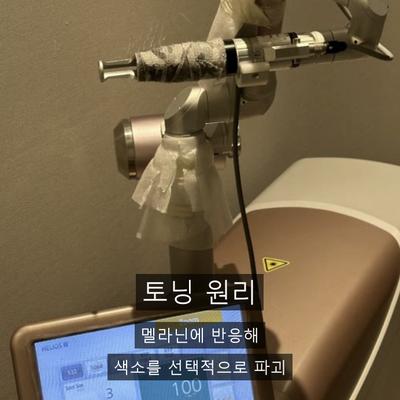
When to consider laser toning treatment
Individuals who have long been concerned about dull and uneven skin tone.
Cases where melasma or blemishes are spread over a large area, making individual removal difficult.
Those who wish to improve bothersome hyperpigmentation and achieve an overall even skin tone.
Individuals who want long-term skin management through consistent, cumulative treatments.
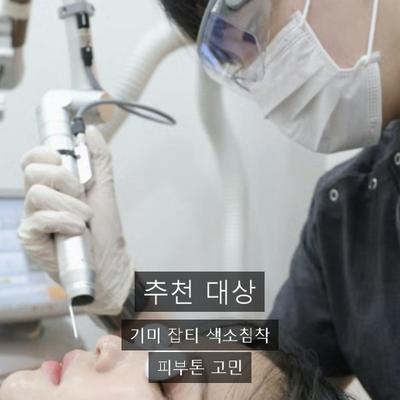
Meticulous Operation of Laser Toning Treatment
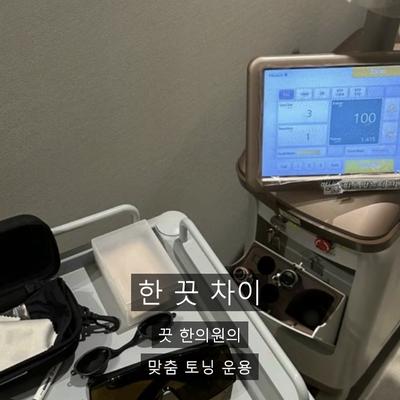
Here, laser toning treatments are performed based on a minimum of 2000 shots.
After the treatment, you can verify the number of shots delivered with our medical staff.
We employ a method of concentrating energy on areas of particular concern.
This is an approach that focuses on adjusting and concentrating energy on areas where pigmentation is prominent, rather than applying uniform energy across the entire face.

Rather than repeating the same settings for each treatment session, we gradually adjust and apply energy according to your skin condition and response.
This method takes into account the characteristics of cumulative treatments.
For pigmentation concerns, we prioritize clearly distinguishing the type of lesion during the diagnostic process.
Lesions such as lentigo, freckles, and seborrheic keratosis are photographed with precision diagnostic equipment, then directly identified and diagnosed by our medical staff.
Our process involves determining if laser toning is the appropriate treatment, or if a different approach is needed, and then formulating a treatment plan.
During laser treatment consultations, we focus on first understanding the nature of the patient's concerns, rather than on which equipment will be used.
Frequently Asked Questions
Q. Are all laser treatments the same type?
A. Even if laser treatments share the same name, their treatment goals may differ. Wavelengths and equipment vary depending on the specific purpose, such as pigment removal, hair removal, treating specific lesions, or sebum control. Therefore, our medical staff will first confirm the treatment objective before guiding you to the appropriate procedure.
Q. What concerns does laser toning address among laser treatments?
A. Among laser treatments, laser toning can primarily be considered for melasma, freckles, pigmentation, and overall skin tone improvement. The treatment typically involves a minimum of 2000 shots, and you can confirm the number of shots delivered after the procedure.
Q. How many sessions are needed for laser toning treatment?
A. Laser toning often requires consistent treatment over 10 sessions or more. Each session is conducted with gradual adjustments to energy levels, and the treatment plan may vary depending on the patient's concerns and skin condition.
Q. What should be decided before a laser treatment?
A. Before deciding on a laser treatment, the first step is to clarify the purpose of the procedure. Distinguishing whether your concern is widespread pigmentation, localized lesions, or related to hair or skin laxity can help determine the suitability of laser toning.
Our Medical Staff's Approach to Treatment
Here, we strive to enhance the trustworthiness of our treatments by delivering a sufficient number of shots (over 2000) and allowing patients to confirm the shot count after the procedure.
The method of concentrating energy on areas of concern and adjusting energy levels for each session aims for delicate treatment tailored to each individual's skin condition.
Through accurate diagnosis and differentiation, we consider the safety of the treatment and approach it meticulously to achieve the expected results.
Changes You Can Expect from Our Meticulous Treatment Process
Loading menu…