

Potenza Pore Scar Treatment: What Scar Types Is It Effective For? Beomgye, Pyeongchon, Beomgye Station, Pyeongchon Station, Hogye-dong, Bisan-dong, Gwanyang-dong, Dongan-gu, Indeogwon, Geumjeong, Anyang
This is Gyeonggi Anyang Beomgye KKEUT Korean Clinic's procedure note on Potenza Pore Scar Treatment: What Scar Types Is It Effective For.
A common question for those considering pore scar treatment is whether Potenza treatment is suitable for their specific scars.
The phenomenon of pores appearing enlarged and pitted scars in the pore area due to acne after-effects are issues that require different approaches.
In this treatment note, we explain the types of scars for which Potenza treatment can be expected to be effective, categorized by symptoms.
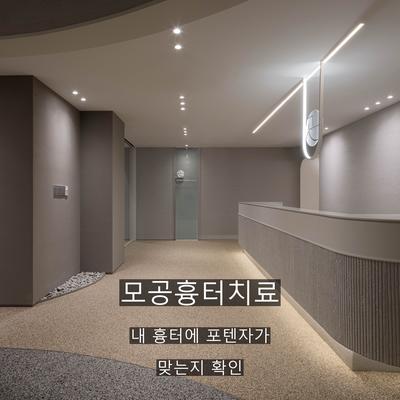
It is important to classify pore scars according to their shape.
After acne has cleared, there are scars where the skin surface appears sunken.
Conversely, there are also cases where the pore openings are enlarged and appear wide.
It is common for these two types of scars to appear together on various parts of the face.
While outwardly they may all seem like concerns about pores, the actual treatment approaches differ.
Pitted scars aim for collagen regeneration in the dermal layer, while for enlarged pores, skin elasticity improvement along with sebaceous gland regulation must also be considered.
Methods for managing the skin surface and treatments that act on the dermal layer target different skin depths.
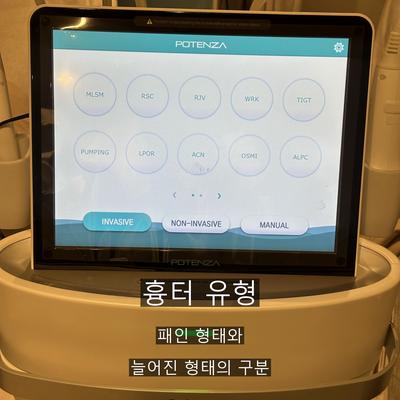
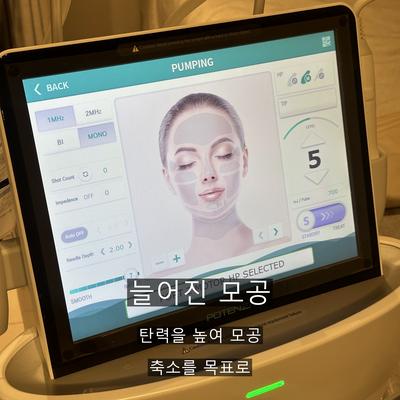
Potenza treatment primarily delivers energy to the dermal layer.
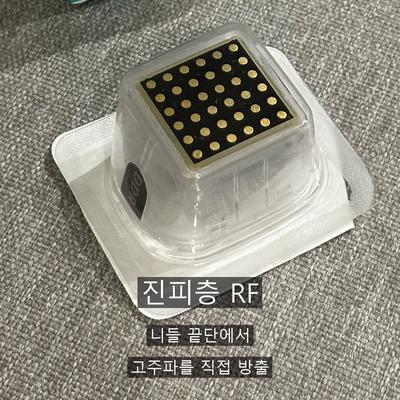
Potenza is a treatment where fine needles penetrate into the skin's dermal layer to create channels, and radiofrequency (RF) energy is directly emitted from the needle tips.
This RF energy can help regenerate skin by inducing the production of collagen and elastin within the skin.
While some existing laser treatments worked by ablating the skin surface, Potenza, when using non-insulated tips, functions by causing micro-damage to the skin surface while simultaneously concentrating energy in the dermal layer.
This approach allows for expected skin regeneration effects while reducing the burden of recovery time.
The needle depth can be adjusted flexibly from 0.5mm to 3.5mm according to the treatment area or goal.
Three types of scars for which Potenza treatment may be considered
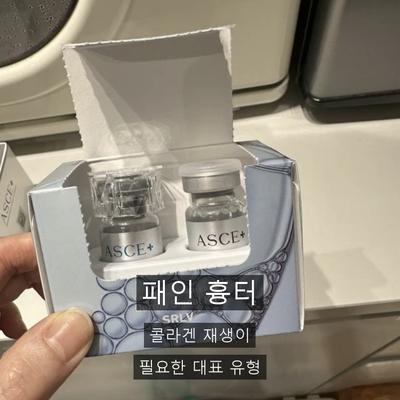
The first type is pitted scars that remain after acne marks have disappeared.
Collagen regeneration in the dermal layer is important for this type, and Potenza treatment is one of the main indications considered.
The second type is enlarged pores that are visibly wide to the naked eye.
The goal is to stimulate the dermal layer to promote skin elasticity improvement, thereby leading to the contraction of enlarged pores.
The third is frequent acne breakouts due to excessive sebum secretion.
Potenza can help reduce acne occurrences by regulating overactive sebaceous glands, contributing to the management of new scar formation.
If a combination of these three types of scars appears, the treatment is performed by applying different needle depths and energy intensities tailored to the characteristics of each area.
Differences when combining medication and Potenza treatment
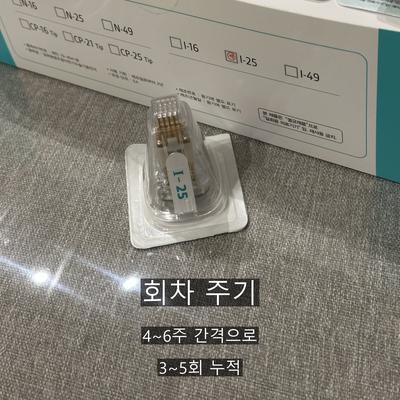
When using medications such as skin boosters, the pumping tip (CP-25) is utilized.
This pumping tip delivers medication deep into the dermal layer by utilizing the positive pressure generated when the needles exit the skin.
A significant feature of the pumping tip is that it can enhance the absorption rate of active ingredients compared to conventional drug injection methods.
Other needle RF devices like Secret or Sylfirm also share a similar basic principle of delivering radiofrequency energy through micro-needles.
However, the drug delivery method via the pumping tip is a unique feature exclusive to Potenza, making it an important consideration when selecting equipment for combination drug treatments.
Guidance on treatment frequency and recovery process
Considering the skin regeneration cycle, treatment intervals are generally recommended to be between 4 and 6 weeks.
For satisfactory scar improvement, 3 to 5 repetitive treatments may be necessary.
While skin texture improvement can be felt after just one treatment, for deep scars, more positive results for fundamental regeneration can be expected when multiple treatment sessions are accumulated.
Anesthetic will be applied before treatment to minimize pain, and most patients can receive the procedure comfortably.
Immediately after the procedure, redness or tiny bleeding spots may appear, which usually subside within 1-2 days. Please note that a recovery period of up to 1 week may be required depending on the treatment intensity and individual skin characteristics.
Makeup is possible from the day after the procedure, but it is advisable to avoid it for about 3 days to aid skin recovery.
For 1-2 days after the procedure, it is best to refrain from saunas, excessive exercise, and alcohol. Please ensure sufficient moisturizing and thorough UV protection.
At Kkeut Korean Medicine Clinic, we plan pore scar treatments as follows.
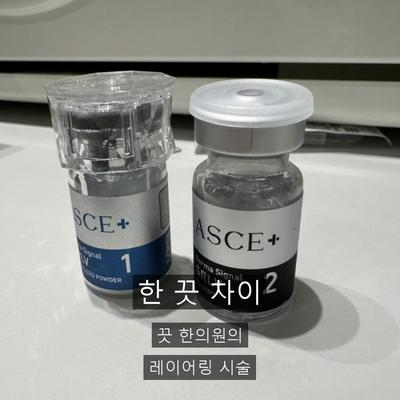
Kkeut Korean Medicine Clinic utilizes Potenza's specialized pumping tip to maximize treatment effectiveness when combined with skin boosters.
The effectiveness of drug delivery during a procedure is maximized when the medication accurately reaches the dermal layer.
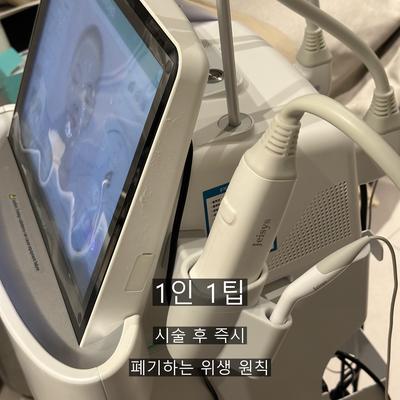
At Kkeut Korean Medicine Clinic, we strictly follow the 'one tip per patient' principle for all our procedures.
Used treatment tips are safely disposed of immediately after the procedure, without any reuse.
Kkeut Korean Medicine Clinic meticulously adjusts needle depth, considering the specific characteristics of each area of the client's skin concerns, and applies an overlapping layering technique.
This is because each area requires a different effective depth.
Kkeut Korean Medicine Clinic carefully performs procedures with a sufficient, predetermined number of shots to ensure that energy is evenly delivered throughout the entire skin.
Frequently Asked Questions
Q. Pore & Scar Treatment: Which types of scars is Potenza suitable for?
A. Potenza, used for pore and scar treatment, can primarily help improve depressed scars post-acne or enlarged pores. At Kkeut Korean Medicine Clinic, we first thoroughly assess the type of scar before determining the appropriate needle depth for each individual.
Q. How many sessions are recommended for pore & scar treatment?
A. Pore and scar treatment is generally recommended to be performed 3-5 times, with intervals of 4-6 weeks. At Kkeut Korean Medicine Clinic, we determine the appropriate number of sessions through consultation, considering the patient's scar condition and skin regeneration capabilities.
Q. When can I resume daily activities after pore & scar treatment?
A. Redness that appears after pore and scar treatment typically subsides within 1-2 days, though individual variations may occur. At Kkeut Korean Medicine Clinic, we provide detailed guidance on when makeup can be applied and how to manage your skin post-procedure.
Kkeut Korean Medicine Clinic's Commitment
Kkeut Korean Medicine Clinic strives to effectively improve skin by utilizing Potenza-specific pumping tips and sophisticated layering techniques.
Kkeut Korean Medicine Clinic strictly adheres to the 'one tip per patient disposal' principle, striving to create a safe and hygienic treatment environment.
With a sufficient number of shots and meticulously adjusted depths for each area, Kkeut Korean Medicine Clinic delicately performs procedures to ensure both safety and satisfactory improvements.
We approach with meticulous attention to every 'fine detail.' Kkeut Korean Medicine Clinic operates with this philosophy.
Loading menu…