

Skin Lifting: Ultrasound vs. Radiofrequency – What's the Difference? The Essentials Explained with Shurink! Beomgye, Pyeongchon, Beomgye Station, Pyeongchon Station, Hogye-dong, Bisan-dong, Gwanyang-dong, Dongan-gu, Indeogwon, Geumjeong, Anyang
9/2/2026
This is a procedure note for Skin Lifting: Ultrasound vs. Radiofrequency – What's the Difference? The Essentials Explained with Shurink! at Gyeonggi Anyang Beomgye KKEUT Korean Clinic.
When considering skin lifting procedures, many people hesitate between ultrasonic and radiofrequency methods.
These two types of procedures differ not only in their names but also in the depth at which energy is delivered to the skin and their respective purposes.
Here, we will compare the operating principles of ultrasonic and radiofrequency lifting and focus on Shrink, one of the ultrasonic lifting devices.
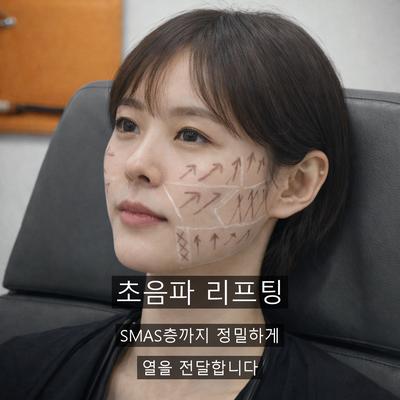
Ultrasonic lifting procedures utilize high-intensity focused ultrasound, or HIFU technology.
The principle involves precisely concentrating ultrasonic energy on the SMAS layer, located deep within the skin, to create thermal coagulation points.
When the SMAS fascia layer, which is closely related to facial sagging, is stimulated, collagen production is induced, leading to an expectation of improved skin elasticity.
Since ultrasonic procedures concentrate energy in a dot-like form on specific desired areas, it is crucial to accurately control the treatment depth.
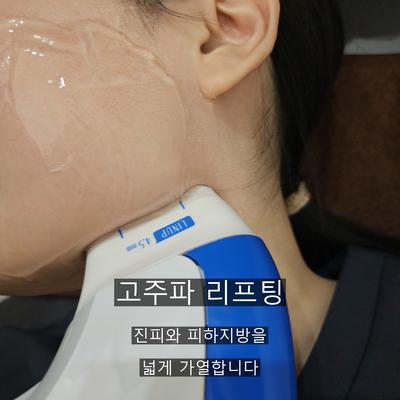
Radiofrequency lifting utilizes RF energy to broadly increase the temperature of the entire dermal and subcutaneous fat layers of the skin.
Unlike ultrasound, which reaches specific points deeply, RF uniformly delivers heat to a wide area, aiding in collagen activation.
If the focus is on improving surface elasticity, pores, or skin texture, radiofrequency might be a more suitable option.
In conclusion, ultrasound reaches the fascial layer, delivering energy in dots, while radiofrequency broadly stimulates the dermis and subcutaneous fat layers in an area-based manner.
Before deciding on a skin lifting procedure, it is necessary to first diagnose the degree of skin sagging and the depth of the area to be improved.
If facial contour sagging is prominent and needs improvement, the ultrasonic method may be more appropriate. Conversely, if the main concern is surface elasticity degradation such as skin texture or pores, the radiofrequency method could be a more suitable choice.
Since ultrasonic and radiofrequency treatments reach different depths, their purposes also differ.
Combined procedures, utilizing both methods to stimulate multiple layers of the skin simultaneously, are also commonly applied.
The treatment combination may vary depending on age, current skin condition, and the areas one wishes to improve. Therefore, it is important to consult with an experienced specialist for an accurate diagnosis.
If skin elasticity degradation is in its early stages or if you desire simple maintenance without the burden of a recovery period, the radiofrequency method can be a reasonable choice.
On the other hand, if overall facial sagging has worsened and the facial contours have collapsed, an approach using the ultrasonic method to lift deeply from the SMAS layer can be a more effective solution.
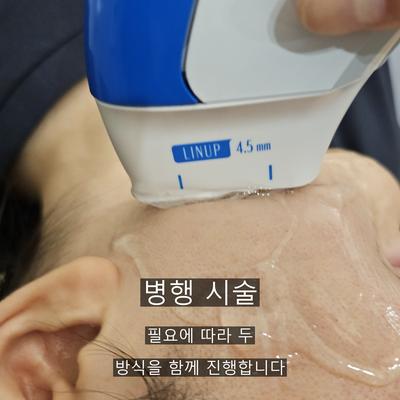
Shrink is one of the widely known ultrasonic lifting devices, and in addition to its main 4.5mm tip, it uses various tips of different depths such as 3.0mm, 2.0mm, and 1.5mm, adjusted to the treatment area.
Since energy can be delivered incrementally from the SMAS layer to the relatively shallow dermal layer according to the depth of each tip, detailed customized treatments are performed for each facial area.
Shrink treatment takes approximately 30 minutes to 1 hour, depending on the area being treated, and the time may vary depending on the number of tips used or the scope of the treatment.
Ultrasonic lifting, including Shrink, is generally recommended to be received at monthly intervals.
This is because the collagen regeneration effect can be further enhanced when treatments are consistently accumulated rather than completed in a single session.
The timing of the next treatment may vary depending on the number of shots performed in a single session, and if strong stimulation was applied, treatments may be adjusted to shorter cycles.
For both lifting methods, anesthetic cream is often applied before the procedure to reduce discomfort from pain. The recovery period after the procedure may vary depending on the individual's skin condition.
KKEUT Korean Medicine Clinic's Lifting Procedure Process
While understanding the principles of skin lifting procedures is important, the meticulousness of the actual treatment process can influence the results.
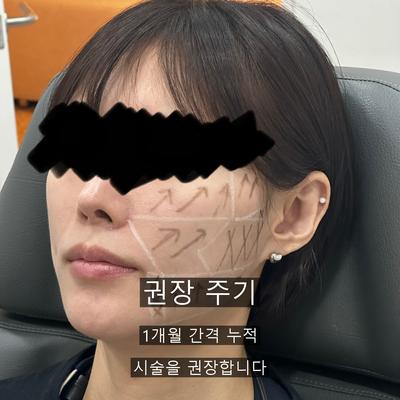
At KKEUT Korean Medicine Clinic, before a lifting procedure, skin design work is always performed with the patient in a sitting position.
In a lying position, facial tissues are less affected by gravity, which can make the actual degree of sagging appear different. Therefore, overlooking this point can lead to undesired results such as hollowing of the cheeks.
KKEUT Korean Medicine Clinic does not skip this design process; instead, we accurately assess the patient's condition and establish a treatment plan for each session.
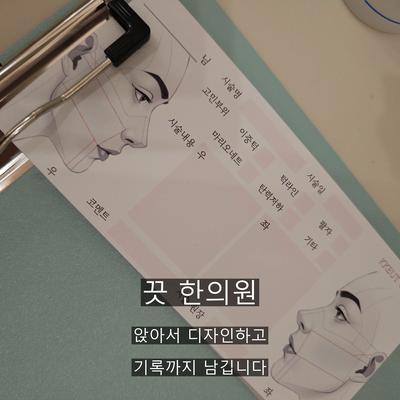
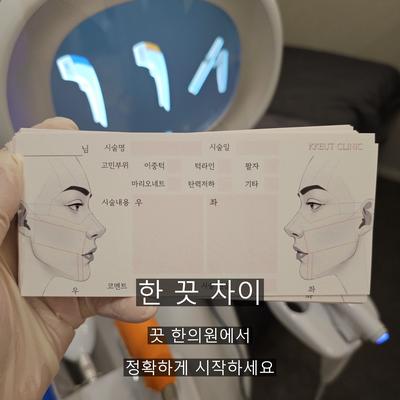
After the treatment is completed, details such as the type of tip used, intensity, and treatment area information are thoroughly recorded on a lifting card and provided to the patient.
This record allows for more accurate decisions based on objective evidence when determining the timing or intensity of subsequent treatments.
At KKEUT Korean Medicine Clinic, considering the patient's skin condition, we also explain options for performing treatments with an intensity comparable to Ultherapy.
Even with the same skin lifting procedure, finely adjusting the intensity according to the condition of the skin tissue and the desired direction of improvement can reduce variations in treatment results.
Frequently Asked Questions
Q. When getting a skin lift, do I have to choose only one, ultrasound or radiofrequency?
A. You don't necessarily have to choose only one method. For areas with deep sagging, an ultrasonic lifting approach can be used, while for areas of concern regarding skin texture or surface elasticity degradation, a radiofrequency lifting approach can be taken, allowing for different treatment plans.
Q. How often should I get a skin lift with Shrink?
A. Ultrasonic lifting treatments like Shrink are typically performed on a monthly basis. However, the interval for subsequent treatments may be adjusted depending on the intensity or number of shots applied during the session.
Q. I'm worried about cheek hollowing after a skin lift. Is there a way to prevent it?
A. Post-treatment cheek hollowing can vary significantly depending on the design stage. If the patient's facial contours are accurately identified and designed for treatment while they are in a seated position, it can help reduce such risks.
Q. Is it okay to receive both radiofrequency and ultrasound lifting treatments on the same day?
A. Depending on the medical staff's judgment, it is possible to combine radiofrequency and ultrasound lifting treatments on the same day. However, for safety, it is advisable to determine the appropriate distribution of treatment areas and intensities through thorough consultation with the medical staff.
Our Clinic's Treatment Principles
At our clinic, we meticulously design the patient's facial contours while they are in a seated position, striving to achieve customized results for each individual.
By utilizing lifting treatment cards to meticulously record and share treatment details, we help patients transparently understand their treatment process and build trust.
Through the precise intensity control function of our equipment, we treat patients with the optimal intensity suited to their skin condition, ensuring treatment safety while striving to achieve the desired effects.
You can experience the subtle changes created by precise treatments.
Related notes
Procedure notes worth reading next.


Loading menu…