

Why Acne Scaling and Peeling Are Important: 3 Reasons Beomgye, Pyeongchon, Beomgye Station, Pyeongchon Station, Hogye-dong, Bisan-dong, Gwanyang-dong, Dongan-gu, Indeogwon, Geumjeong, Anyang
6/25/2026
This is a procedure note for Why Acne Scaling and Peeling Are Important: 3 Reasons at Gyeonggi Anyang Beomgye KKEUT Korean Clinic.
Acne scaling is the starting point for acne management.
Many people try various methods to manage acne, such as extraction, medication, and lasers. However, if the step of physically removing sebum and dead skin cells accumulated inside the pores is not prioritized, any treatment will only yield partial results.
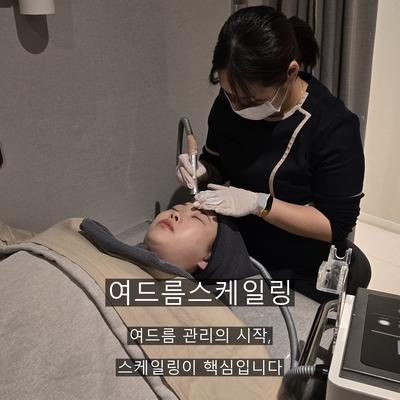
The reason why scaling and peeling are considered key in acne management is clear. If the hyperkeratinized stratum corneum that blocks the skin's surface and pore openings remains, the sebum drainage pathway narrows, ultimately leading to comedones and inflammatory acne.
3 Reasons Why Peeling is Important for Acne
First, it blocks excessive dead skin cell production. Acne-prone skin has a faster and more irregular skin cell turnover rate than normal skin. In this process, dead skin cells that fail to shed can block pore openings and combine with sebum, leading to blackheads and whiteheads. Acidic peeling solutions like salicylic acid or glycolic acid break down the bonds between dead skin cells to alleviate this blockage.
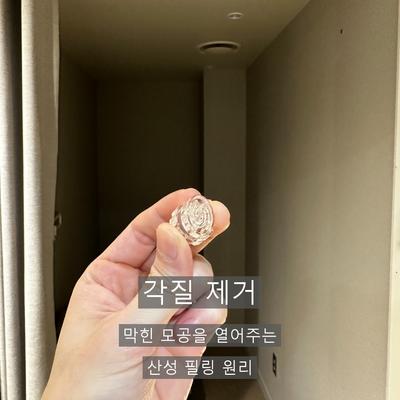
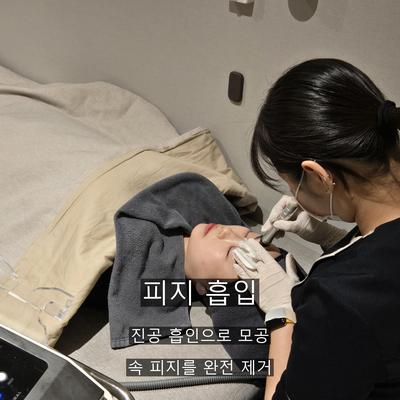
Second, it secures sebum drainage pathways. The core mechanism of acne scaling is a combination of vacuum suction and acidic solution. The solution softens the sebum inside the pores, and the suction head physically extracts it. Unlike squeezing or scraping, the key is to open the sebum drainage pathway without damaging the skin barrier.
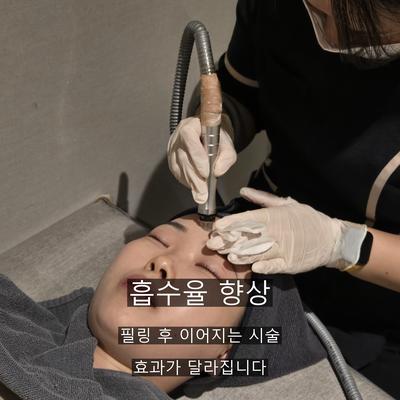
Third, it enhances the absorption rate of subsequent treatments and medications. If the stratum corneum remains thick, the penetration efficiency of lasers, skin boosters, and topical medications decreases. Once the epidermal barrier is refined with peeling, subsequent treatments can act precisely on deeper layers. This is why scaling functions both as a preparatory step and an independent treatment in acne management.
Acne Scaling: What is the Process?
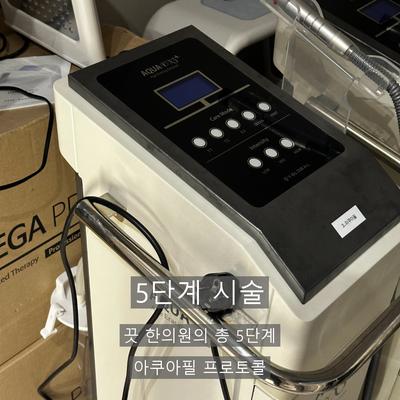
General AquaFacial scaling proceeds in the following order: Cleansing → Application and suction of dead skin cell dissolving solution (Step 1) → Intensive suction of sebum and blackheads (Step 2) → Soothing finish (Step 3). A single session takes approximately 30 minutes, and patients experience an immediate clarification of their skin surface after the procedure.
There is virtually no downtime. Temporary tingling or redness may occur after the procedure but subsides within a few hours, and light base makeup is possible on the same day.
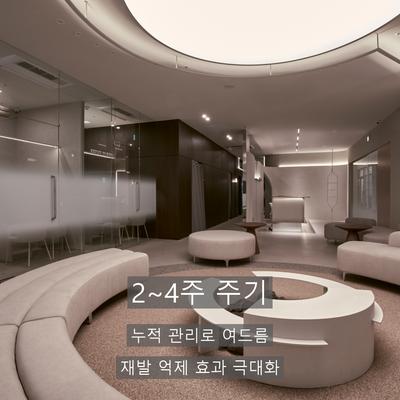
The recommended frequency is every 2-4 weeks. While the effects of blackhead and surface dead skin cell removal are immediately noticeable after a single session, pore size reduction and suppression of acne recurrence are achieved through consistent, cumulative treatments. During periods of active acne breakouts, intensive management every 2 weeks is effective.
Sensitive skin can also be treated. By adjusting the concentration and contact time of the peeling solution, irritation can be minimized to suit the skin's reaction. If you are currently receiving acne treatment at a dermatology clinic, it is recommended to proceed after confirming with your medical team whether it can be combined.
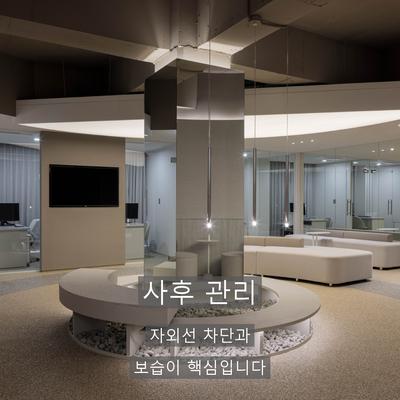
Aftercare is simple. On the day of the procedure, avoid using strong irritants such as scrubs and acidic toners, and apply sunscreen more diligently than usual. As a general rule, avoid excessive face washing and extractions.
GGEUT Korean Medicine Clinic's Sincerity
GGEUT Korean Medicine Clinic's acne scaling follows a total 5-step protocol, starting from the sebum softening stage and finishing with a Jaungo modeling pack, rather than the typical 3 steps. This design ensures that the essential preparatory steps for the skin are not missed, and focuses on soothing the skin until the very end.
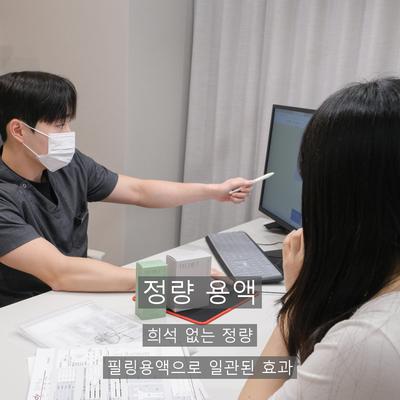
GGEUT Korean Medicine Clinic uses undiluted, precise amounts of peeling solution. Even with the same ingredients, the effect varies depending on whether it's diluted. GGEUT Korean Medicine Clinic uses the solution at its specified concentration without dilution, ensuring consistency and effectiveness for every session.
GGEUT Korean Medicine Clinic performs the procedure by replacing the dedicated tip for each of Step 1, Step 2, and Step 3. If the tips are not replaced, solutions may mix between stages or suction power may decrease. GGEUT Korean Medicine Clinic precisely proceeds by changing the tip to match each stage.
Frequently Asked Questions
Q. Can acne disappear after just one acne scaling session?
A. With one acne scaling session, surface dead skin cells and sebum are immediately cleared. However, to fundamentally suppress acne itself, cumulative management at 2-4 week intervals is necessary. GGEUT Korean Medicine Clinic assesses your skin condition and recommends the optimal frequency.
Q. When can I apply makeup after acne scaling?
A. Light base makeup is possible after 1-2 hours of rest following the procedure. There is almost no downtime, allowing for a quick return to daily activities.
Q. Can sensitive skin also undergo acne scaling?
A. Yes, it's possible. Acne scaling allows for adjustment of the peeling solution concentration and contact time, minimizing irritation for sensitive skin. GGEUT Korean Medicine Clinic first assesses your skin condition before determining the treatment intensity.
Q. What is the difference between scaling and extraction?
A. Extraction involves squeezing sebum out with physical force, which carries the risk of skin barrier damage and scarring. Acne scaling breaks down sebum with an acidic solution and then removes it with vacuum suction, significantly reducing skin irritation and protecting the surrounding pore tissue.
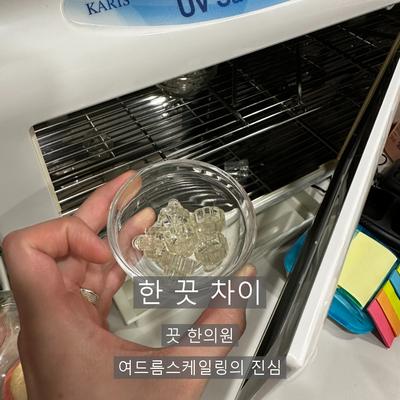
GGEUT Korean Medicine Clinic's Sincerity
GGEUT Korean Medicine Clinic provides differentiated results compared to standard 3-step treatments through a total 5-step protocol, from sebum softening to the Jaungo modeling pack finish.
GGEUT Korean Medicine Clinic enhances the consistency and stable effectiveness of each session through its principle of using undiluted, precise amounts of peeling solution.
GGEUT Korean Medicine Clinic pursues both safety and effectiveness by maximizing suction power and solution efficacy at each stage through customized tip procedures, replacing dedicated tips for each of Steps 1, 2, and 3.
A Subtle Difference, Distinct Results — Experience it at GGEUT Korean Medicine Clinic.
Related notes
Procedure notes worth reading next.


Loading menu…