

Explaining Oligio's fundamental principles. Beomgye, Pyeongchon, Beomgye Station, Pyeongchon Station, Hogye-dong, Bisan-dong, Gwanyang-dong, Dongan-gu, Indeogwon, Geumjeong, Anyang
5/4/2026
This is a procedure note for Explaining Oligio's fundamental principles. at Gyeonggi Anyang Beomgye KKEUT Korean Clinic.
Understanding the core principles behind Oligio helps to clarify its effectiveness and the proper execution of the procedure.
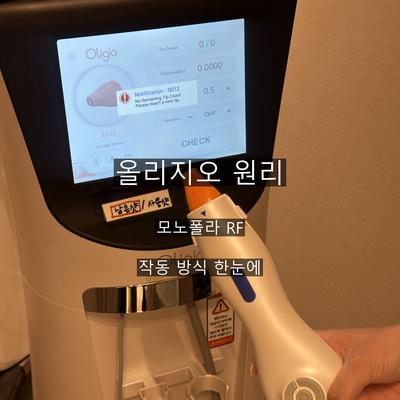
Oligio is a medical device designed to deliver monopolar radiofrequency (RF) energy into the deeper skin layers.
Monopolar RF: How Heat Penetrates Deeply into Skin Tissue
Radiofrequency (RF) energy generates heat within tissues due to the resistance encountered as electrical current passes through them.
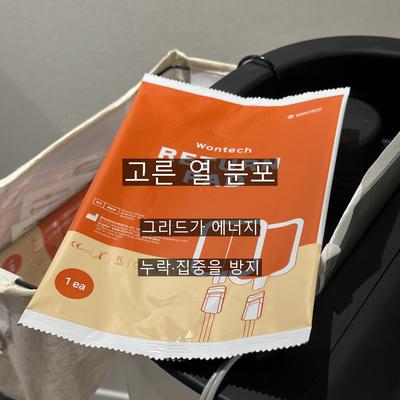
The monopolar method involves energy being emitted from a single handpiece, with the current then traveling through the body to a return pad placed on the patient.
This extensive current pathway allows the energy to quickly bypass the epidermal layer and reach into the dermis and subcutaneous tissues effectively.
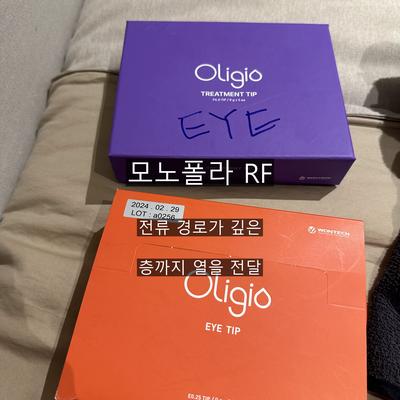
A key aspect of monopolar RF is its capacity to deliver concentrated thermal stimulation internally while maintaining a relatively lower temperature on the skin's surface.
Targeting Thermal Stimulation to the Dermis and Subcutaneous Layers
The Oligio principle primarily targets the dermis and the subcutaneous fat layers beneath it.
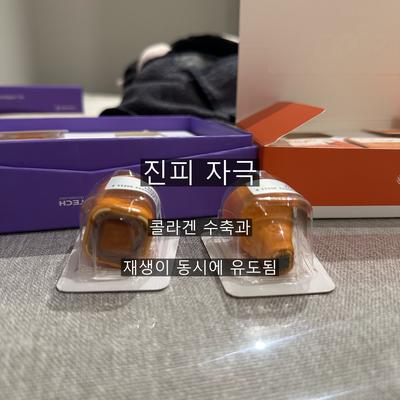
When thermal energy is applied to the dermis, an immediate contraction of existing collagen fibers may occur, followed by a gradual process of new collagen synthesis over several weeks.
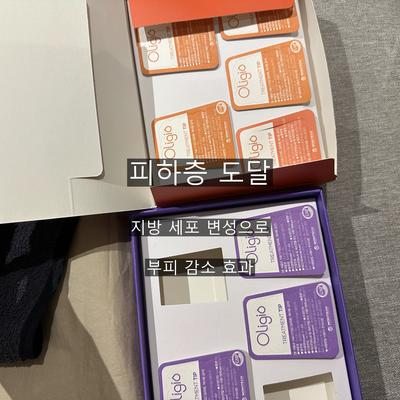
Delivery of heat to the subcutaneous fat layer can lead to an impact on fat cell membranes, potentially contributing to volume reduction and a remodeling of tissue structure.
Oligio's ability to stimulate these two distinct layers simultaneously differentiates its approach from more superficial laser or ultrasound devices.
The Importance of Grid Design
Monopolar RF energy inherently tends to diffuse broadly within tissues.
For this reason, it is important to precisely mark the application points of the tip with a grid pattern across the entire face before the procedure.
At Kkeut Clinic, we carry out the grid design for the tip while the patient is in a seated position, prior to commencing the lifting procedure.
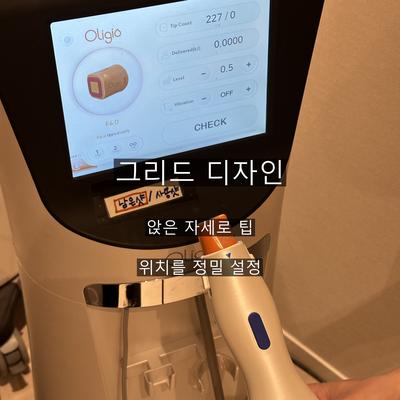
The rationale for designing in a seated posture is to use the skin's actual position, influenced by gravity, as a reference point.
If the design were conducted while lying down, the skin might shift laterally, potentially misaligning the intended energy concentration points.
Grid design aims to facilitate an even distribution of thermal energy throughout the treated area, helping to prevent either localized excessive energy concentration or areas being missed altogether.
Superpass Technique: A Strategy for Cumulative Heat Delivery
To more fully leverage the Oligio principle, Kkeut Clinic utilizes the Superpass technique.
The Superpass technique involves accumulating energy by repeatedly moving the device over the same treatment area.
Instead of aiming to reach the target temperature with a single strong pass, heat is progressively built up through multiple applications. This approach helps to lessen abrupt tissue stimulation while promoting more uniform energy delivery to deeper skin layers.
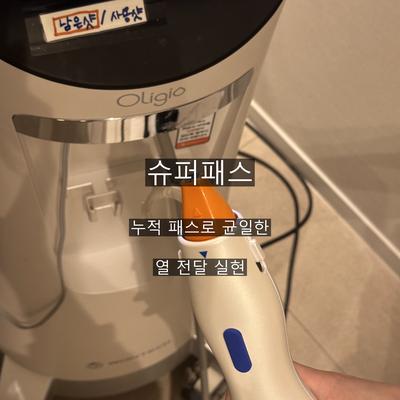
As this method relies on cumulative energy, the operator's precision in controlling speed and managing the number of passes directly influences the outcome.
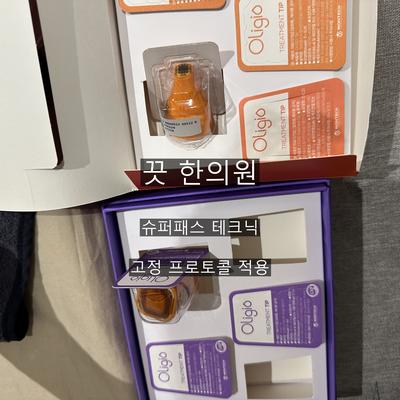
Kkeut Clinic consistently follows a protocol that supports sustained, cumulative thermal energy delivery through this Superpass technique.
Common Inquiries
Q. Based on the Oligio principle, what skin layers are primarily affected?
A. The Oligio principle is designed so that monopolar RF current travels through the epidermis to target the dermis and subcutaneous fat. It works to encourage collagen contraction and regeneration, along with the denaturation of fat cells in these deeper layers, going beyond mere superficial stimulation.
Q. Is a grid design truly essential?
A. Given Oligio's monopolar nature, which causes energy to spread broadly, performing the procedure without a grid might result in uneven stimulation, with some areas receiving too much energy and others being overlooked. At Kkeut Clinic, we consistently implement grid design in a seated position before initiating treatment.
Q. How does the Superpass technique compare to typical procedures?
A. For optimal application of the Oligio principle, achieving uniform heat delivery via cumulative passes is often considered more advantageous than relying on a single, strong stimulation. Kkeut Clinic's Superpass technique focuses on gradually accumulating energy through multiple passes to ensure even reach into deeper tissue layers.
Kkeut Clinic's Commitment
Kkeut Clinic strives for even heat distribution across the entire treatment area by carefully executing a tip grid design while the patient is seated, prior to the lifting procedure.
Kkeut Clinic adheres to a consistent protocol that supports sustained, cumulative thermal energy delivery through the Superpass technique.
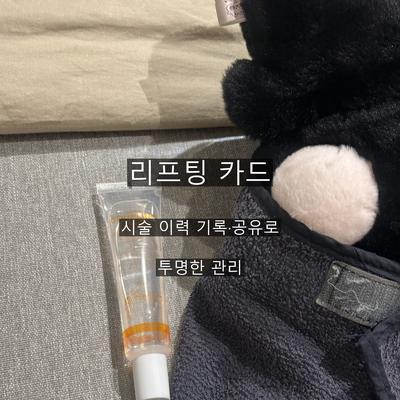
Kkeut Clinic provides patients with a lifting card, which documents their treatment records, enabling a clear understanding of their procedural history.
A Nuanced Approach May Yield a Noticeable Difference. Consult with Kkeut Clinic.
Related notes
Procedure notes worth reading next.


Loading menu…