

3 Key Tips Before Starting Syringoma Agnes Treatment Beomgye, Pyeongchon, Beomgye Station, Pyeongchon Station, Hogye-dong, Bisan-dong, Gwanyang-dong, Dongan-gu, Indeogwon, Geumjeong, Anyang
This is Gyeonggi Anyang Beomgye KKEUT Korean Clinic's procedure note on 3 Key Tips Before Starting Syringoma Agnes Treatment.
Some people are concerned about small, milia-like bumps that are skin-colored and appear around the eyes or on the upper cheeks.
Many people are interested in how to reduce the burden of syringoma recurrence through Agnes treatment.
Here are three things to consider before choosing syringoma treatment.
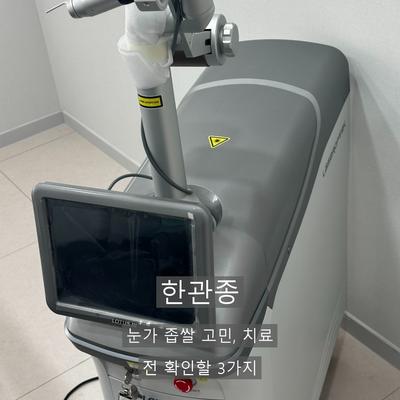
One. Syringomas must be clearly distinguished from similar skin lesions.
Syringomas are benign lesions originating from sweat glands. They often appear as multiple small, milia-like lesions, primarily under the eyes, on the eyelids, and on the upper cheeks.
Since these lesions are not accompanied by pain, many people consider treatment mainly for cosmetic reasons.
However, if the lesions grow rapidly or change in shape and color, it is necessary to first rule out the possibility of other diseases before treatment.
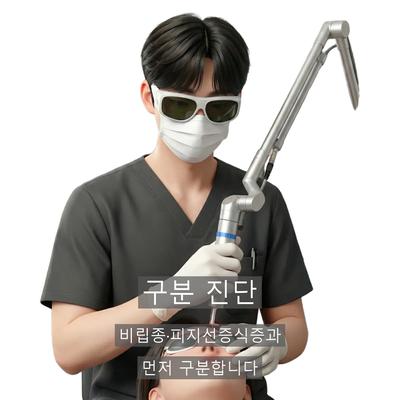
It is difficult to distinguish them from milia or sebaceous hyperplasia based solely on appearance, so self-diagnosis or self-extraction is not recommended.
Milia are known to originate from keratin cysts, sebaceous hyperplasia from sebaceous glands, and syringomas from sweat glands.
Since each lesion originates from a different source, accurate diagnosis is the first step towards a correct treatment plan.
At Kkeut Korean Medicine Clinic, seemingly similar milia-like lesions are carefully differentiated, and then approached with different methods tailored to their specific characteristics.
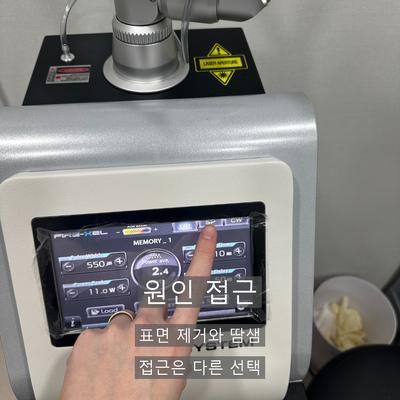
Two. Surface removal of lesions and addressing the root cause are different treatment approaches.
Syringoma treatment can broadly be divided into two methods. One is to remove the visible surface of the lesion, and the other is to access the sweat gland tissue that is the root cause of the lesion.
Surface removal primarily focuses on improving visible bumps, while the root cause approach emphasizes reducing the likelihood of the lesion reappearing in the same area.
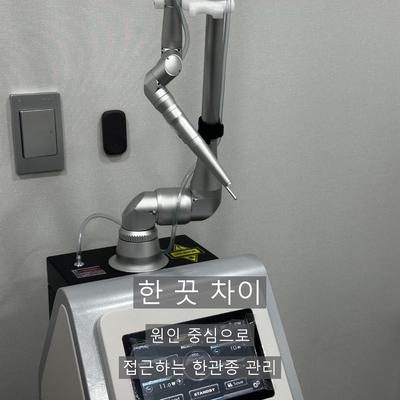
Agnes is a radiofrequency insulated needle treatment device. The procedure is performed by precisely delivering radiofrequency energy deep into the lesion using an insulated, fine needle.
Kkeut Korean Medicine Clinic utilizes Agnes to operate a root cause approach program that considers the possibility of syringoma recurrence.
An approach that directly targets sweat gland tissue has a different direction than simple surface removal.
Since this procedure is performed on each individual lesion, the total treatment time may vary depending on the number of lesions.
The appropriate treatment method will be determined considering the patient's number of lesions, location, and size.
Especially for thin and delicate areas like around the eyes, it is important to determine the treatment method after directly examining the lesions in the clinic.
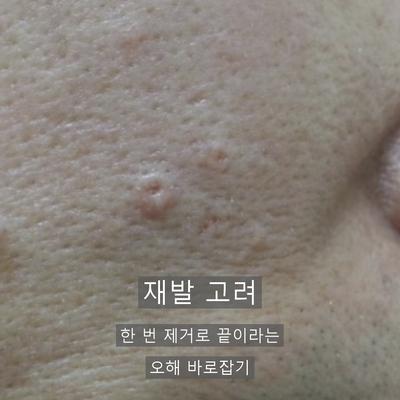
The idea that 'a single treatment will completely resolve syringomas' is one of the common misconceptions regarding syringoma treatment.
Since syringomas are connected to sweat glands, if only the superficial part is treated, they may recur in the same spot or surrounding areas. Therefore, it is advisable to consider a root cause approach from the outset.
Any claim that there will be absolutely no recurrence with any treatment method should be regarded with caution.
Attempting to squeeze or extract them yourself at home is not recommended as it may lead to inflammation or scarring.
Documenting the lesion areas with photos before treatment can help compare and confirm changes over the course of treatment.
Three. It is advisable to confirm the treatment session plan and aftercare methods in advance.
Syringomas often appear not just as one or two, but spread as multiple lesions, making it difficult to address all of them in a single treatment session.
The necessary number of treatment sessions and the interval between subsequent treatments may vary depending on the patient's number of lesions, distribution area, and the chosen treatment method.
During your consultation, it is advisable to confirm the plan for which areas will be primarily focused on in the current treatment, and how subsequent treatments will proceed.
During your consultation, we recommend confirming the following four points.
First, you should confirm that you clearly understand the basis and explanation for your lesions being diagnosed as syringomas.
Second, it is advisable to confirm whether the treatment focuses on surface removal or combines a root cause approach, and what specific treatment method will be used.
Third, you should confirm that you have been sufficiently informed about methods for wound protection after treatment and precautions in daily life.
Fourth, it is advisable to confirm that specific criteria for future treatment plans and follow-up visit timings have been clearly explained.
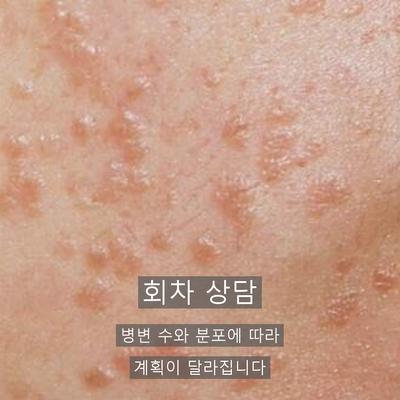
The aftercare process following treatment is also an important part of the overall treatment.
Micro-wounds may occur in the treated area, so protective care for that area is necessary.
At Kkeut Korean Medicine Clinic, we use Duoderm gel for aftercare instead of typical Duoderm stickers.
The gel type offers less discomfort during application and removal, and even those with sticker allergies can use it relatively comfortably.
Immediately after the procedure, the treated area may become red or form small scabs. The extent of these reactions can vary depending on the depth and number of lesions, and the individual's skin condition.
Do not forcibly remove any scabs that form; it is best to leave them alone until they fall off naturally.
During the wound healing process, pigmentation can occur, so it's necessary to avoid UV exposure.
Swelling or redness may appear around the eyes after the procedure, and this varies from person to person. If symptoms persist for a long time, it is advisable to inform the medical staff.
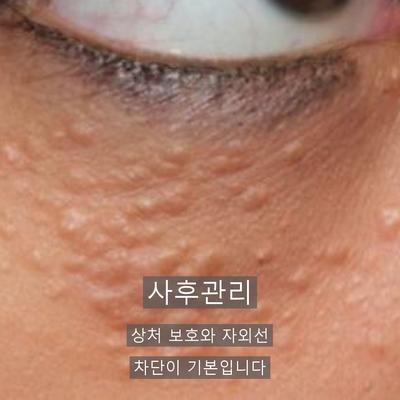
Kkeut Korean Medicine Clinic's Approach to Syringoma
At Kkeut Korean Medicine Clinic, accurate lesion differentiation is prioritized when treating syringoma.
Milia, sebaceous hyperplasia, and syringoma, which appear in similar forms, have different causes. Therefore, we clearly differentiate each lesion and apply individual treatment methods.
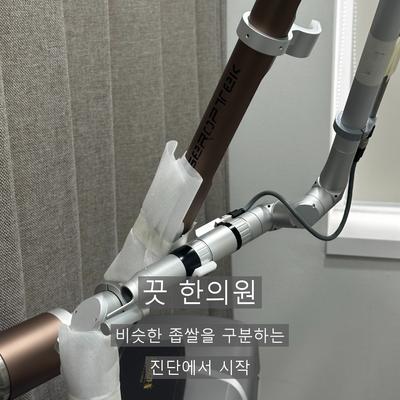
For syringoma management, we operate a program that not only removes the surface but also combines procedures to address the underlying cause itself.
This program utilizes Agnes radiofrequency insulated needle treatment to directly act on the sweat glands, which can help reduce the possibility of recurrence. This is a method that addresses the root cause of syringoma development.
Kkeut Korean Medicine Clinic emphasizes suppressing recurrence and values procedures that address the cause itself.

After the procedure, Duoderm gel is used to protect the wound area, thereby reducing the burden of post-procedure care.
Regarding syringoma problems, Kkeut Korean Medicine Clinic proposes an approach that considers the fundamental cause rather than just improving the visible parts.
Kkeut Korean Medicine Clinic's Cause-Centered Syringoma Management
Frequently Asked Questions
Q. Is Agnes treatment necessary for all syringoma?
A. Whether Agnes treatment is combined is determined after the medical staff directly checks the number, location, and size of the lesions. At Kkeut Korean Medicine Clinic, we first provide an accurate diagnosis and then suggest the most suitable method for the patient among surface removal and cause-centered approaches.
Q. How many Agnes sessions are needed?
A. The number of Agnes treatment sessions varies depending on the number and distribution range of syringoma lesions, and the chosen treatment method. At Kkeut Korean Medicine Clinic, you can discuss and decide on a detailed treatment plan during your consultation.
Q. How should I care for my skin after Agnes treatment?
A. Please adequately protect the Agnes treatment area with Duoderm gel, and it is best not to forcibly remove any scabs that form. Additionally, you should pay special attention to sun protection. Kkeut Korean Medicine Clinic provides detailed guidance on necessary post-treatment care methods.
Kkeut Korean Medicine Clinic's Treatment Philosophy
At Kkeut Korean Medicine Clinic, we meticulously differentiate similar-looking small papular lesions to provide customized treatment suitable for each patient.
Kkeut Korean Medicine Clinic strives to help patients resolve their issues through the Agnes combination cause removal program.
At Kkeut Korean Medicine Clinic, we facilitate the recovery of the treated area through Duoderm gel post-care, helping to ensure a stable outcome.
The difference of delicate treatment. Experience meticulous care at Kkeut Korean Medicine Clinic.
Loading menu…