

How to prevent molluscum contagiosum from spreading to your family: 3 essential tips Beomgye, Pyeongchon, Beomgye Station, Pyeongchon Station, Hogye-dong, Bisan-dong, Gwanyang-dong, Dongan-gu, Indeogwon, Geumjeong, Anyang
This is Gyeonggi Anyang Beomgye KKEUT Korean Clinic's procedure note on How to prevent molluscum contagiosum from spreading to your family: 3 essential tips.
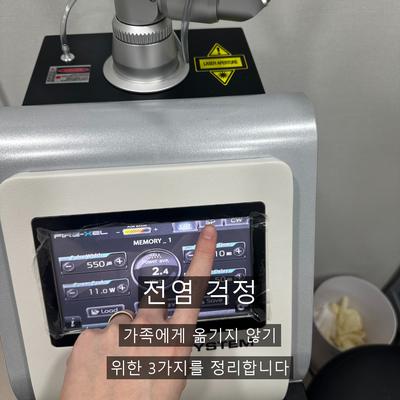
If you're reading this due to concerns about molluscum contagiosum transmission, you might be worried about it spreading to family members you live with.
When bumpy growths appear on the skin, many people first become anxious about transmitting them to family members.
We've organized three points to be aware of at home, in order.
Since the management approach may vary depending on the type of lesion, the following content explains Kkeut Korean Medicine Clinic's diagnostic process and procedures.
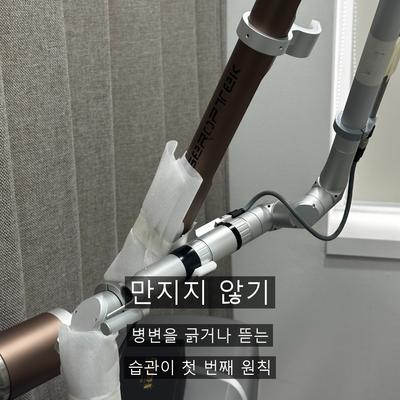
First, it is important to stop the habit of touching or scratching the lesion.
Wart-type lesions are skin conditions caused by viruses.
Viruses can spread through small skin lesions, so there's a risk of them spreading if you pick at the lesion with your fingernails or touch other areas with scratched hands.
If you have lesions in an area where you shave or epilate, you should be especially careful as they can spread along the path touched by the razor blade.
Even if it's itchy, not rubbing the lesion is a basic principle to observe at home.
If you've touched a lesion, it's good to develop the habit of washing your hands thoroughly with soap immediately.
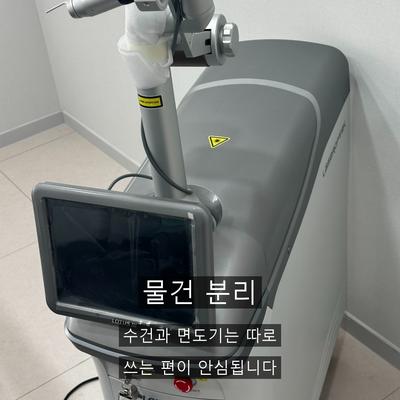
Second, it's best to use separate items for things that family members share.
If there are concerns about transmission within the household, you should first look at items that directly touch the skin.
For items that directly touch the skin, such as towels, razors, or exfoliating mitts, keeping separate ones for the person with lesions can provide a little more peace of mind.
Using towels individually and separating them from other laundry when washing is an easy practice to implement at home.
In households with children, skin contact during bathing or play can be frequent, so covering the lesioned area with clothing or a bandage can also be considered.
Using public facilities with frequent bare skin or skin contact, such as saunas or swimming pools, should be carefully considered during the period when lesions are present.
These lifestyle guidelines should be understood as ways to reduce the possibility of transmission through contact, rather than completely blocking the lesions.
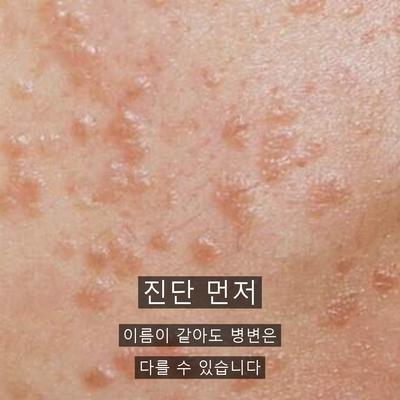
Third, even if they look similar on the surface, the type of lesion can differ, so accurate identification is crucial.
Even if you search for molluscum contagiosum, small, flat lesions appearing on the face or back of the hands could be flat warts, making it difficult to judge accurately by name alone.
Other millet-seed-like lesions such as milia, syringomas, or sebaceous hyperplasia can also appear similar in outward appearance alone.
Since different types of lesions require different treatment approaches, accurate identification can be considered the starting point of management.
At Kkeut Korean Medicine Clinic, during consultation, we use a light to illuminate and confirm the lesion, and based on this, we decide on the procedure's progression and method.
We do not recommend attempting to squeeze or pick at lesions at home, as this can irritate the skin or increase the risk of spreading.
After a flat wart diagnosis, the process proceeds as follows.
Flat warts are typically approached by removing the lesions using a laser.
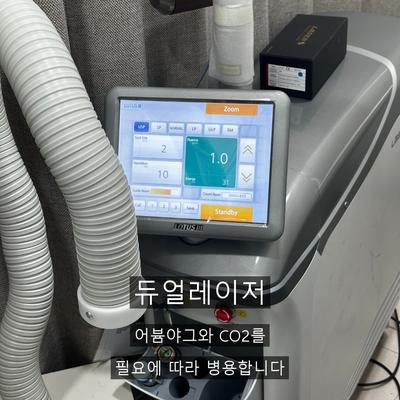
Kkeut Korean Medicine Clinic focuses on reducing the burden of recovery time after treatment and lowering the possibility of recurrence through a dual laser method that uses both Er:YAG and CO2 lasers together.
The principle of this treatment method is to intentionally utilize the surrounding thermal damage created by the CO2 laser to manage even viruses that may be hidden around the lesion.
Since using only a CO2 laser can lengthen the recovery period, Kkeut Korean Medicine Clinic makes it a principle to combine Er:YAG and CO2 according to the condition of the lesion.
More important than simply having the equipment is the fact that this method was chosen considering the latent characteristics of the virus.
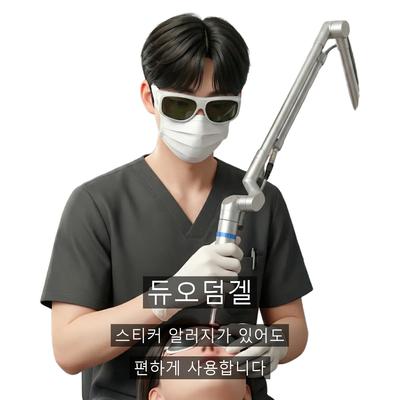
After the procedure, Duoderm gel will be used.
It has the advantage of being less cumbersome than applying and removing a sticker, and people with allergic reactions to Duoderm stickers can use it relatively comfortably.

Even after the procedure, it is important to manage the treated area cleanly without touching or picking at it.
Since viral diseases can have concerns about recurrence, it is advisable to consult thoroughly about these aspects before the procedure.
Characteristics of Kkeut Korean Medicine Clinic's Flat Wart Treatment
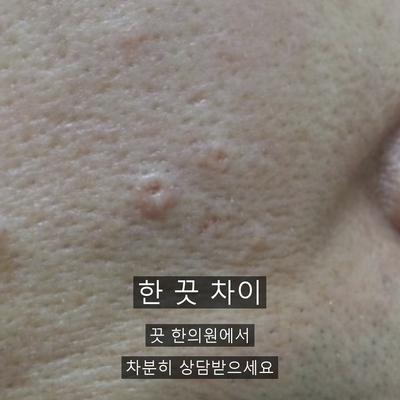
Kkeut Korean Medicine Clinic clearly separates and conducts the diagnostic stage before proceeding with treatment.
We decide on the procedure after accurately confirming the lesion using a light, so we never start treatment simply by hearing the name.
For those worried about transmitting it to family members, the fact that such an accurate diagnostic process is performed can be an important source of reassurance.
Kkeut Korean Medicine Clinic uses a dual laser system that combines Er:YAG and CO2.
Its characteristic is to focus on recurrence prevention by reducing the burden of recovery while also considering viruses that may be latent.
This is a method chosen by Kkeut Korean Medicine Clinic after careful consideration of the lesion's characteristics.
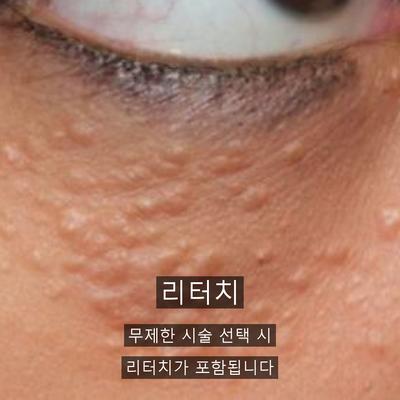
At Kkeut Korean Medicine Clinic, if you choose unlimited treatments, we also provide retouch treatments.
Even if the lesion recurs, you can receive removal treatment again without additional cost, helping to alleviate the burden of recurrence.
To reduce discomfort related to post-treatment care, Kkeut Korean Medicine Clinic standardizes aftercare with Duoderm gel to aid patients' recovery.
Frequently Asked Questions
Q. I'm worried about molluscum contagiosum transmission. Can I just use a separate towel?
A. When concerned about molluscum contagiosum transmission, separating personal items such as towels and razors is a basic preventive measure to reduce contact opportunities.
However, it may be difficult to completely block transmission with just this. Therefore, it is best to avoid habits of touching the lesion directly and visit Kkeut Korean Medicine Clinic to have the lesion accurately examined.
Q. How do I know what kind of lesion I have if I'm worried about molluscum contagiosum transmission?
A. It is not easy to distinguish with the naked eye whether the lesion you are concerned about for molluscum contagiosum transmission is flat warts or another issue like milia.
At Kkeut Korean Medicine Clinic, we carefully examine the lesion with a light in the consultation room, make a diagnosis, and then decide on the treatment plan.
Q. If I have a lesion removed due to molluscum contagiosum transmission concerns, what about recurrence?
A. Viral lesions, such as molluscum contagiosum, can have concerns about recurrence. At Kkeut Korean Medicine Clinic, we provide touch-up treatments if you choose unlimited treatments.
Even if the lesion recurs, you can receive removal treatment again without additional cost.
The Sincerity of Kkeut Korean Medicine Clinic
At Kkeut Korean Medicine Clinic, we go through a clear diagnostic process with light confirmation to provide a more suitable approach for each individual patient.
Our Kkeut Korean Medicine Clinic utilizes Er:YAG and CO2 dual lasers, and strives to increase patient satisfaction through aftercare using Duoderm gel.
Kkeut Korean Medicine Clinic's policy includes touch-ups when unlimited treatments are chosen, reducing the burden of post-treatment care and allowing for stable results.
A meticulous approach can create different results. We recommend consulting with a specialist at Kkeut Korean Medicine Clinic.
Loading menu…