

Pain-free anal hair removal! A procedure that also considers hygiene. Beomgye, Pyeongchon, Beomgye Station, Pyeongchon Station, Hogye-dong, Bisan-dong, Gwanyang-dong, Dongan-gu, Indeogwon, Geumjeong, Anyang
This is Gyeonggi Anyang Beomgye KKEUT Korean Clinic's procedure note on Pain-free anal hair removal! A procedure that also considers hygiene.
Anal hair removal, being a sensitive area, is a procedure that many people worry about regarding pain and hygiene even before receiving treatment.
We will explain in detail, according to the procedure steps, those aspects that may have been difficult to ask directly during consultation.
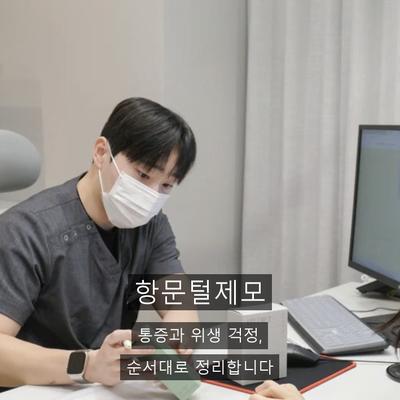
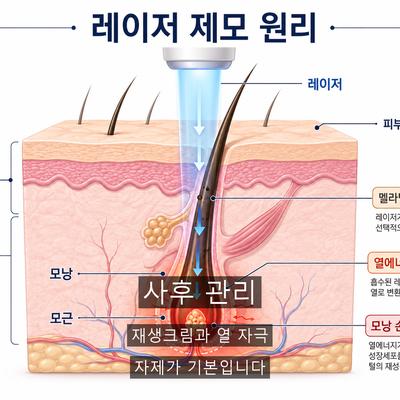
How Laser Hair Removal Works
Laser energy is selectively absorbed by the dark melanin pigment in the hair. This absorbed energy converts into heat, affecting the hair root and follicle where hair grows.
Lasers can work more effectively on hair follicles rich in melanin during the growth phase. However, hair in the growth phase is only a portion of all hair, and its timing is difficult to predict.
It is difficult to treat all hair follicles at once. Therefore, it is important to receive multiple treatments, timed with the cycle in which resting hairs transition into the growth phase.
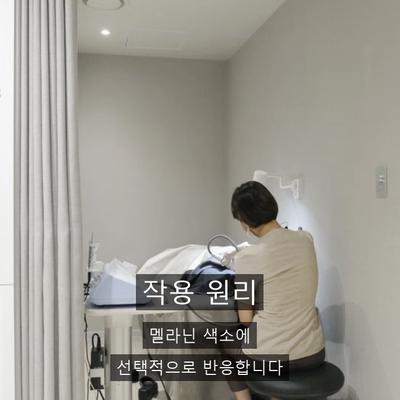
Understanding Pain
For sensitive areas with thick hair, such as Brazilian waxing, managing pain is a crucial consideration.
For the perianal area, we also plan the treatment using cooling equipment and appropriate laser energy control to protect the skin.
Anesthetic cream primarily acts on the surface layer of the skin, making it difficult to deliver sufficient anesthetic effect to deeply located hair roots.
From a medical perspective, anesthesia is not always necessary for the procedure. It is often used to enhance the psychological comfort of the patient.
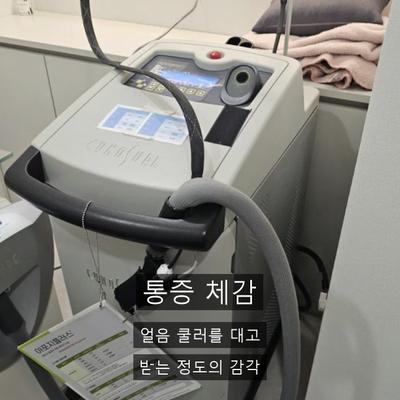
The sensation felt during the procedure can be likened to a tingling feeling after an ice cooler is placed on the skin. As the number of treatments increases and hair volume decreases, pain may gradually lessen.
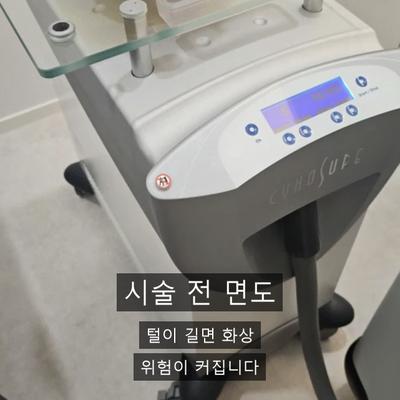
Necessity of Shaving Before Treatment
If hair is left long, laser energy can be unnecessarily consumed on the skin surface, increasing the risk of burns. Additionally, the treatment effect may be reduced as energy might not be properly delivered to the hair roots.
Therefore, shaving the hair in the treatment area before your appointment is a basic preparatory step.
Unlike shaving, plucking removes the hair root itself, eliminating the target for the laser. To ensure treatment effectiveness, you should avoid plucking hair during the hair removal period.
If there are areas difficult to shave yourself, it is advisable to inquire about appropriate preparation methods through a consultation before the treatment.
Post-Treatment Hygiene and Folliculitis Management
Due to the nature of lasers delivering direct thermal energy to hair follicles, there may be a temporary increase in the likelihood of folliculitis after treatment. This is one of the common skin reactions.
Consistent use of a regenerative cream for care can lead to gradual improvement over time.
We recommend starting to shave from the day after the procedure, once the skin has sufficiently calmed down, rather than on the day of the treatment itself.
Immediately after the procedure, hair may be somewhat weakened, making it difficult to shave as cleanly as usual.
For 1-2 days after the procedure, it is advisable to refrain as much as possible from activities that can raise body temperature, such as exercise, sauna, and alcohol consumption.
Understanding Treatment Sessions, Cycles, and Permanent Hair Removal
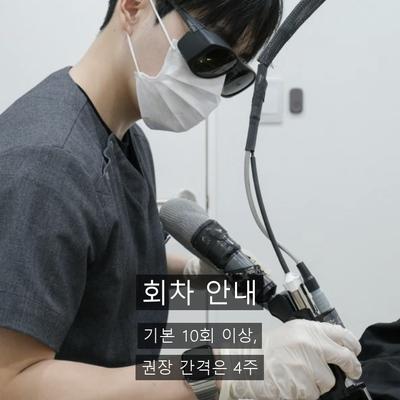
Regardless of the area, usually more than 10 treatments are recommended, with intervals of at least 3 weeks, and ideally 4 weeks.
The 4-week interval considers the skin's exfoliation cycle. This is to protect the skin and allow sufficient time for the next growth phase hair to emerge.
What is commonly referred to as 'permanent hair removal' does not mean that hair will never grow back for life. It is better to understand laser hair removal as closer to 'semi-permanent hair removal.'
Even after most hair has been reduced through treatment, receiving maintenance treatments approximately once every 2-3 months can help sustain the desired effects.
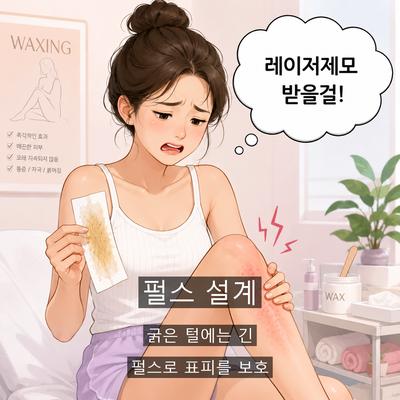
While waxing offers temporary hair removal and can irritate the skin, laser treatment acts directly on the hair follicle, providing a more long-term approach to hair management.
Kkeut Clinic's Approach to Sensitive Area Treatments
At Kkeut Clinic, we meticulously consider the patient's hair thickness and skin condition, individually adjusting laser pulse duration and energy density.
Thick hair has a high melanin content, and applying energy with short pulses can risk epidermal damage. Therefore, Kkeut Clinic uses a long-pulse method to deliver thermal energy more gently, striving to protect the skin surface.
For thick, dark hair, we apply a high energy density to ensure sufficient thermal energy reaches the hair root. Conversely, for fine, light hair, we adjust the energy or use repeated pulses to effectively deliver heat to the hair root.
In areas with dense hair, we perform treatments by dispersing laser energy to prevent burns caused by excessive heat accumulation.
For individuals with darker skin tones, laser output needs to be adjusted even more delicately to reduce the possibility of side effects caused by melanin pigment.
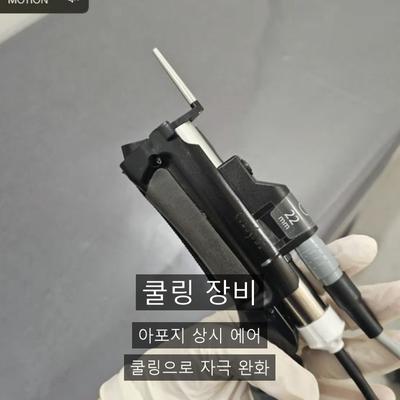
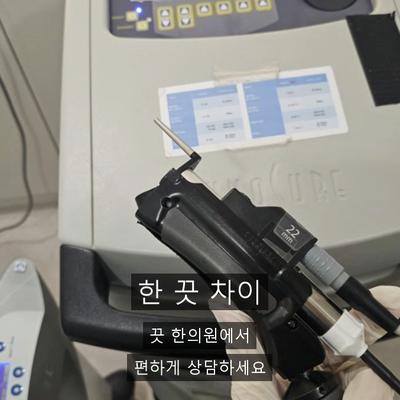
We utilize widely known laser devices such as Apogee and GentleMax for our treatments.
The Apogee laser continuously sprays cool air before and after treatment to lower skin temperature. GentleMax also features a skin protection function by spraying cooling gas.
At Kkeut Clinic, before concluding the treatment, we double-check if there are any additional areas of concern and finalize the procedure only after obtaining the patient's consent.
Specifically, for certain areas where more intensive care is desired, we can precisely adjust and apply the energy.
Frequently Asked Questions (FAQ)
Q. Is anal hair removal very painful without anesthetic cream?
A. When removing anal hair, anesthetic cream only works on the skin surface, so it is difficult to completely relieve the pain felt deep in the hair follicles. At Kkeut Oriental Medicine Clinic, we use cold cooling air and ice coolers to manage discomfort during the procedure. Whether or not anesthesia is administered will be decided through consultation.
Q. When can I shave after anal hair removal?
A. After anal hair removal, it is recommended to start shaving from the day after the procedure, once the skin has stabilized, rather than on the same day. Pulling out hair can reduce the effectiveness of the hair removal procedure, so it is best to avoid such actions.
Q. Does anal hair removal prevent hair from growing back permanently?
A. Most hair removal procedures, including anal hair removal, are semi-permanent hair removal, which significantly reduces the amount of hair and slows down its growth, rather than preventing hair from growing back permanently. Generally, more than 10 repeated procedures are required, and even after reaching a state where hair barely grows, maintenance procedures can be considered every 2-3 months.
The Sincerity of Kkeut Oriental Medicine Clinic
At Kkeut Oriental Medicine Clinic, we carefully adjust laser pulse and energy settings according to the patient's hair thickness and skin tone. Through this customized approach, we strive to provide hair removal procedures suitable for each individual.
Kkeut Oriental Medicine Clinic concludes the procedure only after the patient has fully agreed to the results of the treatment, before the procedure is finalized. This approach emphasizes the comfort and trust of our patients.
At Kkeut Oriental Medicine Clinic, cooling equipment is always used during the procedure to regulate skin temperature and ensure that energy is evenly distributed across the skin. This can help reduce skin stress during the procedure and achieve stable results.
Hair Removal Completed with a Delicate Approach Guided by Kkeut Oriental Medicine Clinic.
Loading menu…