

Sedated Rejuran is risky. It's not that painful. Beomgye, Pyeongchon, Beomgye Station, Pyeongchon Station, Hogye-dong, Bisan-dong, Gwanyang-dong, Dongan-gu, Indeogwon, Geumjeong, Anyang
6/19/2026
This is a procedure note for Sedated Rejuran is risky. It's not that painful. at Gyeonggi Anyang Beomgye KKEUT Korean Clinic.
The number of people searching for the keyword 'Sleep Rejuran' is increasing.
This method involves receiving Rejuran treatment while under sedation, and we, at Kkeut Oriental Clinic, will accurately explain whether this method is truly necessary.
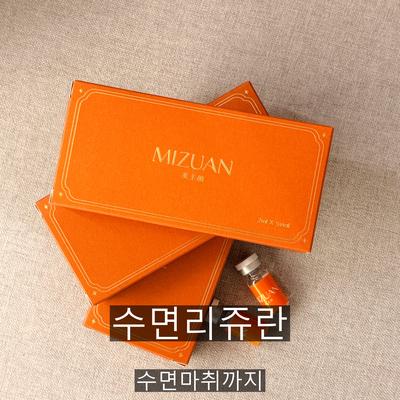
What is Rejuran?
Rejuran is a PN (polynucleotide) based skin booster.
It is a procedure that delivers polynucleotide components, extracted and purified from salmon testes DNA, to the dermal layer, thereby enhancing the skin's natural regeneration environment.
It is not about filling volume like fillers. It helps restore damaged tissues and activates fibroblasts to induce collagen and elastin production.
Its purpose is to improve the overall skin environment, addressing concerns such as fine lines, reduced elasticity, skin texture, pore issues, soothing sensitive skin, and fine lines around the eyes.
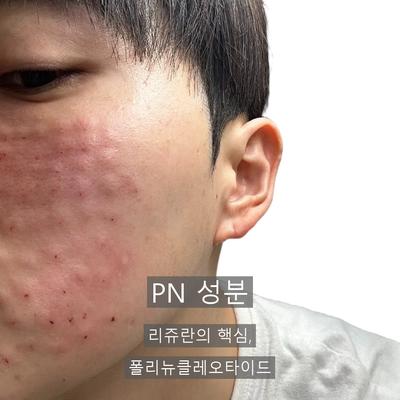
Sleep Rejuran: Why did it emerge?
Sleep Rejuran, as the name suggests, is a method of receiving Rejuran treatment while under sedation.
When Rejuran is administered via manual injection, there is a tingling sensation because it is injected directly into the dermal layer. Clinics have started using sedation to alleviate this discomfort.
However, it is necessary to consider whether this choice is always the right one.
Sedation: Is it necessary for Rejuran?
Sedation is a medical procedure that temporarily suppresses consciousness by administering medication intravenously.
Although rare, side effects such as respiratory depression, allergic reactions, and cardiac-related reactions can occur, and recovery time is also required after the procedure. It's not that sedation itself is dangerous, but rather that the burden outweighs the necessity.
What about the pain level of Rejuran?
When performed with manual injection after applying anesthetic cream, the pain is generally tolerable. Minor swelling and redness may occur after the procedure and usually subside within 1-3 days.
It is crucial to carefully consider whether adding the extra burden of sedation to a procedure where surface pain is already significantly managed with anesthetic cream is a beneficial choice for the patient.
There is no clear medical evidence to specifically choose Sleep Rejuran.
On the other hand, if you receive sedation, it is difficult for you to directly feel or confirm your skin's reaction during the procedure. It also creates an environment where medical staff find it challenging to check the patient's immediate reactions in real-time.
For skin booster treatments like Rejuran, which require continuous management, it's important to consider that receiving sedation for each session also accumulates recovery burden.
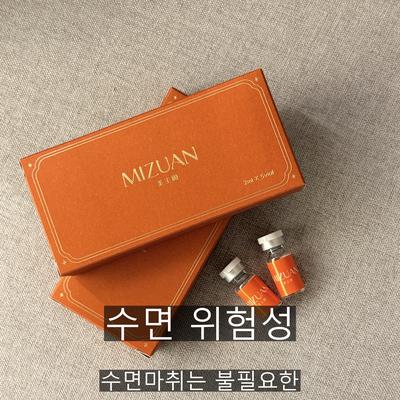
How to Confirm Proper Dermal Layer Injection
The key to Rejuran's effectiveness is whether the components are accurately delivered to the dermal layer.
Not all injections reach the dermal layer. If the substance remains on the skin surface or penetrates too deeply, it is difficult to expect the desired regenerative effect.
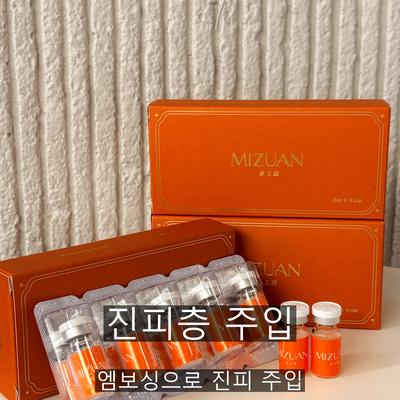
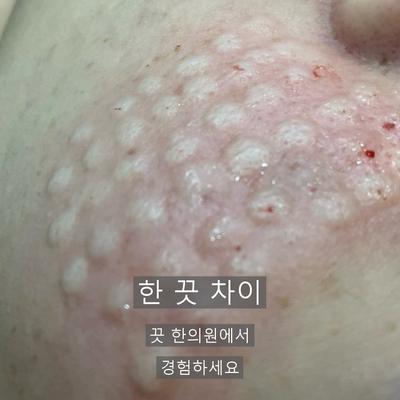
When the PN components are accurately injected into the dermal layer, an 'embossing' phenomenon appears, where the skin surface becomes raised. This is a sign that the medication has been properly delivered to its intended location.
At Kkeut Oriental Clinic, we check for embossing with the patient using a mirror after the procedure. If the procedure ends without such confirmation, there is no way to know if the medication has reached the desired layer.
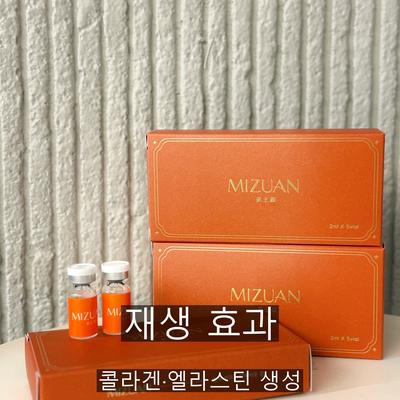
There should be options for the delivery method
Manual injection is not the only way to receive Rejuran.
There are various delivery methods, such as forming channels with a Potenza pumping tip and then applying it, or using a DermaShine (injector).
Compared to manual injection, the method of applying after channel formation is known to reduce pain and the risk of nodules. If you are concerned about pain, changing the method is a more reasonable approach than sedation.
At Kkeut Oriental Clinic, we offer various methods such as manual injection, Potenza pumping tip, and DermaShine. Choosing the appropriate method based on the patient's skin condition and pain sensitivity leads to better results.
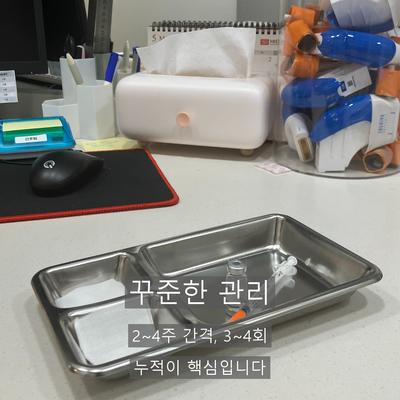
Rejuran is a procedure where effects accumulate through consistent management rather than a one-time treatment.
Generally, 3-4 sessions at 2-4 week intervals are recommended. After that, maintenance care continues depending on the skin condition.
Choosing Sleep Rejuran incurs sedation costs and recovery time for each session. Given the nature of a procedure that requires consistent management, selecting a method that is less burdensome and easier to continue is more advantageous in the long run.
Frequently Asked Questions
Q. Won't it be difficult to manage the pain without Sleep Rejuran?
A. The biggest reason people consider Sleep Rejuran is pain. However, Rejuran is quite tolerable when performed after applying anesthetic cream. If you are concerned about pain, choosing a Potenza pumping tip or DermaShine method instead of manual injection is a practical solution. Sedation adds an unnecessary burden beyond that.
Q. Won't Sleep Rejuran be more effective?
A. Whether or not you receive sedation does not determine the effectiveness of Rejuran. What determines the effect is whether the PN components are accurately delivered to the dermal layer. Confirming dermal injection through the presence of embossing and choosing the appropriate delivery method directly impacts the results.
Q. Is Sleep Rejuran safe?
A. While sedation itself cannot be definitively called dangerous, adding sedation to Rejuran, a procedure where pain can be controlled with anesthetic cream, does not offer significant benefits compared to the risks. The difficulty in immediately checking skin reactions during the procedure should also be considered.
Q. What method should I choose instead of Rejuran with sleep anesthesia?
A. We recommend changing the delivery method according to your pain sensitivity. At Kkeut Clinic, you can choose a method suitable for your condition among manual injection, Potenza pumping tip, and Dermashine. The procedure can be completed comfortably enough without sleep anesthesia.
The Sincerity of Kkeut Clinic
Kkeut Clinic visually confirms with the patient after the procedure, through 'embossing' verification, that the PN components have been accurately delivered to the dermis layer. We do not conclude the procedure without evidence that it has been applied to the correct location.
Kkeut Clinic provides an environment where delivery methods such as manual injection, Potenza pumping tip, and Dermashine can be selected according to the patient's condition. If you are concerned about pain, changing the method is a more reasonable and safer solution than sleep anesthesia.
Given that consistent treatment is important for PN-based skin boosters, Kkeut Clinic prioritizes methods that are less burdensome and more comfortable to manage each session. Not adding unnecessary risks is also part of Kkeut Clinic's treatment philosophy.
A subtle difference, a distinct result — Experience it at Kkeut Clinic.
Related notes
Procedure notes worth reading next.


Loading menu…