

Nasolabial Fold Thread Lift vs. Shrink Onda for Nasolabial Lifting: A Comprehensive Comparison Beomgye, Pyeongchon, Beomgye Station, Pyeongchon Station, Hogye-dong, Bisan-dong, Gwanyang-dong, Dongan-gu, Indeogwon, Geumjeong, Anyang
7/24/2026
This is a procedure note for Nasolabial Fold Thread Lift vs. Shrink Onda for Nasolabial Lifting: A Comprehensive Comparison at Beomgye(Opening Soon) KKEUT Korean Clinic.
When considering improvements for nasolabial folds, it's often confusing to decide which treatment to choose among thread lifts for nasolabial folds, Shurink, and Onda Lifting.
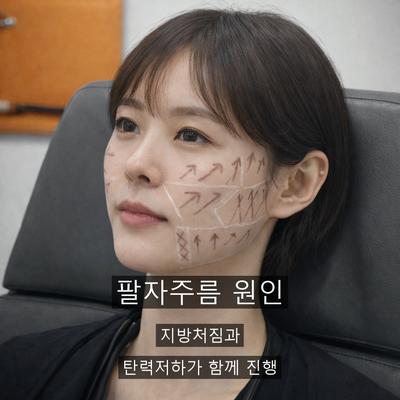
Nasolabial folds, which extend from the corners of the mouth to the sides of the nose, are a typical sign of aging that deepen as fat below the cheekbones sags and overall cheek elasticity diminishes.
Since it's not merely a simple wrinkle but a structural change resulting from a simultaneous loss of overall facial volume and elasticity, the approach is crucial.
For this reason, treatments for nasolabial folds that address the root cause of sagging, rather than just smoothing surface wrinkles, tend to last longer.
Nasolabial thread lifting, which uses threads, is a procedure that physically lifts sagging tissue by inserting dissolvable threads beneath the dermis layer of the skin.
In the areas where threads are inserted, collagen production is stimulated, and over time, you can also expect the added benefit of increased elasticity.
For those desiring immediate lifting effects, nasolabial thread lifting is often the preferred choice.
The threads used in this procedure are typically dissolvable threads that are naturally absorbed by the body over time.
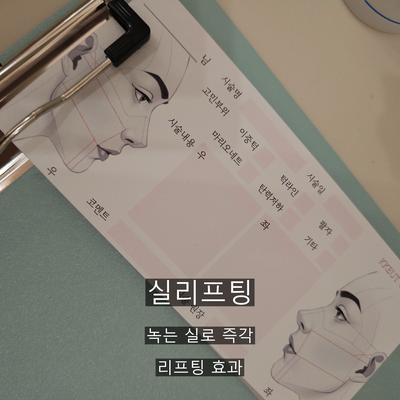
Shurink is a treatment that uses high-intensity focused ultrasound (HIFU) to deliver thermal energy to the deep SMAS layer of the skin, stimulating collagen regeneration and tissue contraction.
Shurink allows for precise treatment tailored to the thickness of the nasolabial fold area, as the depth of penetration can be adjusted according to the type of tip used.
This method, which lifts elasticity solely with energy without inserting threads, is preferred by those who desire quick recovery and natural changes.
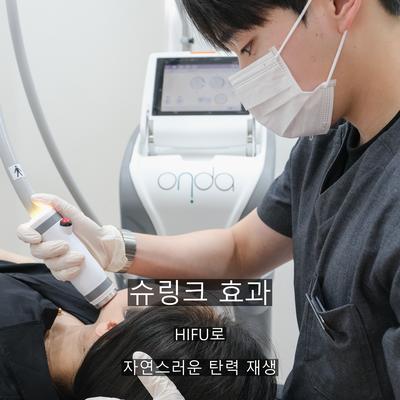
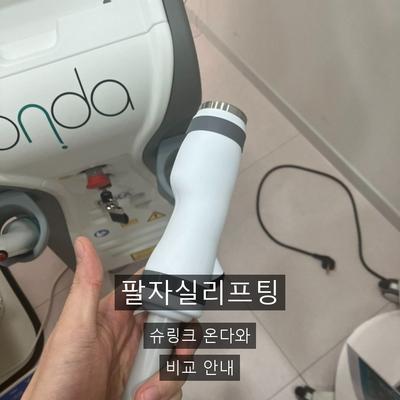
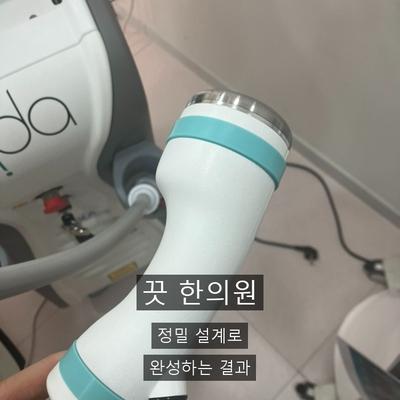
Onda Lifting is a procedure that uses microwave energy to simultaneously deliver heat to the fat layer and the dermis.
It effectively works on areas where both fat sagging and reduced skin elasticity occur, such as the nasolabial fold area.
Onda Lifting can be performed with just a topical anesthetic cream, making it a less burdensome option.
Onda Lifting is one of the few lifting methods that targets the fat layer.
Unlike thread lifting or Shurink, thermal energy is delivered directly to the fat layer itself, making it particularly suitable for nasolabial folds accompanied by volume loss.
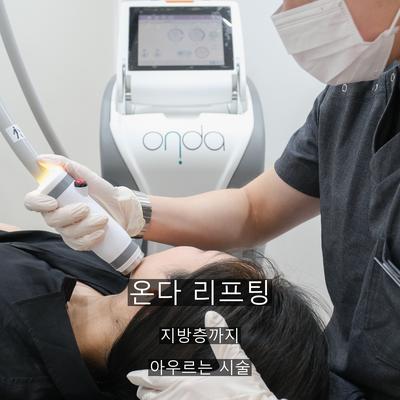
Thread lifting excels in immediate physical lifting, Shurink in natural elasticity regeneration, and Onda Lifting in volume improvement, including the fat layer. Therefore, the recommended treatment varies depending on the facial condition.
Prices vary depending on the treatment method and materials, so a consultation is necessary to determine a reasonable range.
If sagging is severe and immediate changes are desired, thread lifting is an option. If natural elasticity improvement is preferred, Shurink or Onda Lifting would be considered.
All three treatments are not impossible to combine, and in some cases, they may be performed together in a determined order depending on the facial condition.
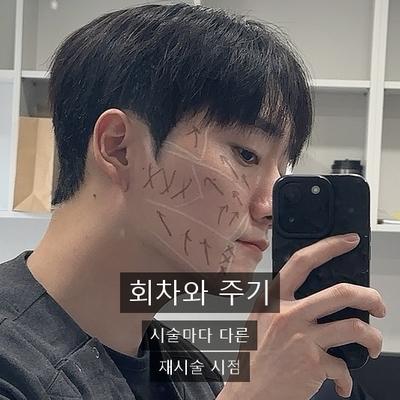
While changes from Onda Lifting can be felt after a single session, the effects tend to become clearer with cumulative treatments. Shurink is often performed at one-month intervals.
The duration of nasolabial thread lifting varies depending on the type and number of threads, and re-treatment is generally considered between 6 months and 1 year.
Shurink and Onda Lifting are closer to the concept of regular maintenance treatments, while thread lifting is closer to a treatment considered again when sagging reoccurs.
Due to the nature of thread lifting where threads are inserted, swelling and bruising may appear for a few days. Onda Lifting and Shurink generally have shorter downtime.
The idea that there is no pain at all during thread lifting is not accurate; the degree of pain varies depending on the treated area and the number of threads.
The extent of swelling or bruising varies depending on an individual's vascular distribution and skin condition.
Ultimately, deciding which treatment among thread lifting, Shurink, and Onda Lifting is right for you depends on the clinic's ability to accurately diagnose and design a plan for your facial condition.
Ultimately, the clinic chosen and the criteria used for treatment design determine the satisfaction with a lifting procedure.
Kkeut Clinic's Differentiated Treatment Expertise
When consulting for nasolabial fold improvement, Kkeut Clinic does not recommend only thread lifting but comprehensively compares Shurink and Onda Lifting to design a treatment plan that suits your facial condition.
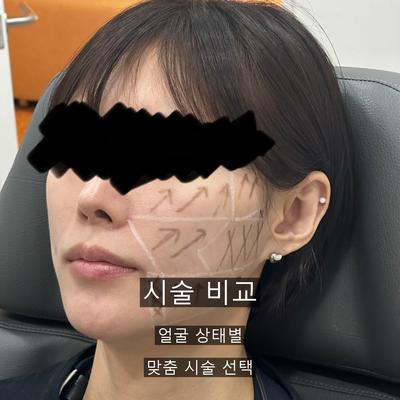
At Kkeut Clinic, the design for Onda Lifting is always completed in a seated position before proceeding with the treatment.
Since the areas where fat accumulates differ between standing/lying down and sitting positions, not designing while seated can lead to side effects such as cheek dimpling.
Kkeut Clinic adheres to a sequence for Onda Lifting where, initially, high power is slowly applied to deeply accumulate heat, and later, standard power is rapidly applied to reduce pain while maintaining the same effectiveness.
This single sequence makes a difference in results, even for the same Onda Lifting treatment.
Kkeut Clinic records and shares all lifting treatment details on a lifting card.
Because the areas and amount of energy applied are recorded, the timing and intensity of the next treatment can be accurately determined.
Frequently Asked Questions
Q. Can nasolabial thread lifting and Onda Lifting be performed together?
A. Yes, nasolabial thread lifting and Onda Lifting have different mechanisms of action, so they can sometimes be performed together. Kkeut Clinic assesses your facial condition to determine if combination treatment is appropriate.
Q. How long do the effects of nasolabial thread lifting last?
A. While it varies depending on the type and number of threads, as well as the individual's skin condition, nasolabial fold thread lifting usually lasts between 6 months and 1 year.
Q. Is the nasolabial fold thread lift very painful?
A. Since it is performed after anesthesia, the pain is tolerable, and after the nasolabial fold thread lift, mild swelling or bruising may appear for a few days.
Q. Can I get good results with only Shurink or Onda Lifting instead of a nasolabial fold thread lift?
A. If the degree of sagging is not severe, you can expect significant improvement with just Shurink or Onda Lifting, without a nasolabial fold thread lift.
The Sincerity of KKEUT Clinic
KKEUT Clinic provides differentiated results through a precise design process performed in a seated position.
KKEUT Clinic enhances patient satisfaction by sequentially adjusting high and standard outputs.
KKEUT Clinic simultaneously pursues safety and effectiveness by recording and sharing all treatment details with a lifting card.
Different Results with a Subtle Difference — Experience it at KKEUT Clinic.
Loading menu…