

For hydrated, dewy skin, it's important to replenish moisture from the deep dermal layer, not just the surface. Beomgye, Pyeongchon, Beomgye Station, Pyeongchon Station, Hogye-dong, Bisan-dong, Gwanyang-dong, Dongan-gu, Indeogwon, Geumjeong, Anyang
7/3/2026
This is a procedure note for For hydrated, dewy skin, it's important to replenish moisture from the deep dermal layer, not just the surface. at Gyeonggi Anyang Beomgye KKEUT Korean Clinic.
The term 'mulgwang skin' describes a radiant glow and deep hydration that seems to come from within the skin. If you consistently use hydrating creams, essences, and sheet masks, but this feeling doesn't last, it's time to reconsider the layers your treatments are reaching.
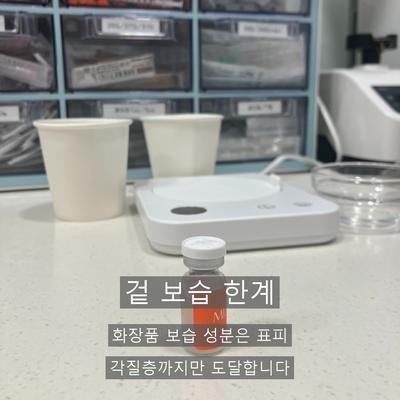
Cosmetic moisturizing ingredients only reach the stratum corneum, the outermost layer of the epidermis. Since the stratum corneum acts as a barrier against external irritants, even the most expensive moisturizing creams cannot penetrate to the dermis. While they can temporarily make the surface moist, this is why the effect returns to its starting point after just one wash.
The skin's internal moisture reservoir is in the dermal layer, not the epidermis. Since external care alone cannot reach this layer, even diligent skincare may not resolve dryness caused by a decrease in dermal moisture.
The Dermal Moisture Layer Determines Mulgwang Skin
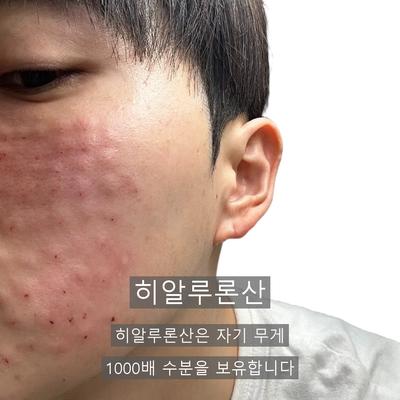
The dermal layer constitutes approximately 90% of the skin's total thickness. Hyaluronic acid, abundantly distributed in this layer, has the ability to attract and hold water up to 1,000 times its own weight. When this moisture is sufficient, the skin feels plumped from within, exhibiting a texture and radiance entirely different from that achieved by forced external hydration.
The essence of 'mulgwang skin' is a dermal moisture layer that is sufficiently filled. This refers to a layer that cannot be reached by superficial hydration.
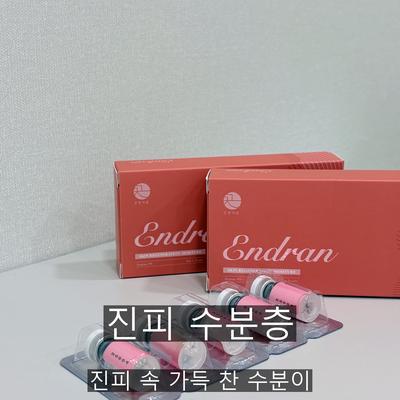
As we age, the hyaluronic acid in the dermal layer naturally decreases. This decrease begins in the mid-20s and drops to half of youthful levels by the 40s. Even with external moisture supply, it's difficult to keep up with this rate of decrease through epidermal care alone. At this point, an internal approach to the skin becomes necessary.
Skin boosters are treatments that directly deliver hyaluronic acid or skin regenerating ingredients to the dermal layer. This approach is designed to precisely reach the dermal layer, rather than merely passing through the epidermis. By filling from within rather than merely moistening the surface, it closely aligns with the principle of how 'mulgwang skin' is created.
Ingredients delivered to the dermal layer directly replenish moisture with hyaluronic acid and improve the skin's own moisture retention environment by stimulating collagen and elastin production. While many notice immediate hydration and radiance changes right after the treatment, what's more important is how skin quality improves with cumulative sessions.
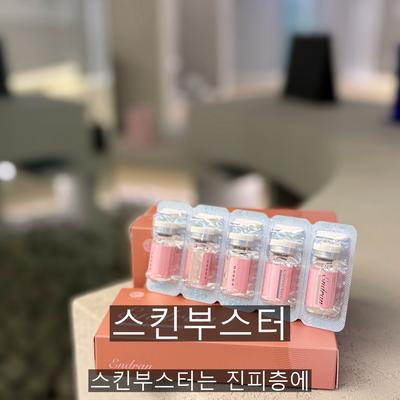
Epidermal hydration reverts to its starting point after just one wash. The changes in the skin environment created by ingredients delivered to the dermal layer, stimulating new collagen and elastin production, offer different levels of longevity. This is where the difference between superficial care and skin booster treatments lies.
Typically, we recommend cumulative treatments of 3-4 sessions, spaced 2-4 weeks apart. While immediate changes can be felt with just one session, consistent accumulation, considering the skin's regeneration cycle, determines the quality of the results. After the treatment, consistently maintaining moisturizing care and sun protection is fundamental to prolonging the effects. On the day of the treatment, it's advisable to avoid heat stimulation such as saunas, alcohol consumption, and strenuous exercise.
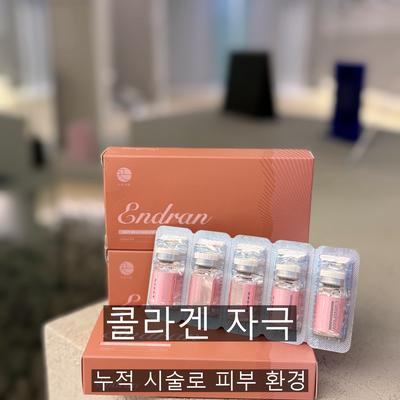
Skin booster types vary slightly in their effects depending on their ingredients. PN (polynucleotide) series are effective for overall skin environment improvement, including hydration, elasticity, and pores, while PLLA (poly-L-lactic acid) series strongly stimulate collagen synthesis. If skin regeneration is the goal, the PN series is more suitable; if collagen deficiency is the main concern, the PLLA series is a better approach. Since the most suitable ingredient depends on your skin condition and concerns, thorough consultation should precede any treatment.
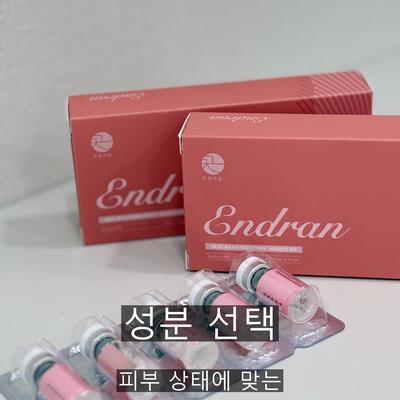
Kkeut Oriental Clinic's Unique Skin Booster Treatment Method
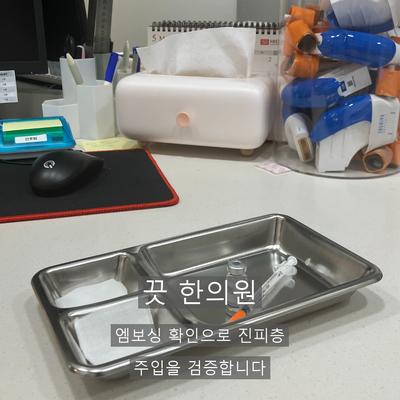
At Kkeut Oriental Clinic, we show you the 'embossing' phenomenon directly in a mirror after skin booster treatment. Embossing is when the skin slightly rises in bumps, indicating that the medicine has been precisely injected into the dermal layer. Receiving an injection is different from ensuring the ingredients have precisely reached the dermal layer. Kkeut Oriental Clinic incorporates this verification process as part of the treatment.
Beyond manual injections, Kkeut Oriental Clinic also utilizes a method of forming channels with Potenza pumping tips or Needle RF, followed by uniform absorption of ingredients. This design aims to reduce the risk of nodules that can occur with injection methods and ensures even delivery of ingredients throughout the dermal layer. At Kkeut Oriental Clinic, the process of determining the most suitable method based on your skin condition and areas of concern is included in the pre-treatment consultation.
Frequently Asked Questions
Q. I'm considering skin boosters for 'mulgwang skin.' How many sessions are typically needed?
A. Many people experience changes in 'mulgwang skin' effects from the very first session. To significantly improve the dermal moisture environment, we recommend 3-4 or more cumulative sessions, spaced 2-4 weeks apart. At Kkeut Oriental Clinic, we provide a session plan tailored to your skin condition through consultation.
Q. Hydrating creams also contain hyaluronic acid. How is that different from 'mulgwang skin'?
A. Topically applied hyaluronic acid works on the stratum corneum, while skin boosters directly deliver ingredients to the dermal layer. 'Mulgwang skin' is a state created when the dermal moisture layer is replenished, so the layers of access are fundamentally different.
Q. Can I resume daily life immediately after the treatment?
A. Yes, 'mulgwang skin' skin booster treatments typically have a short downtime. On the day of the treatment, please avoid heat stimulation such as saunas, alcohol consumption, and strenuous exercise, and ensure you moisturize and use sun protection. Kkeut Oriental Clinic will guide you on personalized post-treatment care.
Q. Can I receive 'mulgwang skin' skin booster treatments through non-injection methods?
A. At Kkeut Oriental Clinic, we apply a method of forming channels using Potenza pumping tips or Needle RF, followed by applying and absorbing the ingredients. This offers less pain and a lower risk of nodules than injections, making it a suitable option for those aiming for 'mulgwang skin'.
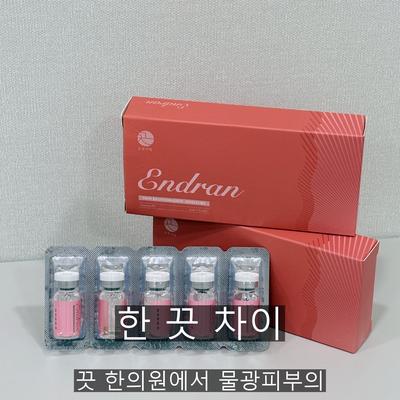
Kkeut Oriental Clinic's Commitment
Kkeut Oriental Clinic verifies that ingredients are precisely delivered to the dermal layer through post-treatment 'embossing' checks.
Kkeut Oriental Clinic achieves uniform absorption into the dermal layer without the risk of nodules, using Potenza pumping tips and Needle RF channel formation methods.
Kkeut Oriental Clinic directly verifies the precise extraction of undiluted solution in front of the client, creating a treatment environment that honestly delivers exactly what was received.
A subtle difference, leading to different results — Experience it at Kkeut Oriental Clinic.
Related notes
Procedure notes worth reading next.


Loading menu…